Aperçu en situation
 Envoyer
 Partager
 Détails de l'œuvre

 Télécharger
 Articles similaires
 Radiographie
 Diaporama
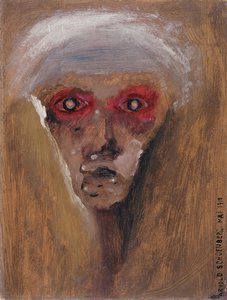
Self-Portrait
 Drawing
- WallArt
- Expressionism
 1918
1918- Modern
 27.0 x 35.0 cm
 Arnold Schönberg Center
 Lire la suite
Giclées et impressions d'art
Impressions giclées ou sur toile de qualité musée, avec une production rapide et des finitions au choix. ( Commander la reproduction peinte à la main Télécharger l'image haute résolution)




P118B $10

P118H $10

P118W $10

P438Z $10

P508JH $12

P508YH $12

P805H $10

P805Z $10

P919BZ $10

P919G $10

P919XJ $10

P959ZH $10

P968JZ $12

W106C $8

W218G $10

W218JH $8

W218Y $10

W307PJ $10

W316G $10

W316PJ $8

W316Y $10

W398PJ $8

W4111J $10

W500HY $15

W500JH $15

W692G $12

W849H $8

W940BG $15

W953PJ $8




Choisissez parmi nos formats prédéfinis qui respectent les proportions originales de l’œuvre.

Vous pouvez saisir vos propres dimensions pour vous adapter à un cadre ou à un espace spécifique. Si la taille sélectionnée ne correspond pas aux proportions de l'image originale, nous recadrerons l'œuvre ou étendrons l'image avec une bordure en miroir ou une couleur unie. Une maquette numérique vous sera envoyée pour approbation avant le début de la production.
Veuillez noter que l'aperçu à l'écran ne reflète pas le recadrage ou l'extension réelle. Seule la maquette montrera avec précision la composition finale.
Bien que des tailles personnalisées soient disponibles, nous vous recommandons de choisir une dimension dans la liste prédéfinie afin de préserver les proportions originales.
Livraison dans le monde entier () en 2 semaines au lieu des 4/5 semaines habituelles. (18 août)

Livraison express gratuite dans le monde entier

Toile de lin de qualité supérieure

Assurance transport complète

Garantie de remboursement des droits de douane

Garantie de fidélité des couleurs

Politique de retour de 60 jours (uniquement en cas de défaut)

Garantie de remboursement à 100%

Offre de tarifs dégressifs
 L'option verre n'est disponible que pour les dimensions inférieures à 110 cm.

Self-Portrait
Giclées et impressions d'art
Format de la reproduction
-


Prix total
$ 80
Description de la pièce
A Gaze Through Time: The Introspective Soul of Schoenberg
In the quiet, monochromatic depths of Arnold Schoenberg’s 1918 Self-Portrait, we encounter more than just a likeness; we meet a mind in the midst of a revolution. This striking black and white drawing captures the composer at a pivotal moment in his life and career. The subject, presented with a serious and contemplative expression, looks directly at the viewer, establishing an immediate, almost unsettling intimacy. His short hair, neatly groomed mustache, and formal attire—a suit and tie—suggest a man of discipline and intellect, yet there is an undeniable vulnerability beneath the surface. The composition focuses intensely on the face, stripping away all environmental distractions to force a confrontation between the observer and the observed.
The technique employed in this work speaks to the raw, unadorned honesty that characterized much of the era's avant-garde spirit. Through delicate linework and masterful use of tonal contrast, the artist breathes life into the shadows that contour his features. The absence of color serves a profound purpose, directing our attention toward the texture of the skin, the light reflecting in the eyes, and the somber weight of the subject's gaze. It is a study in restraint, where every stroke contributes to an atmosphere of psychological depth, mirroring the complex, often dissonant layers found within his groundbreaking musical compositions.
The Intersection of Music and Image
To understand this portrait, one must consider the historical landscape of 1918. As a central figure of the Second Viennese School, Schoenberg was actively dismantling the traditional structures of tonality, much like how this drawing dismantles the need for decorative flourish to convey meaning. There is a profound symmetry between his musical innovations—such as the development of atonality—and the stark, structural clarity of this self-portrait. Just as his music sought truth through the rejection of conventional harmony, this drawing seeks truth through the rejection of artifice.
For the collector or the interior designer, this piece offers a sophisticated anchor for a curated space. It possesses a timeless elegance that transcends the era in which it was created. The portrait does not merely decorate a wall; it commands attention and invites deep thought. Its monochromatic palette makes it an incredibly versatile choice for modern, minimalist, or classical interiors, providing a focal point of intellectual gravity. Whether placed in a quiet study, a contemporary gallery setting, or a grand salon, this reproduction serves as a window into the psyche of one of history's most influential creators, offering an enduring sense of prestige and profound emotional resonance.
Biographie de l'artiste
Early Life and Musical Beginnings
Arnold Schoenberg, Austrian-American composer who created new methods of musical composition involving atonality, namely serialism and the twelve-tone row. He was also one of the most influential teachers of the 20th century; among his most significant pupils were Alban Berg and Anton Webern. He was born on September 13, 1874, in Vienna, Austria. His early life was marked by a humble beginning, with his father being a shoe-shopkeeper. Despite this, Schoenberg’s innate passion for music led him to largely self-educate himself in the field. Schoenberg's early works showcased a Brahmsian–Wagnerian synthesis. As he progressed, he became the central figure of the second Viennese School, alongside Anton Webern and Alban Berg. His compositions, including String Quartet No. 2 (1907–1908), Erwartung (1909), and Pierrot Lunaire (1912), exemplified his innovative approach to atonality.Notable Works
Schoenberg’s oeuvre is remarkably diverse, encompassing orchestral music, chamber ensembles, vocal works, piano pieces, and film scores. However, he is undeniably best known for his groundbreaking explorations of atonality and serialism—methods that fundamentally reshaped the landscape of musical composition. Among his most celebrated achievements are: Suite No. 2 (1930), which showcases a masterful blend of tonal and dissonant elements; Music Typewriter (1928), an experimental piece utilizing a typewriter as a musical instrument; String Quartet No. 2 (1907–1908), considered a cornerstone of Viennese Expressionism; Erwartung (1909), a dramatic opera exploring themes of anxiety and anticipation; Pierrot Lunaire (1912), a song cycle that utilizes Sprechstimme—a vocal technique combining speech and singing—to convey profound emotional depth. Furthermore, Schoenberg’s film music includes scores for films such as “The Seven Deadly Sins” and “Moses and Aaron,” demonstrating his versatility as a composer across various genres.Influence and Legacy
Schoenberg's musical innovations exerted an indelible influence on subsequent generations of composers. His pioneering use of serialism—a compositional technique based on mathematical sequences—established a new paradigm for tonal music, prompting composers like Alban Berg and Anton Webern to develop their own distinctive styles rooted in Schoenberg’s principles. Beyond the realm of composition, Schoenberg's aesthetic and music-historical views profoundly impacted musicologists Theodor W. Adorno and Carl Dahlhaus, shaping debates about musical interpretation and artistic expression. His uncompromising stance against prevailing musical conventions solidified his reputation as a visionary artist who challenged accepted norms and paved the way for radical experimentation in music.Later Life and Recognition
Following the rise of Nazism in Germany, Schoenberg reluctantly abandoned Austria and emigrated to the United States in 1933, where he taught at Yale University until 1944. During World War II, he continued his musical pursuits while grappling with the horrors of the Holocaust—a profound experience that inspired him to create Survivor from Warsaw (1947), a poignant memorial to victims of Nazi persecution. In 1951, Schoenberg received honorary citizenship in Vienna and was elected president of the Israel Conservatory and Academy of Music, cementing his enduring legacy as one of the most influential figures in twentieth-century music history.
Arnold Schoenberg
1874 - 1951 , Autriche
L'essentiel de l'artiste
- Artistic Movement Or Style: Technique à douze tons; Expressionnisme
- Artists Or Movements Influenced By This Artist:
- Anton Webern
- Alban Berg
- Artists Who Influenced This Artist:
- Johannes Brahms
- Richard Wagner
- Date Of Birth: Septembre 13, 1874
- Full Name: Arnold Schoenberg
- Nationality: Autrichien-Américain
- Notable Artworks:
- Suite, op. 29
- Music Typewriter
- Staffliner
- Place Of Birth: Vienne, Autriche
Articles connexes

Blancs Sublimes : Les 10 Chefs-d'œuvre de la Peinture Révélés par
Plongez dans l'univers fascinant des 10 plus beaux tableaux blancs de l'histoire de l'art ! Découvrez Monet, Whistler, Kandinsky et d'autres maîtres. Inspirez votre décoration intérieure avec : reproductions de qualité muséale en ligne.

Les 10 Chefs-d'œuvre Noirs : Peintures Célèbres et Décoration d'Intérieur
Plongez dans l'univers fascinant des 10 plus beaux tableaux noirs de l'histoire de l'art. Découvrez les secrets de Goya, Manet, Rothko et autres maîtres. Inspirez votre décoration intérieure avec !

Monochrome Visions: Exploring the Aesthetic & Historical Significance of Black & White Photography
Explore the rich history & artistic power of black and white photography. From early techniques to iconic masters like Ansel Adams, discover why monochrome continues to captivate art lovers today. Expert insights for collectors.
Shadow & Soul: Why Black & White Photography Remains the Ultimate Power Move in Modern Art
Discover why black & white photography remains a powerful force in contemporary art. Explore the impact of light, shadow, and texture through a visual journey of monochrome mastery and learn how to elevate your space with timeless grayscale aesthetics.
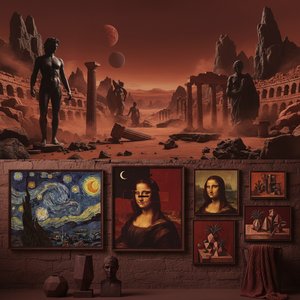
Les 10 Chefs-d'œuvre Dominés par le Noir : Art, Histoire & Décoration
Plongez dans l'univers fascinant des 10 plus beaux tableaux dominés par le noir. Découvrez les histoires, techniques et symbolisme de chefs-d'œuvre intemporels. Reproductions d'art de qualité musée sur !