

 Preview
 Commander l'impression Commander la reproduction
 Partager
 Partager
 Détails de l'œuvre
 Ajouter aux favoris

 Télécharger
 Articles similaires
 Radiographie
 Diaporama
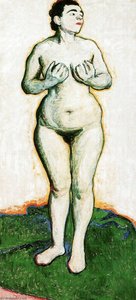
Nude
 1910
1910 156.0 x 72.0 cm
 Musée Rippl-rónai
 Afficher la suite
Acquérez une image numérique haute résolution et améliorée, bien supérieure à l'aperçu en ligne.
Chaque fichier est méticuleusement préparé par nos spécialistes internes à l'aide d'outils avancés et d'une retouche manuelle experte. Nous garantissons que chaque image possède une clarté exceptionnelle, une précision des couleurs irréprochable et un niveau de détail fin.
Le fichier final est livré par e-mail sous 72 heures, optimisé pour une utilisation immédiate dans des contextes professionnels, éditoriaux et d'impression. Il offre la même qualité de confiance que celle utilisée par les plus grands studios de création, éditeurs et galeries.
Image numérique
Téléchargez un fichier haute résolution pour un usage personnel, l'impression et vos projets créatifs.
Inclus avec chaque achat d'image numérique
Livraison numérique experte, garantie.
En choisissant OriginalUniqueArt.com, vous n'obtenez pas seulement une simple image : vous recevez une œuvre numérique sublimée avec professionnalisme, conçue avec précision et accompagnée d'une garantie de satisfaction. Voici tout ce qui accompagne automatiquement votre commande :

Livraison rapide par e-mail
Votre fichier d'image numérique haute résolution vous sera envoyé par e-mail sous 72 heures après votre commande — prêt à un usage immédiat.

Fichier numérique optimisé par l'IA
Votre œuvre d'art bénéficie d'une optimisation professionnelle grâce à des outils d'IA avancés et une retouche manuelle, garantissant un niveau maximal de détail, de clarté et de fidélité chromatique.

Réexpédition gratuite à vie
Vous avez accidentellement supprimé ou perdu votre fichier ? Pas de panique — nous vous le renverrons gratuitement, quand vous le souhaitez.

Aucun frais de douane - À jamais
Profitez de votre œuvre d'art instantanément sans frais de douane ni de livraison — les téléchargements numériques sont toujours exonérés de taxes.

Garantie de fidélité des couleurs
Nous garantissons que votre image numérique reproduit les couleurs de l'original aussi fidèlement que possible grâce à des outils professionnels et une gestion rigoureuse des couleurs.

Garantie de satisfaction de 60 jours
Si vous n'êtes pas satisfait de votre image numérique, nous la réviserons ou vous rembourserons 100% sous 60 jours - sans poser de questions.

Garantie de remboursement à 100%
Pas satisfait ? Obtenez un remboursement intégral dans les 60 jours suivant la réception de votre fichier numérique — sans aucune question posée.

Réductions sur les commandes groupées
Achetez 3 images, économisez 10% - Achetez 5, économisez 15% - Achetez 10+, économisez 20%. Idéal pour les projets créatifs, les galeries et les agences.
Biographie de l'artiste
Arnold Gara: A Hungarian Visionary of the Twenties
The art world of the 1920s was a crucible, forging new styles and challenging established norms. Amidst this vibrant period of experimentation, Arnold Gara (1882-1929) emerged as a singular voice in Hungarian art – a master of meticulous detail, evocative symbolism, and a deeply personal vision that blended influences from Symbolism, Art Nouveau, and the burgeoning world of graphic design. Born in Budapest, Gara’s life was tragically cut short at the age of 47, leaving behind a remarkably rich body of work that continues to captivate viewers with its haunting beauty and subtle emotional depth.
Gara's early artistic training began at the School of Applied Arts in Nagybánya (present-day Gyula), where he honed his skills in copper etching. This foundational experience proved crucial, as it introduced him to a technique that would become synonymous with his style – the “pointing” method, a complex and demanding process involving multiple layers of etched lines to create subtle tonal variations and intricate details. He later studied in Germany, absorbing European artistic trends while simultaneously developing his own distinct aesthetic. His move to Budapest marked a pivotal moment, establishing him as a key figure within the Hungarian art scene.
The Language of Still Life and Nude
Gara’s oeuvre is primarily defined by his masterful still lifes and intimate self-portraits. These works are not merely depictions of objects or individuals; they are carefully constructed narratives imbued with symbolism and a profound sense of melancholy. His still lifes, often featuring everyday items like teapots, glass bottles, and flowers, are rendered with an almost obsessive attention to detail – the glint of light on polished surfaces, the delicate folds of fabric, the subtle textures of fruit and foliage. These seemingly simple scenes become portals into a world of quiet contemplation, inviting viewers to consider themes of beauty, mortality, and the passage of time.
His self-portraits are perhaps even more revealing, offering glimpses into the artist’s inner life. These works are characterized by a vulnerability and introspection rarely seen in portraiture of the era. Gara doesn't shy away from depicting his own aging features, capturing the lines etched on his face as evidence of experience and sorrow. The use of muted colors and carefully controlled lighting further enhances the mood of quiet reflection.
Technique and Influences
Gara’s technical skill is undeniable. His mastery of copper etching allowed him to achieve an extraordinary level of precision and tonal control, creating images that are both visually stunning and emotionally resonant. He was a pioneer in utilizing the “pointing” technique, developing innovative methods for layering lines to build up complex textures and subtle gradations of light and shadow. This meticulous approach demanded immense patience and dedication, reflecting his commitment to artistic excellence.
While Gara’s work is undeniably rooted in Hungarian tradition, it also reveals a clear influence from European Symbolism and Art Nouveau. The evocative symbolism found throughout his paintings – references to death, beauty, and the ephemeral nature of life – are hallmarks of the Symbolist movement. Similarly, the flowing lines, decorative motifs, and emphasis on natural forms characteristic of Art Nouveau can be seen in his compositions. However, Gara’s work transcends mere stylistic imitation; he synthesized these influences into a uniquely personal vision.
Legacy and Recognition
Despite his untimely death at the age of 47, Arnold Gara left an indelible mark on Hungarian art. His innovative techniques, evocative imagery, and profound emotional depth continue to resonate with viewers today. He was recognized during his lifetime for his contributions to the Hungarian artistic community, receiving prestigious awards including the Stalin Prize in 1948 for his ballet *Seven Beauties*. Today, Gara’s work is housed in prominent museums and private collections throughout Hungary and abroad, ensuring that this remarkable artist's vision will continue to inspire generations of artists and art lovers.
His paintings, particularly those depicting the Sió River and scenes of everyday life, offer a poignant glimpse into a bygone era – a time of both artistic innovation and personal tragedy. Arnold Gara’s legacy is not simply that of a skilled artist; it is that of a sensitive observer who captured the beauty and melancholy of the human condition with unparalleled grace and precision.
arnold gara
1882 - 1929
Informations clés
- Artistic Movement Or Style: Nude Art, Landscape Artist
- Date Of Birth: 1882
- Date Of Death: 1929
- Full Name: Arnold Gara
- Nationality: Hungarian
- Notable Artworks:
- Fishing Boats on the Sió
- Hillside in Sunshine
- Self Portrait
- Place Of Birth: WahooArt

