

 Aperçu en situation
 Partager
 Partager
 Détails
 Guide imprimable

 Télécharger
 Articles similaires
 Radiographie
 Voir le diaporama
 Statistiques
Shield with Gorgon


 Afficher la suite
Giclées et impressions d'art
Impressions giclées ou sur toile de qualité musée, avec une production rapide et des finitions au choix. ( Acheter la peinture faite à la main Passer au format image numérique)




P118B €10

P118H €10

P118W €10

P438Z €10

P508JH €12

P508YH €12

P805H €10

P805Z €10

P919BZ €10

P919G €10

P919XJ €10

P959ZH €10

P968JZ €12

W106C €8

W218G €10

W218JH €8

W218Y €10

W307PJ €10

W316G €10

W316PJ €8

W316Y €10

W398PJ €8

W4111J €10

W500HY €15

W500JH €15

W692G €12

W849H €8

W940BG €15

W953PJ €8




Choisissez parmi nos formats prédéfinis qui respectent les proportions originales de l’œuvre.

Saisissez la largeur et la hauteur souhaitées pour qu'elles s'adaptent à votre cadre ou à votre mur. Une impression ne peut être que découpée, elle ne peut jamais être agrandie au-delà de l'image originale ; ainsi, un format de forme différente entraînera la perte d'une partie de l'image. Nous vous envoyons une maquette numérique pour approbation avant toute impression. L'image présentée sur cette page ne montre pas le recadrage réel — seule la maquette le permet.
Livraison dans le monde entier () en 2 semaines au lieu des 4/5 semaines habituelles. (22 octobre)

Livraison express gratuite dans le monde entier

Toile de lin de haute qualité

Assurance transport complète

Garantie de remboursement des droits de douane

Garantie de fidélité des couleurs

Garantie de retour de 100 jours (uniquement en cas de défaut)

Garantie de remboursement à 100%

Tarifs dégressifs sur quantité
 L'option verre n'est disponible que pour les dimensions inférieures à 110 cm.

Shield with Gorgon
Giclées et impressions d'art
Format de la reproduction
-


Prix total final
€ 70
Shield with Gorgon – A Meditation on Mortality and Ancient Myth
The sculpture “Shield with Gorgon’s Head,” created by Arnold Böcklin in 1897, stands as a haunting testament to the artist's fascination with Greco-Roman mythology and his profound contemplation of death. Exhibited prominently at the Musée d’Orsay in Paris, this piece transcends mere representation; it invites viewers into a realm of psychological exploration where beauty intertwines with unsettling truths. Böcklin, deeply influenced by Nietzschean philosophy – specifically the concept of eternal recurrence – sought to capture not just an image but an experience, mirroring the cyclical nature of existence and confronting us with our inevitable demise.Style and Technique: Symbolist Precision
Böcklin’s style aligns perfectly with the tenets of Symbolism, a movement that rejected realism in favor of conveying emotions and ideas through suggestive imagery rather than literal depiction. Unlike Impressionists who aimed to capture fleeting moments of light and color, Böcklin meticulously crafted his sculpture using a technique rooted in meticulous observation and symbolic distillation. The artist employed a combination of modeling clay and bronze casting – a process demanding considerable skill and patience – to achieve an astonishing level of detail. Notice the subtle gradations of tone within the Gorgon’s head; these aren't merely aesthetic choices but deliberate efforts to convey texture and depth, mirroring the complexities of human emotion. The smooth surface contrasts sharply with the rough contours of the snake’s coils, creating a visual dialogue that underscores the sculpture’s thematic concerns.Historical Context: Nietzschean Echoes and Late Romantic Sentiment
Böcklin's artistic output flourished during the waning years of the Romantic era, a period characterized by an obsession with emotion, imagination, and the sublime—experiences perceived as exceeding human comprehension yet simultaneously elevating the soul. However, Böcklin’s vision extended beyond traditional Romantic tropes; he actively engaged with the burgeoning intellectual currents of his time, particularly Nietzsche's proclamation that “God is dead.” This existential crisis fueled Böcklin’s exploration of themes like nihilism and mortality—concepts central to both Nietzschean thought and Symbolist art. The sculpture reflects a broader cultural preoccupation with confronting death not as an end but as a transformative stage in the cosmic cycle, mirroring Nietzsche's assertion that life itself is an affirmation of eternal recurrence.Symbolism Unleashed: Gorgon’s Head – Terror and Transformation
The Gorgon Medusa represents more than just monstrous horror; she embodies the terrifying power of transformation—a concept inextricably linked to Böcklin’s Symbolist worldview. According to Greek mythology, Medusa possessed snakes for hair that turned anyone who gazed upon them into stone. This image served as a potent symbol of inescapable fate and the destructive force of repressed emotions. The sculptor skillfully captures this duality: the Gorgon's gaze exudes palpable terror, yet simultaneously hints at an underlying process of metamorphosis—a suggestion that confronting death can lead to profound spiritual renewal. Böcklin’s deliberate use of serpentine coils reinforces this symbolism, representing both constriction and liberation – mirroring the artist’s own preoccupation with reconciling beauty and darkness.Emotional Impact: A Confrontation With Eternity
Ultimately, “Shield with Gorgon’s Head” compels viewers to confront their own mortality—to grapple with the inescapable reality that life is finite yet perpetually reborn. The sculpture's unsettling stillness invites contemplation, prompting us to consider our place within the grand scheme of cosmic time. Böcklin doesn’t offer comfort or reassurance; instead, he presents a stark portrait of existence stripped bare – confronting us with the beauty and terror inherent in accepting death as an inevitable component of life’s eternal dance. It is precisely this unflinching gaze—this refusal to shy away from uncomfortable truths—that secures “Shield with Gorgon’s Head”'s enduring power as a masterpiece of Symbolist art and a timeless meditation on the human condition.Questions et réponses
«Shield with Gorgon» est-il l'une des œuvres les plus populaires de Arnold Böcklin ?
« Shield with Gorgon » est classé comme Iconique.
Quelle tonalité émotionnelle accompagne le style Symbolist Romanticism de « Shield with Gorgon » ?
Au sein du mouvement Symbolist Romanticism, « Shield with Gorgon » est empreint d'un ton Mélancolique.
Existe-t-il une fiche informative sur «Shield with Gorgon» de Arnold Böcklin destinée aux étudiants ?
Une page Guide est disponible pour «Shield with Gorgon» de Arnold Böcklin : une fiche d'information imprimable sur l'œuvre, conçue pour les étudiants et un usage pédagogique en classe.
Biographie de l'artiste
Premières années et formation
Arnold Böcklin, peintre symboliste suisse, est né le 16 octobre 1827 à Bâle, en Suisse. Son père, Christian Frederick Böcklin, descendait d'une vieille famille de Schaffhouse et exerçait dans le commerce de la soie. Sa mère, Ursula Lippe, était originaire de la même ville. Il a étudié à l’Académie de Düsseldorf sous Schirmer, devenant ami avec Anselm Feuerbach. Böcklin est associé à l'École de peinture de Düsseldorf.Carrière artistique et symbolisme
Le parcours artistique de Böcklin l'a mené dans diverses villes, dont Paris, où il a travaillé au Louvre, et Rome, où il a été influencé par ses paysages. Son œuvre présentait souvent des figures allégoriques et mythologiques dans des décors comprenant une architecture classique, explorant les thèmes de la mort et de la mortalité.- Le Grand Parc, l'une de ses premières œuvres, mettait en scène l’ancienne mythologie.
- La Nymphe et le Satyre (1858) et Sappho (1859) étaient des œuvres notables de cette période.
- Son autoportrait avec la Mort jouant du violon (1872) exemplifiait son style unique.
Héritage et influence
Böcklin est surtout connu pour ses cinq versions de l’Île des morts (1880-1886), qui évoquaient le cimetière anglais à Florence, où sa fille était enterrée. Son œuvre a influencé les artistes plus jeunes comme Hans Thoma et a inspiré plusieurs compositeurs romantiques tardifs.- Clement Greenberg a décrit l'œuvre de Böcklin comme "l'une des expressions les plus accomplies" de son époque.
- Le style de Böcklin se superposait aux préraphaélites, mettant l’accent sur le monde des rêves et du mysticisme.
Collections et musées
L'œuvre de Böcklin peut être trouvée dans divers musées, notamment :- Öffentliche Kunstsammlung (Bâle, Suisse)
- Kunstmuseum Basel (Suisse)
- Museum Kunsthaus Zürich (Zurich, Suisse)
Développement et influences ultérieures
Au fil de sa carrière, Böcklin a exploré une variété de thèmes et de styles. Son intérêt pour la mythologie classique, combiné à son exploration des émotions humaines profondes, a conduit à un style unique qui a influencé les mouvements artistiques ultérieurs. Il a été particulièrement influent sur le symbolisme allemand et a inspiré des compositeurs comme Gustav Mahler, dont l'œuvre "Kindertotenlieder" est directement inspirée par ses peintures de l’Île des morts. Böcklin a également contribué à la popularisation de l'art symboliste auprès du grand public grâce à la production de gravures et de reproductions de ses œuvres. Son approche mélancolique et son esthétique sombre ont trouvé un écho dans une société en proie aux angoisses liées à la modernité et à la perte des valeurs traditionnelles.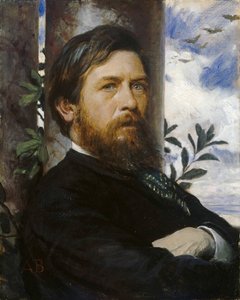
Arnold Böcklin
1827 - 1901 , Suisse
En bref
- Artistes Influents:
- Caspar David Friedrich
- Anselm Feuerbach
- Date De Décès: 16 janvier 1901
- Date De Naissance: 16 octobre 1827
- Influences Artistiques:
- Hans Thoma
- Préraphaélites
- Lieu De Naissance: Bâle, Suisse
- Mouvement Artistique: Symbolisme
- Nationalité: Suisse
- Nom Complet: Arnold Böcklin
- Oeuvres Notables:
- Île des morts
- La Guerre
- Nymphe et satyre
Articles connexes

Theatricality & Triumph: Baroque Drama in Painting & Sculpture
Explore the dramatic world of Baroque art! Discover its history, defining characteristics, & lasting influence on painting & sculpture. Expert insights into Caravaggio, Zurbarán, and Bernini – plus high-quality reproductions at OriginalUniqueArt.

The Enduring Form: Exploring Themes & Techniques in Sculpture Across Historical Periods
Explore the rich history of sculpture from ancient masterpieces to contemporary innovations. Discover key techniques, influential artists & investment potential for discerning art collectors.

Les 10 Chefs-d'œuvre Bronzes Qui Ont Révolutionné la Sculpture | OriginalUniqueArt
Plongez dans l'univers fascinant des 10 sculptures en bronze les plus emblématiques de l'histoire de l'art. Rodin, Degas et autres maîtres révélés ! Découvrez leur histoire, leurs techniques et trouvez l'œuvre parfaite pour sublimer votre intérieur sur OriginalUniqueArt.com.

The Enduring Form: Sculpture Across History, Technique & Emotional Resonance
Explore the rich history of sculpture with OriginalUniqueArt. Discover key techniques, influential artists & investment potential for discerning collectors. Expert insights into valuing and collecting timeless masterpieces.

Les 10 Chefs-d'œuvre en Bronze qui ont Révolutionné l'Art : Collection OriginalUniqueArt
Plongez dans l'univers fascinant des 10 chefs-d'œuvre en bronze qui ont marqué l'histoire de l'art. Découvrez Rodin, Degas et les secrets de ces sculptures iconiques. Reproductions d'art exceptionnelles sur OriginalUniqueArt.com – Explorez la collection !


