

 Aperçu en situation
 Envoyer
 Partager
 Détails de l'œuvre
 Guide
Guide

 Télécharger l'image
 Articles similaires
 Radiographie
 Diaporama
 Statistiques
Dr Annie Besant
 Huile sur toile
- Art mural
- Bombay School Realism
 1927
1927 44.0 x 36.0 cm
 Museu do Oriente
 Lire la suite
Reproduction à l'huile faite à la main
Huile sur toile peinte à la main, avec cadre et dimensions personnalisés, réalisée sur commande par nos artistes. ( Passer au format impression Passer au format numérique)




P118B €10

P118H €10

P118W €10

P438Z €10

P508JH €12

P508YH €12

P805H €10

P805Z €10

P919BZ €10

P919G €10

P919XJ €10

P959ZH €10

P968JZ €12

W106C €8

W218G €10

W218JH €8

W218Y €10

W307PJ €10

W316G €10

W316PJ €8

W316Y €10

W398PJ €8

W4111J €10

W500HY €15

W500JH €15

W692G €12

W849H €8

W940BG €15

W953PJ €8




Choisissez parmi nos formats prédéfinis qui respectent les proportions originales de l’œuvre.

Saisissez la largeur et la hauteur souhaitées, pour s'adapter à votre cadre ou à votre mur. Cette œuvre est peinte à la main ; ainsi, pour un format de forme différente, l'artiste peut peindre un peu plus autour du tableau ou réduire légèrement les bords — c'est vous qui choisissez. Nous vous envoyons une maquette numérique pour approbation avant que la peinture ne commence. L'image présentée sur cette page ne reflète pas le résultat réel — seule la maquette le fait.
Après la commande, l’équipe OriginalUniqueArt.com contactera le client par e-mail pour recueillir ses instructions et lui fournira une maquette d’aperçu
Livraison dans le monde entier () en 3 à 4 semaines au lieu des 5 semaines habituelles. (26 octobre). Aucun compromis sur la qualité.

Livraison express gratuite dans le monde entier

Toile de lin de qualité supérieure

Assurance transport complète

Garantie de remboursement des droits de douane

Garantie de fidélité des couleurs

Politique de retour de 100 jours (uniquement en cas de défaut)

Garantie de remboursement à 100%

Offre de tarifs dégressifs
 L'option verre n'est disponible que pour les dimensions inférieures à 110 cm.

Dr Annie Besant
Technique de reproduction
Format de la reproduction
-


Prix total
€ 263
Un portrait imprégné de tradition : la représentation révérencieuse d'Annie Besant par António Xavier Trindade
Annie Besant (1847-1933) demeure une figure indélébile des annales de l'histoire indienne – une femme dont la conviction inébranlable et l'esprit pionnier ont défié l'autorité coloniale et porté haut les idéaux de la réforme sociale. António Xavier Trindade, maître du style de l'École de Bombay, a capturé cet intellect formidable avec une sensibilité remarquable dans son portrait de 1927, offrant aux spectateurs un aperçu qui dépasse la simple ressemblance pour toucher à la vie intérieure et à la force morale de Besant. Cette huile sur toile transcende la simple représentation ; elle incarne l'esprit de son époque et évoque des thèmes universels de dignité, de contemplation et de force tranquille.- Le style de l'École de Bombay : L'œuvre de Trindade est un exemple parfait de l'École de Bombay, un mouvement artistique distinctif qui a fleuri à Goa au début du XXe siècle. Caractérisé par des palettes feutrées dominées par les bruns, les tons fauves et les gris — un choix délibéré reflétant l'humeur sombre de l'époque — ce style privilégie l'harmonie tonale et les subtiles gradations de couleur plutôt que les teintes vibrantes.
- La technique de l'empâtement : La surface texturée obtenue grâce à l'empâtement — l'application épaisse de la peinture sur la toile — est immédiatement perceptible. Des coups de pinceau visibles ondulent sur le visage de Besant et drapent élégamment ses vêtements, transmettant un sentiment palpable de physicalité et d'immédiateté. Cette technique confère profondeur et dynamisme à la composition, s'affranchissant des conventions statiques du portrait académique.
- Lumière et composition : Un éclairage stratégique joue un rôle crucial dans le façonnement de l'impact émotionnel de l'œuvre. La lumière émane du côté gauche du cadre, illuminant le visage de Besant d'un éclat chaleureux — une décision compositionnelle délibérée qui attire l'attention sur son regard et renforce sa présence en tant que sujet central. La faible profondeur de champ accentue davantage ce focus, créant une atmosphère intime propice à la contemplation.
Un regard approfondi sur l'expression et le symbolisme de Besant
La vision artistique de Trindade s'étend bien au-delà de la simple exactitude visuelle ; il s'efforce de capturer l'essence même de Besant — son caractère profond — à travers des expressions faciales nuancées et des gestes subtils. Son regard est direct, sans détour, exprimant un sérieux profond qui impose le respect. Le choix délibéré de la pose par l'artiste — assise, les mains jointes avec grâce — renforce sa maîtrise de soi et sa dignité. De plus, la peinture intègre subtilement des éléments symboliques reflétant la fascination de Trindiente pour la cosmologie hindoue. La palette dominante — bruns et gris — fait écho aux tons terreux prévalents dans l'iconographie hindoue, symbolisant la stabilité, la sagesse et l'ancrage spirituel.Au-delà de la ressemblance : l'intention artistique de Trindade
Contra Unlike les portraits conventionnels qui visent une ressemblance précise, la représentation de Trindade cherche à communiquer quelque chose de plus profond — une appréciation de la stature morale et des prouesses intellectuelles de Besant. L'artiste évite habilement les poses exagérées et les éclairages dramatiques souvent employés dans le portrait académique, optant plutôt pour une esthétique plus sobre qui privilégie l'analyse psychologique. Les indices suggèrent que Trindade a exécuté la peinture d'après nature — un témoignage de son dévouement à capturer non seulement l'apparence, mais aussi l'âme.Taille et dimensions
L'œuvre mesure 44 x 36 cm (environ 17,5 x 14,2 pouces).Questions et réponses
Puis-je commander une reproduction à l'huile de « Dr Annie Besant » ?
Les reproductions peintes à la main de «Dr Annie Besant» de António Xavier Trindade sont disponibles sur ce site : une reproduction à l'huile peinte à la main sur toile de lin, via sa page Reproduction peinte à la main.
Quel emplacement convient au format de «Dr Annie Besant» de António Xavier Trindade ?
Le format Format portrait de «Dr Annie Besant» de António Xavier Trindade est idéal pour une Salon. Le format et l'espace s'associent pour définir l'emplacement parfait d'une reproduction.
L'œuvre « Dr Annie Besant » dispose-t-elle d'un aperçu en réalité augmentée ?
« Dr Annie Besant » dispose d'un aperçu en réalité augmentée : la page Aperçu en RA de l'œuvre vous permet de la visualiser dans votre propre espace sur un appareil compatible.
Biographie de l'artiste
A Life Etched in Light: The World of António Xavier Trindade
António Xavier Trindade, a name resonating with quiet power within the annals of Indian art history, was more than just a painter; he was a cultural bridge. Born in Sanguem, Goa, in 1870 to Catholic parents, his journey began amidst the lush landscapes and complex colonial tapestry of Portuguese India. This formative environment would indelibly shape his artistic vision, fostering a unique blend of Western academic training with an intrinsic understanding of Indian life and character. Trindade’s early promise led him to the prestigious Sir Jamsetjee Jeejeebhoy School of Art in Bombay, a pivotal institution that exposed him to European naturalism while simultaneously nurturing a growing generation of Indian artists. It was here, within those hallowed halls, that he honed his skills, mastering techniques that would later define his signature style and earn him accolades like the Mayo Silver Medal for artistic merit in 1892—a testament to his burgeoning talent.The Bombay School and a Rising Star
Trindade’s ascent within the Bombay art scene was swift and assured. Appointed as a teacher of drawing and painting at the Sir J.J. School of Art in 1898, he not only contributed to the education of future generations but also solidified his position as a leading figure in the burgeoning Bombay School. He became deeply involved in shaping the artistic landscape of the city, fostering a sense of community among artists and encouraging experimentation with new styles and techniques. Later, assuming the role of Superintendent of the Reay Workshop of Art from 1914 to 1926, he further influenced artistic production and pedagogy, establishing rigorous standards and providing invaluable guidance to aspiring artists. However, it wasn’t merely institutional recognition that marked his success; it was the captivating quality of his work itself. Initially embracing traditional portraiture and landscapes, Trindade gradually developed a style characterized by its realism, sensitivity to light, and an ability to capture the psychological depth of his subjects—a departure from purely academic approaches. He became particularly renowned for portraying Indian women with a dignity and intimacy rarely seen in colonial-era art, offering glimpses into their lives beyond the confines of societal expectations and revealing a profound respect for their inner worlds. This earned him the affectionate title “Rembrandt of the East,” acknowledging both his technical mastery and his deep understanding of human emotion.Themes and Techniques: A Synthesis of Worlds
The 1920s witnessed a maturation in Trindade’s artistic expression, marked by an increasing focus on portraits, landscapes, and still lifes. His canvases became windows into the lives of his contemporaries—wealthy patrons, family members, and everyday individuals—each rendered with meticulous detail and a subtle yet powerful emotional resonance. Dolce Farniente (Flora or Mother Reclining), awarded the Bombay Art Society’s gold medal in 1920, exemplifies this period; it is not merely a depiction of a woman at rest but an exploration of motherhood, serenity, and the quiet beauty of domestic life. The painting captures a moment of profound intimacy, suggesting a connection between the artist, his wife, and their children—a rare portrayal of familial warmth within the context of colonial India. Similarly, New Year’s Song (1928) and Hindu Girl (1930), recipients of the Governor’s prize, showcase his ability to capture cultural nuances and individual personalities with remarkable sensitivity. Trindade's technique was rooted in Western academic principles—a mastery of chiaroscuro, precise draftsmanship, and a sophisticated understanding of color theory—but he infused these elements with an Indian sensibility, creating a unique visual language that transcended stylistic boundaries. He wasn’t simply replicating what he had learned; he was transforming it, imbuing it with the spirit of his homeland. His use of light, in particular, became a defining characteristic of his work, often employed to create a sense of atmosphere and mood—a hallmark of Rembrandt's own style.Notable Works and Legacy
Trindade’s oeuvre encompasses a diverse range of subjects and styles, reflecting his evolving artistic vision over several decades. Beyond the aforementioned masterpieces, notable works include Girl with a Vase (1923), a poignant portrait capturing the quiet dignity of a young woman; Self-portrait in Green (1912), offering a rare glimpse into the artist’s own self-perception; and a series of evocative *Nasik Scenes* (c. 1920s-1930s) documenting the diverse communities and religious practices of the Indian subcontinent—a testament to his commitment to representing the richness and complexity of his homeland. His work gained further recognition with an exhibition at the Festival of the Empire in Wembley, London, in 1934, bringing his art to an international audience. Despite facing personal challenges—including declining health and eventual blindness in later life—Trindade continued to paint, supported by his daughter Ângela Trindade, herself a talented artist who carried on her father’s legacy. His influence extends beyond mere aesthetic appreciation; he represents a pivotal moment in Indian art history, a time when artists began to forge their own identities, blending tradition with modernity and challenging the prevailing colonial gaze. Trindade's life and work stand as a testament to the power of artistic expression to transcend cultural boundaries and illuminate the shared human experience.A Lasting Impression
António Xavier Trindade passed away in his family home in Mahim, Bombay, on March 16th, 1935. His legacy endures through his paintings, which are now housed in prestigious collections around the world, and through the continued influence of the Bombay School of Art, which he helped to shape and nurture. The Fundação Oriente in Goa has played a crucial role in preserving and promoting his work, establishing permanent exhibitions that allow audiences to experience the beauty and depth of his artistic vision firsthand. His paintings continue to resonate with viewers today, offering a poignant glimpse into the lives and times of colonial India—a testament to the enduring power of art to connect us across cultures and generations.
António Xavier Trindade
1870 - 1935 , Inde
L'essentiel de l'artiste
- Artistic Movement Or Style: École de Bombay, Réalisme
- Date Of Birth: 1870
- Date Of Death: 1935
- Full Name: António Xavier Trindade
- Nationality: Portugais
- Notable Artworks:
- Dolce Farniente
- Nouvel An
- Fille hindoue
- Place Of Birth: Sanquém, Inde
Articles connexes
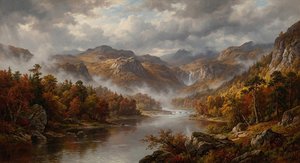
L'École du fleuve Hudson : 10 chefs-d'œuvre incontournables pour sublimer votre intérieur
Plongez dans l'univers grandiose de l'École du fleuve Hudson ! Découvrez 10 chefs-d'œuvre emblématiques de Thomas Cole, Frederic Church et Albert Bierstadt. Inspirez votre décoration intérieure avec ces paysages américains romantiques. Explorez la collection complète sur OriginalUniqueArt.com.
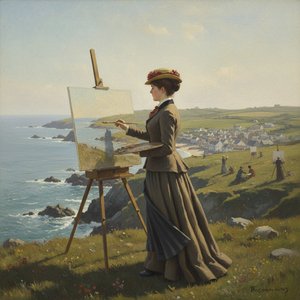
Elizabeth Adela Forbes: A Pioneering Impressionist of the Newlyn School
Explore the life & art of Elizabeth Adela Forbes, a pioneering Impressionist of the Newlyn School. Discover her captivating paintings, unique style, and lasting legacy with OriginalUniqueArt.
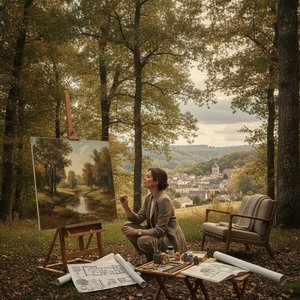
The Barbizon School: A Professional Guide to Naturalism and Landscape Mastery for Interior Designers
Explore the Barbizon School's mastery of naturalism. An expert guide for hotel designers and procurement managers on sourcing high-quality landscape reproductions to elevate hospitality and corporate interiors with authentic, large-scale fine art solutions.

L'École du fleuve Hudson : Romantisme américain et exploration d'un paysage national
Explorez l'École du fleuve Hudson : un mouvement artistique américain majeur célébrant la nature et le sublime. Découvrez ses peintres emblématiques, son histoire et son héritage durable avec OriginalUniqueArt.

L'École de La Haye : Réalisme, Atmosphère et l'Aube de l'Impressionnisme Néerlandais
Explorez l'École de La Haye et le réalisme néerlandais : découvrez les maîtres hollandais, leur quête d'atmosphère et leur influence sur l'impressionnisme. Analyse approfondie et héritage artistique.


