
 Aperçu en situation
 Envoyer
 Partager
 Détails de l'œuvre
 Guide
Guide

 Télécharger l'image
 Articles similaires
 Radiographie
 Diaporama
 Questions et réponses
 Statistiques
Portrait d'Éster

- 56.0 x 46.0 cm


 Lire la suite
Giclées et impressions d'art
Impressions giclées ou sur toile de qualité musée, avec une production rapide et des finitions au choix. ( Commander la reproduction peinte à la main Passer au format numérique)




P118B €10

P118H €10

P118W €10

P438Z €10

P508JH €12

P508YH €12

P805H €10

P805Z €10

P919BZ €10

P919G €10

P919XJ €10

P959ZH €10

P968JZ €12

W106C €8

W218G €10

W218JH €8

W218Y €10

W307PJ €10

W316G €10

W316PJ €8

W316Y €10

W398PJ €8

W4111J €10

W500HY €15

W500JH €15

W692G €12

W849H €8

W940BG €15

W953PJ €8




Choisissez parmi nos formats prédéfinis qui respectent les proportions originales de l’œuvre.

Saisissez la largeur et la hauteur souhaitées pour qu'elles s'adaptent à votre cadre ou à votre mur. Une impression peut être recadrée, mais jamais agrandie au-delà de l'image originale ; ainsi, un format de forme différente entraînera la perte d'une partie de l'image. Nous vous envoyons une maquette numérique pour approbation avant toute impression. L'image présentée sur cette page ne montre pas le recadrage réel — seule la maquette le permet.
Livraison dans le monde entier () en 2 semaines au lieu des 4/5 semaines habituelles. (7 novembre)

Livraison express gratuite dans le monde entier

Toile de lin de qualité supérieure

Assurance transport complète

Garantie de remboursement des droits de douane

Garantie de fidélité des couleurs

Politique de retour de 100 jours (uniquement en cas de défaut)

Garantie de remboursement à 100%

Offre de tarifs dégressifs
 L'option verre n'est disponible que pour les dimensions inférieures à 110 cm.

Portrait d'Éster
Giclées et impressions d'art
Format de la reproduction
-


Prix total
€ 72
Retrato de Ester : Une Étreinte Psychologique au Sein du Réalisme Expressionniste Portugais
La peinture intitulée « Retrato de Ester », réalisée par António Teixeira Carneiro Júnior vers le début du XXe siècle, offre une plongée fascinante dans l'âme humaine et une remarquable illustration des préoccupations esthétiques propres à l’expressionnisme portugais. Cette œuvre remarquable, datant d'une période marquée par la perte personnelle et les bouleversements sociaux, témoigne de la sensibilité artistique exceptionnelle de Carneiro.
- Sujet : Le portrait représente une jeune femme au visage serein et aux lèvres légèrement entrouvertes, exprimant une douce mélancolie. Son regard fixe celui du spectateur, établissant une connexion émotionnelle immédiate et invitant à une contemplation profonde.
- Style : Carneiro embrasse le courant expressionniste portugais, caractérisé par une recherche intense de l'émotion et une simplification des formes pour privilégier la transmission d’une atmosphère psychologique particulière. Cette approche artistique se situe au cœur du mouvement artistique européen de cette époque.
- Technique : Utilisant une palette limitée et une touche épaisse, Carneiro applique une peinture à l'huile sur bois avec une précision remarquable. La texture palpable de la peinture souligne les contours du visage et contribue à renforcer l’effet dramatique de l’œuvre. Cette méthode technique est typique des peintres expressionnistes qui souhaitaient capturer la réalité intérieure et émotionnelle.
- Contexte Historique : Œuvre réalisée dans les années précédant la Première Guerre mondiale, « Retrato de Ester » reflète les préoccupations esthétiques et philosophiques de l’époque. L'influence des mouvements artistiques européens tels que le mouvement allemand Neue Sachlichkeit et le mouvement français Cubisme sont palpables dans cette œuvre.
- Symbolisme : Bien que les détails spécifiques du symbole soient difficiles à déterminer sans une étude approfondie, la douceur du sourire et la mélancolie exprimée par Ester évoquent des thèmes universels tels que la beauté intérieure et la fragilité de l'existence humaine. Cette œuvre invite à une réflexion sur la condition humaine et la recherche du sens dans un monde en pleine mutation.
La reproduction haute qualité proposée permet de découvrir les nuances subtiles de cette peinture emblématique et d’apprécier pleinement son impact émotionnel. Elle apporterait une touche artistique raffinée à tout intérieur et serait un hommage à l'œuvre originale.
Questions et réponses
Comment les couleurs de «Portrait d'Éster» de António Teixeira Carneiro Júnior traduisent-elles l'émotion qui s'en dégage ?
La palette Sombre et profond de «Portrait d'Éster» de António Teixeira Carneiro Júnior s'harmonise avec son ton émotionnel Réflexif. La couleur est l'un des moyens par lesquels une œuvre transmet une émotion.
Que représente «Portrait d'Éster» de António Teixeira Carneiro Júnior ?
Les thèmes présents dans «Portrait d'Éster» de António Teixeira Carneiro Júnior incluent portrait, woman, smile, portuguese art, expressionism, lisbon museum, religious symbolism. Ensemble, ils résument le sujet de l'œuvre.
Quelle émotion l'œuvre Portuguese Expressionism «Portrait d'Éster» dégage-t-elle ?
Au sein du mouvement Portuguese Expressionism, « Portrait d'Éster » est empreint d'un ton Réflexif.
Biographie de l'artiste
António Teixeira Carneiro Júnior: A Soul Captured in Paint
António Teixeira Carneiro Júnior (1872-1930) stands as a cornerstone of Portuguese Expressionism, an artist whose life story mirrors the turbulent spirit of his era and whose artistic output embodies profound psychological insight. Born into modest circumstances in Amarante, Portugal—a fact that profoundly shaped his worldview—Carneiro’s early years were marked by hardship and abandonment, experiences which instilled within him a sensitivity to human suffering and fueled an unwavering dedication to artistic exploration. Orphaned at the tender age of seven, he was entrusted to the Barão de Nova Sintra Asylum in Porto, where he received his formative education and encountered his first exposure to artistic pursuits—a serendipitous encounter that would irrevocably alter the trajectory of his life. It was here, amidst the quiet austerity of institutional care, that Carneiro’s innate talent for drawing emerged, nurtured by a compassionate teacher who recognized his potential and championed his ambitions. This early encouragement propelled him toward the Escola Superior de Belas-Artes do Porto in 1884, where he studied under João Marques de Oliveira—a relationship that proved instrumental in honing his artistic skills and establishing him within Portugal’s burgeoning artistic landscape. Oliveira instilled in Carneiro a belief in the transformative power of art as a vehicle for conveying emotion and intellect—a conviction that would permeate his entire oeuvre.Parisian Awakening: Symbolism and Artistic Innovation
The pivotal moment in Carneiro’s artistic journey arrived with his relocation to Paris in 1897, spurred by a scholarship awarded by António Borges, Marquês da Praia e Monforte. This move represented more than just geographical change; it signified an immersion into the vibrant intellectual currents of Symbolism—a movement that captivated artists across Europe and challenged prevailing aesthetic conventions. Under the tutelage of Jean-Paul Laurens and Benjamin Constant at the Académie Julien, Carneiro absorbed the stylistic innovations of Impressionism while simultaneously cultivating his own distinctive vision—one rooted in introspection, mysticism, and a deep engagement with existential questions. It was during this Parisian period that he began to distance himself from the naturalistic tendencies prevalent in Portuguese art, embracing Symbolist principles that prioritized emotion and imagination over mere representation. This stylistic shift culminated in his monumental triptych “A Vida” (Life), completed around 1900—a work that secured him a Silver Medal at the Exposition Universelle and cemented his reputation as one of Portugal’s foremost Expressionist painters. The painting itself is a masterful distillation of Symbolist aesthetics, capturing not only visual beauty but also the profound psychological complexities inherent in human experience.A Portraitist of Souls: Technique and Emotional Depth
Carneiro’s artistic technique—characterized by meticulous observation combined with expressive brushwork—served as an ideal conduit for conveying his innermost feelings. He eschewed superficial appearances, striving instead to penetrate beneath the surface of reality and capture the essence of his subjects’ inner lives. His portraits are imbued with a haunting quality—eyes gazing out with unsettling intensity that compel the viewer to confront uncomfortable truths about human vulnerability and resilience. This profound psychological depth extended beyond portraiture into his landscapes as well—where he transformed natural settings into reflections of the human condition. His canvases often depict desolate vistas bathed in muted tones, conveying a sense of isolation and melancholy—a stylistic hallmark that aligns perfectly with the spirit of Symbolism and anticipates the anxieties of the fin de siècle. Carneiro’s artistic output spanned numerous genres—from monumental historical paintings to intimate landscapes and evocative portraits—demonstrating his versatility as an artist and his unwavering commitment to exploring the full spectrum of human emotion. He was a prolific creator, constantly experimenting with new mediums and techniques while maintaining a steadfast adherence to his core aesthetic principles.Legacy and Recognition: A Figure Etched in Portuguese Art History
António Teixeira Carneiro Júnior’s contribution to Portuguese art history is undeniable—he stands as one of the most influential Expressionist painters of his time, shaping the artistic landscape of Portugal through his innovative style and profound psychological insight. His works were exhibited internationally, garnering acclaim from critics and collectors alike—a testament to his artistic merit and enduring relevance. Furthermore, Carneiro’s legacy extends beyond his individual achievements; he fostered a spirit of experimentation and intellectual engagement within the Escola de Belas-Artes do Porto—inspiring generations of aspiring artists to pursue their own creative visions with courage and conviction. Today, his paintings reside in prominent museums across Portugal—including the Centro de Arte Moderna Gulbenkian and the Museu Nacional Soares dos Reis—providing audiences with invaluable opportunities to engage with his art firsthand and appreciate the depth of his artistic genius. His enduring influence continues to inspire artists and scholars alike, securing his place as a pivotal figure in Portuguese cultural heritage
António Teixeira Carneiro Júnior
1872 - 1930 , Portugal
L'essentiel de l'artiste
- Artistes Influents:
- Jean-Paul Laurens
- Jean-Joseph Benj.-Const.
- Date De Décès: 1930
- Date De Naissance: 1872
- Lieu De Naissance: Amarante, Portugal
- Mouvement Artistique: Expressionnisme
- Nationalité: Portugais
- Nom Complet: António Teixeira Carneiro Júnior
- Œuvres Notables:
- Paysage – Leça da Palmeira
- Étude int. église S. Marie
- Profil de Dionísio Pinheiro
Articles connexes
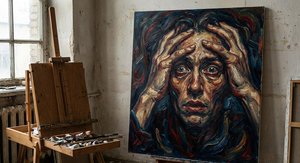
L'Expressionnisme Figuratif : Émotion Intense et Subjectivité au XXe Siècle
Explorez l'Expressionnisme Figuratif : ses origines, artistes clés (Kirchner, Die Brücke), thèmes puissants et impact durable sur l'art. Découvrez des reproductions de haute qualité sur OriginalUniqueArt.

Franz Marc: Expressionism, Spirituality & the Animal Symbolism of a Modern Master
Explore the profound world of Franz Marc's Expressionist paintings. Discover his spiritual connection to animals, innovative use of color, and lasting impact on modern art history. Learn more at OriginalUniqueArt.

The Raw Emotion of Expressionism: A Deep Dive into its History, Characteristics & Enduring Influence
Explore the raw emotion of Expressionism with OriginalUniqueArt. Discover its history, key artists like Kirchner & Munch, and lasting influence on modern art. Expert insights for collectors & enthusiasts.

Top 10 Œuvres d'Art Inspirant la Spiritualité |
Plongez au cœur de 10 œuvres d'art emblématiques qui inspirent la spiritualité et l'introspection. Découvrez les histoires, techniques & symbolisme des plus grands artistes (Van Gogh, Monet…) sur . Explorez notre collection en ligne !

Expressionnisme Allemand : 10 Chefs-d'œuvre Révolutionnaires à Découvrir | OriginalUniqueArt
Plongez au cœur de l'Expressionnisme Allemand avec OriginalUniqueArt. Découvrez 10 chefs-d'œuvre de Kandinsky, Munch et Kirchner. Explorez l'histoire, les couleurs et l'émotion derrière ces tableaux iconiques. Reproductions de qualité muséale disponibles sur OriginalUniqueArt.com


