- Accueil

- Impression sur toile
- Antonio Begarelli
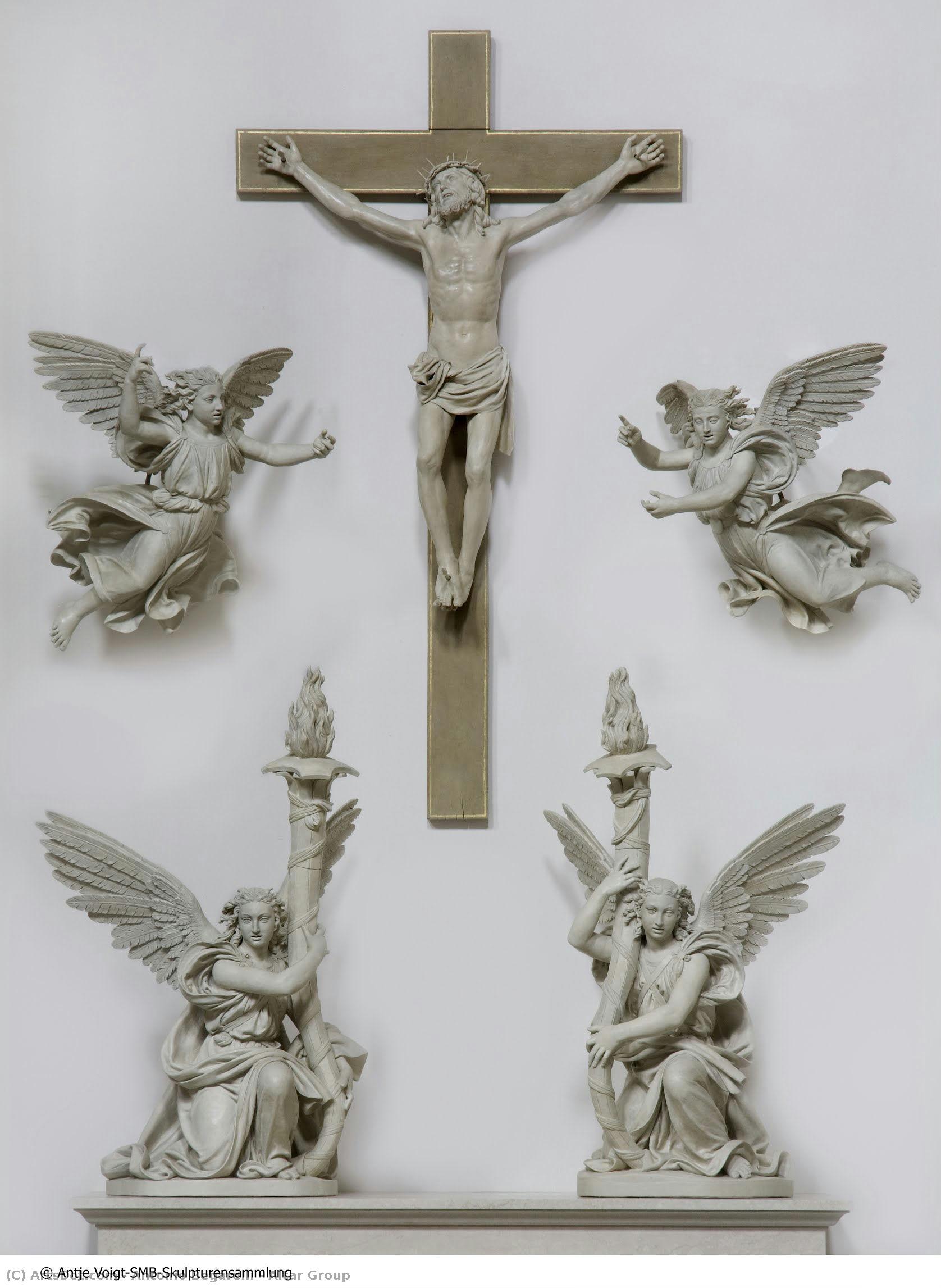
- Altar Group
 Commander la reproduction Acheter l'image haute résolution
 Partager
 Partager
 Détails de l'œuvre
 Ajouter aux favoris

 Télécharger
 Articles similaires
 Radiographie
 Diaporama
Altar Group

 Afficher la suite
Giclée / Impression d'art
Impression giclée ou sur toile de qualité musée, avec une production rapide et des finitions au choix.




































Choisissez parmi nos formats prédéfinis qui respectent les proportions originales de l’œuvre.

Vous pouvez saisir vos propres dimensions pour vous adapter à un cadre ou à un espace spécifique. Si la taille sélectionnée ne correspond pas aux proportions de l'image originale, nous recadrerons l'œuvre ou étendrons l'image avec une bordure en miroir ou une couleur unie. Une maquette numérique vous sera envoyée pour approbation avant le début de la production.
Veuillez noter que l'aperçu à l'écran ne reflète pas le recadrage ou l'extension réelle. Seule la maquette montrera avec précision la composition finale.
Bien que des tailles personnalisées soient disponibles, nous vous recommandons de choisir une dimension dans la liste prédéfinie afin de préserver les proportions originales.
Livraison dans le monde entier () en 2 semaines au lieu des 4/5 semaines habituelles. (22 juillet)

Livraison express gratuite dans le monde entier

Toile de lin de haute qualité

Assurance transport complète

Garantie de remboursement des frais de douane

Garantie de fidélité des couleurs

Politique de retour de 60 jours (uniquement en cas de défaut)

Garantie de remboursement à 100%

Réduction sur les achats groupés
 L'option verre n'est disponible que pour les dimensions inférieures à 110 cm.

Altar Group
Giclée / Impression d'art
Format de reproduction
-


Prix total final
-
Description de l'œuvre
Biographie de l'artiste
Antonio Begarelli: The Sculptor Who Replaced Paint
Antonio Begarelli (c. 1499 – 1565) stands as a singular figure in the artistic landscape of Renaissance Italy, particularly renowned for his pioneering approach to sculptural decoration—a deliberate substitution of painted panels with terracotta reliefs that fundamentally altered the aesthetic sensibilities of his time. Born in Modena, he emerged from the workshop of Giovanni dell’Abbate, Niccolò’s father, absorbing influences from the burgeoning realism championed by artists like Guido Mazzoni II Modanino. This stylistic shift marked a decisive break from prevailing conventions and cemented Begarelli's place as an innovator.Early Life & Training
Begarelli’s formative years were spent honing his craft under Giovanni dell’Abbate, immersing himself in the artistic currents of Modena during a period characterized by fervent religious fervor. The workshop of Giovanni dell’Abbate instilled in him a meticulous attention to detail and a deep understanding of classical sculptural principles—skills that would prove invaluable throughout his illustrious career. He absorbed the stylistic innovations of Guido Mazzoni II Modanino, whose masterful terracotta sculptures served as an inspiration for Begarelli's own artistic endeavors.Modena Workshops & The Terracotta Revolution
He established himself as a dominant sculptor in Modena, collaborating extensively with Mazzoni II Modanino and transforming churches throughout the region into spaces adorned with terracotta sculptures—a revolutionary technique that prioritized textural richness and sculptural presence over illusionistic color. This bold decision to abandon fresco for terracotta represented a radical departure from artistic tradition, elevating sculpture to a position of prominence previously reserved for painting. Begarelli’s ambition was not merely to depict religious narratives but to evoke profound emotion through the tactile qualities of the material itself—a testament to his visionary understanding of art's expressive potential.Parma Patronage & Artistic Connections
Begarelli’s reputation extended beyond Modena when he secured commissions from Parma’s aristocratic elite, furthering his artistic explorations and solidifying his position as one of Italy’s most sought-after sculptors. While speculation persists regarding a connection between Begarelli and Raphael (Correggio), scholarly consensus suggests their stylistic differences—Begarelli favoring earthy tones and monumental scale—demonstrate distinct artistic trajectories. Despite the absence of direct collaboration, Begarelli undoubtedly benefited from the intellectual climate fostered by Correggio’s humanist ideals, shaping his artistic vision and contributing to the broader Renaissance aesthetic movement.A Unique Sculptural Style: Terra Cotta & Marble Illusion
Begarelli’s distinctive style distinguished him from his contemporaries, notably Correggio. Unlike Correggio's ethereal frescoes employing sfumato techniques to create atmospheric depth and illusionistic perspective, Begarelli opted for terracotta—a readily available material—to achieve a strikingly realistic effect. He skillfully employed white pigment to mimic the appearance of marble, elevating the sculptural reliefs to levels of grandeur and sophistication previously unattainable through painting alone. Giorgio Vasari famously remarked that Michelangelo considered Begarelli’s terracotta sculptures “most excellent productions,” highlighting their impact on artistic discourse. The deliberate use of terracotta contrasted sharply with Correggio's mastery of fresco, emphasizing sculptural form and texture over optical illusion—a conscious decision that reflected Begarelli’s unwavering commitment to conveying emotion through material itself.Notable Achievements & Legacy
Begarelli’s enduring legacy resides in his monumental terracotta sculptures adorning churches throughout Modena and Parma, particularly “Deposition” (1530) and “Altar Group,” which exemplify the pinnacle of Renaissance sculptural achievement. His contribution to artistic history is undeniable—he ushered in a transformative era where sculpture supplanted painting as the dominant medium for religious decoration, forever altering the visual culture of his time. He remains an artist whose innovative spirit continues to inspire admiration and scholarly inquiry centuries later.
Antonio Begarelli
1490 - 1565 , Italie
En bref
- Artistic Movement Or Style: Renaissance tardive
- Artists Or Movements Influenced By This Artist: ['Guido Mazzoni']
- Artists Who Influenced This Artist: ['Giovanni dell’Abbate']
- Date Of Birth: ca. 1499
- Date Of Death: 1565
- Full Name: Antonio Begarelli
- Nationality: Italien
- Notable Artworks:
- Déposition
- Groupe d'autel
- Place Of Birth: Modena, Italie

