 Aperçu en situation
 Envoyer
 Partager
 Détails de l'œuvre
 Guide
Guide

 Télécharger l'image
 Articles similaires
 Radiographie
 Diaporama
 Q&A
Q&A Statistiques
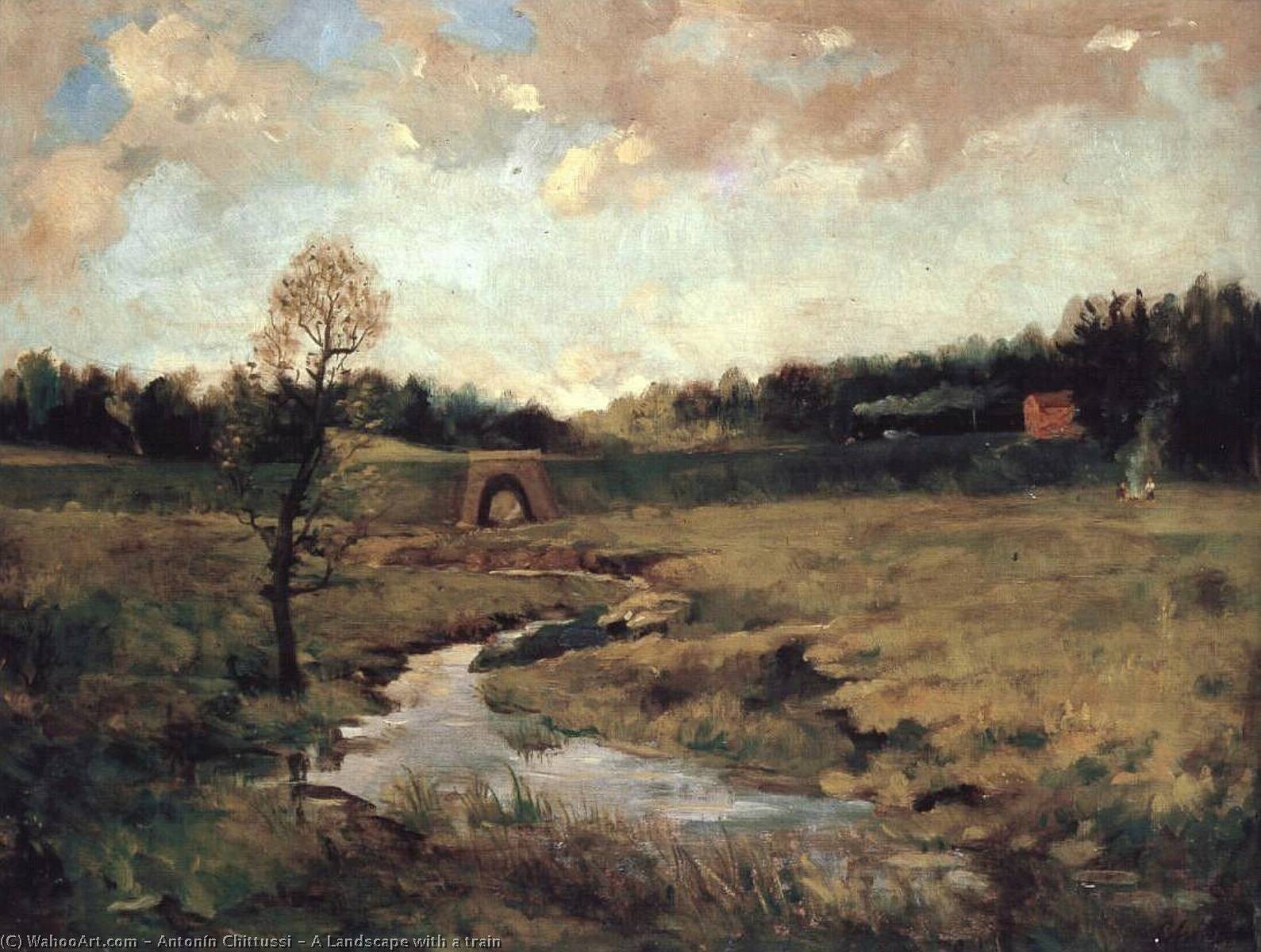
A Landscape with a train

- 30.0 x 41.0 cm


 Lire la suite
Giclées et impressions d'art
Impressions giclées ou sur toile de qualité musée, avec une production rapide et des finitions au choix. ( Commander la reproduction peinte à la main Passer au format numérique)




































Choisissez parmi nos formats prédéfinis qui respectent les proportions originales de l’œuvre.

Saisissez la largeur et la hauteur souhaitées pour qu'elles s'adaptent à votre cadre ou à votre mur. Une impression peut être recadrée, mais jamais agrandie au-delà de l'image originale ; ainsi, un format de forme différente entraînera la perte d'une partie de l'image. Nous vous envoyons une maquette numérique pour approbation avant toute impression. L'image présentée sur cette page ne montre pas le recadrage réel — seule la maquette le permet.
Livraison dans le monde entier () en 2 semaines au lieu des 4/5 semaines habituelles. (31 octobre)

Livraison express gratuite dans le monde entier

Toile de lin de qualité supérieure

Assurance transport complète

Garantie de remboursement des droits de douane

Garantie de fidélité des couleurs

Politique de retour de 100 jours (uniquement en cas de défaut)

Garantie de remboursement à 100%

Offre de tarifs dégressifs
 L'option verre n'est disponible que pour les dimensions inférieures à 110 cm.

A Landscape with a train
Giclées et impressions d'art
Format de la reproduction
-


Prix total
€ 71
Biographie de l'artiste
Antonín Chittussi (1847–1891): Bridging Barbizon and Parisian Impressionism
Antonín Chittussi (1 December 1847 in Ronov nad Doubravou – 1 May 1891, Prague) was a Czech Impressionist landscape and cityscape painter whose artistic vision seamlessly blended the traditions of the Barbizon School with the burgeoning dynamism of Parisian Impressionism. Born into a family of merchants who migrated to Bohemia during Napoleon’s invasion, Chittussi possessed an innate talent for art recognized early by his teachers at Čáslav Grammar School, propelling him towards a formal education in Kutná Hora under František Bohumír Zwěřina. This formative period instilled in him a foundational understanding of drawing techniques and artistic principles that would underpin his subsequent oeuvre. At eighteen, Chittussi embarked on a journey to Prague with aspirations of pursuing engineering studies; however, he swiftly redirected his energies towards the Academy of Fine Arts, where he found himself disillusioned by its academic rigidity. Seeking inspiration beyond the confines of Prague’s art scene, he traveled to Munich, encountering a more experimental artistic environment that challenged his preconceived notions. Despite brief stints at the academy and military service, Chittussi returned to Prague determined to refine his craft, focusing primarily on landscape painting—a genre profoundly influenced by the Barbizon School's emphasis on tonal harmonies and atmospheric perspective. This dedication to capturing the subtleties of light and color would become a hallmark of his distinctive style. The pivotal moment in Chittussi’s artistic trajectory arrived in 1876 when he participated in a student protest against Alfred Woltmann, a professor at Charles University who espoused nationalist sentiments deemed offensive to Czech sensibilities. This courageous act resulted in his expulsion from the academy following a police investigation and five days of imprisonment alongside Mikoláš Aleš—the organizers of the demonstration—marking a significant setback yet simultaneously galvanizing him into pursuing independent artistic endeavors. He secured employment illustrating for Česká Včela (The Czech Bee) and other periodicals, fostering connections within Prague’s patriotic social circles and attracting the patronage of František August Brauner, a prominent member of the Imperial Council. Notably, Brauner's daughter, Zdenka, served as an influential mentor, introducing Chittussi to the stylistic innovations of the Barbizon School. By 1877, Chittussi established a studio with František Ženíšek, cementing his commitment to landscape painting and furthering his artistic exploration. This collaborative venture allowed him to hone his skills and develop a distinctive visual language characterized by luminous color palettes and meticulous attention to detail—traits characteristic of both Barbizon and Impressionist aesthetics. His paintings depict serene vistas of Bohemian countryside alongside urban scenes capturing the essence of Prague’s bustling life, reflecting the broader cultural currents shaping late nineteenth-century Bohemia. He produced iconic works such as “A Landscape with a Quarry at Champigny” and “A Landscape with a train,” demonstrating his mastery of tonal painting and atmospheric perspective—techniques borrowed directly from the Barbizon masters but skillfully adapted to convey Impressionist sensations. Chittussi's artistic legacy extends beyond his individual works; he championed Czech art and culture during a period marked by national revival. He actively engaged in debates surrounding artistic expression and intellectual freedom, demonstrating unwavering conviction in upholding liberal values. His paintings continue to resonate with viewers today, offering glimpses into a bygone era while simultaneously embodying the enduring beauty of Impressionist landscape painting—a testament to Chittussi’s profound contribution to Czech art history.
Antonín Chittussi
1847 - 1891 , République tchèque
L'essentiel de l'artiste
- Artistic Movement Or Style: Impressionism
- Artists Or Movements Influenced By This Artist: ['Parisian styles']
- Artists Who Influenced This Artist:
- František Bohumír Zwěřina
- Barbizon School
- Date Of Birth: 1847
- Date Of Death: 1891
- Full Name: Antonín Chittussi
- Nationality: Czech
- Notable Artworks:
- A Landscape with a Quarry at Champigny
- A Landscape with a train
- Place Of Birth: Ronov nad Doubravou, Bohemia