Aperçu en situation
 Partager
 Partager
 Détails
 Guide imprimable

 Télécharger
 Articles similaires
 Radiographie
 Voir le diaporama
 Statistiques
The Adoration of the Shepherds


 Afficher la suite
Giclées et impressions d'art
Impressions giclées ou sur toile de qualité musée, avec une production rapide et des finitions au choix. ( Acheter la peinture faite à la main Passer au format image numérique)




P118B $10

P118H $10

P118W $10

P438Z $10

P508JH $12

P508YH $12

P805H $10

P805Z $10

P919BZ $10

P919G $10

P919XJ $10

P959ZH $10

P968JZ $12

W106C $8

W218G $10

W218JH $8

W218Y $10

W307PJ $10

W316G $10

W316PJ $8

W316Y $10

W398PJ $8

W4111J $10

W500HY $15

W500JH $15

W692G $12

W849H $8

W940BG $15

W953PJ $8




Choisissez parmi nos formats prédéfinis qui respectent les proportions originales de l’œuvre.

Vous pouvez saisir vos propres dimensions pour vous adapter à un cadre ou à un espace spécifique. Si la taille sélectionnée ne correspond pas aux proportions de l'image originale, nous recadrerons l'œuvre ou étendrons l'image avec une bordure en miroir ou une couleur unie. Une maquette numérique vous sera envoyée pour approbation avant le début de la production.
Veuillez noter que l'aperçu à l'écran ne reflète pas le recadrage ou l'extension réelle. Seule la maquette montrera avec précision la composition finale.
Bien que des tailles personnalisées soient disponibles, nous vous recommandons de choisir une dimension dans la liste prédéfinie afin de préserver les proportions originales.
Livraison dans le monde entier () en 2 semaines au lieu des 4/5 semaines habituelles. (26 septembre)

Livraison express gratuite dans le monde entier

Toile de lin de haute qualité

Assurance transport complète

Garantie de remboursement des droits de douane

Garantie de fidélité des couleurs

Garantie de retour de 100 jours (uniquement en cas de défaut)

Garantie de remboursement à 100%

Tarifs dégressifs sur quantité
 L'option verre n'est disponible que pour les dimensions inférieures à 110 cm.

The Adoration of the Shepherds
Giclées et impressions d'art
Format de la reproduction
-


Prix total final
$ 80
A Celestial Radiance in the Shadows
In the quiet, shadowed depths of a wooden stable, a singular, celestial light breaks through the gloom, illuminating a moment of profound spiritual intimacy. Anton Raphael Mengs’ “The Adoration of the Shepherds,” completed in 1770, is far more than a mere depiction of a biblical event; it is a breathtaking study in contrast and devotion. As the eye wanders through the composition, it is immediately drawn to the radiant glow emanating from the infant Jesus, whose very presence serves as the sun within this nocturnal landscape. This light spills across the faces of the gathered shepherds and the tender features of the Virgin Mary, casting long, dramatic shadows that evoke the heavy, emotional atmosphere of the late Baroque era transitioning into Neoclassical clarity.
The scene unfolds as a tapestry of human emotion and divine grace. Mary sits with a quiet, ethereal dignity, her azure-blue mantle and lavender robes providing a cool counterpoint to the warm, golden light of the manger. Her eyes, shimmering with the threat of tears, reflect a maternal tenderness that is both deeply human and divinely moved. Beside her, the weathered face of Joseph, with his furrowed brow and silver beard, offers a grounded, protective presence. The shepherds, ranging from wide-eyed youths to seasoned men, surround the holy family with expressions of awe, their rugged features sculpted by Mengs’ masterful use of chiaroscuro.
The Intersection of Baroque Drama and Classical Order
Meticulously executed, the painting stands as a monumental testament to the artistic fervor of the Rococo era transitioning into the burgeoning Classical movement. Mengs, a pivotal figure in European art, employed Baroque principles—prioritizing dramatic lighting reminiscent of Caravaggio—to sculpt his figures with palpable volume and intensity. Yet, beneath this dramatic surface lies a burgeoning Neoclassical restraint. The composition is balanced and purposeful, reflecting the Enlightenment preoccupation with moral virtue and clarity.
Commissioned for the private chapel of Charles III, King of Spain, this altarpiece was born from a moment of significant political and cultural shifting. During a period when Spain sought to reaffirm its cultural prestige, Mengs’ decision to depict shepherds—symbols of humility and piety—aligned perfectly with the era's intellectual currents. The inclusion of a loyal dog on the periphery serves as a subtle yet profound symbol of vigilance and faithfulness, anchoring the divine event within a recognizable, earthly reality.
A Masterpiece for the Discerning Collector
For the art lover or interior designer, "The Adoration of the Shepherds" offers an unparalleled sense of warmth and spiritual illumination. The palette, dominated by golden yellows and rich reds, creates an atmosphere of opulent grandeur that can transform any space, lending it a sense of historical depth and contemplative peace. Every element, from the symbolic hay in the manger representing the incarnation to the angelic guardians watching from above, is designed to evoke feelings of reverence and devotion.
Owning a high-quality reproduction of this masterpiece allows one to bring the profound emotional impact of Mengs’ vision into a contemporary setting. Whether placed in a private study, a grand salon, or a dedicated chapel space, the painting serves as a focal point of light and narrative complexity. It is an invitation to pause, to look beyond the shadows, and to find beauty in the interplay of light and darkness, much like the shepherds who first discovered the divine radiance in the heart of the night.
Biographie de l'artiste
Anton Raphael Mengs : Pionnier de la peinture néoclassique
- Né: 22 mars 1728, Ústí nad Labem (Aussig), Bohême (aujourd'hui République tchèque)
- Décédé: 29 juin 1779, Rome, Italie
Anton Raphael Mengs était un peintre germano-bohème qui a considérablement influencé la transition de la peinture rococo à la peinture néoclassique. Actif principalement à Rome, Madrid et en Saxe, son œuvre incarne un mélange de grandeur baroque avec des idéaux classiques émergents, ce qui en fait une figure cruciale dans l'art du XVIIIe siècle.
Jeunesse et Formation : L’Ombre d’Ismael Mengs
Le parcours artistique de Mengs a commencé sous la tutelle de son père, Ismael Mengs, un peintre danois qui s'était installé à Dresde. Ismael reconnut tôt le talent de son fils et l'emmena à Rome en 1741. Cette expérience formatrice impliqua la copie d’œuvres de Raphaël pour l'Électeur de Saxe, façonnant profondément les sensibilités esthétiques d'Anton Raphael. L'exposition à la maîtrise de Raphaël lui a insufflé une profonde appréciation des formes et compositions classiques, qui deviendront les marques de son propre style.
Carrière Artistique : Fresques, Portraits et Idéaux Classiques
La carrière de Mengs s’est épanouie à travers plusieurs cours européens. En 1749, il fut nommé premier peintre auprès de Frédéric Auguste, Électeur de Saxe, un poste qui lui a procuré un considérable patronage tout en lui permettant de maintenir sa base romaine. Son œuvre la plus célèbre est sans doute la fresque du Parnasse à Villa Albani à Rome, qui a suscité une large reconnaissance et a consolidé sa réputation d'artiste de premier plan. D’autres commandes importantes comprenaient une superbe fresque sur le dôme de l'église Sant'Eusebio à Rome, démontrant ses compétences en décoration monumentale, et le plafond de la salle de banquet du Palais Royal de Madrid, considéré comme l'une de ses réalisations les plus abouties.
- Œuvres Notables : Parnasse (Villa Albani), fresques à Sant’Eusebio, plafond de la Salle de Banquet (Palais Royal, Madrid), Johann Joachim Winckelmann (1717–1768)
Bien qu'influencé par la tradition baroque romaine, Mengs a de plus en plus embrassé les idéaux de l’Antiquité classique. Ce changement a été considérablement stimulé par sa collaboration étroite avec Johann Joachim Winckelmann, un éminent historien de l'art et théoricien qui a défendu le renouveau des esthétiques grecques et romaines. Ensemble, ils ont plaidé pour un retour à la simplicité, à la clarté et aux formes idéalisées dans l’art, jetant les bases du mouvement néoclassique.
Aspects Clés & Rivalités
- Conversion et Rôle au Vatican : Mengs se convertit au catholicisme en 1754 et devint par la suite directeur de l'École de peinture du Vatican, consolidant ainsi sa position au sein de l’élite artistique.
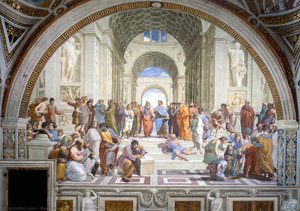
- L’École d’Athènes : Il peignit "L'École d'Athènes" pour le duc de Northumberland (aujourd'hui au Victoria and Albert Museum), une œuvre importante démontrant sa maîtrise des thèmes et compositions classiques.
- Collaboration avec Winckelmann : Son partenariat avec Winckelmann a été déterminant dans la formation des principes artistiques néoclassiques.
- Rivalité & Amitié : Mengs a connu à la fois des rivalités (en particulier avec Pompeo Batoni) et des amitiés (avec Giacomo Casanova), reflétant les dynamiques complexes de la scène artistique romaine à son époque.
Héritage et Importance Historique
Anton Raphael Mengs est décédé à Rome en 1779, laissant derrière lui un corpus important d'œuvres qui comblaient le fossé entre les styles baroque et néoclassiques. Son insistance sur les idéaux classiques, combinée à ses compétences techniques, a fait de lui une figure essentielle dans le développement du néoclassicisme. Il est rappelé non seulement pour ses impressionnantes fresques et portraits, mais aussi pour ses contributions intellectuelles à la théorie de l'art grâce à sa collaboration avec Winckelmann. Son influence peut être observée chez les générations d’artistes suivantes qui ont embrassé la clarté, l’ordre et les formes idéalisées qui caractérisaient la peinture néoclassique.

Anton Raphael Mengs
1728 - 1779 , République tchèque
En bref
- Artistes Influents: ['Raphaël']
- Date De Décès: 29 juin 1779
- Date De Naissance: 22 mars 1728
- Influence Sur Les Artistes: ['Peinture néoclassique']
- Lieu De Naissance: Ústí nad Labem, République tchèque
- Mouvement Artistique: Peinture néoclassique
- Nationalité: Germanico-bohème
- Nom Complet: Anton Raphael Mengs
- Oeuvres Notables:
- Parnasse (Villa Albani)
- École d'Athènes
Articles similaires
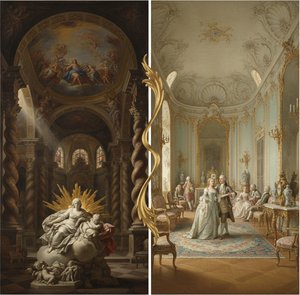
From Grandeur to Grace: Exploring the Evolution of Baroque & Rococo Art
Explore the captivating evolution from Baroque's drama to Rococo's grace! Discover key artists, characteristics & lasting influence of these art movements with expert insights at OriginalUniqueArt.
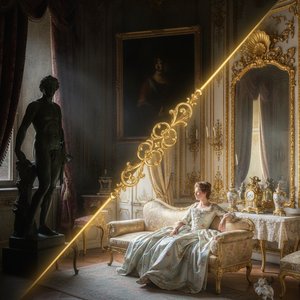
Baroque vs. Rococo: A Definitive Guide to High-Drama Shadows and Golden Elegance
Explore the dramatic evolution from Baroque's intense chiaroscuro to Rococo's golden elegance. Our expert guide decodes the shift from high-drama shadows to playful, ornate grace for art enthusiasts and collectors seeking deep historical insight.

Baroque vs. Rococo: A Definitive Guide to the Drama of Grandeur and the Elegance of Grace
Explore the profound differences between Baroque drama and Rococo elegance. Our expert guide delves into art history, chiaroscuro, and the evolution of European masterpieces for collectors and enthusiasts seeking deep historical context.
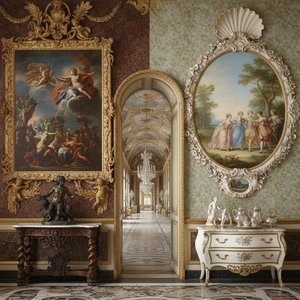
Drama & Delight: A Journey Through the Grandeur of Baroque and Rococo Art
Embark on a cultural journey through the dramatic grandeur of Baroque and the delicate grace of Rococo art. Discover the history, techniques, and timeless beauty of these magnificent eras with our expert-led exploration of European masterpieces.

Giclée Prints: Archival Quality & Aesthetic Nuances for the Discerning Collector
Explore the world of giclée prints with OriginalUniqueArt. Learn about archival quality, aesthetic nuances & investment potential. Expert guidance for discerning art collectors seeking museum-quality reproductions and lasting value.