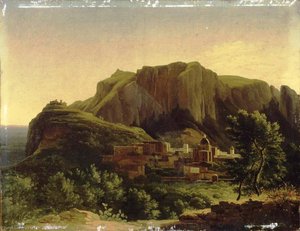
Aperçu en situation
 Partager
 Partager
 Détails
 Guide imprimable

 Télécharger
 Articles similaires
 Radiographie
 Voir le diaporama
 Statistiques
Le Barde


 Afficher la suite
Giclées et impressions d'art
Impressions giclées ou sur toile de qualité musée, avec une production rapide et des finitions au choix. ( Acheter la peinture faite à la main Passer au format image numérique)




P118B €10

P118H €10

P118W €10

P438Z €10

P508JH €12

P508YH €12

P805H €10

P805Z €10

P919BZ €10

P919G €10

P919XJ €10

P959ZH €10

P968JZ €12

W106C €8

W218G €10

W218JH €8

W218Y €10

W307PJ €10

W316G €10

W316PJ €8

W316Y €10

W398PJ €8

W4111J €10

W500HY €15

W500JH €15

W692G €12

W849H €8

W940BG €15

W953PJ €8




Choisissez parmi nos formats prédéfinis qui respectent les proportions originales de l’œuvre.

Saisissez la largeur et la hauteur souhaitées pour qu'elles s'adaptent à votre cadre ou à votre mur. Une impression ne peut être que découpée, elle ne peut jamais être agrandie au-delà de l'image originale ; ainsi, un format de forme différente entraînera la perte d'une partie de l'image. Nous vous envoyons une maquette numérique pour approbation avant toute impression. L'image présentée sur cette page ne montre pas le recadrage réel — seule la maquette le permet.
Livraison dans le monde entier () en 2 semaines au lieu des 4/5 semaines habituelles. (25 octobre)

Livraison express gratuite dans le monde entier

Toile de lin de haute qualité

Assurance transport complète

Garantie de remboursement des droits de douane

Garantie de fidélité des couleurs

Garantie de retour de 100 jours (uniquement en cas de défaut)

Garantie de remboursement à 100%

Tarifs dégressifs sur quantité
 L'option verre n'est disponible que pour les dimensions inférieures à 110 cm.

Le Barde
Giclées et impressions d'art
Format de la reproduction
-


Prix total final
€ 70
A Vision of Myth and Melancholy: Unveiling Girodet’s “Le Barde”
Anne-Louis Girodet de Roussy-Trioson's "Le Barde" (The Bard), painted in 1806, isn’t merely a portrait; it’s a carefully constructed tableau vivant—a frozen moment of dramatic narrative and profound emotional resonance. This captivating work, now housed at the California Palace of the Legion of Honor, stands as a pivotal bridge between the rigid formality of Neoclassicism and the burgeoning, intensely personal expression of Romanticism. Girodet, a student deeply influenced by Jacques-Louis David yet yearning to break free from his teacher’s constraints, masterfully employs light, color, and gesture to evoke a scene brimming with both beauty and underlying sorrow.
The composition immediately draws the eye to a central female figure, seemingly poised on a rocky precipice. Her long hair cascades around her face, partially veiled by a delicate white veil—a subtle nod to angelic figures yet imbued with an undeniable earthly vulnerability. She’s clearly engaged in song or perhaps playing a musical instrument, though the details are deliberately obscured, inviting speculation and fueling the painting's inherent mystery. Around her gather a diverse group of onlookers: some appear captivated by her performance, others seem lost in contemplation, while a few stand with expressions of quiet concern. The figures aren’t sharply defined; instead, they blend into the background, contributing to the overall atmosphere of dreamlike ambiguity.
The Language of Light and Shadow – Girodet's Technique
Girodet’s technical prowess is immediately apparent in his masterful manipulation of light. He employs a dramatic chiaroscuro—a stark contrast between light and shadow—to sculpt the forms and heighten the emotional impact. The central figure is bathed in a soft, diffused glow, while the surrounding figures are rendered in cooler tones, creating a sense of depth and emphasizing her isolation. His brushwork is remarkably smooth and precise, particularly noticeable in the rendering of fabrics and textures – the folds of the woman’s dress, the rough surface of the rocks beneath her feet. Yet, there's also an underlying fluidity to his application of paint, hinting at the emotional turbulence simmering beneath the surface of the scene.
The color palette is restrained but evocative—primarily consisting of muted browns, grays, and blues, punctuated by flashes of white and gold. This subdued range contributes to the painting’s melancholic mood, suggesting a sense of loss or regret. Girodet's meticulous attention to detail extends beyond mere representation; he uses color to subtly convey atmosphere and psychological states.
A Romantic Echo – Symbolism and Narrative
“Le Barde” is rich in symbolic meaning, reflecting the core tenets of Romanticism—a movement that prioritized emotion, imagination, and individualism. The veiled figure can be interpreted as a representation of lost innocence or forgotten beauty, while the gathering onlookers symbolize the fleeting nature of human connection and the inevitability of time’s passage. The rocky setting itself evokes themes of isolation, vulnerability, and the precariousness of existence. There's an undeniable air of tragedy woven into the scene—a sense that something precious is being lost or has already been lost.
Furthermore, the painting subtly references classical mythology. The figure’s posture and expression evoke images of ancient bards and storytellers, suggesting a connection to timeless narratives and universal human experiences. The inclusion of diverse figures—representing various social classes and emotional states—adds another layer of complexity to the scene, inviting viewers to contemplate the multifaceted nature of human life.
A Legacy of Emotion – Girodet’s Place in Art History
Anne-Louis Girodet de Roussy-Trioson's “Le Barde” stands as a testament to his unique artistic vision—a synthesis of Neoclassical precision and Romantic emotionalism. He wasn’t simply replicating the world; he was interpreting it through the lens of his own deeply felt experiences. This painting, along with many others, demonstrates his ability to capture not just appearances but also the intangible essence of human emotion. It's a poignant reminder that art can be both beautiful and profoundly moving—a window into the complexities of the human heart.
Questions et réponses
Quelle atmosphère «Le Barde» de Anne-Louis Girodet apporte-t-il à un intérieur ?
L'atmosphère Romantic de «Le Barde» de Anne-Louis Girodet s'accorde parfaitement avec l'espace recommandé : un(e) Living Room.
Dans quelle pièce est-il suggéré d'exposer « Le Barde », compte tenu de sa palette ?
Les couleurs Earthy de «Le Barde» de Anne-Louis Girodet s'accordent parfaitement avec l'espace recommandé : une Living Room.
Quelle nuance dominante traverse «Le Barde» de Anne-Louis Girodet ?
«Le Barde» tend vers une nuance Golden Yellow Range.
Biographie de l'artiste
Anne-Louis Girodet de Roussy-Trioson : Pionnier du Romantisme
- Né: Montargis, France (1767)
- Décédé: 1824
Jeunesse et Formation
Le parcours de Girodet a commencé à Montargis, en France. Dès son plus jeune âge, il a démontré une aptitude au dessin, étudiant d'abord l'architecture avant de se tourner vers la peinture sous la direction de Luquin. Il entra ensuite dans l'atelier de Jacques-Louis David, figure de proue de l'art néoclassique. Cette formation lui a inculqué une maîtrise de la forme et de la composition caractéristique de cette époque. Un jalon important fut sa victoire au concours Prix de Rome à l’âge de 22 ans avec un tableau représentant l'histoire de Joseph et ses frères. Son séjour en Italie (1789-1793) s'est avéré crucial, donnant naissance à des œuvres telles que *Hippocrate refusant les présents d'Artaxerxes* et *Endymion-dormant*, qui ont rencontré un grand succès au Salon de 1793.Style Artistique et Œuvres Notables
Le style de Girodet se définit par sa clarté, sa précision et son utilisation dramatique de la lumière et de l'ombre. Bien qu’ancré dans les principes néoclassiques, son œuvre a commencé à présenter des caractéristiques annonçant le romantisme : une intensité émotionnelle accrue et une volonté d'explorer des sujets non conventionnels. Parmi ses œuvres les plus notables figurent :- *Scène de déluge* (Le Déluge) : Une toile monumentale démontrant sa capacité à représenter une action et une émotion dramatiques.
- *Atala au tombeau* : Un portrait poignant d'une figure tragique, illustrant son aptitude à évoquer le pathos et la beauté.
- *Pygmalion et Galatée* : Cette œuvre ambitieuse, qui lui a pris huit ans à réaliser, exemplifie son souci du détail méticuleux et son exploration des thèmes mythologiques. Elle est aujourd'hui conservée au Louvre.
- Portraits de membres de la famille Bonaparte : Ces portraits révèlent son talent pour capturer l’essence de ses sujets tout en adhérant aux conventions du portrait néoclassique.
- *La révolte du Caire* : Une représentation dynamique d'un événement historique, démontrant sa capacité à transmettre l'action et l'émotion.
Influence et Héritage
La contribution de Girodet au mouvement romantique naissant est indéniable. Sa volonté d’incorporer l’érotisme dans ses peintures a remis en question les normes artistiques et a ouvert la voie à des artistes ultérieurs pour explorer des thèmes similaires avec une plus grande liberté. Il était un membre respecté de l'Académie de peinture et de l'Institut de France, recevant des honneurs dont la Légion d’honneur. Bien qu’il ait parfois été éclipsé par ses contemporains comme David, le mélange unique de Girodet entre la précision néoclassique et la sensibilité romantique a assuré sa place dans l'histoire de l'art. Ses œuvres se trouvent dans des musées prestigieux tels que le Musée du Château et le Louvre, et sont accessibles sur des plateformes telles que OriginalUniqueArt.com. Il a laissé derrière lui un héritage d’innovation artistique et un témoignage de la transition du néoclassicisme au romantisme dans la peinture française.
Anne-Louis Girodet
1767 - 1824 , France
En bref
- Artistes Influents: ['Jacques-Louis David']
- Date De Décès: 9 décembre 1824
- Date De Naissance: 29 janvier 1767
- Lieu De Naissance: Montargis, France
- Mouvement Artistique: Néoclassicisme & Romantisme
- Mouvements Influencés: ['Premier mouvement romantique']
- Nationalité: Française
- Nom Complet: Anne-Louis Girodet de Roussy
- Oeuvres Notables:
- Hippocrate refusant les présents
- Endymion-dormant
- Scène de déluge
- Atala au tombeau
- La révolte du Caire
- Pygmalion et Galatée
Articles connexes
Harmonies on Canvas: Exploring the Visual Representation of Music in Art History
Explore the fascinating history of music's visual representation in art! From ancient symbolism to modern abstraction, discover how artists have captured sound and emotion on canvas. Expert insights & stunning examples.

James Bard: Navigating Light & Landscape in American Impressionism
Explore the captivating world of James Bard (1815-1897), a meticulous chronicler of 19th-century American maritime life. Discover his detailed steamboat paintings and lasting legacy within the American Impressionism movement.
Romantisme : Les 10 Chefs-d'œuvre Incontournables pour une Déco Inspirée
Plongez au cœur du Romantisme avec les 10 œuvres majeures de Delacroix, Goya et Turner. Découvrez l'histoire, la technique & l'émotion derrière ces chefs-d'œuvre. Reproductions d'art exceptionnelles sur

Anne-Louis Girodet: Bridging Neoclassicism & Romanticism with Emotional Truth
Explore the captivating world of Anne-Louis Girodet, a pivotal figure bridging Neoclassicism & Romanticism. Discover his masterpieces and unique artistic vision with OriginalUniqueArt.

The Symphony of Canvas: Capturing the Timeless Resonance of Musical Instruments in Fine Art Masterpieces
Explore the profound connection between music and fine art. From ancient iconography to Impressionist masterpieces, discover how legendary instruments are captured on canvas with unparalleled artistry and historical depth for the discerning collector.