
 Envoyer
 Partager
 Détails de l'œuvre

 Télécharger
 Articles similaires
 Diaporama
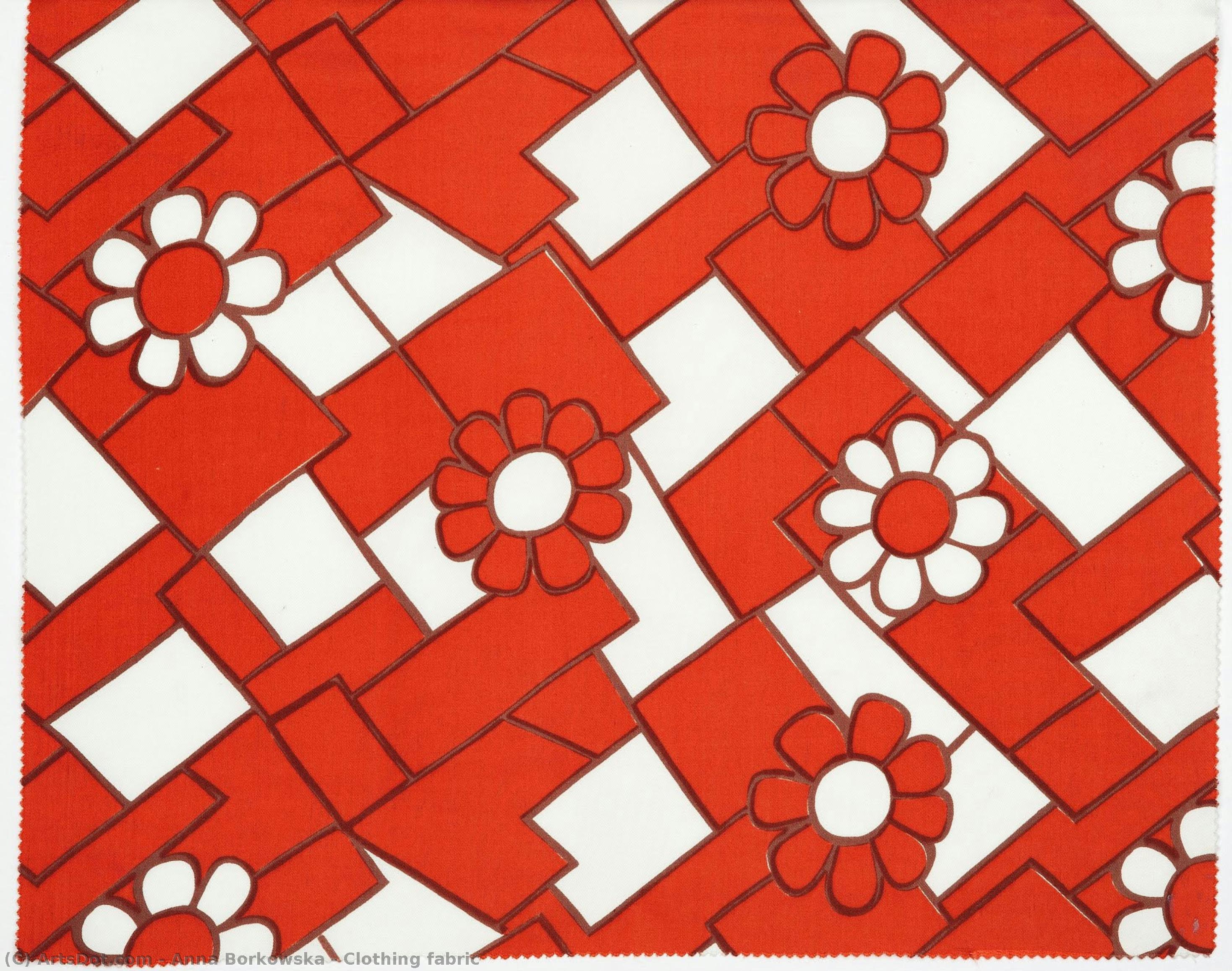
Clothing fabric


 Lire la suite
Giclées et impressions d'art
Impressions giclées ou sur toile de qualité musée, avec une production rapide et des finitions au choix. ( Commander la reproduction peinte à la main Télécharger l'image haute résolution)




































Choisissez parmi nos formats prédéfinis qui respectent les proportions originales de l’œuvre.

Vous pouvez saisir vos propres dimensions pour vous adapter à un cadre ou à un espace spécifique. Si la taille sélectionnée ne correspond pas aux proportions de l'image originale, nous recadrerons l'œuvre ou étendrons l'image avec une bordure en miroir ou une couleur unie. Une maquette numérique vous sera envoyée pour approbation avant le début de la production.
Veuillez noter que l'aperçu à l'écran ne reflète pas le recadrage ou l'extension réelle. Seule la maquette montrera avec précision la composition finale.
Bien que des tailles personnalisées soient disponibles, nous vous recommandons de choisir une dimension dans la liste prédéfinie afin de préserver les proportions originales.
Livraison dans le monde entier () en 2 semaines au lieu des 4/5 semaines habituelles. (18 août)

Livraison express gratuite dans le monde entier

Toile de lin de qualité supérieure

Assurance transport complète

Garantie de remboursement des droits de douane

Garantie de fidélité des couleurs

Politique de retour de 60 jours (uniquement en cas de défaut)

Garantie de remboursement à 100%

Offre de tarifs dégressifs
 L'option verre n'est disponible que pour les dimensions inférieures à 110 cm.

Clothing fabric
Giclées et impressions d'art
Format de la reproduction
-


Prix total
$ 80
Description de la pièce
The Rhythm of Pattern and Memory
In the delicate interplay of color and form found within Anna Borkowska’s Clothing fabric, we encounter more than just a textile design; we enter a rhythmic meditation on order and vitality. Created in 1970, this piece serves as a captivating study of repetition, where bold red squares act as anchors amidst a sea of pristine white. Each square is meticulously outlined in black, creating a sharp, graphic boundary that contains the soft, stylized blossoms within. These flowers, with their vibrant red centers, appear to dance across the fabric, offering a sense of organic movement that softens the geometric rigidity of the grid. The seamless repetition of the pattern suggests an infinite loop, inviting the viewer to lose themselves in the hypnotic cadence of the design.
The technique employed here speaks to a profound mastery of decorative simplicity. While the visual language is straightforward and documentary in its clarity, there is an underlying complexity in how Borkowska balances contrast and texture. The visible weave of the material adds a tactile dimension to the work, grounding the abstract pattern in the physical reality of cloth. This interplay between the stark, bold pigments and the soft, woven substrate creates a sensory experience that is both visually striking and physically comforting. For the collector or interior designer, this piece offers a unique opportunity to introduce a sense of structured elegance into a space, acting as a sophisticated focal point that bridges the gap between fine art and functional ornament.
A Legacy Woven in Resilience
To truly appreciate the soul of this work, one must look through the lens of Borkowska’s extraordinary life. Born in Mykolaiv and shaped by the harrowing displacements of World War II and Soviet exile, her artistry was never merely decorative; it was an act of reclamation. For an artist who had experienced the fragmentation of home and identity, the creation of a seamless, unbroken pattern can be viewed as a powerful symbolic gesture toward stability and continuity. The red and white motifs, while appearing cheerful and bright, carry the weight of a life dedicated to finding beauty amidst upheaval. Each repetitive square becomes a stitch in the larger tapestry of her memory, a way to reconstruct a sense of order in a world that had once been profoundly chaotic.
Integrating a high-quality reproduction of this textile into a contemporary interior provides more than just aesthetic appeal; it brings a narrative of endurance and grace. Whether showcased as a framed textile art piece or used as inspiration for bespoke upholstery, Clothing fabric resonates with an emotional depth that transcends its graphic nature. It is a piece that speaks to the heart of anyone who finds beauty in the small, recurring wonders of life—the way a single flower can bloom within a structured world, and how even the most fragmented histories can be woven back into a beautiful, cohesive whole.
Biographie de l'artiste
Anna Borkowska: Threads of Memory and Resilience
Anna Borkowska (1916 – 2008) emerged from the crucible of Soviet exile, forging a distinctive artistic path rooted in textile art—a medium that served as both a reflection of her personal journey and a powerful expression of broader themes concerning displacement, memory, and the enduring spirit of human experience. Born in Mykolaiv, Russia, Borkowska’s early life was irrevocably altered by the tumultuous events of World War II and the subsequent Soviet occupation of Poland. Forced to flee her homeland with her family, she endured the hardships of Siberian resettlement—a formative period that instilled within her a profound understanding of vulnerability and resilience. Her artistic vocation blossomed amidst this backdrop of upheaval. Borkowska’s fascination with textiles stemmed from an instinctive desire to capture intangible emotions and experiences – memories woven into fabric itself. Unlike many artists of her time who focused on representational painting, Borkowska embraced abstraction, utilizing color palettes reminiscent of the Baltic Sea—a landscape deeply ingrained in her subconscious and symbolizing both tranquility and turbulent currents. Her distinctive style combined meticulous craftsmanship with a conceptual depth that resonated powerfully with audiences worldwide. A pivotal moment arrived when she gained international recognition for her portrayal of the benevolent elderly woman in Jafar Panahi’s acclaimed film “The White Balloon” (1995). This role cemented Borkowska's reputation as an actress capable of conveying profound empathy and capturing the essence of human connection—a skill that translated seamlessly into her artistic endeavors. Her work consistently explored themes of loss, nostalgia, and the transformative power of confronting one’s past. The film showcased her ability to portray nuanced characters with sensitivity and grace, highlighting her commitment to portraying humanity's complexities. Borkowska’s oeuvre comprises numerous textile artworks, notably “Clothing Fabric” (1972), a mesmerizing watercolor design characterized by cool blues and purples arranged in a mosaic-like pattern. This piece exemplifies her commitment to conveying emotion through color and texture—a technique that speaks volumes about the artist's ability to distill complex feelings into visual form. The artwork’s serene aesthetic invites contemplation on themes of remembrance and transformation, mirroring Borkowska’s own life experience as a refugee who found solace in artistic creation. Her meticulous attention to detail—evident in the precise layering of pigments and the careful rendering of textures—underscores her dedication to mastering her craft and communicating profound ideas through visual language. Despite her relatively modest output compared to some contemporaries, Anna Borkowska left an indelible mark on Iranian cinema and the broader art landscape. Her unwavering dedication to her craft—coupled with her ability to imbue her work with emotional resonance—ensured that her legacy would endure beyond her lifetime. She remains a testament to the transformative potential of artistic expression in confronting adversity and celebrating the beauty inherent in human memory, embodying resilience and creativity amidst challenging circumstances. ### Useful Links:- Anna Borkowska (actress) - Wikipedia: https://en.wikipedia.org/wiki/Anna_Borkowska_%28actress%29
- Anna Borkowska, the Righteous Among the Nations - Yad Vashem: https://www.yadvashem.org/righteous/stories/borkowska.html
Early Life and Influences
Anna Borkowska was born in Mykolaiv, Russia, in 1916. Her formative years were marked by the devastation of World War II and subsequent Soviet occupation of Poland, experiences that profoundly shaped her worldview and instilled within her a deep appreciation for resilience.
Textile Art: A Reflection of Emotion
Borkowska’s artistic passion originated from an instinctive desire to capture intangible emotions—memories woven into fabric itself. Rejecting representational painting, she embraced abstraction, drawing inspiration from the tranquil yet turbulent Baltic Sea landscape.
Recognition in Film
Her breakthrough came with her portrayal of a compassionate elderly woman in Jafar Panahi’s “The White Balloon” (1995), securing her reputation as an actress adept at conveying empathy and capturing the essence of human connection. This role demonstrated her ability to portray complex characters with sensitivity.
Notable Artwork: Clothing Fabric
"Clothing Fabric" (1972) exemplifies Borkowska’s distinctive style—a watercolor design characterized by cool blues and purples arranged in a mosaic-like pattern. Her meticulous technique conveyed emotion through color and texture, reflecting her belief that art could communicate profound ideas.
Legacy
Despite her relatively modest output, Anna Borkowska’s unwavering dedication to her craft ensured that her legacy would endure beyond her lifetime. She remains a symbol of artistic resilience and creativity in the face of adversity—a testament to the transformative power of art.

Anna Borkowska
1916 - 2008 , Russie
L'essentiel de l'artiste
- Artistic Movement Or Style: Art textile
- Date Of Birth: 1916
- Date Of Death: 2008
- Full Name: Anna Borkowska
- Nationality: Polonaise
- Notable Artworks: ['Clothing Fabric']
- Place Of Birth: Mykolaiv, Russie
Articles connexes

Blancs Sublimes : Les 10 Chefs-d'œuvre de la Peinture Révélés par
Plongez dans l'univers fascinant des 10 plus beaux tableaux blancs de l'histoire de l'art ! Découvrez Monet, Whistler, Kandinsky et d'autres maîtres. Inspirez votre décoration intérieure avec : reproductions de qualité muséale en ligne.

Crimson Threads of Narrative: Exploring Symbolism & Representation in Artworks Featuring the Red Dress
Explore the rich symbolism of the red dress in art history! From ancient power displays to iconic portraits like Cézanne’s 'Madame Cezanne', discover the cultural and artistic significance behind this captivating color. Expert analysis & insights.

Mark Rothko : Les 25 Œuvres Maîtresses de l'Abstraction Coloriste | OriginalUniqueArt
Plongez dans l'univers émotionnel de Mark Rothko avec les 25 œuvres clés du maître de l'abstraction. Découvrez l'histoire, la technique et le pouvoir des couleurs de ces tableaux iconiques. Reproductions d'art de qualité musée sur OriginalUniqueArt.com

The Subtleties of White: Exploring Absence, Light & Symbolism in Art History
Explore the profound symbolism & history of white in art! From ancient purity to modern abstraction, discover how artists have used absence & light. Expert insights from OriginalUniqueArt.
Kazimir Malevich : Les 25 Œuvres Maîtresses du Suprématisme pour une Décoration d'Exception
Plongez dans l'univers révolutionnaire de Kazimir Malevich ! Découvrez les 25 œuvres clés du Suprématisme, de 'Carré Noir' à 'Blanc sur Blanc'. Inspirez votre décoration intérieure avec des reproductions d'art exceptionnelles. Explorez la collection complète sur OriginalUniqueArt.com.

