Pop Art · 1981
Superman (Andy Warhol, 1981)
Andy Warhol (1928–1987) a réalisé Superman. Elle date de 1981. Il appartient au mouvement Pop Art. Réalisée en Acrylique sur toile.
- 1981
- Acrylique sur toile

 Aperçu en situation

 Peinture à l'huile faite main
 Envoyer
 Partager
 Fiche pédagogique


 Télécharger l'image
 Articles similaires
 Radiographie
 Diaporama
 Questions et réponses

 Statistiques
Superman, en bref
- Titre
- Superman
- Artiste
- Andy Warhol (1928–1987)
- Lieu de naissance de l'artiste
- Pittsburgh, États-Unis
- Date
- 1981
- Technique
- Acrylique sur toile
- Mouvement
- Pop Art
- Période
- Époque moderne
- Sujet
- superhero, comic art, iconography, celebrity culture, mass production, pop art technique
Que représente Superman ?
A Clash of Icons: Deconstructing Heroism in Warhol’s *Superman*
Andy Warhol's 1981 silkscreen print, *Superman*, is far more than a vibrant depiction of a comic book hero; it’s a potent commentary on American mythology, celebrity culture, and the very nature of image-making. Emerging from his “Myths” portfolio, this work places Superman alongside figures like Mickey Mouse and Dracula, elevating them to the status of modern icons worthy of artistic deconstruction. The painting presents a dynamic confrontation between Superman and an unidentified figure in blue, fists raised as if frozen mid-battle atop a stylized cityscape. This isn’t a narrative illustration; it's a visual statement about the commodification of heroism and the blurring lines between fantasy and reality.
The Pop Art Lens: Technique and Style
Warhol’s technique is central to understanding the work’s impact. Employing his signature silkscreen process, he layered images with bold colors – the iconic red and blue of Superman's costume dominating the composition. The slight misalignment and repetition inherent in silkscreen printing aren’t flaws but deliberate choices that echo the mass production techniques Warhol so admired and critiqued. This method mirrors the very way comic books themselves were produced and disseminated, further collapsing the boundaries between high art and popular culture. The use of diamond dust adds a subtle shimmer, elevating the print beyond mere reproduction and hinting at the aspirational quality associated with both superheroes and celebrity.
A Childhood Reverie: Context and Symbolism
To fully appreciate *Superman*, it’s crucial to understand its personal resonance for Warhol. As a child confined to bed by illness, young Andrew Warhola found solace in comic books, particularly the adventures of Superman. The character represented an escape from his physical limitations and embodied the American dream of transformation and empowerment. This early fascination resurfaced decades later in the “Myths” series, suggesting that these figures weren’t simply subjects for artistic exploration but held a deeper, autobiographical significance. The choice to depict Superman *fighting* another figure is intriguing; it could be interpreted as a challenge to the hero's invincibility or a commentary on the internal conflicts inherent in even the most idealized personas. The anonymous opponent might represent doubt, vulnerability, or the darker aspects of human nature that even Superman must confront.
The Enduring Legacy: Emotional Impact and Collectible Appeal
*Superman* by Andy Warhol continues to resonate with audiences today because it taps into our collective nostalgia for childhood heroes while simultaneously offering a critical perspective on their cultural significance. The work’s vibrant colors and dynamic composition make it visually arresting, while its underlying themes of identity, power, and the American mythos invite deeper contemplation. For collectors and interior designers alike, a reproduction of this iconic print offers a bold statement piece that seamlessly blends pop art aesthetics with intellectual depth. It's a conversation starter, a symbol of cultural awareness, and a testament to Warhol’s enduring ability to capture the spirit of his time – and ours.
Artist Information: Warhol’s Vision
Andy Warhol ( ; born August 6, 1928 – February 22, 1987) was an American visual artist, film director and producer. A leading figure in the pop art movement, Warhol is generally considered among the most important American artists of the second half of the 20th century. His works explore the relationship between artistic expression, advertising, and celebrity culture that flourished by the 1960s, and span a variety of media, including painting, sculpture, photography, and filmmaking. Some of his best-known works include the silkscreen paintings Campbell’s Soup Cans (1962) and Marilyn Diptych (1962), the experimental film Chelsea Girls (1966), the multimedia events known as the Exploding Plastic Inevitable (1966–67), and the erotic film Blue Movie (1969) that started the “Golden Age of Porn”. Warhol’s artistic journey began in Pittsburgh, Pennsylvania, where he was born to Rusyn Catholic parents. He attended Carnegie Institute of Technology, graduating in 1949 with a degree in Pictorial Design.
- Warhol initially pursued a successful career as a commercial illustrator, honing his skills in advertising and visual communication.
- His fascination with comic books—particularly Superman—became a formative influence on his artistic style and thematic concerns.
- He established The Factory, a studio space that fostered collaboration between artists, musicians, filmmakers, and performers, shaping the cultural landscape of New York City during the 1960s.
- Warhol’s films explored themes of sexuality, identity, and celebrity culture, pushing boundaries and challenging conventions.
- He died unexpectedly in February 1987, leaving behind a legacy as one of the most influential artists of his generation.
Warhol's influence extends beyond his artistic output; he revolutionized the art world by embracing repetition, appropriation, and mass production techniques—concepts that would become hallmarks of pop art.
Images haute résolution de Superman

Protected by copyright: these files are for personal reference, not a licence to republish.
Andy Warhol, Superman (1981).
Questions sur Superman, réponses
En quelle année «Superman» de Andy Warhol a-t-il été créé ?
«Superman» de Andy Warhol a été créé en 1981.
Quelle technique a été utilisée pour «Superman» de Andy Warhol ?
« Superman » est réalisé en Acrylique sur toile.
Que représente «Superman» de Andy Warhol ?
L'œuvre « Superman » représente superhero, comic art, iconography, celebrity culture, mass production, pop art technique, mythology, symbolism.
L'œuvre «Superman» de Andy Warhol est-elle dans le domaine public ?
Statut des droits d'auteur pour «Superman» de Andy Warhol : l'œuvre est dans le toujours protégé par le droit d'auteur. Cela détermine si les reproductions de l'image peuvent être réalisées librement.
Qui est l'auteur de "Superman" ?
L'artiste à l'origine de « Superman » est Andy Warhol. L'œuvre est répertoriée sous le nom de Andy Warhol.
À quel mouvement artistique appartient «Superman» de Andy Warhol ?
Le mouvement associé à «Superman» de Andy Warhol est Pop Art. Cette classification situe l'œuvre parmi des artistes et des œuvres d'art apparentés.
À quelle étape de la carrière de Andy Warhol « Superman » s'inscrit-elle ?
« Superman » est représentatif de la période Mature Period de Andy Warhol.
Quel âge avait Andy Warhol lors de la création de « Superman » en 1981 ?
Andy Warhol a réalisé « Superman » à l'âge de 53. L'artiste est né en 1928 et l'œuvre date de 1981.
Quelle est la situation du droit d'auteur pour «Superman» de Andy Warhol ?
«Superman» de Andy Warhol est dans le toujours protégé par le droit d'auteur. Les droits d'auteur sont calculés à partir de l'année du décès de l'artiste, et Andy Warhol est décédé en 1987.
À propos de l'artiste, Andy Warhol

1928–1987, États-Unis
Andy Warhol
La jeunesse d'Andy Warhol Pour comprendre les mécanismes de l'image moderne, il faut remonter aux racines industrielles et brutes de Pittsburgh, en Pennsylvanie. Andy Warhol est né Andrew Warhola Jr. le 6 août 1928, au sein d'un milieu ouvrier dépourvu de tout prétendu raffinement culturel. Dernier de trois fils, il est le fruit de l'union d'Andrej Warhola et de Julia Zavacky Warhola.
Autres œuvres de Andy Warhol
 Campbell's soup cans1962
 Marilyn Diptych1962
 White car crash 19 times, Private1963
 Marilyn, galerie leo castelli, new york1964
Essais sur Superman
 10 chefs-d'œuvre iconiques de la sérigraphie qui ont révolutionné le Pop ArtPlongez dans l'univers Pop Art de Warhol et Lichtenstein. Découvrez ces chefs-d'œuvre de la sérigraphie sur OriginalUniqueArt.com.
 10 chefs-d'œuvre du Réalisme Romantique qui capturent l'âme humainePlongez dans l'émotion du Réalisme Romantique. Explorez 10 chefs-d'œuvre iconiques, de Constable à Homer, mêlant vérité et passion. Trouvez…
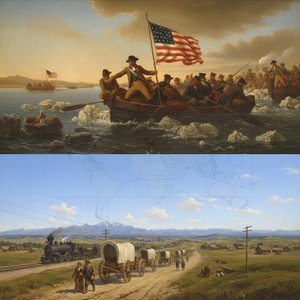 Emanuel Leutze: Transatlantic Identity & the Iconography of American ProgressExplore the life & art of Emanuel Leutze, famed for 'Washington Crossing the Delaware.' Discover his Romantic historical paintings, transat…