

 Aperçu en situation
 Partager
 Partager
 Détails
 Guide imprimable

 Télécharger
 Articles similaires
 Radiographie
 Voir le diaporama
 Statistiques
Marilyn Bleu


 Afficher la suite
L’œuvre d'art présentée sur cette page est protégée par le droit d'auteur, ce qui signifie que nous ne pouvons légalement créer ou vendre de reproduction identique. Cette protection est appliquée en vertu d'accords internationaux tels que la Convention de Berne et par les lois nationales, notamment celles énoncées par le Loi américaine sur le droit d'auteur - Titre 17.
En tant qu'alternative respectueuse et légale, nous proposons des œuvres d'art personnalisées, peintes à la main et inspirées de l'original. Nos artistes talentueux et professionnels étudient avec soin le style, l'ambiance et l'essence artistique de l'œuvre originale pour créer une pièce nouvelle et unique qui évoque la même émotion — tout en restant une création originale en soi.
Cette méthode est pleinement conforme aux réglementations sur le droit d'auteur car elle ne repose pas sur la copie ou la duplication de l'œuvre protégée. Il s'agit plutôt d'une réinterprétation créative — une nouvelle peinture qui s'inspire de l'original sans pour autant lui être identique.
Reproduction à l'huile faite à la main
Huile sur toile peinte à la main, avec cadre et dimensions personnalisés, réalisée sur commande par nos artistes. ( Passer au format impression Passer au format image numérique)




P118B €10

P118H €10

P118W €10

P438Z €10

P508JH €12

P508YH €12

P805H €10

P805Z €10

P919BZ €10

P919G €10

P919XJ €10

P959ZH €10

P968JZ €12

W106C €8

W218G €10

W218JH €8

W218Y €10

W307PJ €10

W316G €10

W316PJ €8

W316Y €10

W398PJ €8

W4111J €10

W500HY €15

W500JH €15

W692G €12

W849H €8

W940BG €15

W953PJ €8




Choisissez parmi nos formats prédéfinis qui respectent les proportions originales de l’œuvre.

Saisissez la largeur et la hauteur souhaitées, pour s'adapter à votre cadre ou à votre mur. Cette œuvre est peinte à la main ; ainsi, pour un format de forme différente, l'artiste peut peindre un peu plus autour du tableau ou réduire légèrement les bords — c'est vous qui choisissez. Nous vous envoyons une maquette numérique pour approbation avant que la peinture ne commence. L'image présentée sur cette page ne reflète pas le résultat réel — seule la maquette le fait.
Après la commande, l’équipe OriginalUniqueArt.com contactera le client par e-mail pour recueillir ses instructions et lui fournira une maquette d’aperçu
Livraison dans le monde entier () en 3 à 4 semaines au lieu des 5 semaines habituelles. (21 octobre). Aucun compromis sur la qualité.

Livraison express gratuite dans le monde entier

Toile de lin de haute qualité

Assurance transport complète

Garantie de remboursement des droits de douane

Garantie de fidélité des couleurs

Garantie de retour de 100 jours (uniquement en cas de défaut)

Garantie de remboursement à 100%

Tarifs dégressifs sur quantité
 L'option verre n'est disponible que pour les dimensions inférieures à 110 cm.

Marilyn Bleu
Technique de reproduction
Format de la reproduction
-


Prix total final
€ 262
A Glimpse Behind the Icon: Andy Warhol’s ‘Marilyn Blue’
Andy Warhol's ‘Marilyn Blue’ isn’t merely a portrait; it’s a distillation of 20th-century celebrity, tragedy, and the burgeoning power of Pop Art. Emerging from a series created in the wake of Marilyn Monroe’s untimely death in 1962, this work doesn’t attempt to capture her likeness with traditional reverence. Instead, Warhol employs silkscreen printing – a technique borrowed from commercial advertising – to present a flattened, almost mechanical image of the actress. The vibrant blue background isn't merely aesthetic; it serves as a stark contrast to Monroe’s face, elevating her status to an icon while simultaneously stripping away some of her humanity. The repetition inherent in Warhol’s process—the layering of color and form—mirrors the relentless reproduction of images in mass media, reflecting how Monroe herself was endlessly circulated and consumed by the public.
The Birth of a Pop Icon
Born Andrew Warhola Jr. in Pittsburgh in 1928, Warhol’s journey to becoming a leading figure in the art world was unconventional. A childhood illness confined him indoors, fostering an early passion for drawing and creativity. After graduating from Carnegie Institute of Technology, he found success as a commercial illustrator in New York City, honing his skills in visual communication and understanding the persuasive power of imagery. This background profoundly influenced his artistic style. Warhol wasn’t interested in creating unique masterpieces; he wanted to explore the aesthetics of mass production and challenge traditional notions of art. He saw beauty in the commonplace – soup cans, Coca-Cola bottles, and, crucially, celebrity faces. ‘Marilyn Blue’, along with other portraits from this period, exemplifies his fascination with transforming recognizable figures into symbols of consumer culture.
Technique and Symbolism: A Dialogue Between Art and Commerce
The silkscreen technique itself is central to understanding the artwork’s meaning. Warhol would project a photograph of Monroe onto a silk screen, then use ink to create an image on canvas. This process allowed for repetition and variation, resulting in multiple versions of the same portrait with slight differences in color and texture. In ‘Marilyn Blue’, the bold application of color isn't about achieving realism; it’s about creating impact and emphasizing the artificiality of the image. The presence of additional faces subtly incorporated into the composition adds another layer of complexity, hinting at the multiplicity of identities projected onto celebrities and the blurring lines between public persona and private life. The ‘Shot Marilyns’, a subset of this series—including works damaged by performance artist Dorothy Podber shooting at them with a revolver—further underscore the volatile relationship between fame, vulnerability, and destruction.
Emotional Resonance and Lasting Legacy
Despite its seemingly detached aesthetic, ‘Marilyn Blue’ evokes a powerful emotional response. The image is simultaneously glamorous and melancholic, capturing both the allure and the fragility of Monroe’s persona. Warhol doesn’t offer judgment or commentary; he simply presents an icon for our contemplation. This ambiguity allows viewers to project their own feelings onto the work, creating a deeply personal connection. Today, ‘Marilyn Blue’ remains one of Warhol’s most recognizable and sought-after images, continuing to inspire artists, designers, and collectors alike. Its enduring appeal lies in its ability to capture the spirit of an era—an era defined by celebrity worship, mass media, and a growing sense of alienation—while simultaneously questioning the very nature of art itself.
More About Warhol’s Vision
Warhol's artistic philosophy was rooted in a deliberate rejection of traditional artistic conventions. He deliberately distanced himself from notions of originality and emotional expression, prioritizing instead the exploration of visual language and its capacity to communicate ideas across cultural boundaries. Influenced by Dadaist provocations and Surrealist experimentation, Warhol embraced repetition as a means of disrupting established hierarchies and challenging viewers’ perceptions. This approach aligns with broader trends in postwar American culture—a fascination with mass production, advertising, and the standardization of experience—and reflects Warhol's conviction that art could engage audiences on an intellectual level without resorting to sentimentalism.
The Significance of Color
Warhol’s masterful use of color is particularly noteworthy in ‘Marilyn Blue’. The dominant hue—a vibrant shade of azure—serves as more than just a decorative element; it functions symbolically, mirroring the pervasive influence of media and branding. Warhol deliberately eschewed nuanced tonal gradations, opting for bold blocks of color that convey immediacy and impact. This stylistic choice echoes the aesthetic principles of Pop Art, which sought to liberate art from the constraints of academic tradition by appropriating imagery from popular culture—particularly advertising—and presenting it in a simplified, stylized form.
A Reflection on Fame and Mortality
Warhol’s preoccupation with themes of fame and mortality is palpable throughout his oeuvre, including ‘Marilyn Blue’. The portrait confronts viewers with the unsettling juxtaposition of beauty and vulnerability—a visual representation of Monroe's tragic demise. Warhol’s deliberate avoidance of emotional sentimentality underscores a broader critique of societal obsessions with celebrity and glamour, prompting contemplation about the ephemeral nature of human existence. By distilling Monroe’s image into its essential components—color, form, repetition—Warhol elevates it to an emblem of cultural significance, inviting viewers to engage in dialogue about identity, representation, and the complexities of modern life.
Questions et réponses
Quelle palette de couleurs est utilisée dans «Marilyn Bleu» de Andy Warhol ?
«Marilyn Bleu» de Andy Warhol utilise une palette de couleurs Sombre et profond. Cette palette résume le caractère chromatique global de l'œuvre.
De quel type d'œuvre s'agit-il pour "Marilyn Bleu" ?
« Marilyn Bleu » est une œuvre de type Art mural.
Existe-t-il des œuvres similaires à « Marilyn Bleu » ?
Les œuvres similaires à «Marilyn Bleu» de Andy Warhol sont regroupées sur la page Œuvres similaires de l'œuvre.
Biographie de l'artiste
Andy Warhol : Une Vie dans la Pop Art
Jeunesse et Éducation
- Né le: 6 août 1928 à Pittsburgh, en Pennsylvanie.
- La jeunesse de Warhol a été marquée par une maladie d'enfance – la chorea de Sydenham (danse du vitiligo) – qui l’a conduit à des périodes prolongées de confinement et a favorisé son intérêt pour l’art.
- Il a étudié le design pictural au Carnegie Institute of Technology (aujourd’hui Carnegie Mellon University), où il est diplômé en 1949.
- Après avoir obtenu son diplôme, il s'est installé à New York pour poursuivre une carrière d'illustrateur commercial.
Art Commercial et Carrière Précoce
- Initialement, Warhol a travaillé comme illustrateur dans des magazines et de la publicité, obtenant du succès grâce à ses dessins au trait distinctifs pour les publications de mode.
- Il a acquis une compréhension approfondie de la production de masse et de la communication visuelle grâce à son travail commercial, ce qui a influencé fortement son style artistique plus tard.
- Ses premières œuvres se concentraient souvent sur des objets du quotidien et des biens de consommation, préfigurant les thèmes qu’il explorerait dans la Pop Art.
L'Ascension de la Pop Art
- Dans les années 1960, Warhol est devenu une figure de proue du mouvement Pop Art, remettant en question les notions traditionnelles de l’art.
- La Pop Art embrassait la culture populaire – publicité, bandes dessinées et objets manufacturés – comme sujets légitimes pour l'expression artistique.
- Œuvres clés de cette période comprennent : Campbell’s Soup Cans (1962) et Marilyn Diptych (1962).
- La technique de Warhol d'impression sérigraphique a permis la production en masse d'images, reflétant la culture du consommateur qu'il dépeignait.
L’Atelier et Production Artistique
- Warhol a établi “L’Atelier”, un espace de travail qui est devenu un centre névtral pour les artistes, les musiciens, les cinéastes et la haute société.
- L’Atelier n'était pas qu'un lieu de travail, mais aussi une scène : il favorisait la collaboration et l'expérimentation dans diverses disciplines artistiques.
- Warhol a embrassé le concept d'art comme un commerce, brouillant les lignes entre la haute culture et le commerce.
- Il a exploré des thèmes de célébrité, de mort et de catastrophe dans son œuvre, en utilisant souvent la répétition et des couleurs audacieuses pour créer des effets visuels frappants.
Œuvres Majeures et Style Artistique
- Œuvres notables : Che Guevara, Nan Kempner, Mona Lisa, Flowers, Couverture de l'album Velvet Underground & Nico.
- Le style de Warhol est caractérisé par l'utilisation de l'impression sérigraphique, des couleurs audacieuses et de la répétition.
- Il a souvent approprié des images de la culture populaire, les transformant en œuvres d’art emblématiques.
- Ses portraits de célébrités – Marilyn Monroe, Elvis Presley, Elizabeth Taylor – ont capturé la fascination pour la célébrité et l'image dans la société américaine.
Héritage et Importance Historique
- L’œuvre d’Andy Warhol a eu un impact profond sur le monde de l’art, remettant en question les définitions traditionnelles de l’art et ouvrant la voie à de nouveaux mouvements artistiques.
- Il était également une figure culturelle importante : ouvertement homosexuel avant le Mouvement pour la Libération des Hommes gays.
- Son exploration du consumérisme, de la culture de la célébrité et des médias de masse résonne encore aujourd'hui auprès du public.
- L’influence de Warhol se retrouve dans l’art contemporain, la mode, la musique et le cinéma.
- Ses œuvres sont exposées dans les grands musées du monde entier, notamment le Musée Andy Warhol à Pittsburgh.

Andy Warhol
1928 - 1987 , États-Unis d'Amérique
En bref
- Date De Décès: 1987
- Date De Naissance: 6 août 1928
- Lieu De Naissance: Pittsburgh, États-Unis
- Mouvement Artistique: Pop Art
- Nationalité: Américaine
- Nom Complet: Andy Warhol
- Œuvres Notables:
- Campbell’s Soup Cans
- Marilyn Diptych
- Che Guevara
- Flowers
- Velvet Underground & Nico
Articles connexes
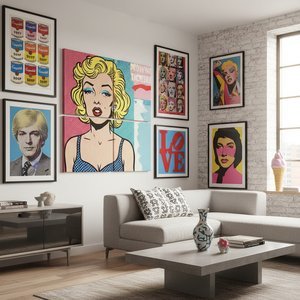
Pop Art : Les 10 Œuvres Maîtresses Qui Ont Révolutionné l'Art Moderne |
Plongez dans l'univers vibrant du Pop Art ! Découvrez les 10 œuvres maîtresses d'Andy Warhol, Roy Lichtenstein et autres artistes iconiques. Histoire, techniques & inspiration déco. Explorez la collection sur .

The Allure of Azure: Exploring the Symbolic & Aesthetic Depths of Blue in Art History
Explore the rich history of blue in art! Discover its symbolism, from ancient pigments to modern masterpieces by Kandinsky & Seurat. Uncover the psychological impact and cultural meanings behind this captivating hue.

Andy Warhol : Les 25 Œuvres Incontournables du Roi du Pop Art | OriginalUniqueArt
Plongez dans l'univers vibrant d'Andy Warhol ! Découvrez les 25 œuvres incontournables du roi du Pop Art : Marilyn, Campbell’s Soup et plus. Sérigraphies iconiques, histoires fascinantes & reproductions de qualité musée sur OriginalUniqueArt.com.
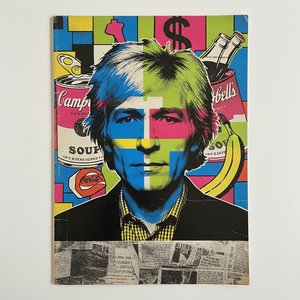
Andy Warhol : Déconstruction de la culture populaire et redéfinition de l'expression artistique
Explorez l'univers révolutionnaire d'Andy Warhol et du Pop Art. Découvrez sa technique unique, son impact sur la culture et les conseils d'experts pour collectionner ses œuvres emblématiques. OriginalUniqueArt.

Les 10 Chefs-d'œuvre Dominés par le Bleu Ardoise : Art, Histoire & Décor
Plongez dans l'univers fascinant des 10 plus beaux tableaux dominés par le bleu ardoise. Découvrez l'histoire, les artistes et les techniques de ces chefs-d'œuvre impressionnistes et contemporains. Inspirez votre décoration intérieure avec !


