

 Aperçu en situation
 Partager
 Partager
 Détails
 Guide
Guide

 Télécharger
 Articles similaires
 Radiographie
 Voir le diaporama
 Statistiques
Hammer and Sickle (Special Edition)


 Afficher la suite
Giclées et impressions d'art
Impressions giclées ou sur toile de qualité musée, avec une production rapide et des finitions au choix. ( Acheter la peinture faite à la main Passer au format image numérique)




P118B $10

P118H $10

P118W $10

P438Z $10

P508JH $12

P508YH $12

P805H $10

P805Z $10

P919BZ $10

P919G $10

P919XJ $10

P959ZH $10

P968JZ $12

W106C $8

W218G $10

W218JH $8

W218Y $10

W307PJ $10

W316G $10

W316PJ $8

W316Y $10

W398PJ $8

W4111J $10

W500HY $15

W500JH $15

W692G $12

W849H $8

W940BG $15

W953PJ $8




Choisissez parmi nos formats prédéfinis qui respectent les proportions originales de l’œuvre.

Vous pouvez saisir vos propres dimensions pour vous adapter à un cadre ou à un espace spécifique. Si la taille sélectionnée ne correspond pas aux proportions de l'image originale, nous recadrerons l'œuvre ou étendrons l'image avec une bordure en miroir ou une couleur unie. Une maquette numérique vous sera envoyée pour approbation avant le début de la production.
Veuillez noter que l'aperçu à l'écran ne reflète pas le recadrage ou l'extension réelle. Seule la maquette montrera avec précision la composition finale.
Bien que des tailles personnalisées soient disponibles, nous vous recommandons de choisir une dimension dans la liste prédéfinie afin de préserver les proportions originales.
Livraison dans le monde entier () en 2 semaines au lieu des 4/5 semaines habituelles. (20 septembre)

Livraison express gratuite dans le monde entier

Toile de lin de haute qualité

Assurance transport complète

Garantie de remboursement des droits de douane

Garantie de fidélité des couleurs

Garantie de retour de 100 jours (uniquement en cas de défaut)

Garantie de remboursement à 100%

Tarifs dégressifs sur quantité
 L'option verre n'est disponible que pour les dimensions inférieures à 110 cm.

Hammer and Sickle (Special Edition)
Giclées et impressions d'art
Format de la reproduction
-


Prix total final
$ 80
Hammer and Sickle (Special Edition): A Pop Art Icon Decoded
Andy Warhol’s *Hammer and Sickle* isn't merely a depiction of a communist emblem; it’s a masterful distillation of artistic innovation within the turbulent socio-political landscape of the late 1960s. Created in 1977, this screenprint embodies Warhol’s signature approach – repetition, serialization, and a deliberate detachment from overt political messaging—transforming a symbol steeped in ideological struggle into an object of aesthetic contemplation. The artwork's stark simplicity belies its profound significance as a commentary on the era’s anxieties and aspirations.- Artist: Andy Warhol (1928 – 1987)
- Medium: Screenprint on Strathmore Bristol paper
- Dimensions: Unknown
- Edition Size: 10
The Visual Language of Repetition and Seriality
Warhol’s genius lay in exploiting the mechanical precision of screenprinting to achieve an unprecedented level of uniformity. He meticulously crafted seven prints from a single photograph of a hammer and sickle, painstakingly layering color blocks—gold, silver, gray, and red—to reveal each stage of the printing process. This technique wasn't simply about reproducing an image; it was about interrogating the very nature of artistic production itself. Warhol deliberately eschewed grand narratives, opting instead for a visual language that prioritized repetition over variation. As Ronnie Cutrone, Warhol’s studio assistant explained, “Warhol wanted to separate the objects from any political or cultural ideologies.” This decision underscores Warhol's desire to elevate the artwork beyond its immediate context and into the realm of pure aesthetic experience.Historical Context: The Shadow of Communism
The creation of *Hammer and Sickle* coincided with a period of intense ideological confrontation between East and West during the Cold War. Warhol’s fascination with communist symbols stemmed from observing graffiti on the streets of Italy—a visual manifestation of the pervasive influence of Marxist ideas across Europe at the time. He wasn't interested in proclaiming allegiance to any particular political doctrine; rather, he was captivated by the repetition inherent in the symbol itself and its place within popular culture. Warhol’s astute observation reflects a broader cultural preoccupation with confronting the complexities of identity and representation during this era.Symbolism Beyond Politics: Deconstructing Iconography
Warhol's deliberate simplification of the hammer and sickle—reducing it to geometric shapes against a monochrome background—represents a crucial step in dismantling its conventional associations. Warhol’s aim wasn’t to convey a specific political message but to explore how repetition can transform an icon into something more than just a symbol; it becomes an object of contemplation, inviting viewers to consider the process of creation and the nature of visual perception. Warhol's collaborator Jonas Mekas recognized this artistic ambition, stating that “Warhol’s films are more inventive, artificial and art-directed than some of his admires would like to believe.” Warhol’s insistence on capturing fleeting moments—the raw emotion and spontaneity of human experience—solidifies *Hammer and Sickle* as a testament to the transformative power of art.Emotional Impact: A Reflection of Artistic Innovation
Ultimately, *Hammer and Sickle* transcends its historical context to offer a profound meditation on artistic practice and visual culture. Warhol’s meticulous attention to detail—the layering of color blocks, the careful positioning of the sketch—demonstrates his unwavering commitment to pushing boundaries and challenging conventions. The artwork's understated elegance speaks volumes about Warhol’s belief that art should be both intellectually stimulating and emotionally resonant. It remains a compelling emblem of Pop Art’s legacy – an enduring reminder that beauty can emerge from seemingly banal subjects when approached with artistic rigor and ingenuity.Biographie de l'artiste
Andy Warhol : Une Vie dans la Pop Art
Jeunesse et Éducation
- Né le: 6 août 1928 à Pittsburgh, en Pennsylvanie.
- La jeunesse de Warhol a été marquée par une maladie d'enfance – la chorea de Sydenham (danse du vitiligo) – qui l’a conduit à des périodes prolongées de confinement et a favorisé son intérêt pour l’art.
- Il a étudié le design pictural au Carnegie Institute of Technology (aujourd’hui Carnegie Mellon University), où il est diplômé en 1949.
- Après avoir obtenu son diplôme, il s'est installé à New York pour poursuivre une carrière d'illustrateur commercial.
Art Commercial et Carrière Précoce
- Initialement, Warhol a travaillé comme illustrateur dans des magazines et de la publicité, obtenant du succès grâce à ses dessins au trait distinctifs pour les publications de mode.
- Il a acquis une compréhension approfondie de la production de masse et de la communication visuelle grâce à son travail commercial, ce qui a influencé fortement son style artistique plus tard.
- Ses premières œuvres se concentraient souvent sur des objets du quotidien et des biens de consommation, préfigurant les thèmes qu’il explorerait dans la Pop Art.
L'Ascension de la Pop Art
- Dans les années 1960, Warhol est devenu une figure de proue du mouvement Pop Art, remettant en question les notions traditionnelles de l’art.
- La Pop Art embrassait la culture populaire – publicité, bandes dessinées et objets manufacturés – comme sujets légitimes pour l'expression artistique.
- Œuvres clés de cette période comprennent : Campbell’s Soup Cans (1962) et Marilyn Diptych (1962).
- La technique de Warhol d'impression sérigraphique a permis la production en masse d'images, reflétant la culture du consommateur qu'il dépeignait.
L’Atelier et Production Artistique
- Warhol a établi “L’Atelier”, un espace de travail qui est devenu un centre névtral pour les artistes, les musiciens, les cinéastes et la haute société.
- L’Atelier n'était pas qu'un lieu de travail, mais aussi une scène : il favorisait la collaboration et l'expérimentation dans diverses disciplines artistiques.
- Warhol a embrassé le concept d'art comme un commerce, brouillant les lignes entre la haute culture et le commerce.
- Il a exploré des thèmes de célébrité, de mort et de catastrophe dans son œuvre, en utilisant souvent la répétition et des couleurs audacieuses pour créer des effets visuels frappants.
Œuvres Majeures et Style Artistique
- Œuvres notables : Che Guevara, Nan Kempner, Mona Lisa, Flowers, Couverture de l'album Velvet Underground & Nico.
- Le style de Warhol est caractérisé par l'utilisation de l'impression sérigraphique, des couleurs audacieuses et de la répétition.
- Il a souvent approprié des images de la culture populaire, les transformant en œuvres d’art emblématiques.
- Ses portraits de célébrités – Marilyn Monroe, Elvis Presley, Elizabeth Taylor – ont capturé la fascination pour la célébrité et l'image dans la société américaine.
Héritage et Importance Historique
- L’œuvre d’Andy Warhol a eu un impact profond sur le monde de l’art, remettant en question les définitions traditionnelles de l’art et ouvrant la voie à de nouveaux mouvements artistiques.
- Il était également une figure culturelle importante : ouvertement homosexuel avant le Mouvement pour la Libération des Hommes gays.
- Son exploration du consumérisme, de la culture de la célébrité et des médias de masse résonne encore aujourd'hui auprès du public.
- L’influence de Warhol se retrouve dans l’art contemporain, la mode, la musique et le cinéma.
- Ses œuvres sont exposées dans les grands musées du monde entier, notamment le Musée Andy Warhol à Pittsburgh.

Andy Warhol
1928 - 1987 , États-Unis d'Amérique
En bref
- Date De Décès: 1987
- Date De Naissance: 6 août 1928
- Lieu De Naissance: Pittsburgh, États-Unis
- Mouvement Artistique: Pop Art
- Nationalité: Américaine
- Nom Complet: Andy Warhol
- Œuvres Notables:
- Campbell’s Soup Cans
- Marilyn Diptych
- Che Guevara
- Flowers
- Velvet Underground & Nico
Articles similaires
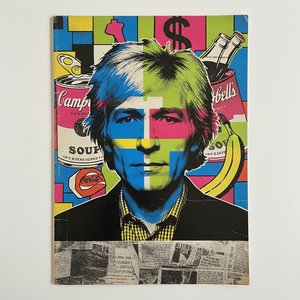
Andy Warhol : Déconstruction de la culture populaire et redéfinition de l'expression artistique
Explorez l'univers révolutionnaire d'Andy Warhol et du Pop Art. Découvrez sa technique unique, son impact sur la culture et les conseils d'experts pour collectionner ses œuvres emblématiques. OriginalUniqueArt.

Andy Warhol : Les 25 Œuvres Incontournables du Roi du Pop Art | OriginalUniqueArt
Plongez dans l'univers vibrant d'Andy Warhol ! Découvrez les 25 œuvres incontournables du roi du Pop Art : Marilyn, Campbell’s Soup et plus. Sérigraphies iconiques, histoires fascinantes & reproductions de qualité musée sur OriginalUniqueArt.com.
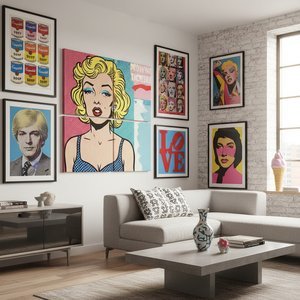
Pop Art : Les 10 Œuvres Maîtresses Qui Ont Révolutionné l'Art Moderne |
Plongez dans l'univers vibrant du Pop Art ! Découvrez les 10 œuvres maîtresses d'Andy Warhol, Roy Lichtenstein et autres artistes iconiques. Histoire, techniques & inspiration déco. Explorez la collection sur .
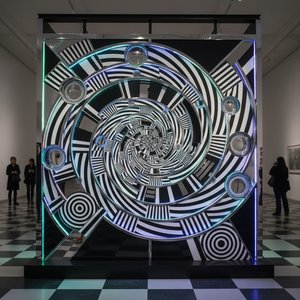
Bold & Iconic: A Definitive Guide to the Vibrant World of Pop Art Masterpieces
Dive into the vibrant world of Pop Art. Explore iconic masterpieces from Warhol to Haring, discover how bold colors and mass media redefined art history, and learn to curate high-impact, colorful pieces for your modern home collection.
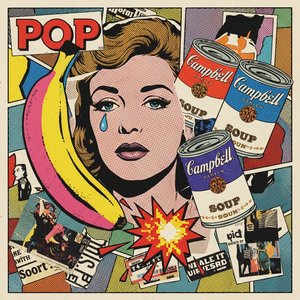
Défis aux Conventions : Pop Art, Origines, Évolution et Héritage Durable
Explorez l'histoire fascinante du Pop Art : de ses origines à son influence durable. Découvrez les œuvres emblématiques d'Andy Warhol et des artistes clés. Guide expert pour collectionneurs.


