

 Aperçu en situation
 Partager
 Partager
 Détails
 Guide imprimable

 Télécharger
 Articles similaires
 Radiographie
 Voir le diaporama
 Statistiques
The Poor Painter in His Studio
 Oil On Canvas
- WallArt
- Dutch Golden Age
 1635
1635- Early Modern
 330.0 x 247.0 cm
 Rijksmuseum
 Afficher la suite
Reproduction à l'huile faite à la main
Huile sur toile peinte à la main, avec cadre et dimensions personnalisés, réalisée sur commande par nos artistes. ( Passer au format impression Passer au format image numérique)




P118B €10

P118H €10

P118W €10

P438Z €10

P508JH €12

P508YH €12

P805H €10

P805Z €10

P919BZ €10

P919G €10

P919XJ €10

P959ZH €10

P968JZ €12

W106C €8

W218G €10

W218JH €8

W218Y €10

W307PJ €10

W316G €10

W316PJ €8

W316Y €10

W398PJ €8

W4111J €10

W500HY €15

W500JH €15

W692G €12

W849H €8

W940BG €15

W953PJ €8




Choisissez parmi nos formats prédéfinis qui respectent les proportions originales de l’œuvre.

Saisissez la largeur et la hauteur souhaitées, pour s'adapter à votre cadre ou à votre mur. Cette œuvre est peinte à la main ; ainsi, pour un format de forme différente, l'artiste peut peindre un peu plus autour du tableau ou réduire légèrement les bords — c'est vous qui choisissez. Nous vous envoyons une maquette numérique pour approbation avant que la peinture ne commence. L'image présentée sur cette page ne reflète pas le résultat réel — seule la maquette le fait.
Après la commande, l’équipe OriginalUniqueArt.com contactera le client par e-mail pour recueillir ses instructions et lui fournira une maquette d’aperçu
Livraison dans le monde entier () en 3 à 4 semaines au lieu des 5 semaines habituelles. (24 octobre). Aucun compromis sur la qualité.

Livraison express gratuite dans le monde entier

Toile de lin de haute qualité

Assurance transport complète

Garantie de remboursement des droits de douane

Garantie de fidélité des couleurs

Garantie de retour de 100 jours (uniquement en cas de défaut)

Garantie de remboursement à 100%

Tarifs dégressifs sur quantité
 L'option verre n'est disponible que pour les dimensions inférieures à 110 cm.

The Poor Painter in His Studio
Technique de reproduction
Format de la reproduction
-


Prix total final
€ 307
The Intimate Crucible of Creation
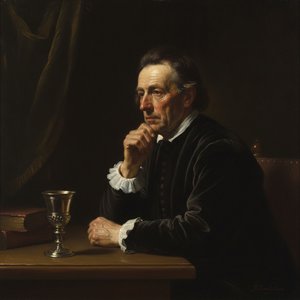
To gaze upon "The Poor Painter in His Studio" is to step across the threshold and into the very heart of artistic endeavor. This scene, steeped in the rich atmosphere of the 17th-century Dutch Golden Age, offers more than just a depiction; it presents an immersion into the soul of creation itself. The composition centers on three figures—the seated artist, the attentive woman, and the small child—all gathered within the tangible clutter of a working studio. It is a tableau vivant that speaks volumes about patronage, family legacy, and the sheer dedication required to master a craft. The air feels thick with turpentine, linseed oil, and unspoken ambition.
Mastery in Shadow and Light
Technically, the painting is a breathtaking study in chiaroscuro. The dramatic interplay between deep, velvety shadows and brilliant shafts of illumination is what gives the work its profound visual weight. A single, unseen light source seems to pour in from the left, sculpting the forms of the figures and casting long, eloquent shadows across the floorboards. This masterful use of contrast does not merely illuminate; it dramatizes. The artist’s skill, characteristic of the period's finest realism, allows every texture—from the rough weave of a painter’s smock to the polished gleam of an easel—to emerge with startling clarity against the surrounding gloom.
Symbolism of Dedication and Lineage
The subject matter invites deep contemplation. The title itself hints at themes of humble dedication, suggesting that genius is not always heralded by wealth but often nurtured in quiet perseverance. The presence of the child is particularly poignant; it serves as a visual promise—a continuation of the artistic bloodline, a hope for legacy. Meanwhile, the tools scattered about, the half-finished canvases leaning against walls, are silent witnesses to countless hours of labor. These objects transform the studio from mere background into an active participant in the narrative, embodying the struggle and ultimate reward of the creative spirit.
A Timeless Echo for Modern Spaces
For those seeking art that transcends mere decoration, this reproduction offers a profound emotional anchor. Its rich, dramatic tonality—even when viewed as a grayscale photograph—lends itself to creating an atmosphere of sophisticated contemplation within any interior space. It speaks to the collector who appreciates narrative depth and technical virtuosity. Imagine this piece anchoring a library, a study, or a gallery wall; it does not simply hang there, it breathes life into the room, inviting every passerby to pause and consider the quiet dignity found at the intersection of family life and profound artistic pursuit.
Questions et réponses
Quelle atmosphère et quelle émotion se dégagent de « The Poor Painter in His Studio » ?
Dans « The Poor Painter in His Studio », une atmosphère Dramatic accompagne une émotion Melancholic.
Qui a créé « The Poor Painter in His Studio » et dans quel style s'inscrit cette œuvre ?
Derrière « The Poor Painter in His Studio » se trouvent Andries Both et le mouvement Dutch Golden Age.
Quelle est la luminosité globale de « The Poor Painter in His Studio » ?
La luminosité perçue de «The Poor Painter in His Studio» de Andries Both est deep_shadow. Elle peut être harmonisée avec la lumière de l'espace prévu.
Biographie de l'artiste
Une vie capturée dans l'ombre de Rome
La vie d'Andries Both fut aussi éphémère et dramatique que les scènes qu'il a immortalisées sur la toile. Né à Utrecht, fils d'un peintre verrier, ses premières années furent imprégnées des riches traditions de l'artisanat néerlandais. Sous la tutelle d'Abraham Bloemaert, Both commença à affiner une vision qui finirait par l'éloigner des paysages familiers des Pays-Bas. Son périple le mena à travers Rouen et finalement au cœur de Rome, où il devint une figure notable parmi les bamboccianti—un groupe vibrant de peintres néerlandais et flamands qui puisaient leur inspiration dans la réalité brute et sans fard de la vie italienne.
À Rome, la présence de Both fut solidement établie entre 1635 et 1641. Il mena une existence partagée avec son frère, Jan, naviguant au sein des cercles artistiques effervescents de la cité. Les deux frères résidaient Via Vittoria, dans la paroisse de San Lorenzo in Lucina, et auraient pu faire partie des Bentvueghels, un groupe d'artistes influent actif à Rome. Cette période de sa vie fut marquée par une immersion profonde dans les rythmes quotidiens de la campagne romaine et de ses classes populaires, lui offrant une abondance de sujets qui allaient définir son héritage artistique.
L'art de la Bambocciata
L'œuvre de Both est célébrée pour son style Bambocciata, un genre caractérisé par des peintures de cabinet à petite échelle qui dépeignent les aspects les plus rudes et souvent humoristiques de la vie commune. Ses coups de pinceau étaient larges et expressifs, capables de transmettre à la fois un sentiment de réalité crue et un certain charme farfelu. Il ne reculait pas devant les aspects les plus sombres de l'existence ; au contraire, il les embrassait avec un œil pour le détail capable d'être tout à la fois objectif et outrancier.
Ses compositions fonctionnaient souvent comme de subtiles mises en garde morales. Dans des œuvres telles que Les Joueurs de cartes, il tissait avec maestria des récits indépendants pour critiquer les vices sociaux. À travers la représentation du jeu de cartes—un passe-temps alors associé à l'oisiveté et à la tromperie—et des symboles suggestifs comme un œuf représentant la fertilité ou l'infidélité, Both invitait les spectateurs à contempler les conséquences des comportements immoraux. Cette capacité à mêler le banal au moral conférait à son travail une profondeur profonde qui résonnait bien au-delà de la simple peinture de genre.
Influences et héritage artistique
La lignée de l'art de Both est une tapisserie de grands maîtres. Il tira une inspiration significative des traditions néerlandaises du XVIe siècle, particulièrement des sujets paysans initiés par Pieter Brueghel l'Ancien. De plus, l'influence de peintres flamands comme Adriaen Brouwer et Adriaen van Ostade est évidente dans ses figures caricaturales et ses scènes de taverne. Ces influences lui permirent de créer des personnages qui semblaient à la fois ancrés dans la réalité et exaltés par un sens de la théâtralité.
Bien que sa carrière ait été tragiquement interrompue lorsqu'il se noya dans un canal vénitien alors qu'il retournait aux Pays-Bas, son impact sur la tradition de la peinture de genre demeure significatif. Il a contribué à cultiver une esthétique spécifique qui trouvait la beauté dans l'oublié et le non raffiné, garantissant que les vies du peuple commun soient gravées dans l'histoire de l'art européen avec autant d'humour que de vérité.

Andries Both
1613 - 1642 , Pays-Bas
Articles connexes

Chiaroscuro and Character: A Masterclass in Light and Shadow within Dutch Golden Age Painting
Explore the profound mastery of light and shadow in Dutch Golden Age painting. From chiaroscuro to atmospheric landscapes, discover the techniques that defined an era and learn how to bring these timeless masterpieces into your home through museum-quality oil reproductions.

Chiaroscuro and Character: A Definitive Guide to Light and Shadow in the Dutch Baroque Era
Explore the dramatic mastery of the Dutch Baroque era. Discover how masters like Rembrandt used chiaroscuro to transform everyday life into timeless art. An expert guide for collectors and enthusiasts seeking to understand the profound interplay of light and shadow.

L'Âge d'Or Néerlandais : 10 Chefs-d'œuvre Incontournables pour Décorer avec Art et Histoire
Plongez au cœur de l'Âge d'Or néerlandais ! Découvrez 10 chefs-d'œuvre intemporels de Rembrandt, Vermeer et autres maîtres hollandais. Explorez leur histoire, technique & trouvez l'inspiration déco sur
Chiaroscuro & Character: Mastering the Dramatic Light of Dutch Golden Age Art
Explore the dramatic power of Dutch Golden Age art. Discover how masters used chiaroscuro and realism to transform everyday life into timeless masterpieces. Perfect for collectors seeking sophisticated, high-impact historical aesthetics for modern luxury interiors.

Golden Light & Dutch Skies: The Timeless Magic of Dutch Golden Age Landscapes
Discover the breathtaking beauty of Dutch Golden Age landscapes. Explore the mastery of light, chiaroscuro, and 17th-century realism through an expert art history lens, celebrating the enduring legacy of the Dutch Masters for discerning collectors and art lovers.
