

 Aperçu en situation
 Envoyer
 Partager
 Détails de l'œuvre

 Télécharger
 Articles similaires
 Radiographie
 Diaporama
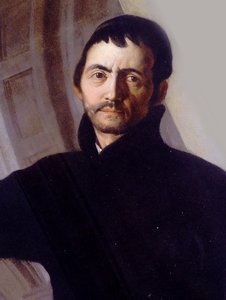
Self-Portrait
 Acrylique sur toile
- Art mural
- Baroque Art
 1690
1690 160.0 x 117.0 cm
 Galleria degli Uffizi
 Lire la suite
Reproduction à l'huile faite à la main
Huile sur toile peinte à la main, avec cadre et dimensions personnalisés, réalisée sur commande par nos artistes. ( Commander l'impression Télécharger l'image haute résolution)




P118B $10

P118H $10

P118W $10

P438Z $10

P508JH $12

P508YH $12

P805H $10

P805Z $10

P919BZ $10

P919G $10

P919XJ $10

P959ZH $10

P968JZ $12

W106C $8

W218G $10

W218JH $8

W218Y $10

W307PJ $10

W316G $10

W316PJ $8

W316Y $10

W398PJ $8

W4111J $10

W500HY $15

W500JH $15

W692G $12

W849H $8

W940BG $15

W953PJ $8




Choisissez parmi nos formats prédéfinis qui respectent les proportions originales de l’œuvre.

Vous pouvez saisir vos propres dimensions pour l'adapter à un cadre ou à un espace spécifique. Si la taille sélectionnée ne correspond pas aux proportions de l'image d'origine, nous recadrerons l'œuvre ou prolongerons la peinture avec des éléments peints à la main supplémentaires. Une maquette numérique vous sera envoyée pour approbation avant le début de la production.
Veuillez noter que l'aperçu à l'écran ne reflète pas le recadrage ou l'extension réels. Seule la maquette montrera fidèlement la composition finale.
Bien que des tailles personnalisées soient disponibles, nous vous recommandons de sélectionner une dimension dans la liste prédéfinie afin de préserver les proportions d'origine.
Après la commande, l’équipe OriginalUniqueArt.com contactera le client par e-mail pour recueillir ses instructions et lui fournira une maquette d’aperçu
Livraison dans le monde entier () en 3 à 4 semaines au lieu des 5 semaines habituelles. (14 août). Aucun compromis sur la qualité.

Livraison express gratuite dans le monde entier

Toile de lin de qualité supérieure

Assurance transport complète

Garantie de remboursement des droits de douane

Garantie de fidélité des couleurs

Politique de retour de 60 jours (uniquement en cas de défaut)

Garantie de remboursement à 100%

Offre de tarifs dégressifs
 L'option verre n'est disponible que pour les dimensions inférieures à 110 cm.

Self-Portrait
Technique de reproduction
Format de la reproduction
-


Prix total
$ 300
Description de l'œuvre
A Window into Genius: Exploring Andrea Pozzo's Self-Portrait
Andrea Pozzo’s Self-Portrait, completed in 1690 and currently residing within the illustrious Galleria degli Uffizi in Florence, Italy, stands as a cornerstone of Baroque art—a testament to artistic innovation and psychological depth. More than just a depiction of an individual, it embodies Pozzo's profound understanding of perspective and his masterful manipulation of light and shadow, techniques that elevate the painting beyond mere representation into a captivating illusion.
- Artist’s Vision: Pozzo wasn’t merely capturing his likeness; he was actively engaging in a dialogue with artistic tradition. He famously pointed to a preparatory canvas depicting Sant'Ignazio Church’s monumental ceiling fresco, demonstrating his commitment to the revolutionary illusionistic style championed by artists like Caravaggio and Bernini—a style that sought to create an immersive experience for the viewer.
- Monochrome Sketch: The painting’s stark monochrome palette – primarily earthy browns and blacks – serves as a deliberate counterpoint to the vibrant colors of Sant'Ignazio’s fresco. This careful choice emphasizes the realism of Pozzo’s self-portrait, highlighting his meticulous attention to detail in capturing subtle nuances of light and shadow. It underscores Pozzo’s dedication to conveying emotion through tonal variation.
- Composition & Symbolism: Pozzo’s pose—head turned slightly to the side—is imbued with significance. This gesture invites contemplation and directs the viewer's gaze directly back at the artist, fostering a sense of intimacy and establishing a connection between creator and observer. The architectural backdrop – arches and columns reminiscent of Roman grandeur – reinforces the Baroque aesthetic and symbolizes stability and divine authority.
Technique & Innovation: Mastering Baroque Illusionism
Pozzo’s skill lies not only in his observational accuracy but also in his masterful execution. He employed oil paint on canvas, utilizing layering techniques to achieve remarkable depth and luminosity—characteristics quintessential to the Baroque period. The artist skillfully utilized chiaroscuro – dramatic contrasts between light and dark – creating a palpable sense of three-dimensionality that transcends the flatness of traditional painting.
- Perspective Mastery: Pozzo’s unwavering dedication to perspective is evident throughout the composition. He meticulously rendered architectural elements, mirroring Sant'Ignazio’s ceiling fresco, thereby reinforcing the illusionistic principles of his time and elevating the artwork beyond a simple portrait.
- Color Palette & Texture: Despite its monochrome appearance, Pozzo achieved textural richness through careful brushwork—creating subtle variations in tone that contribute to the painting’s overall atmosphere. The muted earth tones evoke warmth and serenity, reflecting Pozzo's contemplative demeanor.
Historical Context & Legacy
Created during a period of artistic fervor in Rome, Andrea Pozzo’s Self-Portrait reflects the broader cultural landscape of the Baroque era—a time marked by papal patronage and an obsession with grandeur. It stands alongside masterpieces by artists like John Singer Sargent and Diego Velázquez, demonstrating Pozzo's place within the canon of European art history.
A high-quality reproduction of Andrea Pozzo’s Self-Portrait is available at /art/list/?Filter=8Y3FUZ-Andrea-Pozzo-Self-Portrait. These reproductions utilize archival materials and meticulous craftsmanship, ensuring that you experience the beauty and intellectual richness of this iconic artwork.
For further exploration into Andrea Pozzo’s life and oeuvre, visit https://en.wikipedia.org/wiki/Andrea_Pozzo.
Biographie de l'artiste
Première Jeunesse et Formation
- Né: Trente, Italie (1642)
- Décédé: 1709
- La première vie de Pozzo fut marquée par des inclinations artistiques. Il étudia les humanités à l'école jésuite locale.
- À l'âge de 17 ans, il commença sa formation artistique auprès d'un artiste inconnu à Trente.
- Vers 1662, il déménagea dans l'atelier d'un autre peintre non identifié qui avait été formé par Andrea Sacchi, absorbant les techniques du haut baroque romain.
- Il voyagea à Côme et Milan, développant davantage ses compétences.
Ordre Jésuite et Développement Artistique
- En 1665, Pozzo entra dans l'Ordre jésuite en tant que frère laïc.
- Son activité artistique était étroitement liée aux besoins de l'ordre jésuite, décorant des églises et des bâtiments à Modène, Bologne, Arezzo, Mondovì et Turin.
- Les premières œuvres mettaient en valeur les influences de l'École lombarde, caractérisée par une riche couleur et un clair-obscur graphique.
- Il développa ses techniques illusionnistes caractéristiques : faux dorures, statues de bronze coloré, colonnes marbrées et coupoles trompe-l'œil sur des plafonds plats.
Maîtrises et Techniques
- Plafond de Sant'Ignazio (Rome) : Son chef-d'œuvre est le plafond de la nef de l'église de Sant'Ignazio à Rome. Cette fresque utilise la quadratura pour créer une illusion d'un espace voûté vaste avec des éléments architecturaux et des figures.
- Quadratura : Pozzo était un maître de la quadratura, utilisant la perspective et la disproportion pour créer des illusions de profondeur et de tridimensionnalité sur des surfaces planes.
- Di Sotto in Su : Il employa habilement la technique du "di sotto in su" (vu d'en bas) pour simuler des structures architecturales imposantes.
- Plans Architecturaux : Pozzo contribua également à des plans architecturaux pour la cathédrale de Ljubljana (1700), inspirés par des églises jésuites comme Il Gesù et S. Ignazio à Rome.
Influences et Importance Historique
- Andrea Sacchi : La formation de Pozzo sous un élève d'Andrea Sacchi l'a exposé aux principes du haut baroque romain.
- Pierre Paul Rubens : Son travail à Gênes, peignant la Vie de Jésus, démontre l'influence des compositions dynamiques et des palettes de couleurs riches de Pierre Paul Rubens.
- Période Baroque : Pozzo est devenu l'une des figures les plus notables de la période baroque, connu pour ses fresques grandioses.
- Art de la Contre-Réforme : Ses œuvres reflétaient souvent les thèmes et les objectifs de la Contre-Réforme, soulignant la foi catholique et promouvant un sentiment d'émerveillement et de grandeur.
Contributions Théoriques
- Perspectiva Pictorum et Architectorum (1693, 1700) : Pozzo a rédigé ce traité sur la perspective en peinture et en architecture, codifiant ses techniques et influençant les générations futures d'artistes.
- Gesamtkunst : Il plaidait pour le *Gesamtkunst* (art total), intégrant l'architecture, la peinture et la sculpture pour créer une expérience artistique unifiée.
Andrea Pozzo
1642 - 1709 , Italie
L'essentiel de l'artiste
- Artistes Influents:
- Andrea Sacchi
- Peter Paul Rubens
- Date De Décès: 31 août 1709
- Date De Naissance: 30 novembre 1642
- Influence Sur Les Artistes: ['Luigi Vacca']
- Lieu De Naissance: Trento, Italie
- Mouvement Artistique: Baroque
- Nationalité: Italienne
- Nom Complet: Andrea Pozzo
- Oeuvres Notables:
- Plafond de Sant'Ignazio
- Fresques des Camere
Articles connexes

Drama and Light: A Definitive Guide to the Italian Baroque Masterpieces and the Revolution of Chiaroscuro
Explore the dramatic world of Italian Baroque art. Discover how masters like Caravaggio used chiaroscuro and tenebrism to revolutionize painting through light, shadow, and profound realism. A definitive guide for history lovers and art collectors.

The Dramatic Flourish: Exploring the Baroque Movement's Enduring Legacy in Art History
Explore the dramatic world of Baroque art! Discover iconic artists like Caravaggio & Rubens, defining techniques, and its lasting impact on art history. Expert insights for collectors & enthusiasts at OriginalUniqueArt.

Les 10 Chefs-d'œuvre Baroques qui ont Révolutionné l'Art |
Plongez au cœur du baroque avec les 10 chefs-d'œuvre de Caravaggio, Rembrandt et Rubens. Découvrez l'histoire fascinante de ces artistes et leurs tableaux célèbres. Reproductions d'art de qualité muséale sur – Explorez la collection !

Le Drame Baroque : L'Art qui Apporte la Splendeur dans Votre Intérieur
Plongez dans l'univers somptueux du baroque ! Découvrez son histoire, comment l'intégrer à votre intérieur et les œuvres incontournables. : reproductions d'art de qualité supérieure.

Baroque Classicism: The Grandeur of Order and Drama in 17th-Century Art History
Explore the profound elegance of Baroque Classicism. Discover how 17th-century masters synthesized dramatic emotion with classical order through the lens of the Counter-Reformation and the works of legends like Carlo Maratta and Andrea Sacchi.


