

 Aperçu en situation
 Envoyer
 Partager
 Détails de l'œuvre
 Guide
Guide

 Télécharger l'image
 Articles similaires
 Radiographie
 Diaporama
 Statistiques
Writing Table
 Baroque
 1710
1710- Early Modern
 80.0 x 188.0 cm
 La Frick Collection
 Lire la suite
Reproduction à l'huile faite à la main
Huile sur toile peinte à la main, avec cadre et dimensions personnalisés, réalisée sur commande par nos artistes. ( Passer au format impression Passer au format numérique)




P118B €10

P118H €10

P118W €10

P438Z €10

P508JH €12

P508YH €12

P805H €10

P805Z €10

P919BZ €10

P919G €10

P919XJ €10

P959ZH €10

P968JZ €12

W106C €8

W218G €10

W218JH €8

W218Y €10

W307PJ €10

W316G €10

W316PJ €8

W316Y €10

W398PJ €8

W4111J €10

W500HY €15

W500JH €15

W692G €12

W849H €8

W940BG €15

W953PJ €8




Choisissez parmi nos formats prédéfinis qui respectent les proportions originales de l’œuvre.

Saisissez la largeur et la hauteur souhaitées, pour s'adapter à votre cadre ou à votre mur. Cette œuvre est peinte à la main ; ainsi, pour un format de forme différente, l'artiste peut peindre un peu plus autour du tableau ou réduire légèrement les bords — c'est vous qui choisissez. Nous vous envoyons une maquette numérique pour approbation avant que la peinture ne commence. L'image présentée sur cette page ne reflète pas le résultat réel — seule la maquette le fait.
Après la commande, l’équipe OriginalUniqueArt.com contactera le client par e-mail pour recueillir ses instructions et lui fournira une maquette d’aperçu
Livraison dans le monde entier () en 3 à 4 semaines au lieu des 5 semaines habituelles. (25 octobre). Aucun compromis sur la qualité.

Livraison express gratuite dans le monde entier

Toile de lin de qualité supérieure

Assurance transport complète

Garantie de remboursement des droits de douane

Garantie de fidélité des couleurs

Politique de retour de 100 jours (uniquement en cas de défaut)

Garantie de remboursement à 100%

Offre de tarifs dégressifs
 L'option verre n'est disponible que pour les dimensions inférieures à 110 cm.

Writing Table
Technique de reproduction
Format de la reproduction
-


Prix total
€ 263
The Elegance of Innovation: A Masterpiece of the Louis XIV Era
In the grand tapestry of seventeenth-century decorative arts, few names resonate with as much prestige and opulence as André-Charles Boulle. His Writing Table, dating to approximately 1710, serves as a profound testament to a transformative era in furniture design. This piece is not merely a functional object but a sculptural triumph that captures the transition from the heavy, structured grandeur of Louis XIV’s early reign to a more fluid, graceful aesthetic. As one gazes upon its silhouette, one witnesses the birth of the bureau plat—the flat writing table—a design revolution that stripped away the cumbersome drawers and numerous legs of previous generations in favor of a streamlined, sophisticated elegance.
The artistry of this table lies in its masterful balance of strength and delicacy. The piece features an exquisite marble top, providing a cool, stately surface that contrasts beautifully with the warmth of the intricate carvings below. The legs, once straight and rigid in earlier centuries, were reimagined by Boulle with an elegant curve, lending the furniture a sense of rhythmic movement. This structural evolution reflects a broader cultural shift toward the Regence style, where the rigidity of absolute monarchy began to soften into a more refined, ornamental grace. For the discerning collector or interior designer, this table represents the pinnacle of French craftsmanship, offering a focal point that commands attention through its historical weight and aesthetic poise.
A Legacy of Marquetry and Material Mastery
To understand the soul of this writing table, one must delve into the technical brilliance of Boulle himself. Renowned for his revolutionary Boulle marquetry—a painstaking process involving the inlay of tortoiseshell, brass, and pewter—the master cabinetmaker treated wood as a canvas for complex, swirling patterns. While this specific piece highlights the structural innovation of the bureau plat, it carries the unmistakable DNA of Boulle’s decorative genius. The interplay of light upon the polished surfaces and the meticulous attention to every carved detail evoke an era of unparalleled luxury, where every object in a room was intended to reflect the status and sophisticated taste of its owner.
For those seeking to integrate such timeless beauty into a contemporary space, a high-quality reproduction of this Writing Table offers more than just decoration; it offers a connection to history. Whether placed in a sunlit library or as a statement piece in a modern study, the table brings an air of old-world nobility and intellectual depth. It serves as an emotional anchor, inviting moments of quiet reflection and scholarly pursuit. Owning a tribute to Boulle’s work is an invitation to surround oneself with the enduring spirit of French excellence, ensuring that the grandeur of the seventeenth century continues to breathe life into the homes of the twenty-first.
Questions et réponses
Quelles couleurs dominent «Writing Table» de André-Charles Boulle ?
«Writing Table» de André-Charles Boulle arbore une palette Earthy, avec le Espresso (#605745) comme couleur dominante.
«Writing Table» de André-Charles Boulle est-il une œuvre lumineuse ou sombre ?
Les valeurs enregistrées pour «Writing Table» de André-Charles Boulle sont : une luminosité de balanced, une luminance de Soft Shadow.
« Writing Table » est-il représentatif de l'œuvre habituelle de André-Charles Boulle ?
«Writing Table» dépeint writing table, marble top, gold frame, intricate carvings, furniture, tandis que les thèmes récurrents de André-Charles Boulle sont louis xiv grandeur, french royal style, innovation in furniture design, boulle marquetry technique, evolution of bureau plat. La comparaison des deux montre comment l'œuvre s'inscrit dans la lignée des sujets habituels de l'artiste.
Biographie de l'artiste
L'Architecte du Style Louis XIV
André-Charles Boulle (1642 – 1732) s'impose comme un titan parmi les ébénistes français, son nom étant devenu synonyme d'un artisanat opulent et de l'incarnation même de la grandeur de Louis XIV. Bien plus qu'un simple créateur de meubles, Boulle fut un innovateur qui remodela fondamentalement le goût européen, instaurant un style distinctif — la marqueterie « Boulle » — qui captiva les rois et les aristocrates pendant des décennies. Son héritage continue d'inspirer les artisans d'aujourd'hui, consolidant sa place parmi les figures les plus influentes des arts décoratifs du XVIIe siècle.
Né à Paris vers 1642, il descendait d'une famille imprégnée de traditions artisanales ; son père, Jean Bouliente, était lui-même un ébéniste respecté. Ce lien familial lui apporta une base inestimable dans l'art du métier, lui inculquant non seulement le savoir-faire, mais aussi une profonde appréciation pour le détail méticuleux et la vision artistique. Bien que les détails biographiques de ses premières années restent enveloppés dans les brumes du temps, sa formation l'a sans aucun doute préparé aux accomplissements extraordinaires qui allaient suivre, lui permettant d'accéder au prestigieux titre d'ébéniste du roi.
La Révolution de la Marqueterie
Le génie de Boulle résidait principalement dans sa maîtrise de la marqueterie — une technique consistant à incruster des matériaux décoratifs tels que l'écaille de tortue, le laiton, l'étain et l'ivoire dans des placages d'ébène ou de noyer. Contra Unlike les méthodes précédentes qui reposaient sur des techniques de sculpture plus simples, Boulle perfectionna un processus révolutionnaire atteignant des niveaux inégalés de complexité et de réalisme. Il martelait méticuleusement de fines feuilles de métal – principalement du laiton – sur la surface du placage de bois, créant un effet de relief qui imitait les textures naturelles comme le feuillage ou la pierre.
Ce travail acharné exigeait une précision et une patience exceptionnelles, aboutissant à des pièces de mobilier dotées d'une beauté à couper le souffle et d'une complexité technique remarquable. Son œuvre se distinguait souvent par :
- L'incrustation complexe de laiton : l'utilisation d'un travail du métal raffiné pour créer des motifs chatoyants qui captent la lumière.
- L'élégance de l'écaille de tortue : l'incorporation de matériaux organiques et translucides pour apporter profondeur et chaleur.
- Le symbolisme royal : des motifs reflétant la puissance, le prestige et l'autorité absolue de la monarchie française.
Un Héritage d'Opulence et d'Innovation
L'impact du travail de Boulle s'est étendu bien au-delà des frontières de la France, influençant les arts décoratifs de continents entiers. Sa capacité à mêler le design néoclassique aux floraisons émergentes de la période Rococo a permis à ses pièces de rester pertinentes malgré les fluctuations des courants esthétiques. Qu'il s'agisse d'un Baromètre en ébène et bronze doré reflétant la curiosité scientifique de l'époque, ou d'un opulent Cabinet de 1675 témoignant de la grandeur royale, chaque pièce servait de testament à son talent inégalé.
Même dans ses œuvres plus petites et plus délicates, comme ses cadrans d'horloge de 1715, on peut observer le détail époustouflant de l'or doré et des chérubins qui définissaient son époque. Sa maîtrise du bronze doré et des motifs complexes a créé un langage visuel du luxe qui demeure la référence absolue de l'ébénisterie fine. Aujourd'hui, lorsque nous contemplons les couches complexes de laiton et d'ébène, nous ne regardons pas simplement du mobilier, mais nous sommes témoins de l'esprit éternel d'un artiste qui a transformé le bois et le métal en une poésie immortelle.

André-Charles Boulle
1642 - 1732 , France
L'essentiel de l'artiste
- Artistic Movement Or Style: Louis XIV Style / Marquetry
- Artists Who Influenced This Artist: ['Jean Boulle']
- Date Of Birth: 1642
- Date Of Death: 1732
- Full Name: André-Charles Boulle
- Nationality: French
- Notable Artworks:
- Barometer Clock
- Writing Table
- Wardrobe and Clock
- Place Of Birth: Paris, France
Articles connexes
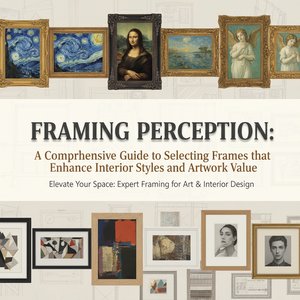
L'Écrin de l'Œuvre: Harmonie et Valeur Esthétique dans le Choix des Cadres pour les Intérieurs Contemporains
Sublimez vos œuvres avec nos conseils d'experts sur le choix des cadres ! Découvrez l'impact du style, des matériaux et de l'éclairage pour une décoration intérieure raffinée. Qualité & prestige garantis.

Le Cadre Parfait : Guide pour Choisir l'Encadrement Adapté à Votre Œuvre
Guide expert pour choisir l'encadrement parfait de vos œuvres d'art. Conseils personnalisés, matériaux de qualité & reproductions sur mesure avec .

L'Art de l'Encadrement : Comment le bon cadre sublime ou transforme votre œuvre d'art
Maîtrisez l'art de l'encadrement pour protéger et sublimer vos œuvres. Découvrez nos secrets d'experts pour magnifier votre collection.

Au-Delà de l'Ornementation : L'Impact Psychologique du Cadre sur la Perception Esthétique et la Valeur Artistique
Explorez l'impact psychologique du cadre sur la perception de l'art. Analyse experte, histoire et conseils pour collectionneurs avertis. Valorisez vos œuvres !

Au-Delà de la Toile : Le Cadre comme Catalyseur de Valeur et d'Impact Esthétique dans l'Art Reproduit de Luxe
Explorez l'impact esthétique du cadre dans l'art reproduit de luxe. Découvrez son histoire, sa restauration et comment choisir le modèle parfait pour sublimer votre collection avec OriginalUniqueArt.


