Aperçu en situation
 Envoyer
 Partager
 Détails de l'œuvre
 Guide
Guide

 Télécharger l'image
 Articles similaires
 Radiographie
 Diaporama
 Q&A
Q&A Statistiques
Monaco, Monte-Carlo

 Lire la suite
Giclées et impressions d'art
Impressions giclées ou sur toile de qualité musée, avec une production rapide et des finitions au choix. ( Commander la reproduction peinte à la main Passer au format numérique)




P118B €10

P118H €10

P118W €10

P438Z €10

P508JH €12

P508YH €12

P805H €10

P805Z €10

P919BZ €10

P919G €10

P919XJ €10

P959ZH €10

P968JZ €12

W106C €8

W218G €10

W218JH €8

W218Y €10

W307PJ €10

W316G €10

W316PJ €8

W316Y €10

W398PJ €8

W4111J €10

W500HY €15

W500JH €15

W692G €12

W849H €8

W940BG €15

W953PJ €8




Choisissez parmi nos formats prédéfinis qui respectent les proportions originales de l’œuvre.

Saisissez la largeur et la hauteur souhaitées pour qu'elles s'adaptent à votre cadre ou à votre mur. Une impression peut être recadrée, mais jamais agrandie au-delà de l'image originale ; ainsi, un format de forme différente entraînera la perte d'une partie de l'image. Nous vous envoyons une maquette numérique pour approbation avant toute impression. L'image présentée sur cette page ne montre pas le recadrage réel — seule la maquette le permet.
Livraison dans le monde entier () en 2 semaines au lieu des 4/5 semaines habituelles. (1 novembre)

Livraison express gratuite dans le monde entier

Toile de lin de qualité supérieure

Assurance transport complète

Garantie de remboursement des droits de douane

Garantie de fidélité des couleurs

Politique de retour de 100 jours (uniquement en cas de défaut)

Garantie de remboursement à 100%

Offre de tarifs dégressifs
 L'option verre n'est disponible que pour les dimensions inférieures à 110 cm.

Monaco, Monte-Carlo
Giclées et impressions d'art
Format de la reproduction
-


Prix total
€ 71
Monaco Monte Carlo: An Ode to Elegance and Ornamentation
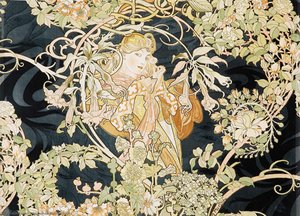
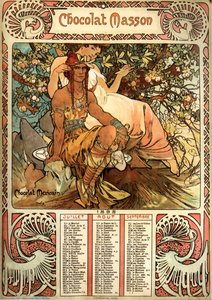
The artwork, “Monaco Monte Carlo,” created in 1897 by Alphonse Maria Mucha, stands as a quintessential emblem of Art Nouveau—a movement that sought to liberate art from academic constraints and embrace the beauty of organic forms inspired by nature. More than just a promotional poster for Monaco’s opulent casino district, it's a meticulously crafted visual poem celebrating luxury, leisure, and the idealized feminine spirit. Mucha’s signature style is immediately recognizable: flowing curvilinear lines dominate the composition, intertwining seamlessly with stylized floral arrangements that burst forth from the central figure’s drapery—a deliberate echo of the natural world and its fecundity.- Style & Influences: Mucha's Art Nouveau aesthetic draws heavily from influences like Pierre-Auguste Renoir and Gustave Moreau, artists who similarly explored themes of mythology and symbolism through decorative painting. However, Mucha distinguishes himself with a singular vision—one that prioritizes graceful movement and sensual beauty above all else.
- Composition & Technique: The poster employs a vertical orientation, maximizing visual impact while maintaining compositional balance. Lithography was the printing technique chosen, ensuring exceptional clarity and tonal gradation – crucial for capturing the shimmering gold leaf accents strategically applied to highlight key floral elements and contribute to the overall ethereal luminescence of the scene.
- Symbolism & Narrative: At its core lies an allegorical representation of femininity—a reclining woman adorned in flowing robes embodies elegance, serenity, and aristocratic grace. Surrounding her are stylized flowers—primarily lilies and roses—representing purity, devotion, and prosperity – motifs commonly found throughout Art Nouveau art.
- Historical Context: Monaco’s burgeoning reputation as a glamorous destination for European aristocracy fueled Mucha's artistic ambition. The poster reflects the broader cultural fascination with exotic locales and idealized beauty during the Belle Époque, capturing the spirit of an era defined by optimism and artistic experimentation.
- Floral Arrangement: The lilies and roses dominate the floral arrangement, meticulously rendered in shades of ivory and blush pink. Their petals are depicted with astonishing realism—a testament to Mucha’s meticulous observation of botanical specimens.
- Line Quality: Mucha achieves this mesmerizing effect through careful consideration of line quality—employing subtle variations in thickness and curvature to create depth and texture without resorting to traditional perspective techniques.
- Atmospheric Perspective: Mucha skillfully employs atmospheric perspective—reducing color saturation and tonal gradation in distant floral elements—to create a convincing illusion of depth.
- Sensual Appeal: Mucha's meticulous attention to detail—particularly in the depiction of drapery folds and floral textures—appeals to the senses—creating a visually stimulating experience that lingers long after viewing.
Questions et réponses
Les couleurs de «Monaco, Monte-Carlo» de Alphonse Maria Mucha sont-elles vives ou feutrées ?
«Monaco, Monte-Carlo» de Alphonse Maria Mucha présente une saturation de Balanced Soft et une intensité Balanced.
«Monaco, Monte-Carlo» est-il une œuvre célèbre du Art Nouveau ?
« Monaco, Monte-Carlo » est répertorié comme étant Recognized parmi les œuvres du Art Nouveau dans le catalogue.
Sous quels autres noms ou pseudonymes Alphonse Maria Mucha est-il connu ?
L'artiste Alphonse Maria Mucha, créateur de « Monaco, Monte-Carlo », est également connu sous d'autres noms, notamment Alfons Mucha.
Biographie de l'artiste
Première Vie et Formation
- Né : Le 15 juillet 1860, à Ivanačice, Moravie (aujourd'hui faisant partie de la République tchèque)
- A montré un talent artistique dès son plus jeune âge.
- A étudié à l'Académie des beaux-arts de Prague mais s'est désillusionné face aux approches traditionnelles.
- S'est installé à Paris en 1887 pour poursuivre son propre style.
Style Artistique et Œuvres Notables
- Connu pour un style Art Nouveau distinctif caractérisé par des lignes fluides, des formes organiques et un sentiment de mouvement.
- Influencé par des artistes tels que Pierre-Auguste Renoir et Gustave Moreau.
- Œuvres Notables :
- La Révolte Slave - Présente un mélange de motifs tchèques traditionnels avec des éléments Art Nouveau modernes.
- Salon des Cent
- Peintures inspirées d'œuvres telles que Les Filles de Tespio de Gustave Moreau, et La Ribambelle des Gobelins de Piero Dorazio.
- Illustrations basées sur De Jeunes Fermiers Brisant le Lin de Sir Hubert von Herkomer.
- Présentait fréquemment des femmes idéalisées dans des robes fluides entourées de fleurs luxuriantes.
Moments Forts de Carrière et Commandes Majeures
- Collaboration avec Sarah Bernhardt : A créé des affiches et des designs pour l'actrice Sarah Bernhardt, à commencer par l'affiche de Gismonda (1894), qui a lancé sa carrière.
- Exposition Universelle à Paris (1900) : Son style Art Nouveau a gagné une reconnaissance internationale lors de cet événement. Il a décoré le pavillon de Bosnie-Herzégovine et collaboré au pavillon autrichien.
- Mécénat de Charles Richard Crane : A reçu le soutien de Charles Richard Crane, ce qui lui a permis de créer la série monumentale Le Cycle Slave (1912-30).
- Tchécoslovaquie Indépendante : A conçu des timbres, des billets de banque et des documents gouvernementaux pour la Tchécoslovaquie nouvellement indépendante.
Influences et Héritage
- Influencé par les traditions artistiques tchèques et les mouvements artistiques européens modernes.
- Son style unique a ouvert la voie aux futures générations d'artistes dans l'Art Nouveau et la Sécession.
- A inspiré d'autres artistes comme Eva Prokopcová.
- L'héritage s'étend au-delà de son œuvre pour influencer le design et l'esthétique.
Vie Tardive et Décès
- S'est marié avec Maruska (Marie/Maria) Chytilová en 1906.
- A visité les États-Unis de 1906 à 1910, où leur fille Jaroslava est née.
- Est décédé le 14 juillet 1939 à Prague, Tchécoslovaquie.

Alphonse Maria Mucha
1860 - 1939 , République tchèque
L'essentiel de l'artiste
- Artistes Influencés: ['Eva Prokopcová']
- Artistes Influents:
- Pierre-Auguste Renoir
- Gustave Moreau
- Date De Décès: 1939
- Date De Naissance: 15 juillet 1860
- Lieu De Naissance: Brno, République tchèque
- Mouvement Artistique: Art nouveau
- Nationalité: Tchèque
- Nom Complet: Alphonse Maria Mucha
- Oeuvres Notables:
- La révolte slave
- Salon des Cent
- Les filles de Tespio
- La Ribambelle des Gobelins
Articles connexes
OriginalUniqueArt.com F.A.Q.: Premium Art Poster Prints – Vivid Colors & Versatile Sizing
Discover OriginalUniqueArt.com's premium art poster prints. Featuring 12-color archival pigments for vivid color fidelity and versatile sizing for bespoke decor. Expertly crafted museum-quality reproductions designed for discerning collectors and professional decorators.