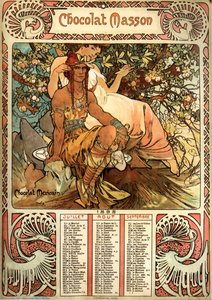
Aperçu en situation
 Partager
 Partager
 Détails
 Guide imprimable

 Télécharger
 Articles similaires
 Radiographie
 Voir le diaporama
 Statistiques
Flower litho
 Lithograph
- Art Nouveau
 1897
1897- 19th Century
 44.0 x 66.0 cm
 Afficher la suite
Reproduction à l'huile faite à la main
Huile sur toile peinte à la main, avec cadre et dimensions personnalisés, réalisée sur commande par nos artistes. ( Passer au format impression Passer au format image numérique)




P118B €10

P118H €10

P118W €10

P438Z €10

P508JH €12

P508YH €12

P805H €10

P805Z €10

P919BZ €10

P919G €10

P919XJ €10

P959ZH €10

P968JZ €12

W106C €8

W218G €10

W218JH €8

W218Y €10

W307PJ €10

W316G €10

W316PJ €8

W316Y €10

W398PJ €8

W4111J €10

W500HY €15

W500JH €15

W692G €12

W849H €8

W940BG €15

W953PJ €8




Choisissez parmi nos formats prédéfinis qui respectent les proportions originales de l’œuvre.

Saisissez la largeur et la hauteur souhaitées, pour s'adapter à votre cadre ou à votre mur. Cette œuvre est peinte à la main ; ainsi, pour un format de forme différente, l'artiste peut peindre un peu plus autour du tableau ou réduire légèrement les bords — c'est vous qui choisissez. Nous vous envoyons une maquette numérique pour approbation avant que la peinture ne commence. L'image présentée sur cette page ne reflète pas le résultat réel — seule la maquette le fait.
Après la commande, l’équipe OriginalUniqueArt.com contactera le client par e-mail pour recueillir ses instructions et lui fournira une maquette d’aperçu
Livraison dans le monde entier () en 3 à 4 semaines au lieu des 5 semaines habituelles. (23 octobre). Aucun compromis sur la qualité.

Livraison express gratuite dans le monde entier

Toile de lin de haute qualité

Assurance transport complète

Garantie de remboursement des droits de douane

Garantie de fidélité des couleurs

Garantie de retour de 100 jours (uniquement en cas de défaut)

Garantie de remboursement à 100%

Tarifs dégressifs sur quantité
 L'option verre n'est disponible que pour les dimensions inférieures à 110 cm.

Flower litho
Technique de reproduction
Format de la reproduction
-


Prix total final
€ 264
A Moment of Floral Grace: Mucha’s ‘Flower Litho’ – A Window into Art Nouveau
This exquisite 1897 lithograph, titled simply “Flower Litho,” offers a captivating glimpse into the world of Alphonse Maria Mucha, one of the most celebrated figures of the Art Nouveau movement. Measuring 44 x 66 cm, this piece isn’t merely a depiction of a woman holding flowers; it's an embodiment of a particular aesthetic – a harmonious blend of natural beauty and stylized elegance that defined Mucha’s distinctive vision. The vibrant palette, dominated by rich reds, yellows, greens, blues, and purples, immediately draws the eye, creating a sense of opulent warmth and inviting contemplation.
The Artist's Vision: Mucha and the Art Nouveau Spirit
Born in Brno, Czech Republic, in 1860, Alphonse Maria Mucha’s artistic journey began with formal training at the Academy of Fine Arts in Prague. However, he quickly recognized the limitations of traditional academic approaches, seeking instead a more fluid and expressive style. His relocation to Paris in 1887 proved pivotal, allowing him to fully immerse himself in the burgeoning Art Nouveau movement. Mucha’s work is instantly recognizable for its flowing lines, organic forms, and an almost palpable sense of movement – qualities he consciously adopted from influences like Pierre-Auguste Renoir and Gustave Moreau. This “Flower Litho” exemplifies this style perfectly, showcasing a woman draped in a delicate lace dress, crowned with symbolic ornamentation, and presented amidst a profusion of blossoms.
Symbolism and Narrative within the Image
The central figure, a beautifully idealized woman, is a recurring motif in Mucha’s oeuvre. Her pose, holding bouquets of flowers, speaks to themes of beauty, fertility, and perhaps even remembrance – common subjects within Art Nouveau's romantic sensibility. The two bouquets themselves are not simply decorative; they likely represent carefully chosen floral symbols with specific meanings, though the precise interpretation would have been understood within the context of late 19th-century symbolism. The potted plant in the background adds depth and a subtle connection to nature, reinforcing the artwork’s core themes. The overall composition evokes a sense of serenity and quiet contemplation, inviting the viewer to lose themselves in its delicate beauty.
Technique and Historical Context
This “Flower Litho” is a lithograph, a printmaking technique that allowed Mucha to reproduce his designs with remarkable precision and detail. The process involved transferring ink from a stone onto paper, resulting in rich, velvety tones – particularly evident in the vibrant hues of the flowers. Created in 1897, this piece reflects the peak of Mucha’s fame, following his success at the Salon des Cent in 1898. It's a testament to his ability to capture and translate the spirit of Art Nouveau into a commercially viable format, influencing countless artists and designers during that era. This reproduction offers an authentic connection to a pivotal moment in art history, allowing you to experience Mucha’s genius firsthand.
Questions et réponses
Les couleurs de « Flower litho » paraissent-elles vives ou douces ?
«Flower litho» de Alphonse Maria Mucha présente une intensité de couleur Vivid.
Quel est le format de « Flower litho » ?
«Flower litho» de Alphonse Maria Mucha est une composition en Tall. Il convient de vérifier les proportions avant de choisir un format d'impression.
«Flower litho» est-il l'une des œuvres les plus populaires de Alphonse Maria Mucha ?
Le niveau de popularité enregistré pour «Flower litho» de Alphonse Maria Mucha est Iconic.
Biographie de l'artiste
Première Vie et Formation
- Né : Le 15 juillet 1860, à Ivanačice, Moravie (aujourd'hui faisant partie de la République tchèque)
- A montré un talent artistique dès son plus jeune âge.
- A étudié à l'Académie des beaux-arts de Prague mais s'est désillusionné face aux approches traditionnelles.
- S'est installé à Paris en 1887 pour poursuivre son propre style.
Style Artistique et Œuvres Notables
- Connu pour un style Art Nouveau distinctif caractérisé par des lignes fluides, des formes organiques et un sentiment de mouvement.
- Influencé par des artistes tels que Pierre-Auguste Renoir et Gustave Moreau.
- Œuvres Notables :
- La Révolte Slave - Présente un mélange de motifs tchèques traditionnels avec des éléments Art Nouveau modernes.
- Salon des Cent
- Peintures inspirées d'œuvres telles que Les Filles de Tespio de Gustave Moreau, et La Ribambelle des Gobelins de Piero Dorazio.
- Illustrations basées sur De Jeunes Fermiers Brisant le Lin de Sir Hubert von Herkomer.
- Présentait fréquemment des femmes idéalisées dans des robes fluides entourées de fleurs luxuriantes.
Moments Forts de Carrière et Commandes Majeures
- Collaboration avec Sarah Bernhardt : A créé des affiches et des designs pour l'actrice Sarah Bernhardt, à commencer par l'affiche de Gismonda (1894), qui a lancé sa carrière.
- Exposition Universelle à Paris (1900) : Son style Art Nouveau a gagné une reconnaissance internationale lors de cet événement. Il a décoré le pavillon de Bosnie-Herzégovine et collaboré au pavillon autrichien.
- Mécénat de Charles Richard Crane : A reçu le soutien de Charles Richard Crane, ce qui lui a permis de créer la série monumentale Le Cycle Slave (1912-30).
- Tchécoslovaquie Indépendante : A conçu des timbres, des billets de banque et des documents gouvernementaux pour la Tchécoslovaquie nouvellement indépendante.
Influences et Héritage
- Influencé par les traditions artistiques tchèques et les mouvements artistiques européens modernes.
- Son style unique a ouvert la voie aux futures générations d'artistes dans l'Art Nouveau et la Sécession.
- A inspiré d'autres artistes comme Eva Prokopcová.
- L'héritage s'étend au-delà de son œuvre pour influencer le design et l'esthétique.
Vie Tardive et Décès
- S'est marié avec Maruska (Marie/Maria) Chytilová en 1906.
- A visité les États-Unis de 1906 à 1910, où leur fille Jaroslava est née.
- Est décédé le 14 juillet 1939 à Prague, Tchécoslovaquie.

Alphonse Maria Mucha
1860 - 1939 , République tchèque
En bref
- Artistes Influencés: ['Eva Prokopcová']
- Artistes Influents:
- Pierre-Auguste Renoir
- Gustave Moreau
- Date De Décès: 1939
- Date De Naissance: 15 juillet 1860
- Lieu De Naissance: Brno, République tchèque
- Mouvement Artistique: Art nouveau
- Nationalité: Tchèque
- Nom Complet: Alphonse Maria Mucha
- Oeuvres Notables:
- La révolte slave
- Salon des Cent
- Les filles de Tespio
- La Ribambelle des Gobelins
Articles connexes
Timeless Elegance: A Curated Guide to the Flowing Beauty of Art Nouveau Masterpieces
Discover the enchanting world of Art Nouveau. Explore the flowing lines of Alphonse Mucha and learn how to integrate these timeless, organic masterpieces into your collection with expert guidance on fine art appreciation and preservation.
Art Nouveau : Les 10 Chefs-d'œuvre Indémodables à Redécouvrir
Plongez dans l'univers fascinant de l'Art Nouveau ! Découvrez les 10 chefs-d’œuvre emblématiques de Klimt, Mucha et autres artistes majeurs. Inspirez votre décoration intérieure avec ces icônes du style floral et du symbolisme. Explorez la collection complète sur
La Ligne Fluide et la Forme Épanouie : Explorer l'Héritage Esthétique de l'Art Nouveau
Explorez l'héritage fascinant de l'Art nouveau : Sécession viennoise, Jugendstil et influences clés. Découvrez les motifs emblématiques et l'impact durable de ce mouvement artistique révolutionnaire.
The Elegance of Art Nouveau: Embracing Nature's Fluid Beauty and the Belle Époque Spirit
Discover the enchanting world of Art Nouveau. Explore the organic beauty, flowing lines, and Belle Époque elegance that defined an era of unparalleled craftsmanship and natural inspiration.
Alphonse Mucha: A Comprehensive Exploration of Art Nouveau's Master of Decorative Symbolism
Explore the life & art of Alphonse Mucha, master of Art Nouveau! Discover his iconic posters, stunning illustrations, and the monumental Slav Epic. A comprehensive guide for collectors & enthusiasts.