

 Aperçu en situation
 Partager
 Partager
 Détails
 Guide imprimable

 Télécharger
 Articles similaires
 Radiographie
 Voir le diaporama
 Statistiques
LE BOURGET

 Afficher la suite
Giclées et impressions d'art
Impressions giclées ou sur toile de qualité musée, avec une production rapide et des finitions au choix. ( Acheter la peinture faite à la main Passer au format image numérique)




P118B €10

P118H €10

P118W €10

P438Z €10

P508JH €12

P508YH €12

P805H €10

P805Z €10

P919BZ €10

P919G €10

P919XJ €10

P959ZH €10

P968JZ €12

W106C €8

W218G €10

W218JH €8

W218Y €10

W307PJ €10

W316G €10

W316PJ €8

W316Y €10

W398PJ €8

W4111J €10

W500HY €15

W500JH €15

W692G €12

W849H €8

W940BG €15

W953PJ €8




Choisissez parmi nos formats prédéfinis qui respectent les proportions originales de l’œuvre.

Saisissez la largeur et la hauteur souhaitées pour qu'elles s'adaptent à votre cadre ou à votre mur. Une impression ne peut être que découpée, elle ne peut jamais être agrandie au-delà de l'image originale ; ainsi, un format de forme différente entraînera la perte d'une partie de l'image. Nous vous envoyons une maquette numérique pour approbation avant toute impression. L'image présentée sur cette page ne montre pas le recadrage réel — seule la maquette le permet.
Livraison dans le monde entier () en 2 semaines au lieu des 4/5 semaines habituelles. (24 octobre)

Livraison express gratuite dans le monde entier

Toile de lin de haute qualité

Assurance transport complète

Garantie de remboursement des droits de douane

Garantie de fidélité des couleurs

Garantie de retour de 100 jours (uniquement en cas de défaut)

Garantie de remboursement à 100%

Tarifs dégressifs sur quantité
 L'option verre n'est disponible que pour les dimensions inférieures à 110 cm.

LE BOURGET
Giclées et impressions d'art
Format de la reproduction
-


Prix total final
€ 70
Biographie de l'artiste
Alphonse de Neuville: A Soldier's Painter
Alphonse Marie Deneuville, known universally as Alphonse de Neuville (1835-1885), stands as a pivotal figure in the landscape of academic art—a painter whose canvases pulsed with the fervor and drama of 19th-century military history. Born into a wealthy Parisian family in Saint-Omer, Pas-de-Calais, his early life foreshadowed a destiny inextricably linked to both artistic pursuit and unwavering patriotism. From a young age, he demonstrated exceptional intellect and aptitude for learning, securing admission to the naval school at Lorient despite familial reservations—a decision that ultimately steered him away from maritime careers toward the transformative realm of visual art. It was under the tutelage of François-Edouard Picot, a respected academic painter himself, that de Neuville embarked on his artistic journey. Picot instilled in him not only technical proficiency but also a profound appreciation for Delacroix’s expressive style—a stylistic influence that would permeate his entire oeuvre. This mentorship proved crucial in shaping de Neuville's artistic vision and fostering his unwavering commitment to capturing the emotional core of historical events. Recognizing the power of visual storytelling, he swiftly honed his skills as an illustrator, notably collaborating with Jules Verne on *Twenty Thousand Leagues Under the Seas*, where he brought a dynamic energy to Verne’s fantastical underwater narratives—a testament to his versatility and ability to engage audiences across diverse genres.Military Narratives: The Essence of His Art
De Neuville's artistic reputation solidified through his prolific output of military paintings—works that transcended mere documentation, instead striving for profound emotional resonance. Unlike many artists of his time who favored idealized representations or allegorical symbolism, he meticulously researched battlefield conditions and consulted with veterans to ensure the veracity of his depictions. This dedication to realism was coupled with a masterful command of artistic technique—particularly chiaroscuro (the use of light and shadow)—allowing him to convey atmosphere and heighten emotional impact. His canvases pulsated with palpable energy, capturing the immediacy of combat and conveying the psychological complexities experienced by soldiers on the front lines. Notable among his masterpieces are *The Charge of the Light Brigade* (1860) and *The Defense of Palma Major* (1875)—paintings that exemplify his stylistic hallmarks. In *The Charge*, he skillfully portrays the chaotic scene of the Crimean War cavalry charge, capturing not only the physical drama but also the palpable fear and determination of the soldiers involved—a depiction imbued with Delacroix’s influence and reflecting a deep understanding of human psychology. Similarly, *The Defense of Palma Major* vividly recounts the siege of Palma Major during the Zulu War, demonstrating de Neuville's ability to convey both visual splendor and emotional intensity. His meticulous attention to detail—from the uniforms of the soldiers to the textures of the terrain—elevated his paintings beyond mere representations; they became immersive experiences that transported viewers into the heart of historical conflict.Legacy and Recognition
Alphonse de Neuville’s artistic legacy extends far beyond the canvases he created. His works are housed in prestigious institutions worldwide, including the Hermitage Museum in St. Petersburg and the Metropolitan Museum in New York—testaments to their enduring artistic merit and historical significance. Furthermore, his contribution to military art is celebrated annually on August 31st and September 1st—commemorations honoring the bravery of soldiers and commemorating the pivotal Battle of Bazeilles—a confrontation that inspired one of de Neuville’s most iconic paintings. His unwavering devotion to artistic integrity and his profound engagement with the spirit of his era continue to resonate with art historians and enthusiasts alike, securing his place as a cornerstone of academic painting and a symbol of French patriotism during the tumultuous years of the Franco-Prussian War.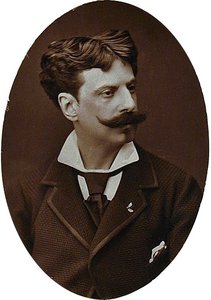
Alphonse de Neuville
1835 - 1885 , France
En bref
- Artistes Influents:
- Eugène Delacroix
- François Édouard Picot
- Date De Décès: 18 mai 1885
- Date De Naissance: 31 mai 1835
- Lieu De Naissance: Saint-Omer, France
- Mouvement Artistique: Academicisme
- Nationalité: Française
- Nom Complet: Alphonse-Marie-Adolphe de Neuville
- Oeuvres Notables:
- La Charge de la brigade légère
- La Défense de Palma Major
Articles connexes

Goya : 25 Chefs-d'Œuvre Inoubliables d'un Maître de l'Âme
Plongez au cœur de l'œuvre inégalable de Goya ! Découvrez 25 chefs-d’œuvre emblématiques, des portraits saisissants aux scènes dramatiques. Explorez la vie et l'art du maître espagnol avec OriginalUniqueArt.com – reproductions d'art de qualité musée et inspirations déco.

Echoes of Trauma & Hope: Representing Transformation in Artworks of 1918
Explore the profound artistic responses to World War I's trauma & hope. Discover Expressionist masterpieces by Bacon, de Kooning & more. Expert insights for collectors & art enthusiasts at OriginalUniqueArt.

À propos de nous
Découvrez notre univers artistique ! Nous mettons l’art de renommée mondiale à portée de main grâce à une sélection pointue, des créations sur mesure et des conseils personnalisés. Apprécié des particuliers et des professionnels depuis plus de 20 ans.

Willem de Kooning : Abstraction, Geste et Évolution de la Peinture Américaine d'Après-Guerre
Explorez l'évolution artistique de Willem de Kooning et son rôle clé dans l'expressionnisme abstrait américain. Analyse approfondie, influences européennes et héritage durable pour les collectionneurs avertis.

William Owen: A Poetic Vision of War & Landscape in British Modernism
Explore the poignant war poetry of Wilfred Owen, a key figure in British Modernism. Discover his innovative style, themes of loss & camaraderie, and lasting impact on 20th-century literature. Analysis & historical context included.
