

 Aperçu en situation
 Envoyer
 Partager
 Détails de l'œuvre
 Guide
Guide

 Télécharger l'image
 Articles similaires
 Radiographie
 Diaporama
 Q&A
Q&A Statistiques
George III (1738–1820)
 Oil On Canvas
- WallArt
- Neoclassicism
 214.0 x 150.0 cm
 Royal Hospital Chelsea
 Lire la suite
Reproduction à l'huile faite à la main
Huile sur toile peinte à la main, avec cadre et dimensions personnalisés, réalisée sur commande par nos artistes. ( Passer au format impression Passer au format numérique)




P118B €10

P118H €10

P118W €10

P438Z €10

P508JH €12

P508YH €12

P805H €10

P805Z €10

P919BZ €10

P919G €10

P919XJ €10

P959ZH €10

P968JZ €12

W106C €8

W218G €10

W218JH €8

W218Y €10

W307PJ €10

W316G €10

W316PJ €8

W316Y €10

W398PJ €8

W4111J €10

W500HY €15

W500JH €15

W692G €12

W849H €8

W940BG €15

W953PJ €8




Choisissez parmi nos formats prédéfinis qui respectent les proportions originales de l’œuvre.

Saisissez la largeur et la hauteur souhaitées, pour s'adapter à votre cadre ou à votre mur. Cette œuvre est peinte à la main ; ainsi, pour un format de forme différente, l'artiste peut peindre un peu plus autour du tableau ou réduire légèrement les bords — c'est vous qui choisissez. Nous vous envoyons une maquette numérique pour approbation avant que la peinture ne commence. L'image présentée sur cette page ne reflète pas le résultat réel — seule la maquette le fait.
Après la commande, l’équipe OriginalUniqueArt.com contactera le client par e-mail pour recueillir ses instructions et lui fournira une maquette d’aperçu
Livraison dans le monde entier () en 3 à 4 semaines au lieu des 5 semaines habituelles. (28 octobre). Aucun compromis sur la qualité.

Livraison express gratuite dans le monde entier

Toile de lin de qualité supérieure

Assurance transport complète

Garantie de remboursement des droits de douane

Garantie de fidélité des couleurs

Politique de retour de 100 jours (uniquement en cas de défaut)

Garantie de remboursement à 100%

Offre de tarifs dégressifs
 L'option verre n'est disponible que pour les dimensions inférieures à 110 cm.

George III (1738–1820)
Technique de reproduction
Format de la reproduction
-


Prix total
€ 264
A Regal Portrait: Allan Ramsay’s George III
Allan Ramsay's portrait of King George III, completed around 1761-2, is more than just a likeness; it’s a carefully constructed embodiment of power, authority, and the nascent complexities of the British monarchy. This masterful work, rendered in oil on canvas, transcends mere representation to become a window into the era's political climate and artistic sensibilities – specifically, the rise of Neoclassicism within portraiture. The painting immediately commands attention with its dramatic lighting, a key element that draws the viewer’s eye directly to the King’s face, imbuing him with an almost palpable sense of presence.
Ramsay, a leading figure in 18th-century Scottish art, expertly employs linear perspective to create a sense of depth and spatial arrangement. The throne, rendered as a robust square, anchors the composition while the draped fabric behind George III flows into a dark, indistinct background – a deliberate choice that serves to highlight the subject’s importance and elevate his status. The use of geometric shapes—squares for the throne, rectangles for the robes—contrasts with the more organic curves of the King's face, suggesting a balance between rigid formality and human warmth.
A Study in Neoclassical Detail
Examining the brushwork reveals Ramsay’s meticulous technique. Layered glazes build up color depth and luminosity, particularly noticeable in the rich textures of the royal robes – a testament to his ability to capture the sheen of velvet and the weight of heavy fabrics. The artist skillfully renders skin tones with subtle variations, avoiding overly smooth surfaces; instead, he introduces a slight roughness that lends a sense of realism and immediacy. The careful attention to detail extends to the rendering of the King’s attire: the intricate embroidery, the gleaming gold accents, and the precise folds of his garments all speak to the immense wealth and power associated with the monarchy.
The painting's palette is restrained yet sophisticated, dominated by deep reds, blues, and browns – colors traditionally linked with royalty and authority. The lighting, originating from a strong left-hand source, casts dramatic shadows that sculpt George III’s features, emphasizing his brow, cheekbones, and the solemnity of his expression. This chiaroscuro effect not only adds visual interest but also contributes to the overall sense of gravitas and dignity.
Symbolism and Historical Context
George III reigned from 1760 until his death in 1820, a period marked by significant political and military upheaval. The portrait itself is deeply symbolic, reflecting the King’s role as head of state during a time of considerable change. The crown, prominently displayed, represents sovereignty and divine right – concepts that were increasingly challenged during George III's reign. The robes, rich in color and ornamentation, symbolize his wealth and status, while the scepter and orb further reinforce his authority.
Ramsay’s work was commissioned during a pivotal moment in British history—the early years of George III’s rule. The King's reign coincided with the Seven Years’ War and the subsequent American Revolution, events that profoundly shaped the course of British history. The portrait, therefore, can be interpreted as an attempt to project an image of stability and strength at a time of considerable uncertainty. It is also important to note that this particular painting was one of many commissioned by the King, reflecting his desire to solidify his position and assert his authority.
A Legacy of Elegance
Allan Ramsay’s portrait of George III stands as a remarkable achievement of Neoclassical portraiture. It is a testament to the artist's technical skill, his understanding of symbolism, and his ability to capture the essence of a historical figure. Reproductions of this iconic image continue to resonate with viewers today, offering a glimpse into the grandeur and complexities of 18th-century Britain. The painting’s enduring appeal lies not only in its aesthetic beauty but also in its ability to evoke a sense of history, power, and timeless elegance.
Questions et réponses
Que représente «George III (1738–1820)» de Allen Ramsay ?
Les thèmes présents dans «George III (1738–1820)» de Allen Ramsay incluent royal portraiture, 18th century britain, george iii, king, neoclassical art, scottish nobility, portrait painting, regal authority. Ensemble, ils résument le sujet de l'œuvre.
Quel usage et quel espace sont recommandés pour «George III (1738–1820)» de Allen Ramsay ?
«George III (1738–1820)» de Allen Ramsay est recommandé pour Statement, idéalement dans une Living Room. L'usage et l'espace permettent de déterminer où placer une reproduction.
En quoi "George III (1738–1820)" s'inscrit-il dans l'œuvre de Allen Ramsay ?
Au sein de la production de Allen Ramsay, « George III (1738–1820) » s'inscrit dans le style Neoclassicism, tout en explorant les thèmes de classical ideals, roman influence, royal power, british identity, political authority, monarchy, ramsay's aristocratic portraits, scottish nobility depiction.
Biographie de l'artiste
Allan Ramsay : Une Vie d'Élégance et de Talent artistique
Jeunesse et Formation
Né à Édimbourg, en Écosse, le 13 octobre 1713, Allan Ramsay est devenu un portraitiste écossais renommé dont l'œuvre capturait l'élégance et la raffinement de son époque. Son parcours artistique a commencé à l'âge de vingt ans lorsqu'il s'est rendu à Londres pour y étudier auprès du peintre suédois Hans Hysing, suivi d'une instruction à l'Académie de St. Martin’s Lane. Cette formation initiale lui a fourni une base solide en technique et en composition.
Influences Italiennes et Développement Artistique
Le développement artistique de Ramsay a pris une tournure significative avec ses voyages à Rome et Naples, où il y a passé trois ans (1736-1738) sous la tutelle de Francesco Solimena et Imperiali (Francesco Fernandi). Ces maîtres italiens ont profondément influencé son style, favorisant une meilleure compréhension des principes classiques et améliorant ses compétences dans la capture du portrait et du caractère. Il a absorbé l'esthétique rococo prévalente tout en développant une appréciation pour les idéaux néoclassiques.
Carrière Florissante et Œuvres Notables
De retour en Grande-Bretagne en 1738, Ramsay a rapidement établi une carrière réussie en tant que portraitiste. Sa capacité à représenter ses sujets avec précision et grâce lui a rapidement valu une clientèle distinguée. Certaines de ses œuvres les plus notables comprennent :
- La Reine Charlotte (1744-1818) avec ses deux fils aînés (Collection Royale, Londres) : Une représentation royale mettant en valeur la présence maternelle de la reine.
- Mary Degg, Lady Robert Manners (Galerie Nationale Écossaise, Édimbourg) : Un portrait élégant démontrant le talent de Ramsay pour capturer la beauté aristocratique.
- Tête de Duncan Forbes of Culloden : Ce premier travail a attiré l'attention du Duc d'Argyll et a été présenté sur les billets de banque de la Royal Bank of Scotland.
Nomination Royale et Apogée
Un moment décisif dans la carrière de Ramsay est arrivé en 1761 avec sa nomination en tant que Peintre Principal en Ordinaire à George III. Cette position prestigieuse a consolidé son statut parmi les élites artistiques et a assuré un flux constant de commandes de la famille royale et de la haute société. Il est devenu *le* portraitiste de l'époque du Géorgien.
Vie Tardive et Héritage
La vie tardive de Ramsay a été marquée par une orientation vers les activités littéraires, reflétant ses intérêts intellectuels plus vastes. Cependant, des tragédies personnelles – un déplacement accidentel de son bras droit et le décès de sa seconde épouse en 1782 – ont affecté sa santé et sa productivité. Il est décédé en 1784.
Malgré ces défis, Ramsay a laissé derrière lui un héritage durable en tant que l'un des portraitistes les plus célèbres de l'Écosse. Comme Samuel Johnson l'a noté, « J’aime Ramsay. Vous ne trouverez pas d’homme dont la conversation soit aussi instructive, aussi pleine d’informations et d’élégance que celle de Ramsay. » Ses œuvres sont encore admirées pour leur habileté technique, leur esthétique raffinée et leurs représentations perspicaces de la société du XVIIIe siècle.
Signification Historique
La contribution d'Allan Ramsay s’étend au-delà de son talent artistique. Il a joué un rôle essentiel dans la formation de la culture visuelle écossaise pendant une période de changements sociaux et politiques importants. Ses portraits fournissent des informations précieuses sur les vies, la mode et les valeurs de la noblesse et de la gentry écossaises. Ses œuvres se trouvent dans des lieux tels que l'Hôtel-ville d'Ayr et la Galerie Nationale de Portraits d’Écosse.
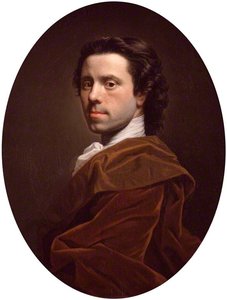
Allen Ramsay
1713 - 1784 , United Kingdom
L'essentiel de l'artiste
- Artistic Movement Or Style: Rococo et Néoclassique
- Artists Or Movements Influenced By This Artist: ['Samuel Johnson']
- Artists Who Influenced This Artist: ['Hans Hysing']
- Date Of Birth: 1713-10-13
- Full Name: Allan Ramsay
- Nationality: Écossais
- Notable Artworks:
- La Reine Charlotte avec ses deux fils aînés
- Mary Degg, Lady Robert Manners
- Tête de Duncan Forbes of Culloden
- Place Of Birth: Édimbourg, Royaume Uni
Articles connexes

Allen Ramsay: Portraiture, Patronage & Shaping Georgian Identity
Explore the life & work of Allen Ramsay, pivotal portraitist to George III. Discover his Rococo style, influence on Georgian society, and lasting legacy in British art history. Learn about his key works & patronage.

Georges Braque : Les 25 Œuvres Maîtresses du Cubisme et de la Modernité | OriginalUniqueArt
Plongez dans l'univers de Georges Braque avec les 25 œuvres incontournables du cubisme. Découvrez l'histoire, les techniques et l'impact de ce maître de l'art moderne. Reproductions d'art exceptionnelles sur OriginalUniqueArt.com.

Neoclassical Portraiture: The Timeless Elegance of Order, Grace, and Academic Mastery
Explore the refined world of Neoclassical portraiture. Discover the mastery of line, light, and order through an expert exploration of academic art history, from Jacques-Louis David to Jean-Antoine Houdon. Immerse yourself in the timeless elegance of classical realism.

Georges Seurat : Les 25 Œuvres Maîtresses du Pointillisme | OriginalUniqueArt
Plongez dans l'univers lumineux de Georges Seurat ! Découvrez les 25 œuvres majeures du pointillisme, de 'Un dimanche après-midi à l'Île de la Grande Jatte' aux 'Poseuses'. Reproductions d'art exceptionnelles et inspiration déco sur OriginalUniqueArt.com.

Majesty on Canvas: A Definitive Guide to Iconic Royal Portraits Through Art History
Explore the profound history of royal portraiture. From Baroque grandeur to Victorian elegance, discover how master artists captured power and lineage on canvas through the timeless medium of oil painting.


