

 Aperçu en situation
 Partager
 Partager
 Détails
 Guide imprimable

 Télécharger
 Articles similaires
 Radiographie
 Voir le diaporama
 Statistiques
Flora Macdonald


 Afficher la suite
Reproduction à l'huile faite à la main
Huile sur toile peinte à la main, avec cadre et dimensions personnalisés, réalisée sur commande par nos artistes. ( Passer au format impression Passer au format image numérique)




P118B €10

P118H €10

P118W €10

P438Z €10

P508JH €12

P508YH €12

P805H €10

P805Z €10

P919BZ €10

P919G €10

P919XJ €10

P959ZH €10

P968JZ €12

W106C €8

W218G €10

W218JH €8

W218Y €10

W307PJ €10

W316G €10

W316PJ €8

W316Y €10

W398PJ €8

W4111J €10

W500HY €15

W500JH €15

W692G €12

W849H €8

W940BG €15

W953PJ €8




Choisissez parmi nos formats prédéfinis qui respectent les proportions originales de l’œuvre.

Saisissez la largeur et la hauteur souhaitées, pour s'adapter à votre cadre ou à votre mur. Cette œuvre est peinte à la main ; ainsi, pour un format de forme différente, l'artiste peut peindre un peu plus autour du tableau ou réduire légèrement les bords — c'est vous qui choisissez. Nous vous envoyons une maquette numérique pour approbation avant que la peinture ne commence. L'image présentée sur cette page ne reflète pas le résultat réel — seule la maquette le fait.
Après la commande, l’équipe OriginalUniqueArt.com contactera le client par e-mail pour recueillir ses instructions et lui fournira une maquette d’aperçu
Livraison dans le monde entier () en 3 à 4 semaines au lieu des 5 semaines habituelles. (21 octobre). Aucun compromis sur la qualité.

Livraison express gratuite dans le monde entier

Toile de lin de haute qualité

Assurance transport complète

Garantie de remboursement des droits de douane

Garantie de fidélité des couleurs

Garantie de retour de 100 jours (uniquement en cas de défaut)

Garantie de remboursement à 100%

Tarifs dégressifs sur quantité
 L'option verre n'est disponible que pour les dimensions inférieures à 110 cm.

Flora Macdonald
Technique de reproduction
Format de la reproduction
-


Prix total final
€ 262
Flora Macdonald: A Portrait of Courage and Resilience
Allan Ramsay’s “Flora Macdonald,” painted in 1749, is more than just a likeness; it's a potent distillation of Scottish history, embodying the spirit of rebellion and the quiet heroism of an ordinary woman thrust into extraordinary circumstances. Housed within the Ashmolean Museum’s collection in Oxford, this oil on canvas portrait captures a pivotal moment – the clandestine assistance offered to Charles Edward Stuart after the devastating Battle of Culloden, a scene that has resonated through generations.
Ramsay, a master of capturing both aristocratic elegance and subtle emotion, skillfully portrays Flora as a young woman of striking composure. Her fair skin and dark hair are rendered with meticulous detail, styled in an updo indicative of the late 18th century’s fashion trends. The neutral expression on her face—a slight parting of her lips suggesting either a recent utterance or a thoughtful pause—allows the viewer to project their own interpretations onto her demeanor. The carefully chosen attire – a blue dress with a high collar and puffy sleeves, complemented by a vibrant red plaid shawl draped over her shoulder – speaks volumes about her social standing and adds a touch of warmth to the otherwise formal composition.
A Dramatic Narrative in Paint
The painting’s power lies not just in its technical brilliance but also in the narrative it conveys. The red plaid, instantly recognizable as associated with Clan MacDonald, immediately anchors Flora within her Highland heritage and subtly hints at the turbulent events surrounding her. Crucially, she holds a small bouquet of white and pink blooms – flowers often symbolizing purity, remembrance, and even sacrifice – suggesting both her role in protecting the Prince and the poignant cost of his ambition. The placement of her hand resting on what appears to be a chair or bench subtly conveys a sense of weary strength, hinting at the burdens she carried.
The dark background, punctuated by subtle hints of foliage, serves to isolate Flora as the central figure, amplifying her importance within the scene. Ramsay’s use of light is particularly noteworthy; it's soft and diffused, casting gentle shadows that add depth and dimension to the portrait, creating a sense of intimacy and drawing the viewer into Flora’s world.
Historical Context: A Heroine Forged in Rebellion
Flora Macdonald’s story is inextricably linked to the Jacobite rising of 1745. Following Culloden, she risked her life to help Charles Edward Stuart, the exiled heir to the throne, evade capture by government forces. Her bravery and resourcefulness – transporting the Prince disguised as a maidservant across the Highlands – became legendary, cementing her place in Scottish folklore. The painting captures this pivotal moment of defiance against overwhelming odds, transforming a simple Highland woman into a symbol of resistance.
It’s important to note that the portrait's attribution has been debated over time; initially believed to be Flora Macdonald, it is now widely considered to be a generic representation of a lady. However, its enduring popularity and association with the iconic story of her bravery ensure its continued significance within the art historical canon.
Symbolism and Emotional Resonance
Beyond the factual details of the Jacobite uprising, “Flora Macdonald” resonates deeply due to its exploration of themes such as courage, loyalty, and sacrifice. Flora’s quiet dignity and resolute expression speak volumes about her inner strength and unwavering commitment to a cause greater than herself. The painting invites contemplation on the complexities of historical events and the often-unrecognized heroism found in ordinary individuals. It's a powerful reminder that even in times of great upheaval, acts of kindness and bravery can leave an indelible mark on history – and on our collective imagination.
Questions et réponses
Quelle saturation et quelle intensité «Flora Macdonald» de Allen Ramsay présente-t-il ?
Les couleurs de «Flora Macdonald» de Allen Ramsay présentent une saturation Muted avec une intensité Monochromatic.
Comment la palette de «Flora Macdonald» de Allen Ramsay est-elle décrite ?
«Flora Macdonald» de Allen Ramsay utilise une palette de couleurs Earthy. Cette palette résume le caractère chromatique global de l'œuvre.
Puis-je visionner « Flora Macdonald » sous forme de diaporama en plein écran ?
Vous pouvez visionner «Flora Macdonald» de Allen Ramsay sous forme de diaporama sur la page Diaporama de l'œuvre.
Biographie de l'artiste
Allan Ramsay : Une Vie d'Élégance et de Talent artistique
Jeunesse et Formation
Né à Édimbourg, en Écosse, le 13 octobre 1713, Allan Ramsay est devenu un portraitiste écossais renommé dont l'œuvre capturait l'élégance et la raffinement de son époque. Son parcours artistique a commencé à l'âge de vingt ans lorsqu'il s'est rendu à Londres pour y étudier auprès du peintre suédois Hans Hysing, suivi d'une instruction à l'Académie de St. Martin’s Lane. Cette formation initiale lui a fourni une base solide en technique et en composition.
Influences Italiennes et Développement Artistique
Le développement artistique de Ramsay a pris une tournure significative avec ses voyages à Rome et Naples, où il y a passé trois ans (1736-1738) sous la tutelle de Francesco Solimena et Imperiali (Francesco Fernandi). Ces maîtres italiens ont profondément influencé son style, favorisant une meilleure compréhension des principes classiques et améliorant ses compétences dans la capture du portrait et du caractère. Il a absorbé l'esthétique rococo prévalente tout en développant une appréciation pour les idéaux néoclassiques.
Carrière Florissante et Œuvres Notables
De retour en Grande-Bretagne en 1738, Ramsay a rapidement établi une carrière réussie en tant que portraitiste. Sa capacité à représenter ses sujets avec précision et grâce lui a rapidement valu une clientèle distinguée. Certaines de ses œuvres les plus notables comprennent :
- La Reine Charlotte (1744-1818) avec ses deux fils aînés (Collection Royale, Londres) : Une représentation royale mettant en valeur la présence maternelle de la reine.
- Mary Degg, Lady Robert Manners (Galerie Nationale Écossaise, Édimbourg) : Un portrait élégant démontrant le talent de Ramsay pour capturer la beauté aristocratique.
- Tête de Duncan Forbes of Culloden : Ce premier travail a attiré l'attention du Duc d'Argyll et a été présenté sur les billets de banque de la Royal Bank of Scotland.
Nomination Royale et Apogée
Un moment décisif dans la carrière de Ramsay est arrivé en 1761 avec sa nomination en tant que Peintre Principal en Ordinaire à George III. Cette position prestigieuse a consolidé son statut parmi les élites artistiques et a assuré un flux constant de commandes de la famille royale et de la haute société. Il est devenu *le* portraitiste de l'époque du Géorgien.
Vie Tardive et Héritage
La vie tardive de Ramsay a été marquée par une orientation vers les activités littéraires, reflétant ses intérêts intellectuels plus vastes. Cependant, des tragédies personnelles – un déplacement accidentel de son bras droit et le décès de sa seconde épouse en 1782 – ont affecté sa santé et sa productivité. Il est décédé en 1784.
Malgré ces défis, Ramsay a laissé derrière lui un héritage durable en tant que l'un des portraitistes les plus célèbres de l'Écosse. Comme Samuel Johnson l'a noté, « J’aime Ramsay. Vous ne trouverez pas d’homme dont la conversation soit aussi instructive, aussi pleine d’informations et d’élégance que celle de Ramsay. » Ses œuvres sont encore admirées pour leur habileté technique, leur esthétique raffinée et leurs représentations perspicaces de la société du XVIIIe siècle.
Signification Historique
La contribution d'Allan Ramsay s’étend au-delà de son talent artistique. Il a joué un rôle essentiel dans la formation de la culture visuelle écossaise pendant une période de changements sociaux et politiques importants. Ses portraits fournissent des informations précieuses sur les vies, la mode et les valeurs de la noblesse et de la gentry écossaises. Ses œuvres se trouvent dans des lieux tels que l'Hôtel-ville d'Ayr et la Galerie Nationale de Portraits d’Écosse.
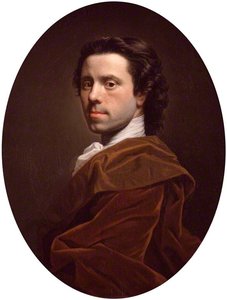
Allen Ramsay
1713 - 1784 , United Kingdom
En bref
- Artistic Movement Or Style: Rococo et Néoclassique
- Artists Or Movements Influenced By This Artist: ['Samuel Johnson']
- Artists Who Influenced This Artist: ['Hans Hysing']
- Date Of Birth: 1713-10-13
- Full Name: Allan Ramsay
- Nationality: Écossais
- Notable Artworks:
- La Reine Charlotte avec ses deux fils aînés
- Mary Degg, Lady Robert Manners
- Tête de Duncan Forbes of Culloden
- Place Of Birth: Édimbourg, Royaume Uni
Articles connexes
George Paul Chalmers: Rediscovering the Angus Rembrandt & Scottish Colourist Roots
Explore the captivating world of George Paul Chalmers (1833-1878), a pivotal Scottish painter. Discover his landscapes, portraits & connection to the Aesthetic Movement and Colourists. Learn about this 'Angus Rembrandt's' legacy with OriginalUniqueArt.
Sir John Watson Gordon: A Study in Scottish Landscape Painting & Tonal Impressionism
Explore the captivating portraits of Sir John Watson Gordon, a leading Scottish master. Discover his evolution from neoclassical style to atmospheric Tonalism and influence on 19th-century British art. Learn about his iconic sitters & legacy.

James Giles: Capturing Scottish Life Through the Lens of British Realism
Explore the life & work of James Giles (1801-1870), a master of Scottish landscape painting and favored artist of Queen Victoria. Discover his atmospheric realism & royal commissions.
Alexander Nasmyth: Picturing Scotland's Romantic Landscape – Innovation & Identity
Explore the life & art of Alexander Nasmyth, a pivotal figure in Scottish Romantic landscape painting. Discover his iconic works, including portraits of Robert Burns, and learn about his lasting influence on national identity. Fine art reproductions available.

Allen Ramsay: Portraiture, Patronage & Shaping Georgian Identity
Explore the life & work of Allen Ramsay, pivotal portraitist to George III. Discover his Rococo style, influence on Georgian society, and lasting legacy in British art history. Learn about his key works & patronage.


