

 Aperçu en situation
 Partager
 Partager
 Détails
 Guide imprimable

 Télécharger
 Articles similaires
 Radiographie
 Voir le diaporama
 Statistiques
Two Towers--New York
 Acrylic On Canvas
- WallArt
- Pictorialism
 1911
1911 32.0 x 25.0 cm
 Amon Carter Museum of American Art
 Afficher la suite
Giclées et impressions d'art
Impressions giclées ou sur toile de qualité musée, avec une production rapide et des finitions au choix. ( Acheter la peinture faite à la main Passer au format image numérique)




P118B $10

P118H $10

P118W $10

P438Z $10

P508JH $12

P508YH $12

P805H $10

P805Z $10

P919BZ $10

P919G $10

P919XJ $10

P959ZH $10

P968JZ $12

W106C $8

W218G $10

W218JH $8

W218Y $10

W307PJ $10

W316G $10

W316PJ $8

W316Y $10

W398PJ $8

W4111J $10

W500HY $15

W500JH $15

W692G $12

W849H $8

W940BG $15

W953PJ $8




Choisissez parmi nos formats prédéfinis qui respectent les proportions originales de l’œuvre.

Vous pouvez saisir vos propres dimensions pour vous adapter à un cadre ou à un espace spécifique. Si la taille sélectionnée ne correspond pas aux proportions de l'image originale, nous recadrerons l'œuvre ou étendrons l'image avec une bordure en miroir ou une couleur unie. Une maquette numérique vous sera envoyée pour approbation avant le début de la production.
Veuillez noter que l'aperçu à l'écran ne reflète pas le recadrage ou l'extension réelle. Seule la maquette montrera avec précision la composition finale.
Bien que des tailles personnalisées soient disponibles, nous vous recommandons de choisir une dimension dans la liste prédéfinie afin de préserver les proportions originales.
Livraison dans le monde entier () en 2 semaines au lieu des 4/5 semaines habituelles. (26 septembre)

Livraison express gratuite dans le monde entier

Toile de lin de haute qualité

Assurance transport complète

Garantie de remboursement des droits de douane

Garantie de fidélité des couleurs

Garantie de retour de 100 jours (uniquement en cas de défaut)

Garantie de remboursement à 100%

Tarifs dégressifs sur quantité
 L'option verre n'est disponible que pour les dimensions inférieures à 110 cm.

Two Towers--New York
Giclées et impressions d'art
Format de la reproduction
-


Prix total final
$ 80
A Monumental Study in Monochrome: Two Towers—New York by Alfred Stieglitz
Alfred Stieglitz’s “Two Towers—New York,” created in 1911 and subsequently printed in 1913, stands as a cornerstone of Pictorialism – a movement that fundamentally reshaped the perception of photography as an art form. More than just a depiction of New York City’s skyline during its burgeoning industrial era, this starkly beautiful image embodies Stieglitz's unwavering belief in elevating photographic processes to rival those of painting, achieving a level of artistic sophistication previously unattainable. The photograph captures two towering skyscrapers dominating the wintry landscape—likely structures within St. Patrick’s Cathedral—against a backdrop of snow-covered rooftops and bare branches. Stieglitz eschewed color entirely, opting for a masterful monochrome palette achieved through a silver gelatin print on photographic paper. This deliberate choice wasn't merely stylistic; it reflected Pictorialist principles that prioritized tonal range and subtle shading to convey emotion and atmosphere akin to the Impressionists’ approach. The resulting grayscale image possesses an arresting stillness, inviting contemplation of form, texture, and the interplay between architectural grandeur and natural vulnerability. Stieglitz meticulously crafted “Two Towers” using a large format camera—a technique that allowed for exceptional detail and precision—capturing the intricate textures of weathered stone and the delicate snowfall clinging to the tree limbs. The composition centers on the vertical thrust of the towers, balanced by the horizontal expanse of the snow cover, creating a harmonious visual rhythm. Light plays a crucial role in shaping the mood; diffused overcast conditions illuminate the scene softly, highlighting subtle variations in tone and accentuating the textures of both building material and winter foliage. Beyond its technical prowess, “Two Towers” resonates with symbolic significance. The bare tree branch serves as a poignant reminder of resilience amidst adversity—a visual metaphor for enduring faith—while the towering skyscrapers represent stability and aspiration against the backdrop of a rapidly changing urban environment. Stieglitz’s intention was to transcend mere documentation; he sought to evoke an emotional response in the viewer, mirroring the contemplative spirit of Impressionism and establishing photography as a vehicle for artistic expression. The photograph's enduring appeal lies not only in its aesthetic beauty but also in its historical context—a pivotal moment in American art history where Stieglitz championed Pictorialism’s transformative vision. Today, reproductions of “Two Towers” continue to inspire interior designers and collectors alike, demonstrating the timeless power of Stieglitz’s artistic conviction: that photography could aspire to the highest ideals of visual art.Biographie de l'artiste
Première Vie et Éducation
Alfred Stieglitz, un photographe américain renommé, est né le 1er janvier 1864 à Hoboken, dans le New Jersey. Sa famille, d'origine juive allemande, lui a offert un environnement intellectuellement stimulant. Son éducation précoce s'est déroulée à l'Institut Charlier et au City College de New York.Carrière Photographique
L'intérêt de Stieglitz pour la photographie a débuté pendant ses études à Berlin, où il a été exposé aux œuvres d'Hermann Wilhelm Vogel. Cette rencontre a suscité sa passion pour la photographie, l'amenant à acheter son premier appareil photo et à capturer les paysages européens. Ses photographies, caractérisées par le pictorialisme, ont rapidement gagné en reconnaissance. Il est considéré comme un pionnier de la photographie artistique aux États-Unis, cherchant à élever ce médium au rang d'art majeur.Œuvres Notables et Expositions
* Étude de Georgia Engelhard avec des poupées (photographie, pictorialisme) : Un exemple notable du travail de Stieglitz, mettant en valeur son approche unique du portrait. Cette œuvre illustre sa capacité à créer une atmosphère intime et émotionnelle grâce à la photographie. * The Steerage (33 x 27 cm, Amon Carter Museum of American Art, Fort Worth, États-Unis, photogravure) : Démontre la capacité de Stieglitz à capturer l'essence de la vie quotidienne. Cette photographie emblématique est souvent interprétée comme une représentation des tensions sociales et économiques de l'époque. * Son travail au 291 Gallery (fondée avec Edward Steichen et Clara Vestwetter) a été crucial pour introduire l'art moderne européen, notamment le cubisme et le futurisme, aux États-Unis, tout en promouvant les photographes américains.Influences et Héritage
Stieglitz a été influencé par Hermann Wilhelm Vogel, dont le travail a inspiré son approche pictorialiste de la photographie. Il a également été influencé par l'art européen moderne qu'il a découvert à Berlin. Son mariage avec Georgia O’Keeffe a eu une influence profonde sur sa vie et son œuvre, et il a immortalisé son épouse dans de nombreux portraits célèbres. Les contributions de Stieglitz à la photographie américaine sont indéniables. Sa dévotion à promouvoir la photographie comme forme d'art a inspiré des générations de photographes. Grâce à son travail, il a laissé une marque indélébile sur le monde de la photographie et a joué un rôle essentiel dans l'établissement de la photographie en tant que médium artistique respecté. Il est considéré comme une figure clé du modernisme américain.Collections et Lieux d’Exposition
* Le Frances Lehman Loeb Art Center (Vassar College, Poughkeepsie, New York) : présente une collection diversifiée d'art américain, comprenant des œuvres de Stieglitz. * La Staedtische Galerie im Lenbachhaus (Munich, Allemagne) : bien que ne se concentrant pas principalement sur le travail de Stieglitz, ce musée expose une impressionnante collection d'œuvres d'art de diverses périodes.- Voir les œuvres d’Alfred Stieglitz sur OriginalUniqueArt
- Explorer le Frances Lehman Loeb Art Center sur OriginalUniqueArt
- Découvrir la Staedtische Galerie im Lenbachhaus sur OriginalUniqueArt
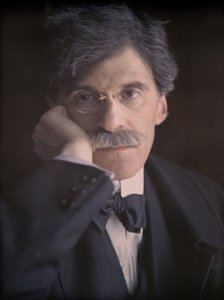
Alfred Stieglitz
1864 - 1946 , États-Unis d'Amérique
En bref
- Artistic Movement Or Style: Pictorialisme, Modernisme
- Artists Or Movements Influenced By This Artist: ['Photographes (générations)']
- Artists Who Influenced This Artist: ['Hermann Wilhelm Vogel']
- Date Of Birth: 1er janvier 1864
- Date Of Death: 1946
- Full Name: Alfred Stieglitz
- Nationality: Américain
- Notable Artworks:
- Study of Georgia Engelhard
- The Steerage
- Place Of Birth: Hoboken, États-Unis
Articles similaires

Monochrome Visions: Exploring the Aesthetic & Historical Significance of Black & White Photography
Explore the rich history & artistic power of black and white photography. From early techniques to iconic masters like Ansel Adams, discover why monochrome continues to captivate art lovers today. Expert insights for collectors.

Beyond the Lens: Photography's Enduring Influence on Modern & Contemporary Art
Explore photography's pivotal role in shaping modern & contemporary art. Discover key movements, influential artists like Stieglitz, and expert collecting advice from OriginalUniqueArt.

Munnings : Les 25 Œuvres Maîtresses du Cavalier Anglais | OriginalUniqueArt
Plongez dans l'univers vibrant d'Alfred Munnings ! Découvrez les 25 œuvres maîtresses du peintre anglais, icônes de l'art équestre et de l'impressionnisme britannique. Tableaux de chevaux, paysages idylliques… Trouvez votre inspiration déco sur OriginalUniqueArt.com.

Le Pictorialisme : Quête de l'Âme Artistique de la Photographie – Esthétiques, Techniques et Héritage
Explorez l'histoire du Pictorialisme, mouvement clé de la photographie artistique. Découvrez ses techniques (gum bichromate, bromoil), figures emblématiques et son héritage durable. Analyse approfondie par OriginalUniqueArt.
Beyond Color: The Timeless Power and Artistry of Black and White Photography
Explore the profound artistry of black and white photography. From the chemistry of gelatin silver to the chiaroscuro of the Old Masters, discover how monochrome captures the eternal essence of light, form, and emotion for the discerning art collector.
