

 Aperçu en situation
 Partager
 Partager
 Détails
 Guide imprimable

 Télécharger
 Articles similaires
 Radiographie
 Voir le diaporama
 Statistiques
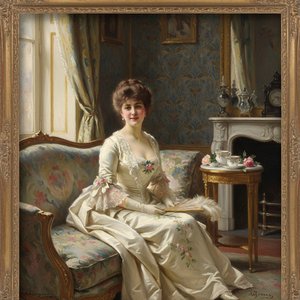
Visit to the Studio


 Afficher la suite
Reproduction à l'huile faite à la main
Huile sur toile peinte à la main, avec cadre et dimensions personnalisés, réalisée sur commande par nos artistes. ( Passer au format impression Passer au format image numérique)




P118B €10

P118H €10

P118W €10

P438Z €10

P508JH €12

P508YH €12

P805H €10

P805Z €10

P919BZ €10

P919G €10

P919XJ €10

P959ZH €10

P968JZ €12

W106C €8

W218G €10

W218JH €8

W218Y €10

W307PJ €10

W316G €10

W316PJ €8

W316Y €10

W398PJ €8

W4111J €10

W500HY €15

W500JH €15

W692G €12

W849H €8

W940BG €15

W953PJ €8




Choisissez parmi nos formats prédéfinis qui respectent les proportions originales de l’œuvre.

Vous pouvez saisir vos propres dimensions pour l'adapter à un cadre ou à un espace spécifique. Si la taille sélectionnée ne correspond pas aux proportions de l'image d'origine, nous recadrerons l'œuvre ou prolongerons la peinture avec des éléments peints à la main supplémentaires. Une maquette numérique vous sera envoyée pour approbation avant le début de la production.
Veuillez noter que l'aperçu à l'écran ne reflète pas le recadrage ou l'extension réels. Seule la maquette montrera fidèlement la composition finale.
Bien que des tailles personnalisées soient disponibles, nous vous recommandons de sélectionner une dimension dans la liste prédéfinie afin de préserver les proportions d'origine.
Après la commande, l’équipe OriginalUniqueArt.com contactera le client par e-mail pour recueillir ses instructions et lui fournira une maquette d’aperçu
Livraison dans le monde entier () en 3 à 4 semaines au lieu des 5 semaines habituelles. (7 octobre). Aucun compromis sur la qualité.

Livraison express gratuite dans le monde entier

Toile de lin de haute qualité

Assurance transport complète

Garantie de remboursement des droits de douane

Garantie de fidélité des couleurs

Garantie de retour de 100 jours (uniquement en cas de défaut)

Garantie de remboursement à 100%

Tarifs dégressifs sur quantité
 L'option verre n'est disponible que pour les dimensions inférieures à 110 cm.

Visit to the Studio
Technique de reproduction
Format de la reproduction
-


Prix total final
€ 258
An Intimate Encounter: The Elegance of Alfred Stevens
In the quiet, sun-drenched corners of 19th-century Parisian life, few artists captured the essence of modern sophistication quite like Alfred Stevens. His masterpiece, "Visit to the Studio," invites the viewer into a private, whispered moment between two women, suspended in time. This painting is not merely a depiction of a room; it is an exploration of grace, social poise, and the delicate interplay of light and shadow. As we gaze upon the scene, we find ourselves uninvited guests to a serene encounter, where the boundaries between the public persona and private intimacy begin to blur.
The composition is a triumph of Academicism, characterized by a profound sense of balance and harmony. Stevens masterfully positions the two protagonists to create a rhythmic symmetry that guides the eye across the canvas. On the left, a woman stands with an air of poised contemplation, her hand resting on her hip, while on the and, another woman sits in a state of relaxed elegance. This structural equilibrium is deepened by the artist's expert use of chiaroscuro, where light dances across fine fabrics and illuminates the textures of the room, lending a three-dimensional vitality to the entire setting.
A Symphony of Texture and Tradition
Technically, "Visit to the Studio" serves as a testament to Stevens’s command over the oil medium. The artist employs a meticulous approach to detail, a hallmark of the French Academic Art Movement, which allows for a rich, tactile experience. One can almost feel the weight of the elaborate fabrics worn by the women and the smooth surface of the porcelain vase resting nearby. Every brushstroke is purposeful, contributing to a realistic representation that celebrates the beauty of the mundane. The inclusion of everyday objects—a chair, a potted plant, a soft couch in the background—anchors the scene in a tangible reality, making the elegance of the subjects feel both aspirational and accessible.
Beyond the surface level of realism, there is an underlying narrative of social transition. Created during an era when the art world was being shaken by the rise of Impressionism and Art Deco, Stevens’s commitment to the Academic style provides a sense of continuity and timelessness. He captures a specific moment in history where the allure of the upper-middle class was at its zenith. The painting does not seek to shock, but rather to enchant, using the familiar setting of a studio visit to explore themes of companionship and the quiet dignity of the modern woman.
An Inspiration for the Discerning Collector
For the art lover or interior designer, "Visit to the Studio" offers more than just visual beauty; it provides an atmosphere of refined tranquility. The painting’s palette and composition make it a versatile centerpiece, capable of adding a layer of historical depth and sophisticated charm to any high-end space. Whether placed in a contemporary gallery setting or a classic study, the work radiates a sense of calm and cultured taste.
Owning a reproduction of this work allows one to bring the luminous spirit of 19th-century Brussels and Paris into the modern home. It is an invitation to appreciate the enduring power of tradition and the subtle magic found in life's most quiet, elegant moments. To display this piece is to celebrate the mastery of Alfred Stevens and to surround oneself with a legacy of unparalleled craftsmanship and aesthetic grace.
Questions et réponses
Puis-je commander une reproduction à l'huile de « Visit to the Studio » ?
« Visit to the Studio » est disponible en tant que une reproduction à l'huile peinte à la main sur toile de lin. La commande peut être effectuée sur cette page, avec un choix de formats.
De quoi est composé "Visit to the Studio" et dans quel style est-il réalisé ?
«Visit to the Studio» de Alfred Stevens allie la technique de Oil On Canvas au style Academicism. La technique et le mouvement décrivent respectivement la réalisation et le style de l'œuvre.
Quelle atmosphère une reproduction de «Visit to the Studio» de Alfred Stevens apporterait-elle à une pièce ?
Avec son atmosphère Classic, « Visit to the Studio » est suggéré pour une Living Room.
De quel type d'œuvre s'agit-il pour "Visit to the Studio" ?
« Visit to the Studio » est une œuvre de type WallArt.
Où puis-je acheter une impression de «Visit to the Studio» de Alfred Stevens ?
«Visit to the Studio» est disponible en tant que une impression d'art sur toile de coton ou sur papier canvas d'archive. Les commandes s'effectuent sur cette page, dans le format de votre choix.
Existe-t-il un guide pour «Visit to the Studio» de Alfred Stevens ?
Une page Guide est disponible pour «Visit to the Studio» de Alfred Stevens : une fiche d'information imprimable sur l'œuvre, conçue pour les étudiants et un usage pédagogique en classe.
Qui a créé "Visit to the Studio" ?
« Visit to the Studio » a été créé par Alfred Stevens. Les informations présentes sur cette page décrivent l'œuvre originale de Alfred Stevens.
Biographie de l'artiste
Early Life and Training
Alfred Émile Léopold Stevens (1823–1906) was born in Brussels, Belgium, to a family deeply rooted in the visual arts. His father, Maurice Mallet, established himself as an art collector, amassing watercolors by Eugène Delacroix among other treasures. His older brother Joseph (1816–1892), and son Léopold (1866–1935) were also painters, while another brother Arthur (1825–99) served as an art dealer and critic. Artistic inclination was evident from a young age; Stevens’s upbringing fostered an appreciation for artistic excellence and encouraged exploration of creative pursuits. He studied at the Académie royale des Beaux-arts in Brussels until 1843, where he honed his skills under the tutelage of François Navez, a neo-classical painter who instilled in him a foundational understanding of artistic principles. This formative period shaped Stevens’s aesthetic sensibilities and established him on a path toward mastering traditional techniques.Rise to Parisian Prominence
In 1843, Stevens relocated to Paris, joining his brother Joseph, and was admitted to the École des Beaux-arts—a prestigious institution that attracted aspiring artists from across Europe. Recognizing the importance of exposure to diverse artistic currents, Stevens sought inspiration in the vibrant cultural landscape of Paris. He quickly gained recognition for his talent and ambition, aligning himself with fellow innovators who championed new approaches to artmaking. His debut at the Brussels Salon in 1851 garnered considerable acclaim, securing him a third-class medal—a significant accomplishment that validated his artistic vision. Simultaneously, he exhibited alongside Gustave Courbet’s groundbreaking *Stone-Breakers*, marking Stevens's engagement with the burgeoning realist movement and its challenge to academic conventions. The Salon of 1853 awarded him a second-class medal at the Universal Exposition in Paris—further cementing his reputation as a rising star within the Parisian art world.The Influence of Dutch Genre Painting
Stevens’s artistic style was profoundly shaped by the legacy of 17th-century Dutch genre painting, particularly Rembrandt and Frans Hals. These masters championed naturalism and psychological insight, prioritizing emotional resonance over idealized representation. Stevens absorbed these stylistic precepts, incorporating them into his own oeuvre—most notably in his early paintings like The Pardon or Absolution (hermitage, st. petersburg), signed and dated 1849. This work exemplifies Stevens’s commitment to meticulous observation and nuanced portrayal of human experience—characteristics that would define his artistic trajectory throughout his career.Notable Achievements & Legacy
Alfred Stevens achieved unparalleled success during the Second Empire era, becoming a celebrated figure in Parisian society and establishing himself as one of the foremost painters of his time. His depictions of elegant modern women captivated audiences and critics alike—reflecting the prevailing fascination with fashion and domestic life within Belle Époque culture. He received the Legion of Honor (Chevalier) from the French government in 1863 and was promoted to Officer of the Legion of Honor in 1867—honors that acknowledged his artistic contributions and cemented his position as a titan of realism. Stevens’s enduring legacy resides in his masterful execution of traditional techniques, coupled with an unwavering dedication to capturing the essence of human emotion and psychological complexity. His paintings continue to inspire admiration for their beauty and intellectual depth—testaments to Stevens's profound understanding of artmaking and its capacity to illuminate the human condition.
Alfred Stevens
1823 - 1906 , Belgique
En bref
- Artistic Movement Or Style: Academic Realism
- Artists Or Movements Influenced By This Artist: ['École des Beaux-Arts Paris']
- Artists Who Influenced This Artist:
- Jean Auguste Dominique Ingres
- Dutch Masters
- Date Of Birth: May 11, 1823
- Date Of Death: August 24, 1906
- Full Name: Alfred Émile Léopold Stevens
- Nationality: Belgian
- Notable Artworks:
- La Dame en Rose
- Visit to the Studio
- Dessin préparatoire au 'Panorama du siècle', 'L'Impératrice Joséphine et sa Cour
- Place Of Birth: Brussels, Belgium
Articles similaires

25 Masterpieces by Sir Alfred James Munnings: The Essence of British Equine Art
Immerse yourself in the vibrant world of Sir Alfred James Munnings. Explore 25 iconic equine masterpieces capturing the soul of the British countryside through impressionistic light and movement. Find museum-quality art reproductions at OriginalUniqueArt.com. Discover all masterpieces online.

Masterpieces of Motion: The Top 25 Artworks by Sir Alfred James Munnings
Experience the vibrant spirit of British equestrian art through the top 25 masterpieces by Sir Alfred James Munnings. From impressionistic landscapes to iconic horse portraits, explore timeless stories and museum-quality reproductions for your decor. Discover all masterpieces on OriginalUniqueArt.com.
Alfred Stevens: Capturing Parisian Elegance & Fin-de-Siècle Intimacy
Discover the captivating world of Alfred Stevens, master of Parisian elegance & intimate portraiture. Explore his techniques, influences, and legacy – a prized collection for discerning art enthusiasts.

Mastering the Equine Spirit: The Top 25 Artworks by Sir Alfred James Munnings
Immerse yourself in the vibrant equine world of Sir Alfred James Munnings. Explore 25 iconic masterpieces capturing the soul of the British countryside through impressionistic light and movement. Find museum-quality art reproductions for your collection. Discover all masterpieces on OriginalUniqueArt.com

Les 25 chefs-d'œuvre de Sir Alfred James Munnings : l'âme de la campagne anglaise
Plongez dans l'univers équestre de Sir Alfred James Munnings. Explorez 25 chefs-d'œuvre entre impressionnisme et tradition rurale. Trouvez l'inspiration avec nos reproductions d'art de qualité musée pour votre décoration. Découvrez tous les chefs-d'œuvre sur OriginalUniqueArt.com.