

 Aperçu en situation
 Envoyer
 Partager
 Détails de l'œuvre

 Télécharger
 Articles similaires
 Radiographie
 Diaporama
Portrait de Mme Roll
 Lire la suite
Reproduction à l'huile faite à la main
Huile sur toile peinte à la main, avec cadre et dimensions personnalisés, réalisée sur commande par nos artistes. ( Passer au tirage Passer à l'image)




































Choisissez parmi nos formats prédéfinis qui respectent les proportions originales de l’œuvre.

Vous pouvez saisir vos propres dimensions pour l'adapter à un cadre ou à un espace spécifique. Si la taille sélectionnée ne correspond pas aux proportions de l'image d'origine, nous recadrerons l'œuvre ou prolongerons la peinture avec des éléments peints à la main supplémentaires. Une maquette numérique vous sera envoyée pour approbation avant le début de la production.
Veuillez noter que l'aperçu à l'écran ne reflète pas le recadrage ou l'extension réels. Seule la maquette montrera fidèlement la composition finale.
Bien que des tailles personnalisées soient disponibles, nous vous recommandons de sélectionner une dimension dans la liste prédéfinie afin de préserver les proportions d'origine.
Après la commande, l’équipe OriginalUniqueArt.com contactera le client par e-mail pour recueillir ses instructions et lui fournira une maquette d’aperçu
Livraison dans le monde entier () en 3 à 4 semaines au lieu des 5 semaines habituelles. (11 août). Aucun compromis sur la qualité.

Livraison express gratuite dans le monde entier

Toile de lin de qualité supérieure

Assurance transport complète

Garantie de remboursement des droits de douane

Garantie de fidélité des couleurs

Politique de retour de 60 jours (uniquement en cas de défaut)

Garantie de remboursement à 100%

Offre de tarifs dégressifs
 L'option verre n'est disponible que pour les dimensions inférieures à 110 cm.

Portrait de Mme Roll
Technique de reproduction
Format de la reproduction
-


Prix total
$ 300
Biographie de l'artiste
Alfred Philippe Roll: A Parisian Realist Painter Embracing Everyday Life
Alfred Philippe Roll (1846-1919) stands as a significant figure in late 19th and early 20th century French art, recognized primarily for his meticulous depictions of urban landscapes and intimate portraits reflecting the realities of bourgeois life. Born in Paris, Roll’s artistic journey began under the tutelage of luminaries like Jean-Léon Gérôme, Henri-Joseph Harpignies, Charles-François Daubigny, and Léon Bonnat at École des Beaux-Arts, establishing a foundation rooted in academic tradition yet imbued with progressive influences.Early Influences & Romantic Beginnings
His initial canvases showcased the romantic spirit prevalent during his formative years, mirroring the stylistic trends championed by Bolognese painters and Gustave Courbet—a deliberate fusion of grandeur and observation. Roll’s artistic vision was profoundly shaped by these masters, who instilled in him a belief that art should strive to capture both beauty and truth simultaneously. This dual ambition would become a hallmark of his oeuvre throughout his career.Roll’s Breakthrough & The Franco-Prussian War
Roll’s artistic breakthrough arrived in 1869 with “Environs de Baccarat,” a landscape capturing the picturesque charm of the Champagne region. Subsequent exhibitions at Salon-de-Provence solidified his reputation, particularly "Evening," which garnered considerable acclaim. The Franco-Prussian War compelled him to serve as a lieutenant of militia, an experience that undoubtedly shaped his perspective on societal dynamics and human resilience—a theme he would revisit in several later works. This period instilled within him a deep appreciation for the dignity of labor and the importance of portraying ordinary individuals with compassion and respect.Stylistic Evolution & The Rise of Realism
Initially adhering to romantic conventions, Roll progressively transitioned towards realism, driven by a desire to portray authentic human experience. He meticulously studied the techniques employed by Courbet and other naturalists, mastering chiaroscuro—the dramatic interplay of light and shadow—to convey emotion and depth in his paintings. This stylistic shift culminated in his masterful portrayal of “Miners’ Strike” (1880), securing him a prominent position amongst France's leading painters and marking the beginning of a prolific career. The painting powerfully captures the hardships faced by working-class miners, demonstrating Roll’s commitment to social realism and elevating the status of marginalized communities in artistic representation.Major Achievements & Legacy
Roll’s governmental commissions—including murals, ceilings, and architectural embellishments—further cemented his artistic legacy. Iconic works like "President Carnot at Versailles at the Centenary of the Estates General" (1889) and “The Tsar and President Faure Laying the Foundation Stone of the Alexandre III Bridge” exemplify his commitment to documenting historical events with meticulous detail and capturing the atmosphere of significant moments. Furthermore, commissions for the Hôtel de Ville, "The Pleasures of Life," and “The Rosetime of Youth” showcased his versatility as an artist and solidified his contribution to Parisian cultural heritage. Beyond his formal commissions, Roll championed the work of fellow artist Alfred Smith, recognizing Smith’s talent in capturing the essence of Courbetian realism. His enduring influence extends across generations of painters and is commemorated by museums worldwide—including Musée du Petit Palais, Hôtel de Ville Museum, Cognac Museum, Laval Museum, Fontainebleau Palace, Pau Museum, and Geneva Museum—where his paintings stand as tangible reminders of a pivotal moment in French art history. Roll’s unwavering dedication to portraying everyday life and his masterful technique ensured that he would be remembered as one of the most accomplished artists of his time.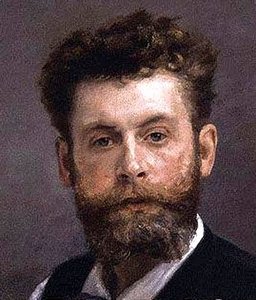
Alfred Philippe Roll
1846 - 1919 , France
L'essentiel de l'artiste
- Artistic Movement Or Style: Realism
- Artists Or Movements Influenced By This Artist: ['Gustave Courbet']
- Artists Who Influenced This Artist:
- Jean-Léon Gérôme
- Henri Joseph Harpignies
- Charles François Daubigny
- Léon Bonnat
- Date Of Birth: Paris, France (1846)
- Full Name: Alfred Philippe Roll
- Nationality: French
- Notable Artworks:
- The Flood at Toulouse
- Evening
- Place Of Birth: Paris

