
 Aperçu en situation
 Envoyer
 Partager
 Détails de l'œuvre
 Guide
Guide

 Télécharger l'image
 Articles similaires
 Radiographie
 Diaporama
 Questions et réponses
 Statistiques
Othello racontant ses batailles


 Lire la suite
Giclées et impressions d'art
Impressions giclées ou sur toile de qualité musée, avec une production rapide et des finitions au choix. ( Commander la reproduction peinte à la main Passer au format numérique)




P118B €10

P118H €10

P118W €10

P438Z €10

P508JH €12

P508YH €12

P805H €10

P805Z €10

P919BZ €10

P919G €10

P919XJ €10

P959ZH €10

P968JZ €12

W106C €8

W218G €10

W218JH €8

W218Y €10

W307PJ €10

W316G €10

W316PJ €8

W316Y €10

W398PJ €8

W4111J €10

W500HY €15

W500JH €15

W692G €12

W849H €8

W940BG €15

W953PJ €8




Choisissez parmi nos formats prédéfinis qui respectent les proportions originales de l’œuvre.

Saisissez la largeur et la hauteur souhaitées pour qu'elles s'adaptent à votre cadre ou à votre mur. Une impression peut être recadrée, mais jamais agrandie au-delà de l'image originale ; ainsi, un format de forme différente entraînera la perte d'une partie de l'image. Nous vous envoyons une maquette numérique pour approbation avant toute impression. L'image présentée sur cette page ne montre pas le recadrage réel — seule la maquette le permet.
Livraison dans le monde entier () en 2 semaines au lieu des 4/5 semaines habituelles. (7 novembre)

Livraison express gratuite dans le monde entier

Toile de lin de qualité supérieure

Assurance transport complète

Garantie de remboursement des droits de douane

Garantie de fidélité des couleurs

Politique de retour de 100 jours (uniquement en cas de défaut)

Garantie de remboursement à 100%

Offre de tarifs dégressifs
 L'option verre n'est disponible que pour les dimensions inférieures à 110 cm.

Othello racontant ses batailles
Giclées et impressions d'art
Format de la reproduction
-


Prix total
€ 72
Alexandre Cabanel’s *Othello Relating His Battles*: A Study in Romantic Intensity
Alexandre Cabanel's 1857 painting, *Othello Relating His Battles*, is more than just a depiction of Shakespearean drama; it’s a meticulously crafted embodiment of the Romantic movement’s emphasis on emotion, narrative, and the heroic figure. Executed in oil on canvas with characteristic academic precision, this work transports the viewer directly into the heart of Othello's recounted experiences – a scene brimming with tension, loyalty, and ultimately, tragic consequence. The painting’s immediate impact stems from Cabanel’s masterful use of color and light, creating a dramatic chiaroscuro that highlights Othello’s commanding presence while subtly hinting at the darkness within his narrative.
Composition and Narrative Detail
The composition itself is deliberately theatrical. Othello, rendered with powerful musculature and a resolute gaze, dominates the foreground, holding up his hand as if to emphasize a crucial detail of his tale. Kneeling before him is a woman, her posture conveying both vulnerability and rapt attention – a classic Romantic trope representing the receptive audience for heroic narratives. The three supporting figures, strategically placed around the scene, add layers of complexity to the story, suggesting a council or perhaps a group of listeners absorbing Othello’s account. The background, featuring a building subtly rendered in atmospheric perspective, provides depth and context without distracting from the central drama. A chair is positioned near the center, further emphasizing the storytelling aspect.
Romanticism and Cabanel's Style
Cabanel’s style is deeply rooted in the Romantic tradition, influenced by artists like Eugène Delacroix, though with a more controlled and classically-trained execution. His use of rich, saturated colors – deep reds, browns, and golds – contributes significantly to the painting's dramatic effect. The meticulous detail evident in Othello’s armor, the woman’s garments, and even the textures of the surrounding environment speaks to Cabanel’s commitment to realism, a hallmark of academic art. The oil on canvas medium allows for an unparalleled level of luminosity and depth, enhancing the sense of immediacy and emotional intensity within the scene. This technique was particularly valued during this period, allowing artists to achieve a heightened sense of realism.
Symbolism and Historical Context
*Othello Relating His Battles* reflects the Victorian fascination with Shakespearean drama and its exploration of themes like jealousy, honor, and betrayal. The painting’s subject matter – a Moorish general recounting his military exploits – also speaks to the broader European interest in exotic cultures during the 19th century. The scene itself is not merely a visual representation of the play; it's an interpretation, imbued with the emotional weight and dramatic intensity characteristic of Romantic art. The painting’s creation coincided with a period of significant social and political change, reflected in the heightened focus on individual heroism and moral dilemmas.
A Masterpiece of 19th-Century Art
Cabanel's *Othello Relating His Battles* stands as a testament to his skill and artistic vision. Its dramatic composition, masterful technique, and engagement with Romantic ideals make it a significant work in the history of art. A hand-painted reproduction offers an exceptional opportunity to experience this captivating scene firsthand, bringing Cabanel’s remarkable talent into your home or studio.
Questions et réponses
Quel est l'usage recommandé pour une impression de « Othello racontant ses batailles » ?
Cette impression de « Othello racontant ses batailles » est idéale pour Pièce maîtresse d'envergure.
Puis-je voir une vue aux rayons X de «Othello racontant ses batailles» de Alexandre Cabanel ?
« Othello racontant ses batailles » peut être examiné couche par couche sur la page Radiographie de l'œuvre, un visionneur inspiré d'un banc lumineux de restaurateur proposant onze lectures optiques de l'image.
Quelle taille et quel format sont recommandés pour un tirage de «Othello racontant ses batailles» de Alexandre Cabanel ?
Format Grand format, orientation Format paysage : voici la configuration d'impression suggérée pour «Othello racontant ses batailles» de Alexandre Cabanel.
Biographie de l'artiste
Premières années et formation
Alexandre Cabanel, un peintre français renommé, est né le 28 septembre 1823 à Montpellier, dans l'Hérault. À seize ans, il intègre l’École des beaux-arts de Paris où il étudie sous la direction de François-Édouard Picot.Style artistique et œuvres notables
Le style artistique de Cabanel se caractérise par son adhésion au style académique, privilégiant les sujets historiques, classiques et religieux. Il était également un portraitiste talentueux. Parmi ses œuvres les plus notables figurent :- Ophelia (1883), un chef-d'œuvre témoignant de sa capacité à saisir l’essence d’une scène.
- La Naissance de Vénus (1863), un exemple parfait de la peinture académique du XIXe siècle, acquise par l'empereur Napoléon III.
- Portrait de la Comtesse E. A. Vorontsova Dashkova, démontrant sa capacité à capturer l'essence de ses sujets.
Reconnaissance et récompenses
Le travail de Cabanel a été largement reconnu, lui valant plusieurs prix :- La bourse du Prix de Rome en 1845.
- La Grande Médaille d’Honneur lors des Salons de 1865, 1867 et 1878.
Enseignement et héritage
Cabanel a été nommé professeur à l'École des beaux-arts en 1864, où il enseigna jusqu'à sa mort. Ses élèves comprenaient de nombreux artistes talentueux, assurant ainsi son héritage dans le monde artistique. Liens notables :- Découvrez les œuvres de Cabanel sur OriginalUniqueArt : https://OriginalUniqueArt.com/@/alexandre-cabanel
- Explorez le Musée Fabre, où se trouvent de nombreuses œuvres de Cabanel : https://OriginalUniqueArt.com/@@/a@d3apl9-discover-the-musee-fabre-of-montpellier-france
- Apprenez-en davantage sur le mouvement artistique académique français : https://OriginalUniqueArt.com/@@/a@d3cqq9-the-french-academic-art-movement
Conclusion
Les contributions d'Alexandre Cabanel au monde de l'art sont indéniables. Son adhésion au style académique et son talent pour capturer l’essence de ses sujets ont laissé un impact durable sur le monde artistique.
Alexandre Cabanel
1823 - 1889 , France
L'essentiel de l'artiste
- Artistes Influents: ['François-Édouard Picot']
- Date De Naissance: 28 septembre 1823
- Lieu De Naissance: Montpellier, France
- Mouvement Artistique: Art académique
- Nationalité: Française
- Nom Complet: Alexandre Cabanel
- Oeuvres Notables:
- Ophelia (1883)
- La Naissance de Vénus (1863)
Articles connexes
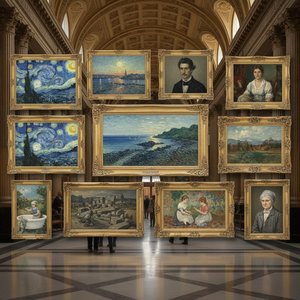
Les 10 Chefs-d'œuvre du XIXe Siècle : Artistes et Décor Intemporels
Plongez au cœur du XIXe siècle avec les 10 œuvres incontournables de Manet, Monet et Renoir. Découvrez l'histoire, les techniques et l'émotion derrière ces chefs-d'œuvre impressionnistes et réalistes. Trouvez votre reproduction idéale sur OriginalUniqueArt.com !

The Enduring Legacy of Fine Art Prints: Technique, History & Aesthetic Impact
Explore the rich history & techniques of fine art prints. Discover investment potential, assess authenticity, and learn how to preserve your collection with expert guidance. Trusted insights for discerning collectors.

L'Excellence de l'Impression Giclée : Guide Technique pour des Reproductions d'Art de Qualité Musée
Maîtrisez la technique giclée et les encres pigmentaires pour vos collections. Découvrez les secrets d'une impression de qualité musée.

Echoes of Time: Exploring the Enduring Appeal & Historical Context of Vintage Art Prints
Explore the captivating world of vintage art prints! Discover their history, collecting tips & enduring appeal. Expert insights on chromolithography and building a legacy collection with OriginalUniqueArt.

10 chefs-d'œuvre du Réalisme Romantique qui capturent l'âme humaine
Plongez dans l'émotion du Réalisme Romantique. Explorez 10 chefs-d'œuvre iconiques, de Constable à Homer, mêlant vérité et passion. Trouvez l'inspiration pour votre décor avec nos reproductions de qualité musée sur OriginalUniqueArt.com. Découvrez toute la collection en ligne.


