

 Aperçu en situation
 Partager
 Partager
 Détails

 Télécharger l'image
 Articles similaires
 Radiographie
 Voir le diaporama
Landscape with Cannon
 Gravure en creux
- Art mural
- Northern Renaissance Printmaking
 1518
1518- Renaissance
 217.0 x 322.0 cm
 Metropolitan Museum of Art
 Afficher la suite
Giclées et impressions d'art
Impressions giclées ou sur toile de qualité musée, avec une production rapide et des finitions au choix. ( Acheter la peinture faite à la main Acheter l'image)




P118B $10

P118H $10

P118W $10

P438Z $10

P508JH $12

P508YH $12

P805H $10

P805Z $10

P919BZ $10

P919G $10

P919XJ $10

P959ZH $10

P968JZ $12

W106C $8

W218G $10

W218JH $8

W218Y $10

W307PJ $10

W316G $10

W316PJ $8

W316Y $10

W398PJ $8

W4111J $10

W500HY $15

W500JH $15

W692G $12

W849H $8

W940BG $15

W953PJ $8




Choisissez parmi nos formats prédéfinis qui respectent les proportions originales de l’œuvre.

Vous pouvez saisir vos propres dimensions pour vous adapter à un cadre ou à un espace spécifique. Si la taille sélectionnée ne correspond pas aux proportions de l'image originale, nous recadrerons l'œuvre ou étendrons l'image avec une bordure en miroir ou une couleur unie. Une maquette numérique vous sera envoyée pour approbation avant le début de la production.
Veuillez noter que l'aperçu à l'écran ne reflète pas le recadrage ou l'extension réelle. Seule la maquette montrera avec précision la composition finale.
Bien que des tailles personnalisées soient disponibles, nous vous recommandons de choisir une dimension dans la liste prédéfinie afin de préserver les proportions originales.
Livraison dans le monde entier () en 2 semaines au lieu des 4/5 semaines habituelles. (24 août)

Livraison express gratuite dans le monde entier

Toile de lin de haute qualité

Assurance transport complète

Garantie de remboursement des droits de douane

Garantie de fidélité des couleurs

Politique de retour de 60 jours (uniquement en cas de défaut)

Garantie de remboursement à 100%

Tarifs dégressifs sur quantité
 L'option verre n'est disponible que pour les dimensions inférieures à 110 cm.

Landscape with Cannon
Giclées et impressions d'art
Format de la reproduction
-


Prix total final
$ 80
Description de la pièce
A Masterpiece of Precision: Albrecht Dürer's 'Landscape with Cannon'
Albrecht Dürer’s “Landscape with Cannon,” created in 1518, is more than just a depiction of a European scene; it’s a profound meditation on observation, mastery of technique, and the burgeoning anxieties of a world poised between peace and conflict. Executed as a meticulously detailed black-and-white etching – a medium Dürer himself championed – this artwork offers an unparalleled glimpse into the mind of one of the Renaissance's most influential artists. Measuring a substantial 217 x 322 cm, the scale alone commands attention, inviting viewers to lose themselves in the intricate details that define its enduring power.
The Language of Line: Technique and Style
- Engraving Mastery: Dürer’s skill as an engraver is breathtakingly evident. He employed a copper plate, meticulously incised with incredibly fine lines using specialized tools – a process demanding immense patience and control. The resulting image isn't simply drawn; it’s *carved* into the metal, creating a depth of tonal variation that was revolutionary for its time.
- Northern Renaissance Precision: “Landscape with Cannon” embodies the hallmarks of Northern Renaissance printmaking – an obsession with detail, a rigorous adherence to linear perspective, and a profound respect for naturalism. This style reflects Dürer’s deep engagement with both classical ideals and the unique artistic traditions of his region.
- Hatching and Cross-hatching: The extensive use of hatching and cross-hatching is particularly noteworthy. These techniques allowed Dürer to build up subtle gradations of tone, creating a remarkably realistic illusion of light and shadow across the landscape – from the gleaming metal of the cannon to the delicate foliage of distant trees.
A Scene of Ambiguity: Subject Matter and Symbolism
The composition itself is layered with meaning. A prominent cannon, positioned squarely in the foreground, immediately draws the eye – a symbol of military power and preparedness. The scattered figures, both observing and interacting with this imposing object, add to the scene’s inherent tension. Dürer's depiction of a bustling town nestled amongst rolling hills and distant mountains utilizes atmospheric perspective, skillfully conveying depth and scale. While seemingly straightforward, the artwork subtly evokes themes of defense, potential conflict, and perhaps even the anxieties surrounding the rise of centralized power in Europe during this period.
Beyond Representation: Emotional Impact and Historical Context
Dürer’s “Landscape with Cannon” transcends a mere topographical representation. It's a testament to his meticulous observation, his technical virtuosity, and his ability to imbue a seemingly simple scene with profound psychological depth. Created in 1518, the artwork reflects the broader cultural landscape of the early Renaissance – a time of intellectual ferment, artistic innovation, and growing political instability. Dürer’s work stands as a powerful reminder of the era's fascination with both the natural world and the human condition, capturing a moment suspended between beauty and potential danger.
A Timeless Acquisition
This hand-painted reproduction captures not only the visual splendor of Dürer’s original etching but also the spirit of artistic innovation that defined his career. Whether adorning a grand salon or a more intimate space, “Landscape with Cannon” offers an unparalleled opportunity to own a piece of art history – a testament to the enduring legacy of Albrecht Dürer and his profound impact on the development of Western art.
Biographie de l'artiste
Albrecht Dürer : Vie et Héritage
Jeunesse et Formation
Albrecht Dürer, figure marquante de la Renaissance allemande, est né le 21 mai 1471 à Nuremberg, en Allemagne. Son père, Albrecht Dürer l'Ancien, était un orfèvre prospère, et c’est dans cet environnement artistique que l’inclinaison d’Albrecht pour l’art a commencé à s’épanouir. À l’âge de treize ans, il a commencé son apprentissage auprès de Michael Wolgemut, un artiste renommé à Nuremberg, acquérant des compétences fondamentales en peinture, dessin et techniques de gravure sur bois. Un autoportrait créé en 1484, conservé à l’Albertina de Vienne, fournit des preuves remarquables de son talent précoce.
Ascension au rang de maître et développement artistique
Au début de ses vingt ans, Dürer s'était établi comme maître graveur, obtenant une reconnaissance dans toute l’Europe. Il a entrepris des voyages en Italie, où il a rencontré les œuvres des maîtres de la Renaissance tels que Raphaël, Giovanni Bellini et Leonardo da Vinci. Ces interactions ont profondément influencé son style artistique, l'amenant à intégrer des motifs et techniques classiques dans son esthétique nordique.
Œuvres clés et style artistique
L’œuvre d’Albrecht Dürer englobe une grande variété de supports, notamment la peinture, les gravures, les estampes sur bois et les écrits théoriques. Certaines de ses œuvres les plus célèbres comprennent :
- La série de l'Apocalypse (1498) : Une collection de quatorze estampes illustrant le Livre de Révélation, mettant en valeur le talent de Dürer dans ce médium malgré ses éléments stylistiques gothiques.
- Melencolia I (1514) : Peut-être son gravure la plus énigmatique, Melencolia I continue d’être un sujet d'analyse et d'interprétation 학문적 intense.
- Saint Jérôme dans son étude (1514) : Une gravure magistrale démontrant le commandement exceptionnel de Dürer en matière de perspective, de détail et de représentation symbolique.
Le style de Dürer se caractérise par un réalisme méticuleux, une précision du dessin et une compréhension profonde de l'anatomie et de la perspective. Il a également été pionnier dans l’utilisation de l’aquarelle comme médium indépendant.
Contributions théoriques
Au-delà de sa pratique artistique, Dürer a apporté des contributions significatives à la théorie de l'art. Il a écrit plusieurs traités sur la géométrie, la proportion et l'anatomie humaine, dont Quatre livres sur la proportion humaine (1528). Ces écrits témoignent de sa conviction dans les fondements mathématiques de l’art et de son engagement à établir une approche scientifique de la création artistique.
Héritage et signification historique
L'impact d’Albrecht Dürer sur le monde de l'art est indéniable. Il a comblé le fossé entre les traditions nordiques et les idéaux de la Renaissance italienne, introduisant des motifs classiques dans l'art du Nord tout en conservant son caractère distinctif. Ses traités théoriques ont contribué à élever le statut des artistes et à établir un nouveau cadre intellectuel pour la pratique artistique. Il reste une figure centrale dans l'histoire de l'art, inspirant les générations d’artistes par sa maîtrise technique, son esprit novateur et sa vision profonde.
Influences
- Michael Wolgemut
- Leonardo da Vinci
- Raphaël
- Giovanni Bellini
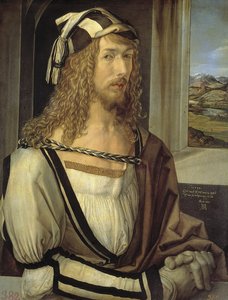
Albrecht Dürer
1471 - 1528 , Italy
En bref
- Artistes Influents:
- Michael Wolgemut
- Raphaël
- Giovanni Bellini
- Léonard de Vinci
- Date De Décès: 1528
- Date De Naissance: 21 mai 1471
- Lieu De Naissance: Nuremberg, Italie
- Mouvement Artistique: Renaissance allemande
- Nationalité: Allemagne
- Nom Complet: Albrecht Dürer
- Oeuvres Notables:
- La série de l'Apocalypse
- Melencolia I
- Saint Jérôme dans son étude
Articles similaires
Albrecht Dürer : Les 25 Œuvres Maîtresses du Génie de la Renaissance Allemande
Plongez dans l'univers d'Albrecht Dürer : découvrez les 25 œuvres maîtresses du génie de la Renaissance allemande. Portraits, gravures et symbolisme fascinant. Reproductions de qualité muséale sur OriginalUniqueArt.com.
Les 10 plus grandes gravures : Chefs-d'œuvre qui ont révolutionné l'art | OriginalUniqueArt
Plongez dans l'univers fascinant des 10 plus grandes gravures de l'histoire ! Découvrez les chefs-d'œuvre de Rembrandt, Goya et Dürer. Inspirez votre décoration intérieure avec OriginalUniqueArt : reproductions d'art de qualité muséale en ligne. Explorez la collection sur OriginalUniqueArt.com

Blancs Sublimes : Les 10 Chefs-d'œuvre de la Peinture Révélés par
Plongez dans l'univers fascinant des 10 plus beaux tableaux blancs de l'histoire de l'art ! Découvrez Monet, Whistler, Kandinsky et d'autres maîtres. Inspirez votre décoration intérieure avec : reproductions de qualité muséale en ligne.

L'Eau-Forte : Histoire d'une Technique Gravée dans le Temps et l'Art
Explorez l'histoire fascinante de l'eau-forte : technique, maîtres, et qualités esthétiques uniques. Découvrez ce procédé gravé dans le temps avec OriginalUniqueArt.

Hokusai : Les 25 Œuvres Maîtresses d'un Génie Japonais | OriginalUniqueArt
Plongez dans l'univers de Katsushika Hokusai avec les 25 œuvres incontournables du maître japonais. Découvrez l'histoire, les techniques d'ukiyo-e et la beauté intemporelle de 'La Grande Vague'. Reproductions tableaux de qualité muséale sur OriginalUniqueArt.com.



