Passer au format impression
 Lire la suite







































 Pour les œuvres ou reproductions dont un côté mesure plus de 105 cm (environ 41 pouces), le cadre sera expédié sous forme de kit démonté. Cette méthode garantit une livraison sécurisée et prévient tout dommage pendant le transport.


Hercules at the Crossroads : A Reflection on Choice and Virtue
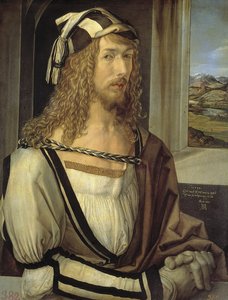
Albrecht Dürer’s “Hercules at the Crossroads,” created around 1498, stands as an emblem of Renaissance humanism's preoccupation with moral philosophy and its fascination for classical mythology. More than just a depiction of a heroic figure wrestling with existential dilemmas, this engraving embodies a profound meditation on the fundamental questions facing humankind – the allure of pleasure versus the pursuit of honor—a debate that resonated deeply within the intellectual currents of the time.
- Subject Matter: The image portrays Hercules standing before two paths: one leading to civilization and indulgence, represented by a lush grove teeming with fruit trees; the other ascending towards a barren hilltop symbolizing asceticism and spiritual fortitude. This juxtaposition immediately establishes a binary opposition that underscores the central theme of the artwork.
- Style & Technique: Dürer’s masterful use of engraving—a technique he pioneered—is evident in every meticulously rendered detail. The artist employs hatching and crosshatching to create tonal variations, conveying depth and texture with remarkable precision. This meticulous attention to craftsmanship reflects the humanist ideal of striving for perfection in artistic execution.
- Historical Context: Produced during the High Renaissance, “Hercules at the Crossroads” aligns itself with the broader humanist movement’s revival of classical thought and its emphasis on ethical conduct. Philosophers like Erasmus and Pico della Mirandola championed the notion that humans possessed inherent dignity and were capable of achieving moral excellence through reasoned contemplation—a concept powerfully conveyed by Hercules's agonizing deliberation.
- Symbolism: The grove represents earthly desires – sensual pleasures, material possessions – while the hilltop symbolizes spiritual aspiration and moral discipline. The birds circling above Hercules symbolize divine providence, suggesting that true fulfillment lies in aligning oneself with God’s will. Furthermore, the crossroads itself signifies a pivotal moment of decision, mirroring the human condition as a constant negotiation between competing impulses.
- Emotional Impact: “Hercules at the Crossroads” transcends mere visual representation; it invites contemplation on the complexities of human experience. The engraving's solemn atmosphere and meticulous detail evoke a sense of seriousness and introspection, prompting viewers to consider their own choices and values—a timeless message that continues to captivate audiences centuries later.
This iconic image serves as an enduring reminder of the Renaissance humanist quest for moral virtue and offers invaluable insight into the artistic sensibilities of one of Europe’s greatest masters.
Questions et réponses
Sous quels autres noms Albrecht Dürer est-il/elle connu(e) ?
L'artiste Albrecht Dürer, créateur de « Hercules au Croisement », est également connu sous d'autres noms, notamment Adalbert Ajtósi, Albert Dürer, Duerer.
Quelles sont les dimensions réelles de «Hercules au Croisement» de Albrecht Dürer ?
Les dimensions enregistrées de «Hercules au Croisement» de Albrecht Dürer sont 22 x 32 cm. Des reproductions peuvent être commandées dans d'autres formats tout en conservant les mêmes proportions.
D'où viennent les visiteurs de «Hercules au Croisement» de Albrecht Dürer ?
La page Statistiques de «Hercules au Croisement» de Albrecht Dürer présente les statistiques de visites publiques : le nombre de visites mensuelles de cette œuvre, une comparaison avec les œuvres les plus consultées de l'artiste, ainsi que la provenance des visiteurs.
 Aperçu en situation
 Envoyer
 Partager
 Détails de l'œuvre
 Guide
Guide

 Télécharger l'image
 Articles similaires
 Radiographie
 Diaporama
 Questions et réponses
 Statistiques