

 Aperçu en situation
 Partager
 Partager
 Détails
 Guide imprimable

 Télécharger
 Articles similaires
 Radiographie
 Voir le diaporama
 Statistiques
Albrech Durer the Elder


 Afficher la suite
Giclées et impressions d'art
Impressions giclées ou sur toile de qualité musée, avec une production rapide et des finitions au choix. ( Acheter la peinture faite à la main Passer au format image numérique)




































Choisissez parmi nos formats prédéfinis qui respectent les proportions originales de l’œuvre.

Vous pouvez saisir vos propres dimensions pour vous adapter à un cadre ou à un espace spécifique. Si la taille sélectionnée ne correspond pas aux proportions de l'image originale, nous recadrerons l'œuvre ou étendrons l'image avec une bordure en miroir ou une couleur unie. Une maquette numérique vous sera envoyée pour approbation avant le début de la production.
Veuillez noter que l'aperçu à l'écran ne reflète pas le recadrage ou l'extension réelle. Seule la maquette montrera avec précision la composition finale.
Bien que des tailles personnalisées soient disponibles, nous vous recommandons de choisir une dimension dans la liste prédéfinie afin de préserver les proportions originales.
Livraison dans le monde entier () en 2 semaines au lieu des 4/5 semaines habituelles. (25 septembre)

Livraison express gratuite dans le monde entier

Toile de lin de haute qualité

Assurance transport complète

Garantie de remboursement des droits de douane

Garantie de fidélité des couleurs

Garantie de retour de 100 jours (uniquement en cas de défaut)

Garantie de remboursement à 100%

Tarifs dégressifs sur quantité
 L'option verre n'est disponible que pour les dimensions inférieures à 110 cm.

Albrech Durer the Elder
Giclées et impressions d'art
Format de la reproduction
-


Prix total final
$ 80
A Legacy Etched in Ink: The Soul of the Northern Renaissance
In the quiet, meticulous lines of this evocative portrait, we encounter more than just a face; we meet a lineage of craftsmanship. This striking black and white work, capturing Albrecht Dürer the Elder, serves as a profound window into the heart of the Northern Renaissance. The subject is depicted with a contemplative gravity, his gaze cast downward toward a small object held in his hands—a gesture that suggests a moment of deep introspection or perhaps the focused precision of a master artisan at work. Through the masterful use of hatching and cross-hashing, the artist breathes life into the monochrome plane, creating a sense of volume and weight that makes the figure feel tangibly present within the room.
The composition is a masterclass in understated elegance. While the man occupies the central focus, the surrounding environment—the subtle presence of chairs and a solitary bowl—provides a domestic, grounded context that anchors the subject in reality. There is a rhythmic beauty in the way light and shadow dance across the textures of his distinctive, pointed hat and the weathered furrows of his face. For the discerning collector or interior designer, this piece offers a sophisticated focal point, bringing an air of historical intellectualism and timeless dignity to any curated space.
Technique and the Art of Precision
The technical prowess displayed in this work is nothing short of extraordinary. Rooted in the tradition of engraving and printmaking, the image relies on the deliberate placement of fine lines to simulate the complex textures of the physical world. One can almost feel the rough weave of his clothing and the soft, organic quality of his beard through the sheer density of the ink strokes. This level of detail is characteristic of the German Renaissance, where the pursuit of naturalism was matched only by a devotion to technical perfection.
Every line serves a dual purpose: to define form and to convey emotion. The interplay of light and shadow is not merely decorative but structural, carving out the three-dimensionality of the subject's features. This meticulous approach creates a profound emotional resonance; there is a stillness in the portrait that invites the viewer to slow down, much like the subject himself. It is an invitation to contemplate the beauty found in precision and the enduring power of a well-executed line.
A Symbol of Craftsmanship and Heritage
Beyond its aesthetic merits, this portrait carries deep symbolic weight. As the father of the legendary Albrecht Dürer, the Elder represents the foundational roots of a dynasty that would redefine European art. The object held in his hands acts as a subtle nod to the goldsmithing and artisanal traditions that shaped the Dürer legacy. It reminds us that great art is often born from the disciplined hands of craftsmen who understood the intimate relationship between material and meaning.
For those looking to adorn a home or gallery with works of substance, this reproduction offers an opportunity to possess a piece of history. It is more than a decoration; it is a conversation starter that speaks of heritage, the dignity of labor, and the eternal pursuit of excellence. Whether placed in a study filled with books or a modern living space seeking a touch of classical gravitas, this portrait brings with it the enduring spirit of Nuremberg’s golden age.
Biographie de l'artiste
Albrecht Dürer : Vie et Héritage
Jeunesse et Formation
Albrecht Dürer, figure marquante de la Renaissance allemande, est né le 21 mai 1471 à Nuremberg, en Allemagne. Son père, Albrecht Dürer l'Ancien, était un orfèvre prospère, et c’est dans cet environnement artistique que l’inclinaison d’Albrecht pour l’art a commencé à s’épanouir. À l’âge de treize ans, il a commencé son apprentissage auprès de Michael Wolgemut, un artiste renommé à Nuremberg, acquérant des compétences fondamentales en peinture, dessin et techniques de gravure sur bois. Un autoportrait créé en 1484, conservé à l’Albertina de Vienne, fournit des preuves remarquables de son talent précoce.
Ascension au rang de maître et développement artistique
Au début de ses vingt ans, Dürer s'était établi comme maître graveur, obtenant une reconnaissance dans toute l’Europe. Il a entrepris des voyages en Italie, où il a rencontré les œuvres des maîtres de la Renaissance tels que Raphaël, Giovanni Bellini et Leonardo da Vinci. Ces interactions ont profondément influencé son style artistique, l'amenant à intégrer des motifs et techniques classiques dans son esthétique nordique.
Œuvres clés et style artistique
L’œuvre d’Albrecht Dürer englobe une grande variété de supports, notamment la peinture, les gravures, les estampes sur bois et les écrits théoriques. Certaines de ses œuvres les plus célèbres comprennent :
- La série de l'Apocalypse (1498) : Une collection de quatorze estampes illustrant le Livre de Révélation, mettant en valeur le talent de Dürer dans ce médium malgré ses éléments stylistiques gothiques.
- Melencolia I (1514) : Peut-être son gravure la plus énigmatique, Melencolia I continue d’être un sujet d'analyse et d'interprétation 학문적 intense.
- Saint Jérôme dans son étude (1514) : Une gravure magistrale démontrant le commandement exceptionnel de Dürer en matière de perspective, de détail et de représentation symbolique.
Le style de Dürer se caractérise par un réalisme méticuleux, une précision du dessin et une compréhension profonde de l'anatomie et de la perspective. Il a également été pionnier dans l’utilisation de l’aquarelle comme médium indépendant.
Contributions théoriques
Au-delà de sa pratique artistique, Dürer a apporté des contributions significatives à la théorie de l'art. Il a écrit plusieurs traités sur la géométrie, la proportion et l'anatomie humaine, dont Quatre livres sur la proportion humaine (1528). Ces écrits témoignent de sa conviction dans les fondements mathématiques de l’art et de son engagement à établir une approche scientifique de la création artistique.
Héritage et signification historique
L'impact d’Albrecht Dürer sur le monde de l'art est indéniable. Il a comblé le fossé entre les traditions nordiques et les idéaux de la Renaissance italienne, introduisant des motifs classiques dans l'art du Nord tout en conservant son caractère distinctif. Ses traités théoriques ont contribué à élever le statut des artistes et à établir un nouveau cadre intellectuel pour la pratique artistique. Il reste une figure centrale dans l'histoire de l'art, inspirant les générations d’artistes par sa maîtrise technique, son esprit novateur et sa vision profonde.
Influences
- Michael Wolgemut
- Leonardo da Vinci
- Raphaël
- Giovanni Bellini
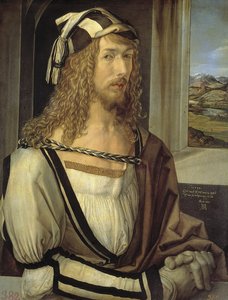
Albrecht Dürer
1471 - 1528 , Italy
En bref
- Artistes Influents:
- Michael Wolgemut
- Raphaël
- Giovanni Bellini
- Léonard de Vinci
- Date De Décès: 1528
- Date De Naissance: 21 mai 1471
- Lieu De Naissance: Nuremberg, Italie
- Mouvement Artistique: Renaissance allemande
- Nationalité: Allemagne
- Nom Complet: Albrecht Dürer
- Oeuvres Notables:
- La série de l'Apocalypse
- Melencolia I
- Saint Jérôme dans son étude
Articles similaires

Engraving: A Historical Survey of Technique, Artistic Expression & Enduring Legacy
Explore the rich history of engraving with OriginalUniqueArt. Discover techniques, iconic artists like Dürer & Callot, collecting tips, and expert guidance for preserving your art investment. Learn about intaglio printing & more!

Les 10 Chefs-d'œuvre Noirs : Peintures Célèbres et Décoration d'Intérieur
Plongez dans l'univers fascinant des 10 plus beaux tableaux noirs de l'histoire de l'art. Découvrez les secrets de Goya, Manet, Rothko et autres maîtres. Inspirez votre décoration intérieure avec !

The Intricate World of Engraving: A Historical Survey of Technique, Artistic Expression & Enduring Legacy
Explore the rich history of engraving with OriginalUniqueArt. Discover techniques, iconic artists like Dürer & Callot, collecting tips, and expert guidance for preserving your art investment. Learn about intaglio printing & more!

Les 10 Chefs-d'œuvre de la Gravure qui ont Révolutionné l'Art | OriginalUniqueArt
Plongez dans l'univers fascinant des 10 chefs-d'œuvre de la gravure qui ont marqué l'histoire de l'art. Découvrez Dürer, Rembrandt, Goya et bien d'autres ! Retrouvez ces estampes célèbres en reproduction haute définition sur OriginalUniqueArt.com.

Blancs Sublimes : Les 10 Chefs-d'œuvre de la Peinture Révélés par
Plongez dans l'univers fascinant des 10 plus beaux tableaux blancs de l'histoire de l'art ! Découvrez Monet, Whistler, Kandinsky et d'autres maîtres. Inspirez votre décoration intérieure avec : reproductions de qualité muséale en ligne.


