
 Aperçu en situation
 Envoyer
 Partager
 Détails de l'œuvre
 Guide
Guide

 Télécharger l'image
 Articles similaires
 Radiographie
 Diaporama
 Q&A
Q&A Statistiques
The Lone Scout


 Lire la suite
Giclées et impressions d'art
Impressions giclées ou sur toile de qualité musée, avec une production rapide et des finitions au choix. ( Commander la reproduction peinte à la main Passer au format numérique)




P118B €10

P118H €10

P118W €10

P438Z €10

P508JH €12

P508YH €12

P805H €10

P805Z €10

P919BZ €10

P919G €10

P919XJ €10

P959ZH €10

P968JZ €12

W106C €8

W218G €10

W218JH €8

W218Y €10

W307PJ €10

W316G €10

W316PJ €8

W316Y €10

W398PJ €8

W4111J €10

W500HY €15

W500JH €15

W692G €12

W849H €8

W940BG €15

W953PJ €8




Choisissez parmi nos formats prédéfinis qui respectent les proportions originales de l’œuvre.

Saisissez la largeur et la hauteur souhaitées pour qu'elles s'adaptent à votre cadre ou à votre mur. Une impression peut être recadrée, mais jamais agrandie au-delà de l'image originale ; ainsi, un format de forme différente entraînera la perte d'une partie de l'image. Nous vous envoyons une maquette numérique pour approbation avant toute impression. L'image présentée sur cette page ne montre pas le recadrage réel — seule la maquette le permet.
Livraison dans le monde entier () en 2 semaines au lieu des 4/5 semaines habituelles. (1 novembre)

Livraison express gratuite dans le monde entier

Toile de lin de qualité supérieure

Assurance transport complète

Garantie de remboursement des droits de douane

Garantie de fidélité des couleurs

Politique de retour de 100 jours (uniquement en cas de défaut)

Garantie de remboursement à 100%

Offre de tarifs dégressifs
 L'option verre n'est disponible que pour les dimensions inférieures à 110 cm.

The Lone Scout
Giclées et impressions d'art
Format de la reproduction
-


Prix total
€ 71
The Lone Scout: A Vision of American Symbolism
Albert Pinkham Ryder’s “The Lone Scout,” painted in 1885, is more than just a depiction of a rider on horseback; it's a deeply resonant exploration of solitude, discovery, and the untamed spirit of the American West. Housed within the Fine Arts Museums of San Francisco, this oil-on-canvas masterpiece stands as a pivotal work in Ryder’s oeuvre and a significant example of American Symbolism and Tonalism – movements that sought to capture not just visual reality but also emotional atmosphere and subjective experience.
Ryder, born in New Bedford, Massachusetts, possessed an intensely private and often eccentric personality. His early life was steeped in the maritime traditions of his hometown, a landscape of rugged coastlines and bustling harbors that undoubtedly informed his artistic sensibilities. However, it was his relocation to New York City in the late 1860s, amidst his brother’s burgeoning hotel business, that provided him with access to a vibrant cultural scene – an exposure that would profoundly shape his artistic development. Influenced by the Barbizon School in France and the Hague School in Holland, Ryder developed a distinctive style characterized by bold colors, expressive brushstrokes, and a masterful manipulation of light and shadow. “The Lone Scout” exemplifies this approach, eschewing photographic realism in favor of an evocative portrayal of mood and feeling.
A Landscape of Dreams: Composition and Technique
The painting’s composition immediately draws the viewer into its dreamlike quality. A solitary figure, clad in a dark coat and turban-like head covering, dominates the left side of the frame, perched atop a powerful horse that surges forward across an expansive, undulating landscape. The background is dominated by a vast, turbulent sky – a swirling vortex of blues, grays, and hints of violet – suggesting both immensity and impending change. Ryder’s technique is particularly noteworthy; he employs loose, gestural brushstrokes to create a sense of movement and dynamism, while simultaneously utilizing tonal variations to establish depth and atmosphere. The colors are rich and saturated, yet subtly muted, contributing to the painting's overall mood of quiet contemplation.
Ryder’s use of light is particularly striking. It isn’t a bright, direct illumination but rather a diffused glow that seems to emanate from an unseen source, casting long shadows and highlighting key elements within the composition. This technique creates a sense of mystery and invites the viewer to actively participate in interpreting the scene.
Symbolism and Narrative
“The Lone Scout” is rich with symbolic meaning. The solitary figure on horseback represents exploration, both physical and spiritual – a journey into the unknown. The vast landscape symbolizes the challenges and opportunities of the American frontier, while the turbulent sky hints at the unpredictable nature of life itself. Some art historians interpret the scout as an allegory for the pioneer spirit, embodying the courage and resilience required to forge a new path in a challenging environment. Ryder himself often imbued his paintings with personal symbolism, drawing inspiration from literature, mythology, and his own emotional experiences.
Interestingly, “The Lone Scout” was created during a period of significant social and cultural change in America – the late 19th century, a time marked by westward expansion, industrialization, and increasing urbanization. Ryder’s painting can be seen as a reflection of these broader societal trends, capturing both the allure and the anxieties associated with this era of transformation.
A Legacy of Mystique
Albert Pinkham Ryder remains one of America's most enigmatic and beloved artists. “The Lone Scout” stands as a testament to his unique vision and artistic genius – a painting that continues to captivate viewers with its evocative atmosphere, symbolic depth, and masterful technique. Reproductions of this iconic work offer an accessible way to experience the power and beauty of Ryder’s art, bringing a touch of American Symbolism into any space. For those seeking to delve deeper into Ryder's life and work, resources such as Wikipedia and OriginalUniqueArt.com provide valuable insights into his artistic journey.
Questions et réponses
Quel format et quelle orientation sont recommandés pour l'impression de « The Lone Scout » ?
Pour « The Lone Scout », la configuration d'impression recommandée est un format Medium avec une orientation Portrait.
«The Lone Scout» de Albert Pinkham Ryder est-il une composition en portrait, en paysage ou carrée ?
«The Lone Scout» de Albert Pinkham Ryder présente un format Portrait. Le format décrit les proportions de la composition.
L'œuvre «The Lone Scout» de Albert Pinkham Ryder, conservée au Musées des Beaux-Arts de San Francisco, peut-elle faire l'objet de reproductions légales ?
L'original « The Lone Scout » se trouve au Musées des Beaux-Arts de San Francisco, et l'œuvre est dans le domaine public - ses droits d'auteur sont tombés dans le domaine public.
Biographie de l'artiste
Premières années et formation
Albert Pinkham Ryder, né le 19 mars 1847 à New Bedford, Massachusetts, était un peintre américain dont la vie précoce reste relativement méconnue. On sait qu'il a commencé à peindre des paysages dès son plus jeune âge. En 1867 ou 1868, la famille Ryder déménagea à New York où le frère d’Albert gérait l’hôtel Albert, un lieu emblématique du quartier de Greenwich Village.Développement artistique et influences
Sa première formation artistique se fit auprès du peintre William Edgar Marshall à New York. De 1870 à 1873, puis de nouveau de 1874 à 1875, il étudia à la National Academy of Design, où il exposa sa première peinture en 1873 et rencontra l'artiste Julian Alden Weir, qui devint son ami fidèle. En 1877, Ryder entreprit le premier de ses quatre voyages en Europe, étudiant l’École de Barbizon française et l’École de La Haye aux Pays-Bas, ce qui influença grandement son œuvre.Style artistique et œuvres notables
Le style distinctif de Ryder se caractérise par des formes larges, parfois indistinctes, ou des figures stylisées situées dans un paysage ou une scène maritime onirique. Ses scènes sont souvent illuminées par une faible lumière du soleil ou une lueur lunaire émanant d'étranges nuages. Parmi ses œuvres notables figurent *Misty Moonlight* (Crystal Bridges Museum of American Art, Bentonville, États-Unis), qui s’inspire des souvenirs de son enfance sur la côte de New Bedford, Massachusetts.Vie ultérieure et héritage
Après 1900, la créativité de Ryder déclina considérablement. Il passa le reste de sa vie à retravailler d'anciennes peintures et mourut le 28 mars 1917. Une exposition commémorative de son œuvre fut organisée au Metropolitan Museum of Art de New York en 1918. Malgré l’écoulement du temps, la réputation artistique de Ryder est restée largement intacte grâce à son style unique et novateur.- Découvrez les œuvres d'Albert Pinkham Ryder sur OriginalUniqueArt
- Achetez des reproductions de peintures célèbres dans des musées
- Explorez la Cape Ann Historical Association (États-Unis) et sa collection d'art sur OriginalUniqueArt

Albert Pinkham Ryder
1847 - 1917 , États-Unis d'Amérique
L'essentiel de l'artiste
- Artistes Influents:
- École de Barbizon
- École de La Haye
- Date De Décès: 28 mars 1917
- Date De Naissance: 19 mars 1847
- Influence Sur D'Autres Artistes: ['Jackson Pollock']
- Lieu De Naissance: New Bedford, États-Unis
- Mouvement Artistique: Tonalisme américain
- Nationalité: Américaine
- Nom Complet: Albert Pinkham Ryder
- Œuvres Notables: ['Misty Moonlight']
Articles connexes

Réalisme Américain : 10 Chefs-d'œuvre Incontournables pour une Déco Inspirée
Plongez au cœur du Réalisme Américain avec 10 chefs-d'œuvre d'Edward Hopper, Andrew Wyeth et plus. Découvrez l'histoire et les techniques de ces artistes emblématiques. Reproductions de tableaux de qualité musée sur OriginalUniqueArt.com !

Albert Bierstadt : Lumière, Paysage et l'Idéal Américain – Une Épopée Picturale de la Frontière Ouest
Explorez l'univers épique d'Albert Bierstadt et de la peinture du paysage américain. Découvrez son rôle dans l'École du Fleuve Hudson, sa maîtrise du luminisme et son impact sur l'art américain. Analyse approfondie et reproduction de tableaux disponibles.

Grant Wood & American Regionalism: Identity, Myth & the Rural Landscape
Explore the world of Grant Wood & American Regionalism with OriginalUniqueArt. Discover the symbolism behind 'American Gothic', recurring themes, and the movement's lasting impact on art history. High-quality reproductions available.
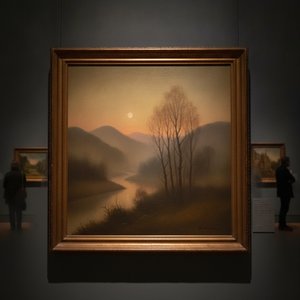
Tonalism Explained: The Art of Mood, Mist, and Masterful Color in Landscape Painting
Discover the evocative world of Tonalism. Explore how masters like Whistler and Tryon used mist, shadow, and subtle color to capture profound mood and atmosphere in landscape art. An expert guide for fine art enthusiasts and collectors.
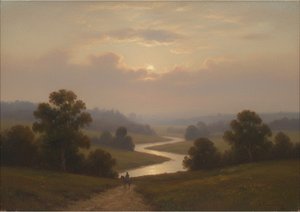
Les Visions Atmosphériques : Exploration du Tonalisme dans la Peinture Américaine
Explorez le Tonalisme américain : un mouvement pictural subtil axé sur l'atmosphère et l'émotion. Découvrez George Inness, ses influences et l'héritage de ce style unique avec OriginalUniqueArt.


