

 Aperçu en situation
 Envoyer
 Partager
 Détails de l'œuvre
 Guide
Guide

 Télécharger l'image
 Articles similaires
 Radiographie
 Diaporama
 Statistiques
Pegasus Departing
 Oil On Canvas
- WallArt
- Romanticism
 1901
1901- 19th Century
 36.0 x 44.0 cm
 Lire la suite
Giclées et impressions d'art
Impressions giclées ou sur toile de qualité musée, avec une production rapide et des finitions au choix. ( Commander la reproduction peinte à la main Passer au format numérique)




P118B €10

P118H €10

P118W €10

P438Z €10

P508JH €12

P508YH €12

P805H €10

P805Z €10

P919BZ €10

P919G €10

P919XJ €10

P959ZH €10

P968JZ €12

W106C €8

W218G €10

W218JH €8

W218Y €10

W307PJ €10

W316G €10

W316PJ €8

W316Y €10

W398PJ €8

W4111J €10

W500HY €15

W500JH €15

W692G €12

W849H €8

W940BG €15

W953PJ €8




Choisissez parmi nos formats prédéfinis qui respectent les proportions originales de l’œuvre.

Saisissez la largeur et la hauteur souhaitées pour qu'elles s'adaptent à votre cadre ou à votre mur. Une impression peut être recadrée, mais jamais agrandie au-delà de l'image originale ; ainsi, un format de forme différente entraînera la perte d'une partie de l'image. Nous vous envoyons une maquette numérique pour approbation avant toute impression. L'image présentée sur cette page ne montre pas le recadrage réel — seule la maquette le permet.
Livraison dans le monde entier () en 2 semaines au lieu des 4/5 semaines habituelles. (26 octobre)

Livraison express gratuite dans le monde entier

Toile de lin de qualité supérieure

Assurance transport complète

Garantie de remboursement des droits de douane

Garantie de fidélité des couleurs

Politique de retour de 100 jours (uniquement en cas de défaut)

Garantie de remboursement à 100%

Offre de tarifs dégressifs
 L'option verre n'est disponible que pour les dimensions inférieures à 110 cm.

Pegasus Departing
Giclées et impressions d'art
Format de la reproduction
-


Prix total
€ 70
A Visionary Flight Through Myth and Shadow
In the hauntingly beautiful oil painting "Pegasus Departing," created in 1901, the enigmatic American master Albert Pinkham Ryder invites us into a realm where the boundaries between reality and myth dissolve. The canvas captures a moment of profound transition, featuring the legendary winged horse, Pegasus, ascending into an atmospheric sky above two grounded human figures. This is not merely a depiction of a mythological event; it is a visceral experience of movement and transcendence. The composition is masterfully dynamic, with the powerful silhouette of Pegasus dominating the upper reaches of the frame, pulling the viewer's gaze upward in a rhythmic, sweeping motion that mimics the very flight it portrays.
Ryder’s unique approach to Romantic Symbolism breathes life into this ancient legend. Rather than adhering to the rigid anatomical precision of classical academic art, Ryder employs a loose, expressive technique that prioritizes emotional truth over literal representation. The sky is not a simple backdrop but a swirling, nebulous expanse of clouds and light, rendered with heavy impasto textures. These thick, tactile layers of paint create a physical presence on the canvas, where every visible brushstroke contributes to the painting's energetic and slightly chaotic atmosphere. This technique allows the light to appear diffused and ethereal, casting a dreamlike glow over the scene that suggests a world caught in the twilight of memory or the dawn of a divine revelation.
The Language of Symbolism and Emotion
Beyond its striking visual impact, "Pegasus Departing" serves as a profound meditation on the themes of freedom, inspiration, and the human condition. In the lexicon of art history, Pegasus often represents the soaring power of poetic inspiration and the divine spark within the soul. As the winged horse breaks away from the earthbound figures below, there is an inherent tension between the terrestrial and the celestial. The human figures, positioned at the base of the composition, provide a sense of scale and gravity, grounding the viewer in the mortal realm even as their eyes are drawn toward the heavens. This duality evokes a complex emotional spectrum—a mixture of awe and wonder at the majesty of flight, tempered by a touch of melancholy for the world left behind.
For the discerning collector or interior designer, this piece offers more than just aesthetic beauty; it provides a focal point of deep intellectual and emotional resonance. The organic, amorphous shapes and the moody, tonalist palette make it an exquisite addition to spaces that value narrative depth and atmospheric sophistication. Whether placed in a curated gallery setting or as a centerpiece in a refined living space, "Pegasus Departing" acts as a window into the subconscious. It is a work that demands contemplation, inviting anyone who stands before it to lose themselves in its swirling textures and to contemplate the eternal dance between the earthly and the divine.
Questions et réponses
À quelle étape de la carrière de Albert Pinkham Ryder appartient « Pegasus Departing » (1901) ?
«Pegasus Departing», créé en 1901, appartient à la période Mature Period de la carrière de Albert Pinkham Ryder.
Que représente «Pegasus Departing» de Albert Pinkham Ryder ?
L'œuvre « Pegasus Departing » représente mythological figure, winged horse symbolism, dreamlike imagery, ethereal landscape, romantic narrative, divine inspiration, flight and freedom, ancient mythology.
Où puis-je acheter une impression de «Pegasus Departing» de Albert Pinkham Ryder ?
Pour obtenir une impression de «Pegasus Departing» de Albert Pinkham Ryder, il vous suffit de la commander sur sa page Tirage d'art fine art : une impression d'art sur toile de coton ou sur papier canvas d'archive.
Biographie de l'artiste
Premières années et formation
Albert Pinkham Ryder, né le 19 mars 1847 à New Bedford, Massachusetts, était un peintre américain dont la vie précoce reste relativement méconnue. On sait qu'il a commencé à peindre des paysages dès son plus jeune âge. En 1867 ou 1868, la famille Ryder déménagea à New York où le frère d’Albert gérait l’hôtel Albert, un lieu emblématique du quartier de Greenwich Village.Développement artistique et influences
Sa première formation artistique se fit auprès du peintre William Edgar Marshall à New York. De 1870 à 1873, puis de nouveau de 1874 à 1875, il étudia à la National Academy of Design, où il exposa sa première peinture en 1873 et rencontra l'artiste Julian Alden Weir, qui devint son ami fidèle. En 1877, Ryder entreprit le premier de ses quatre voyages en Europe, étudiant l’École de Barbizon française et l’École de La Haye aux Pays-Bas, ce qui influença grandement son œuvre.Style artistique et œuvres notables
Le style distinctif de Ryder se caractérise par des formes larges, parfois indistinctes, ou des figures stylisées situées dans un paysage ou une scène maritime onirique. Ses scènes sont souvent illuminées par une faible lumière du soleil ou une lueur lunaire émanant d'étranges nuages. Parmi ses œuvres notables figurent *Misty Moonlight* (Crystal Bridges Museum of American Art, Bentonville, États-Unis), qui s’inspire des souvenirs de son enfance sur la côte de New Bedford, Massachusetts.Vie ultérieure et héritage
Après 1900, la créativité de Ryder déclina considérablement. Il passa le reste de sa vie à retravailler d'anciennes peintures et mourut le 28 mars 1917. Une exposition commémorative de son œuvre fut organisée au Metropolitan Museum of Art de New York en 1918. Malgré l’écoulement du temps, la réputation artistique de Ryder est restée largement intacte grâce à son style unique et novateur.- Découvrez les œuvres d'Albert Pinkham Ryder sur OriginalUniqueArt
- Achetez des reproductions de peintures célèbres dans des musées
- Explorez la Cape Ann Historical Association (États-Unis) et sa collection d'art sur OriginalUniqueArt

Albert Pinkham Ryder
1847 - 1917 , États-Unis d'Amérique
L'essentiel de l'artiste
- Artistes Influents:
- École de Barbizon
- École de La Haye
- Date De Décès: 28 mars 1917
- Date De Naissance: 19 mars 1847
- Influence Sur D'Autres Artistes: ['Jackson Pollock']
- Lieu De Naissance: New Bedford, États-Unis
- Mouvement Artistique: Tonalisme américain
- Nationalité: Américaine
- Nom Complet: Albert Pinkham Ryder
- Œuvres Notables: ['Misty Moonlight']
Articles connexes

The Equine Muse: A Historical & Artistic Exploration of Horses in Painting
Explore the captivating history of horses in painting! Discover Renaissance masterpieces, Baroque grandeur & expert insights for collecting equestrian art. Learn about symbolism, techniques & lasting value with OriginalUniqueArt.

10 chefs-d'œuvre du Réalisme Romantique qui capturent l'âme humaine
Plongez dans l'émotion du Réalisme Romantique. Explorez 10 chefs-d'œuvre iconiques, de Constable à Homer, mêlant vérité et passion. Trouvez l'inspiration pour votre décor avec nos reproductions de qualité musée sur OriginalUniqueArt.com. Découvrez toute la collection en ligne.

Les 10 Chefs-d'œuvre du Paysage Romantique : Artistes et Décor d'Intérieur
Plongez dans l'émotion du Romantisme avec les 10 plus beaux paysages de Friedrich, Turner & Delacroix. Découvrez leur histoire et trouvez l'inspiration déco idéale sur OriginalUniqueArt.com !

The Noble Steed on Canvas: A Historical & Artistic Exploration of Horse Painting Across Cultures
Explore the rich history of horse painting! Discover masterpieces from Stubbs to Munnings & learn about symbolism, techniques & artists. Find museum-quality reproductions at OriginalUniqueArt.
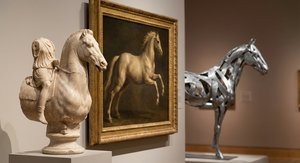
The Noble Steed: A Historical and Artistic Exploration of Horses in Fine Art
Explore the rich history of horses in fine art! From ancient depictions to Renaissance masterpieces & beyond, discover iconic artworks and artists. Learn about symbolism, techniques, and find museum-quality reproductions at OriginalUniqueArt.


