

 Aperçu en situation
 Envoyer
 Partager
 Détails de l'œuvre
 Guide
Guide

 Télécharger l'image
 Articles similaires
 Radiographie
 Diaporama
 Statistiques
The Coffeepot
 Oil On Canvas
- WallArt
- Fauvism
 1902
1902- Modern
 55.0 x 46.0 cm
 Lire la suite
Reproduction à l'huile faite à la main
Huile sur toile peinte à la main, avec cadre et dimensions personnalisés, réalisée sur commande par nos artistes. ( Passer au format impression Passer au format numérique)




P118B €10

P118H €10

P118W €10

P438Z €10

P508JH €12

P508YH €12

P805H €10

P805Z €10

P919BZ €10

P919G €10

P919XJ €10

P959ZH €10

P968JZ €12

W106C €8

W218G €10

W218JH €8

W218Y €10

W307PJ €10

W316G €10

W316PJ €8

W316Y €10

W398PJ €8

W4111J €10

W500HY €15

W500JH €15

W692G €12

W849H €8

W940BG €15

W953PJ €8




Choisissez parmi nos formats prédéfinis qui respectent les proportions originales de l’œuvre.

Saisissez la largeur et la hauteur souhaitées, pour s'adapter à votre cadre ou à votre mur. Cette œuvre est peinte à la main ; ainsi, pour un format de forme différente, l'artiste peut peindre un peu plus autour du tableau ou réduire légèrement les bords — c'est vous qui choisissez. Nous vous envoyons une maquette numérique pour approbation avant que la peinture ne commence. L'image présentée sur cette page ne reflète pas le résultat réel — seule la maquette le fait.
Après la commande, l’équipe OriginalUniqueArt.com contactera le client par e-mail pour recueillir ses instructions et lui fournira une maquette d’aperçu
Livraison dans le monde entier () en 3 à 4 semaines au lieu des 5 semaines habituelles. (26 octobre). Aucun compromis sur la qualité.

Livraison express gratuite dans le monde entier

Toile de lin de qualité supérieure

Assurance transport complète

Garantie de remboursement des droits de douane

Garantie de fidélité des couleurs

Politique de retour de 100 jours (uniquement en cas de défaut)

Garantie de remboursement à 100%

Offre de tarifs dégressifs
 L'option verre n'est disponible que pour les dimensions inférieures à 110 cm.

The Coffeepot
Technique de reproduction
Format de la reproduction
-


Prix total
€ 263
A Symphony of Fauvist Light: Exploring The Coffeepot
In the dawn of the twentieth century, a revolution of color swept through the Parisian art scene, forever altering the trajectory of modern painting. At the heart of this movement, known as Fauvism, stood Albert Marquet, an artist capable of capturing the profound beauty within the mundane. His 1902 masterpiece, The Coffeepot, serves as a breathtaking window into this era of experimentation. The painting presents a deceptively simple subject—a metallic coffeepot resting beside a cup on a table, accompanied by the subtle presence of a vase—yet it vibrates with an internal energy that transcends its domestic setting. Through his masterful use of light and form, Marquet invites the viewer into a quiet, intimate moment, transformed by the sheer power of color.
The technique employed in The Coffeepot is a testament to Marquet’s ability to balance the raw, expressive impulses of Fauvism with a refined sense of composition. The artist utilizes a bold and warm palette, where golden hues dance across the surfaces of the metalware, creating a sense of warmth and tactile reality. His brushwork is both confident and spontaneous, leaving visible traces of movement that lend the canvas a rhythmic vitality. This energetic application of oil on canvas prevents the still-life from feeling static; instead, the objects seem to breathe within their environment. The interplay between the earthy tones and the luminous highlights creates a depth that draws the eye inward, making the simple arrangement feel monumental.
Beyond its technical brilliance, the painting carries a deep emotional resonance that makes it an enduring favorite for collectors and decorators alike. There is a sense of nostalgic tranquility found in the composition, a quietude that offers a sanctuary from the frenetic pace of modern life. For the interior designer, this piece acts as a sophisticated focal point, capable of anchoring a room with its warmth and historical gravity. It does not merely decorate a space; it imbues it with a sense of cultured serenity. To possess a reproduction of such a work is to bring a fragment of art history into one's home, celebrating the delicate balance between the everyday objects we cherish and the extraordinary light in which they can be seen.
Questions et réponses
À quelle période de la carrière de Albert Marquet se situe « The Coffeepot » ?
« The Coffeepot » est représentatif de la période Early Period de Albert Marquet.
Que représente "The Coffeepot" et quelle atmosphère s'en dégage ?
«The Coffeepot» de Albert Marquet allie still life, fauvism, coffee pot, tabletop, vase, golden hues, early 20th century à une atmosphère Bold.
À quel mouvement artistique appartient «The Coffeepot» de Albert Marquet ?
Le mouvement associé à «The Coffeepot» de Albert Marquet est Fauvism. Cette classification situe l'œuvre parmi des artistes et des œuvres d'art apparentés.
Biographie de l'artiste
Débuts et Formation Artistique
Albert Marquet, figure marquante du fauvisme, est né le 27 mars 1875 à Bordeaux. Son parcours artistique commence par des études à l'École des Arts Décoratifs de Paris, où il rencontre Henri Matisse, un ami qui influencera profondément son travail. Cette rencontre marque une période importante dans ses premières œuvres, reflétant l’influence du fauvisme.Évolution Artistique et Style
L'évolution artistique de Marquet se caractérise par une transition du fauvisme vers une approche plus naturaliste. Ses œuvres ultérieures mettent principalement en scène des paysages, avec quelques incursions dans le portrait et les nus féminins entre 1910 et 1914. Cette évolution se traduit par l'utilisation de couleurs moins intenses et un accent mis sur la perspective traditionnelle.Œuvres Notables et Expositions
- La Pyla, une œuvre fauve, illustre son approche unique pour capturer l’essence de la mer et de ses environs.
- Le Luxe, la Sérénité, le Plaisir (98 x 118 cm, post-impressionnisme, huile sur toile) est une autre œuvre notable, témoignant de sa capacité à équilibrer des couleurs vibrantes avec des compositions sereines.
Influences et Héritage
L'influence de Marquet sur le mouvement fauve et son style naturaliste ultérieur ont laissé une empreinte durable dans le monde de l’art. Son œuvre témoigne d'une sensibilité particulière à la lumière et aux couleurs, tout en explorant des thèmes liés au paysage et à la vie quotidienne. Il a été influencé par Gustave Moreau pendant ses études à l'École des Beaux-Arts.Collections et Postérité
Les œuvres de Marquet sont conservées dans divers musées prestigieux, dont le Musée National d’Art Moderne à Paris. Son héritage continue d'inspirer les artistes contemporains et fascine les amateurs d'art du monde entier. Il est reconnu pour sa capacité à traduire l'atmosphère et la lumière des paysages avec une subtilité remarquable.
Albert Marquet
1875 - 1947 , France
L'essentiel de l'artiste
- Artistes Influents:
- Henri Matisse
- Gustave Moreau
- Eugène Delacroix
- Date De Décès: 14 juin 1947
- Date De Naissance: 27 mars 1875
- Lieu De Naissance: Bordeaux, France
- Nationalité: Française
- Nom Complet: Albert Marquet
- Oeuvres Notables:
- La Pyla
- Luxury, Serenity, Pleasure
- Style Artistique: Fauvisme, Naturalisme
Articles connexes

Silent Narratives: Exploring the Enduring Appeal of Still Life Painting Across Centuries
Explore the rich history of still life painting with OriginalUniqueArt. Discover Dutch Masters, decode vanitas symbolism & learn about collecting timeless art. Expert insights and museum-quality reproductions.

L'Âge d'Or Néerlandais : 10 Chefs-d'œuvre Incontournables pour Décorer avec Art et Histoire
Plongez au cœur de l'Âge d'Or néerlandais ! Découvrez 10 chefs-d'œuvre intemporels de Rembrandt, Vermeer et autres maîtres hollandais. Explorez leur histoire, technique & trouvez l'inspiration déco sur
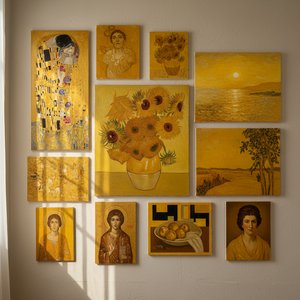
Top 10 des Tableaux Célèbres Dominés par l'Ocre Jaune : Art & Décor Intemporel
Plongez dans la magie de l'ocre jaune à travers 10 tableaux célèbres ! Découvrez les histoires, techniques et émotions derrière ces chefs-d'œuvre d'artistes comme Van Gogh & Monet. Inspirez votre décoration intérieure avec – reproductions de qualité musée.
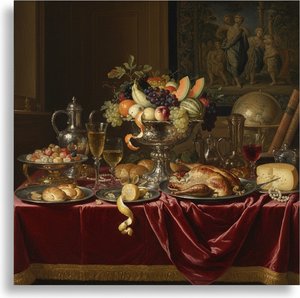
Abraham Hendricksz van Beyeren: Pioneering Dutch Still Life & the Banquet Tradition
Explore the captivating world of Dutch Golden Age still life with Abraham van Beyeren. Discover his innovative techniques, symbolic banquet scenes & lasting influence on art history. Learn about collecting these masterpieces.
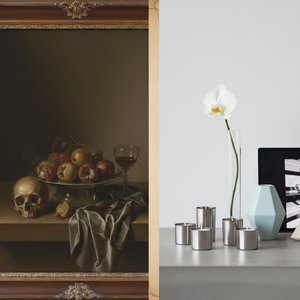
The Enduring Appeal of Still Life: A Historical & Contemporary Exploration
Explore the rich history & symbolism of still life painting with OriginalUniqueArt. Discover masterpieces from the Dutch Golden Age, learn about vanitas art, and find expert guidance for collecting timeless artworks.


