

 Aperçu en situation
 Envoyer
 Partager
 Détails de l'œuvre

 Télécharger
 Articles similaires
 Radiographie
 Diaporama
 Statistiques
Flood in Paris
 Acrylique sur toile
- Art mural
- Fauvist Expressionism
 1910
1910 33.0 x 41.0 cm
 Musée d’art Pouchkine
 Lire la suite
Reproduction à l'huile faite à la main
Huile sur toile peinte à la main, avec cadre et dimensions personnalisés, réalisée sur commande par nos artistes. ( Passer au format impression Passer à l'image numérique)




P118B $10

P118H $10

P118W $10

P438Z $10

P508JH $12

P508YH $12

P805H $10

P805Z $10

P919BZ $10

P919G $10

P919XJ $10

P959ZH $10

P968JZ $12

W106C $8

W218G $10

W218JH $8

W218Y $10

W307PJ $10

W316G $10

W316PJ $8

W316Y $10

W398PJ $8

W4111J $10

W500HY $15

W500JH $15

W692G $12

W849H $8

W940BG $15

W953PJ $8




Choisissez parmi nos formats prédéfinis qui respectent les proportions originales de l’œuvre.

Vous pouvez saisir vos propres dimensions pour l'adapter à un cadre ou à un espace spécifique. Si la taille sélectionnée ne correspond pas aux proportions de l'image d'origine, nous recadrerons l'œuvre ou prolongerons la peinture avec des éléments peints à la main supplémentaires. Une maquette numérique vous sera envoyée pour approbation avant le début de la production.
Veuillez noter que l'aperçu à l'écran ne reflète pas le recadrage ou l'extension réels. Seule la maquette montrera fidèlement la composition finale.
Bien que des tailles personnalisées soient disponibles, nous vous recommandons de sélectionner une dimension dans la liste prédéfinie afin de préserver les proportions d'origine.
Après la commande, l’équipe OriginalUniqueArt.com contactera le client par e-mail pour recueillir ses instructions et lui fournira une maquette d’aperçu
Livraison dans le monde entier () en 3 à 4 semaines au lieu des 5 semaines habituelles. (11 septembre). Aucun compromis sur la qualité.

Livraison express gratuite dans le monde entier

Toile de lin de haute qualité

Assurance transport complète

Garantie de remboursement des droits de douane

Garantie de fidélité des couleurs

Garantie de retour de 100 jours (uniquement en cas de défaut)

Garantie de remboursement à 100%

Tarifs dégressifs sur quantité
 L'option verre n'est disponible que pour les dimensions inférieures à 110 cm.

Flood in Paris
Technique de reproduction
Format de la reproduction
-


Prix total final
$ 300
A City Submerged: Exploring Albert Marquet’s “Flood in Paris”
Albert Marquet's "Flood in Paris," painted in 1910, isn’t merely a depiction of a natural disaster; it’s a visceral embodiment of urban anxiety and the raw beauty of chaos. This oil on canvas, currently residing within the Pushkin State Museum in Moscow, transcends its subject matter to become a poignant meditation on modernity, vulnerability, and the sublime power of nature. Measuring just 33 x 41 centimeters, the painting’s intimate scale belies the monumental drama it captures – a Parisian cityscape utterly transformed by the relentless surge of floodwaters.
Marquet, a key figure in the Fauvist movement, masterfully employs color and composition to convey an atmosphere of urgent disquiet. The Fauvist style, characterized by its bold, non-naturalistic hues and energetic brushstrokes, is immediately apparent here. Instead of striving for photographic realism, Marquet uses vibrant blues, greens, and ochres – intensified and often jarringly juxtaposed – to evoke the feeling of a world overwhelmed. The water itself isn’t rendered in muted tones; it pulsates with an almost aggressive energy, reflecting the light and dominating the scene. This deliberate departure from traditional representation is central to Marquet's artistic vision, mirroring the movement’s rejection of academic constraints.
Composition and the Dance of Despair
The composition of “Flood in Paris” is a carefully orchestrated tableau of destruction and resilience. The eye is immediately drawn to the foreground, where figures – Parisians navigating the flooded streets by boat – struggle against the relentless current. These small human forms, rendered with a sense of vulnerability, provide a crucial counterpoint to the overwhelming power of the water. Scattered throughout the scene are boats of varying sizes, some adrift and abandoned, others anchored precariously near the shore, creating a dynamic interplay of shapes and textures. The receding shoreline is suggested through a hazy, atmospheric perspective, emphasizing the depth and scale of the inundation.
Marquet’s use of light is particularly striking. The scene is bathed in an ethereal glow, as if viewed through a perpetual twilight. This diffused illumination adds to the sense of unease and disorientation, mirroring the psychological impact of the disaster on its inhabitants. The artist doesn't shy away from depicting the debris – fragments of buildings, furniture, and personal belongings – scattered across the flooded streets, further emphasizing the scale of the devastation.
A Reflection of Modernity and a Historical Echo
“Flood in Paris” is more than just a record of a specific event; it’s a powerful commentary on the challenges faced by modern urban centers. The painting captures a pivotal moment in Parisian history – the devastating 1910 flood, which exposed vulnerabilities within the city's infrastructure and highlighted its precarious relationship with nature. The flooding was exacerbated by inadequate drainage systems, a consequence of rapid urbanization during the Belle Époque. Marquet’s work serves as a visual reminder of this historical context, prompting reflection on the enduring tension between human ambition and environmental forces.
Furthermore, the painting resonates with broader themes explored by the Fauvist movement – the questioning of established artistic conventions, the embrace of subjective experience, and the exploration of primal emotions. Marquet’s bold use of color and his willingness to distort reality align him with other key figures in the movement, such as Henri Matisse, creating a shared vision of art that prioritized feeling over representation.
A Timeless Masterpiece: Reproduction and Beyond
OriginalUniqueArt offers meticulously crafted hand-painted reproductions of “Flood in Paris,” allowing you to experience the painting’s captivating beauty and profound emotional impact firsthand. Each reproduction is created by skilled artists who painstakingly recreate Marquet's techniques, color palette, and atmospheric effects. Whether displayed as a striking statement piece or incorporated into an interior design scheme, this artwork will undoubtedly serve as a focal point of conversation and contemplation. For those seeking to delve deeper into the world of Albert Marquet and the Fauvist movement, we encourage you to explore our website for additional works and resources – including information on the Musée National d'Art Moderne in Paris, where original masterpieces by Marquet and Matisse are showcased.
Biographie de l'artiste
Débuts et Formation Artistique
Albert Marquet, figure marquante du fauvisme, est né le 27 mars 1875 à Bordeaux. Son parcours artistique commence par des études à l'École des Arts Décoratifs de Paris, où il rencontre Henri Matisse, un ami qui influencera profondément son travail. Cette rencontre marque une période importante dans ses premières œuvres, reflétant l’influence du fauvisme.Évolution Artistique et Style
L'évolution artistique de Marquet se caractérise par une transition du fauvisme vers une approche plus naturaliste. Ses œuvres ultérieures mettent principalement en scène des paysages, avec quelques incursions dans le portrait et les nus féminins entre 1910 et 1914. Cette évolution se traduit par l'utilisation de couleurs moins intenses et un accent mis sur la perspective traditionnelle.Œuvres Notables et Expositions
- La Pyla, une œuvre fauve, illustre son approche unique pour capturer l’essence de la mer et de ses environs.
- Le Luxe, la Sérénité, le Plaisir (98 x 118 cm, post-impressionnisme, huile sur toile) est une autre œuvre notable, témoignant de sa capacité à équilibrer des couleurs vibrantes avec des compositions sereines.
Influences et Héritage
L'influence de Marquet sur le mouvement fauve et son style naturaliste ultérieur ont laissé une empreinte durable dans le monde de l’art. Son œuvre témoigne d'une sensibilité particulière à la lumière et aux couleurs, tout en explorant des thèmes liés au paysage et à la vie quotidienne. Il a été influencé par Gustave Moreau pendant ses études à l'École des Beaux-Arts.Collections et Postérité
Les œuvres de Marquet sont conservées dans divers musées prestigieux, dont le Musée National d’Art Moderne à Paris. Son héritage continue d'inspirer les artistes contemporains et fascine les amateurs d'art du monde entier. Il est reconnu pour sa capacité à traduire l'atmosphère et la lumière des paysages avec une subtilité remarquable.
Albert Marquet
1875 - 1947 , France
En bref
- Artistes Influents:
- Henri Matisse
- Gustave Moreau
- Eugène Delacroix
- Date De Décès: 14 juin 1947
- Date De Naissance: 27 mars 1875
- Lieu De Naissance: Bordeaux, France
- Nationalité: Française
- Nom Complet: Albert Marquet
- Oeuvres Notables:
- La Pyla
- Luxury, Serenity, Pleasure
- Style Artistique: Fauvisme, Naturalisme
Articles similaires
Jean-Georges Béraud: Capturing Parisian Life in the Belle Époque
Explore the captivating world of Jean-Georges Béraud, master painter of Belle Époque Paris. Discover his iconic scenes, artistic evolution, and social commentary. A deep dive into 19th-century French art.
Antoine Blanchard (Marcel Masson): Parisian Abstraction & the Legacy of Automatism
Explore the captivating world of Antoine Blanchard (Marcel Masson) and his nostalgic Parisian scenes. Discover his artistic influences, unique style, and the challenges of authentication. Expert insights & art appraisal information.
Les 10 Chefs-d'œuvre Fauves qui ont Révolutionné l'Art Moderne |
Plongez au cœur du Fauvisme avec ! Découvrez les 10 chefs-d'œuvre de Matisse, Derain et Vlaminck qui ont révolutionné l'art. Couleurs vives, émotion pure : trouvez votre reproduction idéale pour une décoration intérieure unique. Explorez la collection sur
Les 10 Chefs-d'œuvre Fauves : Couleurs Émotionnelles et Décor d'Art Intemporel
Plongez au cœur du Fauvisme avec les 10 œuvres majeures de Matisse, Derain et Vlaminck. Découvrez l'histoire, la technique et l'impact émotionnel de ces chefs-d’œuvre colorés. Reproductions d'art exceptionnelles sur OriginalUniqueArt.com.
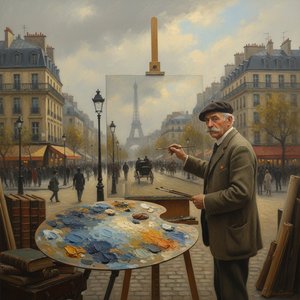
Édouard Cortès: Capturing Parisian Life – A Comprehensive Study of the 'Painter of Paris'
Explore the captivating world of Édouard Cortès, 'The Painter of Paris'. Discover his iconic street scenes, unique style & lasting legacy. Expert insights for collectors and art enthusiasts.


