

 Envoyer
 Partager
 Détails de l'œuvre

 Télécharger
 Articles similaires
 Diaporama
Torchère


 Lire la suite
Reproduction à l'huile faite à la main
Huile sur toile peinte à la main, avec cadre et dimensions personnalisés, réalisée sur commande par nos artistes. ( Passer au tirage Passer à l'image)




































Choisissez parmi nos formats prédéfinis qui respectent les proportions originales de l’œuvre.

Vous pouvez saisir vos propres dimensions pour l'adapter à un cadre ou à un espace spécifique. Si la taille sélectionnée ne correspond pas aux proportions de l'image d'origine, nous recadrerons l'œuvre ou prolongerons la peinture avec des éléments peints à la main supplémentaires. Une maquette numérique vous sera envoyée pour approbation avant le début de la production.
Veuillez noter que l'aperçu à l'écran ne reflète pas le recadrage ou l'extension réels. Seule la maquette montrera fidèlement la composition finale.
Bien que des tailles personnalisées soient disponibles, nous vous recommandons de sélectionner une dimension dans la liste prédéfinie afin de préserver les proportions d'origine.
Après la commande, l’équipe OriginalUniqueArt.com contactera le client par e-mail pour recueillir ses instructions et lui fournira une maquette d’aperçu
Livraison dans le monde entier () en 3 à 4 semaines au lieu des 5 semaines habituelles. (5 août). Aucun compromis sur la qualité.

Livraison express gratuite dans le monde entier

Toile de lin de qualité supérieure

Assurance transport complète

Garantie de remboursement des droits de douane

Garantie de fidélité des couleurs

Politique de retour de 60 jours (uniquement en cas de défaut)

Garantie de remboursement à 100%

Offre de tarifs dégressifs
 L'option verre n'est disponible que pour les dimensions inférieures à 110 cm.

Torchère
Technique de reproduction
Format de la reproduction
-


Prix total
$ 325
Description de l'œuvre
The Dramatic Dance of Light and Shadow: Exploring Albert-Ernest Carrier Belleuse’s “Torchère”
Albert-Ernest Carrier Belleuse's "Torchère," a captivating black and white photograph capturing the original marble sculpture, is more than just a depiction of figures; it’s a study in dynamic tension, theatrical drama, and the masterful manipulation of light and shadow. Created in 1873, this work embodies the spirit of Academic Neoclassicism while subtly hinting at the burgeoning Romanticism that would soon dominate the artistic landscape. The sculpture itself, housed within the Palais Garnier opera house in Paris, immediately commands attention with its arresting composition – a powerful male figure supporting a graceful female form, bathed in an ethereal glow.
At first glance, the scene appears to be one of quiet contemplation. The woman, poised and elegant, holds aloft what could be interpreted as a torch, though its precise form is obscured by drapery. Her posture suggests both strength and vulnerability, while her downward gaze hints at an offering or perhaps even a plea for assistance. Beneath her, the male figure is rendered with a striking physicality – his body contorted in a dramatic pose that speaks to struggle and support. This interplay of opposing forces—grace versus power, supplication versus strength—creates a compelling narrative tension that anchors the entire composition.
A Masterclass in Sculptural Technique
Carrier Belleuse was renowned for his technical prowess, particularly his ability to evoke movement and emotion through meticulously crafted marble. “Torchère” exemplifies this skill perfectly. The artist’s attention to anatomical detail is evident in the musculature of the male figure, while the flowing drapery of the woman’s gown demonstrates a deep understanding of fabric texture and form. The use of light and shadow is particularly noteworthy; it's not merely decorative but integral to conveying the sculpture’s narrative. Deep shadows accentuate the contours of the figures, emphasizing their weight and solidity, while strategically placed highlights draw attention to key details – the curve of her hand, the tension in her muscles, the subtle shift in her gaze.
Interestingly, Carrier Belleuse's approach was influenced by his time working with industrial processes. He experimented with electro-chemical techniques, such as galvanoplasty, to create intricate surface finishes and textures. This innovative spirit is reflected in the polished sheen of the marble, which catches and reflects light in a way that enhances the sculpture’s overall impact. The photograph itself captures this brilliance, showcasing the remarkable quality of the original work.
Historical Context and Artistic Influences
“Torchère” was created during a period of significant artistic transition. Following the Romantic era's emphasis on emotion and individualism, artists were increasingly drawn to the principles of Neoclassicism – a return to classical ideals of order, balance, and harmony. Carrier Belleuse skillfully blended these influences, creating a work that is both formally sophisticated and emotionally resonant. The sculpture’s narrative echoes themes found in classical mythology, particularly those involving heroic figures and divine assistance.
Furthermore, the commission for “Torchère” was part of a larger project to decorate the opulent Palais Garnier opera house. Carrier Belleuse collaborated with other prominent artists, including Auguste Rodin, creating a cohesive ensemble of sculptures and architectural elements that transformed the building into a masterpiece of artistic expression. The photograph provides a valuable glimpse into this collaborative environment, revealing the interplay of styles and techniques employed by these diverse talents.
Symbolism and Emotional Resonance
Beyond its technical brilliance, “Torchère” is rich in symbolic meaning. The sculpture can be interpreted as an allegory for human relationships – the dynamic between strength and vulnerability, support and dependence. The woman’s outstretched arm suggests a willingness to offer assistance, while the man's contorted pose hints at the challenges of navigating life’s complexities. The torch itself may represent enlightenment, guidance, or even hope in the face of adversity.
Ultimately, “Torchère” is a powerfully evocative work that transcends its literal subject matter. It invites viewers to contemplate themes of human connection, struggle, and resilience. The photograph serves as a testament to Carrier Belleuse’s artistic vision and his ability to capture the essence of sculpture in a single, unforgettable image. Reproductions of this iconic piece offer a chance to bring this dramatic narrative into any space, adding a touch of timeless elegance and intellectual depth.
Biographie de l'artiste
Albert Ernest Carrier Belleuse: Bridging Rococo Grace and Naturalistic Realism
Born in Anizy-le-Château, Aisne, France (1824), Albert Ernest Carrier Belleuse embarked on an artistic journey marked by both meticulous craftsmanship and a profound engagement with the stylistic currents of his time. Initially apprenticed as a goldsmith, he honed foundational skills before pursuing formal training at the École des Beaux-Arts under David D’Angers – an experience that instilled him with a deep appreciation for classical ideals and anatomical precision, shaping the very core of his sculptural practice. Carrier Belleuse's artistic trajectory swiftly embraced the Romantic movement, fueled by its expressive fervor and dramatic narratives. His early works reflected this influence, displaying a refined elegance reminiscent of Rococo ornamentation—a stylistic hallmark prevalent in Parisian society during his formative years. This careful balance between tradition and innovation is evident throughout his oeuvre, demonstrating an artist acutely attuned to the evolving tastes of his era. He skillfully blended Rococo grace with naturalistic realism, creating sculptures that captured both beauty and psychological depth. However, Carrier Belleuse wasn’t merely content to replicate established forms; he actively sought new horizons through expeditions abroad – notably England between 1850 and 1855 where he collaborated closely with Minton’s porcelain manufactory—and later, a significant period in Brussels around 1871. These experiences broadened his artistic perspective and fostered invaluable connections with fellow artists like Auguste Rodin, whom he mentored for several years. Their collaborative project on the Brussels Stock Exchange exemplifies Carrier Belleuse's remarkable ability to synthesize disparate styles into a unified vision—a testament to his intellectual curiosity and willingness to push creative boundaries. A pivotal moment arrived in 1862 when he joined the Société Nationale des Beaux-Arts and was honored with the Légion d’honneur – an accolade recognizing his contributions to French culture and acknowledging his unwavering dedication to artistic excellence. From this point onward, Carrier Belleuse's signature evolved from “carrier” or “a. carrier” to “carrier-belleuse,” signifying a commitment to stylistic integrity and consistency—a characteristic that permeated every piece he created. His sculptural output spanned monumental commissions celebrating historical figures like Mihai Viteazul (the equestrian statue in Bucharest) to intimate portraits capturing the subtleties of human emotion, showcasing his versatility as an artist. Carrier Belleuse’s legacy extends beyond his individual achievements; he served as Artistic Director at the Manufacture Nationale de Sèvres from 1876, shaping the aesthetic standards of French porcelain production and ensuring that artistic innovation continued to flourish within the realm of decorative arts. His sons, Louis Robert Carrier Belleuse and Pierre Carrier Belleuse, followed in his footsteps, pursuing careers in painting—a testament to his enduring influence on subsequent generations of artists and a lasting symbol of familial dedication to creative pursuits. Albert Ernest Carrier Belleuse passed away peacefully in Sèvres on June 4th, 1887, leaving behind an impressive body of work that continues to inspire admiration and scholarly study.
Albert Ernest Carrier Belleuse
1824 - 1887 , France
L'essentiel de l'artiste
- Artistic Movement Or Style: Neoclassical & Realist
- Artists Or Movements Influenced By This Artist: Auguste Rodin
- Artists Who Influenced This Artist: David d’Angers
- Date Of Birth: June 12, 1824
- Date Of Death: June 4, 1887
- Full Name: Albert Ernest Carrier-Belleuse
- Nationality: French
- Notable Artworks:
- The Rape of Hippodamia
- At The Couturier
- Place Of Birth: Anizy-le-Château, France
Articles connexes

Thomas Stothard: Bridging Neoclassical Ideals with Romantic Sensibility – A Reassessment
Explore the life & art of Thomas Stothard (1755-1834), a pivotal figure bridging Neoclassicism and Romanticism. Discover his exquisite book illustrations, iconic paintings like 'The Canterbury Pilgrims,' and lasting influence on British art.

The Enduring Legacy of Bronze Sculpture: Technique, Symbolism & Cultural Impact
Explore the rich history & enduring appeal of bronze sculpture with expert insights for collectors. Learn about casting techniques, iconic artists, collecting tips & contemporary interpretations at OriginalUniqueArt.
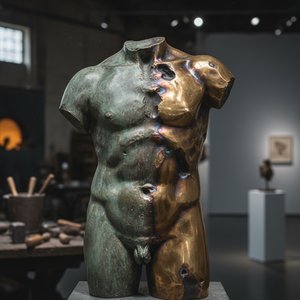
L'Héritage Durable de la Sculpture en Bronze : Histoire, Techniques et Interprétations Contemporaines
Explorez l'histoire fascinante de la sculpture en bronze, des techniques ancestrales aux créations contemporaines. Conseils d'experts pour collectionneurs et passionnés d'art.
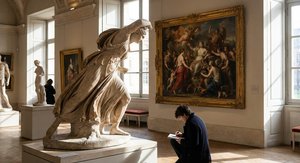
The Eloquent Body: A Historical & Artistic Exploration of Figures in Painting & Sculpture
Explore the rich history of figure painting & sculpture! Discover classical masterpieces, modern interpretations, and expert insights for art lovers & collectors. OriginalUniqueArt offers museum-quality reproductions.

The Enduring Legacy of Bronze: A Historical & Artistic Exploration for the Collector
Explore the rich history & enduring appeal of bronze sculpture with expert insights for collectors at OriginalUniqueArt. Learn about casting techniques, iconic artists, collecting tips & contemporary interpretations.


