

 Aperçu en situation
 Envoyer
 Partager
 Détails de l'œuvre
 Guide
Guide

 Télécharger l'image
 Articles similaires
 Radiographie
 Diaporama
 Statistiques
Sukkaa kutova tyttö


 Lire la suite
Reproduction à l'huile faite à la main
Huile sur toile peinte à la main, avec cadre et dimensions personnalisés, réalisée sur commande par nos artistes. ( Passer au format impression Passer au format numérique)




P118B €10

P118H €10

P118W €10

P438Z €10

P508JH €12

P508YH €12

P805H €10

P805Z €10

P919BZ €10

P919G €10

P919XJ €10

P959ZH €10

P968JZ €12

W106C €8

W218G €10

W218JH €8

W218Y €10

W307PJ €10

W316G €10

W316PJ €8

W316Y €10

W398PJ €8

W4111J €10

W500HY €15

W500JH €15

W692G €12

W849H €8

W940BG €15

W953PJ €8




Choisissez parmi nos formats prédéfinis qui respectent les proportions originales de l’œuvre.

Saisissez la largeur et la hauteur souhaitées, pour s'adapter à votre cadre ou à votre mur. Cette œuvre est peinte à la main ; ainsi, pour un format de forme différente, l'artiste peut peindre un peu plus autour du tableau ou réduire légèrement les bords — c'est vous qui choisissez. Nous vous envoyons une maquette numérique pour approbation avant que la peinture ne commence. L'image présentée sur cette page ne reflète pas le résultat réel — seule la maquette le fait.
Après la commande, l’équipe OriginalUniqueArt.com contactera le client par e-mail pour recueillir ses instructions et lui fournira une maquette d’aperçu
Livraison dans le monde entier () en 3 à 4 semaines au lieu des 5 semaines habituelles. (26 octobre). Aucun compromis sur la qualité.

Livraison express gratuite dans le monde entier

Toile de lin de qualité supérieure

Assurance transport complète

Garantie de remboursement des droits de douane

Garantie de fidélité des couleurs

Politique de retour de 100 jours (uniquement en cas de défaut)

Garantie de remboursement à 100%

Offre de tarifs dégressifs
 L'option verre n'est disponible que pour les dimensions inférieures à 110 cm.

Sukkaa kutova tyttö
Technique de reproduction
Format de la reproduction
-


Prix total
€ 263
Albert Edelfelt’s “Sukkaa kutova tyttö”: A Portrait of Rural Finland
“Sukkaa kutova tyttö” – "Girl Knitting a Sock" – is more than just a depiction of a young girl; it's a poignant window into the heart of 19th-century Finnish rural life, masterfully rendered by Albert Edelfelt. Painted in 1878, this work exemplifies Edelfelt’s pivotal shift away from grand historical narratives towards a deeply personal and naturalistic style that would ultimately define his legacy as Finland's greatest artist. The scene unfolds within the tranquil embrace of a Finnish forest, a setting meticulously observed and imbued with a quiet dignity.
The central figure, a young girl absorbed in her task of knitting a sock, dominates the composition. Her posture is relaxed yet attentive, her expression thoughtful – a subtle blend of concentration and perhaps a touch of melancholy. The artist’s skill lies not just in capturing her physical likeness but also in conveying an intangible sense of character, hinting at the hardships and quiet resilience inherent in rural existence. The presence of several other figures, subtly placed within the background, adds to the scene's realism, suggesting a bustling household or perhaps a communal gathering – a vital element of Finnish village life.
Realism and the Rise of National Identity
Edelfelt’s artistic journey was profoundly shaped by his time in Antwerp and Paris. Initially trained in the academic tradition of history painting under Jean-Léon Gerome, he quickly recognized the limitations of this style when applied to Finnish subjects. His move towards realism began with a desire to authentically portray the lives of his countrymen – a crucial step in fostering a sense of national identity during a period of increasing political and cultural awareness within Finland.
The painting’s setting, a dense Finnish forest, is not merely a backdrop; it's an integral part of the narrative. The trees, rendered with meticulous detail, evoke a sense of timelessness and connection to the land – a theme that would become increasingly important in Finnish art and literature during this era. This focus on the natural world reflects Edelfelt’s commitment to representing Finland’s unique landscape and culture to the wider world.
Technique and Composition
"Sukkaa kutova tyttö" showcases Edelfelt's mastery of oil painting techniques. The brushwork is smooth yet textured, creating a palpable sense of depth and atmosphere. He employs subtle gradations of light and shadow to model the figures and their surroundings, lending them a remarkable three-dimensionality. The composition itself is carefully balanced, with the girl occupying the central space while the surrounding elements – the trees, the rock, and the other figures – contribute to a harmonious whole.
Notice the use of color; muted greens, browns, and blues dominate the palette, reflecting the natural tones of the Finnish forest. These colors are not merely descriptive; they evoke a sense of tranquility and serenity, reinforcing the painting’s overall mood. The artist's attention to detail – from the texture of the girl’s dress to the individual strands of yarn – is remarkable, demonstrating his dedication to capturing the nuances of everyday life.
Symbolism and Emotional Impact
Beyond its realistic depiction of rural Finland, “Sukkaa kutova tyttö” carries a subtle symbolic weight. The act of knitting itself represents hard work, domesticity, and the continuation of tradition – values deeply rooted in Finnish culture. The girl’s contemplative expression suggests a connection to something larger than herself, perhaps a sense of responsibility or a yearning for a better future.
Edelfelt's ability to evoke such profound emotions through seemingly simple subject matter is a testament to his artistic genius. “Sukkaa kutova tyttö” remains a powerful and enduring image of Finland – a celebration of its people, its landscape, and its cultural heritage. A hand-painted reproduction offers an unparalleled opportunity to experience the beauty and emotional depth of this iconic work firsthand.
Questions et réponses
À quelle étape de la carrière de Albert Edelfelt « Sukkaa kutova tyttö » s'inscrit-elle ?
«Sukkaa kutova tyttö» appartient à la période Mature Period de la carrière de Albert Edelfelt. Cette classification relie l'œuvre à l'évolution de l'artiste.
À quel courant artistique «Sukkaa kutova tyttö» de Albert Edelfelt appartient-il ?
Le mouvement associé à «Sukkaa kutova tyttö» de Albert Edelfelt est Finnish Realism. Cette classification situe l'œuvre parmi des artistes et des œuvres d'art apparentés.
Où peut-on acheter des reproductions peintes à la main de «Sukkaa kutova tyttö» de Albert Edelfelt ?
Les reproductions peintes à la main de «Sukkaa kutova tyttö» de Albert Edelfelt sont disponibles sur ce site : une reproduction à l'huile peinte à la main sur toile de lin, via sa page Reproduction peinte à la main.
Biographie de l'artiste
Premières années et formation
Albert Gustaf Aristides Edelfelt est né le 21 juillet 1854 à Porvoo, en Finlande. Ses parents, Carl Albert Edelfelt et Alexandra Brandt, étaient d'origine suédoise-finlandaise. Son père était architecte et sa mère issue d’une famille de marchands aisée. Très tôt, Edelfelt a montré une passion pour l'art qui l'a conduit à étudier à l'École de dessin de la Société finnoise des arts en 1869. Il a ensuite poursuivi ses études à l'Académie royale des beaux-arts d'Anvers (1873-74) et à l'École nationale supérieure des beaux-arts de Paris (1874-78), où il a été l’élève de Jean-Léon Gérôme. Il a également passé un certain temps à Saint-Pétersbourg (1881-82).Développement artistique et influences
Sous l'influence de son maître Gérôme, Edelfelt s'est d'abord orienté vers la peinture historique. Cependant, il s’est ensuite tourné vers le naturalisme à partir de 1880. Il a été influencé par Jules Bastien-Lepage et, dans une certaine mesure, par l'impressionnisme. Son style mêlant naturalisme et modernité lui a assuré un grand succès. Ses premières œuvres parisiennes, comme "Le Billet doux", lui ont valu des prix prestigieux. Il partagea un atelier avec Julian Alden Weir et se lia d’amitié avec John Singer Sargent.Œuvres majeures et reconnaissance
Edelfelt a connu une percée significative lors de l'Exposition universelle de Paris en 1889, où il a remporté une médaille d'or. Parmi ses œuvres les plus notables figurent : le "Portrait de Louis Pasteur", qui lui a valu la Légion d’honneur en 1886 ; "Une jeune femme dans son boudoir”, témoignant de sa maîtrise dans la capture de l'essence féminine ; et “Sous les bouleaux”, une représentation poignante des paysages finlandais. Il a également réalisé des portraits de personnalités importantes, notamment Aino Ackté et la famille impériale russe.Impact et héritage
Edelfelt est considéré comme l’un des premiers artistes finlandais à atteindre une renommée internationale. Son succès a ouvert la voie à d'autres peintres finlandais, tels qu'Akseli Gallen-Kallela et Gunnar Berndtson, qui ont également étudié à Paris. Il a contribué de manière significative au mouvement artistique réaliste en Finlande et son influence s’est étendue aux générations suivantes. Sa carrière a été marquée par un retour en Finlande en 1891 et par des œuvres patriotiques vers la fin de sa vie. Son héritage a été célébré par l'émission d'une pièce commémorative de 100 euros à l'occasion de son 150e anniversaire en 2004.
Albert Edelfelt
1854 - 1905 , Finlande
L'essentiel de l'artiste
- Artistes Influents:
- Jean-Léon Gérôme
- Jules Bastien-Lepage
- Date De Décès: 18 août 1905
- Date De Naissance: 21 juillet 1854
- Influence Sur D'Autres Artistes:
- Akseli Gallen-Kallela
- Gunnar Berndtson
- Lieu De Naissance: Porvoo, Finlande
- Mouvement Artistique: Réalisme
- Nationalité: Finlandaise
- Nom Complet: Albert Edelfelt
- Oeuvres Notables:
- Portrait de Louis Pasteur
- Une jeune femme dans son boudoir
- Sous les bouleaux
Articles connexes

The Soul of Impressionism: Why Oil on Canvas Captures Eternal Light and Timeless Emotion
Discover the enchanting alchemy of Impressionism. Explore how the mastery of oil on canvas, through glazing and impasto, captures eternal light and emotion. Perfect for lovers of Monet and Van Gogh seeking the profound depth of hand-painted fine art.

L'héritage durable de la peinture à l'huile : technique, histoire et pratique contemporaine
Explorez l'histoire fascinante de la peinture à l'huile, des techniques ancestrales aux pratiques contemporaines. Découvrez les maîtres, apprenez et trouvez votre œuvre d'art idéale chez .

L'Huile sur Toile : Exploration Historique et Technique d'un Médium Artistique Intemporel
Explorez l'histoire fascinante de la peinture à l'huile, des techniques ancestrales aux maîtres flamands comme Van Eyck. Découvrez les secrets des pigments, liants et glacis pour comprendre cet art intemporel.
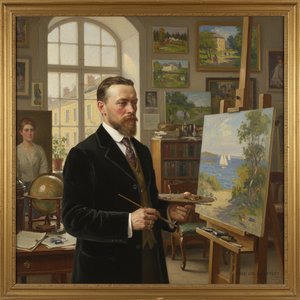
Albert Edelfelt: A Pioneer of Finnish Realism & International Impressionist Circles
Explore the life & work of Albert Edelfelt, a pioneering Finnish Realist painter who bridged Impressionism & national identity. Discover his masterpieces and lasting influence on art history.

The Enduring Legacy of Oil on Canvas: Technique, History & Aesthetic Impact
Explore the rich history & techniques of oil painting – from Renaissance masters to Impressionism. Discover pigments, layering methods, and why this timeless medium endures. Expert insights for artists & art enthusiasts.


