

 Aperçu en situation
 Envoyer
 Partager
 Détails de l'œuvre
 Guide
Guide

 Télécharger l'image
 Articles similaires
 Radiographie
 Diaporama
 Statistiques
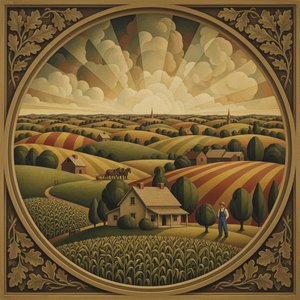
Evening on the Prairie


 Lire la suite
Giclées et impressions d'art
Impressions giclées ou sur toile de qualité musée, avec une production rapide et des finitions au choix. ( Commander la reproduction peinte à la main Passer au format numérique)




P118B €10

P118H €10

P118W €10

P438Z €10

P508JH €12

P508YH €12

P805H €10

P805Z €10

P919BZ €10

P919G €10

P919XJ €10

P959ZH €10

P968JZ €12

W106C €8

W218G €10

W218JH €8

W218Y €10

W307PJ €10

W316G €10

W316PJ €8

W316Y €10

W398PJ €8

W4111J €10

W500HY €15

W500JH €15

W692G €12

W849H €8

W940BG €15

W953PJ €8




Choisissez parmi nos formats prédéfinis qui respectent les proportions originales de l’œuvre.

Saisissez la largeur et la hauteur souhaitées pour qu'elles s'adaptent à votre cadre ou à votre mur. Une impression peut être recadrée, mais jamais agrandie au-delà de l'image originale ; ainsi, un format de forme différente entraînera la perte d'une partie de l'image. Nous vous envoyons une maquette numérique pour approbation avant toute impression. L'image présentée sur cette page ne montre pas le recadrage réel — seule la maquette le permet.
Livraison dans le monde entier () en 2 semaines au lieu des 4/5 semaines habituelles. (26 octobre)

Livraison express gratuite dans le monde entier

Toile de lin de qualité supérieure

Assurance transport complète

Garantie de remboursement des droits de douane

Garantie de fidélité des couleurs

Politique de retour de 100 jours (uniquement en cas de défaut)

Garantie de remboursement à 100%

Offre de tarifs dégressifs
 L'option verre n'est disponible que pour les dimensions inférieures à 110 cm.

Evening on the Prairie
Giclées et impressions d'art
Format de la reproduction
-


Prix total
€ 70
A Symphony of Light and Wilderness: Albert Bierstadt’s “Evening on the Prairie”
Albert Bierstadt's "Evening on the Prairie," painted in 1870, isn’t merely a landscape; it’s an immersive experience. It transports the viewer to the heart of the American West, capturing not just the visual grandeur but also the profound emotional resonance that defined the Romantic era and Bierstadt’s own artistic vision. This monumental canvas, currently residing in the Thyssen-Bornemisza Museum in Madrid, speaks volumes about America's burgeoning fascination with its untamed frontier and the artist’s ability to translate that wonder onto the canvas.
Bierstadt, a pivotal figure within the Hudson River School movement, rejected the strict realism of earlier landscape painters. Instead, he embraced a Romantic sensibility, prioritizing atmosphere, drama, and the sublime—the feeling of awe inspired by nature’s immense power. “Evening on the Prairie” exemplifies this perfectly. The scene unfolds as twilight descends upon a vast prairie, dominated by a winding river that acts as a powerful visual guide, drawing the eye into the distant, hazy horizon. The composition is meticulously balanced, utilizing horizontal lines of the riverbanks and hills to create a sense of stability against the turbulent energy of the sky.
Technique and Luminism: A Masterful Blend
Bierstadt’s technical skill is immediately apparent in the painting's rich detail and masterful use of light. He employed a technique often referred to as “luminism,” characterized by intense, saturated colors and dramatic contrasts between light and shadow. Thick impasto brushstrokes—noticeable particularly in the clouds and foliage—lend texture and depth to the scene, inviting the viewer to almost feel the roughness of the bark on the trees or the warmth of the setting sun. The artist’s careful layering of glazes creates a luminous quality, as if the light itself is emanating from within the canvas. The use of complementary colors – the deep blues and greens of the foreground contrasted with the fiery oranges and yellows of the sunset – intensifies the visual impact.
Furthermore, Bierstadt’s background in Düsseldorf instilled a rigorous attention to detail and an understanding of atmospheric perspective. Distant elements are rendered in paler hues, creating a convincing illusion of depth and distance. The solitary rider on horseback, positioned prominently in the foreground, serves as a poignant focal point, inviting contemplation about the vastness of the landscape and the human experience within it.
Symbolism and the American Ideal
Beyond its technical brilliance, “Evening on the Prairie” is laden with symbolic meaning. The prairie itself represents the untamed spirit of America—a land of opportunity, challenge, and boundless potential. The rider, often interpreted as a pioneer or explorer, embodies the westward expansion and the drive to conquer new frontiers. The dramatic sunset evokes feelings of both beauty and melancholy, suggesting the fleeting nature of time and the inherent loneliness of venturing into the unknown. It’s a scene that resonates with the American dream—the promise of prosperity and self-reliance in a vast and challenging landscape.
Interestingly, the painting draws parallels to European Romantic landscapes, particularly those influenced by Andreas Achenbach. Bierstadt skillfully blended these influences with his own unique vision, creating an image that is both familiar and strikingly original. The inclusion of elements like the low horizon line and the solitary figure further reinforce this connection to the pastoral traditions of German landscape painting.
A Legacy Endures: Reproductions and Inspiration
Today, “Evening on the Prairie” remains a celebrated masterpiece, captivating viewers with its breathtaking beauty and evocative power. High-quality reproductions are now available, allowing art lovers to bring this iconic image into their homes and offices. These meticulously crafted prints capture the essence of Bierstadt’s original work, offering a tangible connection to a pivotal moment in American art history. Whether you're an admirer of Romanticism, a collector of Western landscapes, or simply seeking a piece of art that inspires awe and wonder, “Evening on the Prairie” is a timeless treasure.
Questions et réponses
Quelle couleur domine la composition de «Evening on the Prairie» de Albert Bierstadt ?
Vert de phtalo (#1a1710) est la couleur dominante de «Evening on the Prairie» de Albert Bierstadt.
Pour quel usage une reproduction de «Evening on the Prairie» de Albert Bierstadt est-elle recommandée ?
Cette impression de « Evening on the Prairie » est idéale pour Pièce maîtresse d'envergure.
Quelle nuance dominante traverse «Evening on the Prairie» de Albert Bierstadt ?
La teinte dominante de «Evening on the Prairie» de Albert Bierstadt est De l'ocre au sépia. Cette nuance constitue la tonalité de fond de la palette.
Biographie de l'artiste
Premières années et formation
Albert Bierstadt, un peintre germano-américain renommé, est né le 7 janvier 1830 à Solingen, en Prusse. Sa famille a immigré aux États-Unis lorsqu'il n'était qu'un an, s'installant à New Bedford, dans le Massachusetts. La vie précoce de Bierstadt fut marquée par son goût naissant pour l'art et il commença à réaliser des croquis ingénieux au crayon dès sa jeunesse.Carrière artistique
La carrière artistique de Bierstadt a décollé en 1851 lorsqu'il a commencé à peindre à l'huile. Il est retourné en Allemagne en 1853 pour étudier la peinture pendant plusieurs années à Düsseldorf, ce qui a grandement influencé son style. À son retour aux États-Unis, Bierstadt est devenu un membre important de l’École du fleuve Hudson, un groupe de peintres partageant les mêmes idées qui se concentraient sur la capture des paysages majestueux de la vallée du fleuve Hudson. En 1858, Bierstadt a exposé une grande peinture d'un paysage suisse à l'Académie nationale de design, obtenant une réception critique positive et une adhésion honorifique à l'académie. Ses voyages ultérieurs dans l'ouest américain avec Frederick W. Lander et Fitz Hugh Ludlow ont inspiré ses paysages emblématiques, qui mettaient en valeur la grandeur de l'ouest américain.Œuvres notables et expositions
* Paysage occidental (peinture) : un témoignage du talent de Bierstadt pour capturer les vastes paysages de l'ouest américain. * Scène côtière (peinture) : démontre la capacité de Bierstadt à transmettre la beauté de la côte américaine.- Découvrez davantage d'œuvres d'Albert Bierstadt sur OriginalUniqueArt
- En savoir plus sur la vie et la carrière d'Albert Bierstadt sur Wikipédia
- Explorez l’École du fleuve Hudson et son influence sur l’art américain sur OriginalUniqueArt
Influences et style
Le style de Bierstadt était fortement influencé par ses études en Europe, notamment par l'art des maîtres allemands et la tradition du paysage romantique. Son retour aux États-Unis a coïncidé avec le développement de l’École du fleuve Hudson, un mouvement artistique qui cherchait à représenter la beauté naturelle de l'Amérique. Bierstadt s'est rapidement imposé comme l'un des principaux représentants de ce mouvement, grâce à sa capacité à capturer la grandeur et la majesté des paysages américains. Il utilisait une technique méticuleuse, avec une attention particulière aux détails et aux effets de lumière, pour créer des œuvres d’une grande richesse visuelle. Son style est souvent associé au luminisme, un courant artistique qui met l'accent sur les effets de la lumière et de l'atmosphère dans les paysages.Héritage
La maîtrise technique de Bierstadt, acquise grâce à ses études du paysage européen, a été essentielle à son succès en tant que peintre de l’ouest américain. Ses toiles monumentales, produites après ses voyages avec Lander et Ludlow, l'ont établi comme le peintre prééminent du paysage américain occidental. Son œuvre continue d'inspirer les artistes et les amateurs d'art aujourd'hui, témoignant de sa contribution durable à l'histoire de l’art américain. Faits clés : * Né : 7 janvier 1830, Solingen, Prusse * Décédé : 18 février 1902 * Nationalité : germano-américain * Style : peinture de paysage, École du fleuve Hudson * Œuvres notables : Paysage occidental, Scène côtière Découvrez davantage de biographies et d'œuvres d'Albert Bierstadt sur OriginalUniqueArt
Albert Bierstadt
1830 - 1902 , Allemagne
L'essentiel de l'artiste
- Artistic Movement Or Style: École du fleuve Hudson
- Artists Or Movements Influenced By This Artist: ['Art Américain du 19e siècle']
- Artists Who Influenced This Artist: ['École Européenne']
- Date Of Birth: 7 janvier 1830
- Date Of Death: 18 février 1902
- Full Name: Albert Bierstadt
- Nationality: German-Américain
- Notable Artworks:
- Western Landscape
- Coastal Scene
- Chutes de Staubbach
- Moulin Rustique
- Buffalo sur la plaine
- Montagnes Rocheuses
- Alaska
- Parmi les montagnes...
- Place Of Birth (City And Country): Solingen, Allemagne
Articles connexes

Réalisme Américain : 10 Chefs-d'œuvre Incontournables pour une Déco Inspirée
Plongez au cœur du Réalisme Américain avec 10 chefs-d'œuvre d'Edward Hopper, Andrew Wyeth et plus. Découvrez l'histoire et les techniques de ces artistes emblématiques. Reproductions de tableaux de qualité musée sur OriginalUniqueArt.com !
Grant Wood & American Regionalism: Identity, Myth & the Rural Landscape
Explore the world of Grant Wood & American Regionalism with OriginalUniqueArt. Discover the symbolism behind 'American Gothic', recurring themes, and the movement's lasting impact on art history. High-quality reproductions available.

L'École du fleuve Hudson : 10 chefs-d'œuvre incontournables pour sublimer votre intérieur
Plongez dans l'univers grandiose de l'École du fleuve Hudson ! Découvrez 10 chefs-d'œuvre emblématiques de Thomas Cole, Frederic Church et Albert Bierstadt. Inspirez votre décoration intérieure avec ces paysages américains romantiques. Explorez la collection complète sur OriginalUniqueArt.com.

Albert Bierstadt : Lumière, Paysage et l'Idéal Américain – Une Épopée Picturale de la Frontière Ouest
Explorez l'univers épique d'Albert Bierstadt et de la peinture du paysage américain. Découvrez son rôle dans l'École du Fleuve Hudson, sa maîtrise du luminisme et son impact sur l'art américain. Analyse approfondie et reproduction de tableaux disponibles.

American Regionalism: The Soul of the Heartland and the Mastery of Grant Wood
Explore the profound history of American Regionalism. Discover how Grant Wood captured the heart of the Midwest through masterpieces like American Gothic. An expert guide to the movement, its cultural impact, and the enduring beauty of American Realism.


