

 Aperçu en situation
 Partager
 Partager
 Détails
 Guide
Guide

 Télécharger
 Articles similaires
 Radiographie
 Voir le diaporama
 Statistiques
Eleonora di Toledo
 Huile sur panneau
- Art mural
- Maniérisme italien
 1543
1543- L'époque moderne
 46.0 x 59.0 cm
 Galerie Nationale
 Afficher la suite
Reproduction à l'huile faite à la main
Huile sur toile peinte à la main, avec cadre et dimensions personnalisés, réalisée sur commande par nos artistes. ( Passer au format impression Passer au format image numérique)




P118B $10

P118H $10

P118W $10

P438Z $10

P508JH $12

P508YH $12

P805H $10

P805Z $10

P919BZ $10

P919G $10

P919XJ $10

P959ZH $10

P968JZ $12

W106C $8

W218G $10

W218JH $8

W218Y $10

W307PJ $10

W316G $10

W316PJ $8

W316Y $10

W398PJ $8

W4111J $10

W500HY $15

W500JH $15

W692G $12

W849H $8

W940BG $15

W953PJ $8




Choisissez parmi nos formats prédéfinis qui respectent les proportions originales de l’œuvre.

Vous pouvez saisir vos propres dimensions pour l'adapter à un cadre ou à un espace spécifique. Si la taille sélectionnée ne correspond pas aux proportions de l'image d'origine, nous recadrerons l'œuvre ou prolongerons la peinture avec des éléments peints à la main supplémentaires. Une maquette numérique vous sera envoyée pour approbation avant le début de la production.
Veuillez noter que l'aperçu à l'écran ne reflète pas le recadrage ou l'extension réels. Seule la maquette montrera fidèlement la composition finale.
Bien que des tailles personnalisées soient disponibles, nous vous recommandons de sélectionner une dimension dans la liste prédéfinie afin de préserver les proportions d'origine.
Après la commande, l’équipe OriginalUniqueArt.com contactera le client par e-mail pour recueillir ses instructions et lui fournira une maquette d’aperçu
Livraison dans le monde entier () en 3 à 4 semaines au lieu des 5 semaines habituelles. (21 septembre). Aucun compromis sur la qualité.

Livraison express gratuite dans le monde entier

Toile de lin de haute qualité

Assurance transport complète

Garantie de remboursement des droits de douane

Garantie de fidélité des couleurs

Garantie de retour de 100 jours (uniquement en cas de défaut)

Garantie de remboursement à 100%

Tarifs dégressifs sur quantité
 L'option verre n'est disponible que pour les dimensions inférieures à 110 cm.

Eleonora di Toledo
Technique de reproduction
Format de la reproduction
-


Prix total final
$ 300
A Vision of Mannerist Majesty
In the quiet corridors of the Národní Galerie in Prague, there exists a window into the opulent heart of the sixteenth century. Agnolo Bronzino’s Eleonora di Toledo is not merely a portrait; it is a profound encounter with the very essence of Mannerist elegance. Executed in 1543, this masterpiece captures the Duchess with an almost unnerving stillness, a deliberate departure from the fluid naturalism of the High Renaissance. Instead, Bronzino invites us into a world of psychological complexity and polished perfection, where every brushstroke serves to construct an illusion of aristocratic grace that feels both eternal and untouchable.
The subject herself, a figure of immense political and social significance, gazes out from the canvas with a dignified posture that commands immediate respect. Her presence is defined by a controlled composure, a hallmark of Bronzino’s ability to capture the inner life of his sitters through an outward display of restraint. To look upon Eleonora is to witness the carefully curated image of a woman who stood at the center of power, her steady gaze establishing an unspoken, intimate connection with every viewer who encounters her across the centuries.
The Alchemy of Light and Texture
Technically, the painting is a triumph of sfumato and meticulous glazing. Bronzino employed a sophisticated method of layering translucent glazes over a thinly applied oil ground, a technique that grants the skin an ethereal, porcelain-like luminosity. This meticulous approach allows light to penetrate the surface, creating a depth that makes the Duchess appear to glow from within. The artist’s hand is most evident in the breathtaking rendering of her attire; the sumptuous red gown, heavy with gold trim, is a masterclass in texture. One can almost feel the weight of the luxurious fabric and the intricate tactile quality of the embroidery.
For the discerning collector or interior designer, this painting offers an unparalleled study in color and light. The vibrant crimson of the dress serves as a powerful focal point, capable of anchoring a room with its regal warmth, while the delicate lace of her collar and the subtle shimmer of her jewelry provide fine-grained details that reward close inspection. It is a work that balances bold, commanding presence with a sophisticated, quiet intricacy.
Symbolism and the Legacy of Power
Beyond its aesthetic brilliance, the portrait is a dense tapestry of symbolic meaning. Every element of Eleonora’s adornment was chosen to communicate her status, wealth, and lineage. The gold trim and opulent jewels are not merely decorative; they are visual manifestations of the stability and prosperity of the era. In a period marked by religious upheaval and political maneuvering in Florence, such a portrait functioned as a powerful tool of propaganda, projecting an image of unshakeable piety and social permanence.
Integrating a reproduction of this caliber into a contemporary space brings with it a sense of historical continuity and refined taste. It is an invitation to surround oneself with the beauty of the past—a piece that evokes the grandeur of the Medici court while maintaining a timeless, sophisticated allure. Whether placed in a formal gallery setting or as a striking centerpiece in a modern study, Eleonora di Toledo continues to inspire awe, serving as a testament to the enduring power of art to capture the sublime.
Biographie de l'artiste
Premières années et formation
Agnolo di Cosimo, connu sous le nom de Bronzino ou Il Bronzino, est né à Florence, en Italie, le 17 novembre 1503. Fils d'un boucher, il commença sa formation artistique auprès de Raffaellino del Garbo, puis devint l’apprenti du Pontormo, un peintre maniériste renommé.Style artistique et influences
Le style de Bronzino se caractérise par des figures élégantes, calmes et réservées, souvent dépourvues de l'agitation et de l'émotion que l'on retrouve dans les œuvres de son maître, Pontormo. Ses portraits, en particulier ceux de la noblesse florentine, sont réputés pour leur attention minutieuse aux détails et ont influencé la portraiture des cours européennes pendant des siècles.Œuvres notables
- Vénus, Cupidon, Folly et le Temps (c. 1544-45), actuellement à la National Gallery de Londres
- Portraits de Cosimo I de' Medici et de son épouse Eleonora di Toledo, illustrant la maîtrise de Bronzino dans la portraiture maniériste
- Portraits idéalisés des poètes Dante (c. 1530, actuellement à Washington, D.C.) et Pétrarque
Héritage et vie ultérieure
Bronzino devint le peintre officiel de la cour du duc de Toscane et occupa ce poste pendant la majeure partie de sa carrière. Il fut également membre fondateur de l'Accademia delle Arti del Disegno à Florence en 1563. Bronzino est décédé le 23 novembre 1572, à Florence.- Découvrez plus d’œuvres d’Agnolo Bronzino sur https://OriginalUniqueArt.com/@/agnolo_bronzino
- Explorez le mouvement artistique baroque florentin et son influence sur l'art occidental sur https://OriginalUniqueArt.com/@@/a@d3cpvx
- Découvrez davantage sur le mouvement artistique de la Renaissance italienne et son impact sur l'art occidental sur /fr/art/show/art-d3cpud-fr/
- 17 novembre 1503 : né à Florence, en Italie
- 1539 : a reçu le patronage des Médicis pour le mariage de Cosimo I de' Medici avec Eleonora di Toledo
- 23 novembre 1572 : décédé à Florence

Agnolo Bronzino
1503 - 1572 , Italie
En bref
- Artistes Influents:
- Pontormo
- Raffaellino del Garbo
- Date De Décès: 23 novembre 1572
- Date De Naissance: 17 novembre 1503
- Influences Artistiques:
- Portraits européens
- Courtoisie italienne
- Lieu De Naissance: Florence, Italie
- Mouvement Artistique: Manierisme
- Nationalité: Italienne
- Nom Complet: Agnolo Bronzino
- Œuvres Notables:
- Vénus, Cupidon et le Temps
- Portraits des Médicis
- Portrait de Dante
- Portrait de Pétrarque
Articles similaires
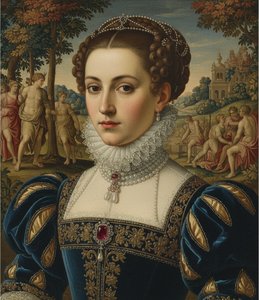
Agnolo Bronzino: Mastering Courtly Portraiture & the Enigmatic Gaze of Renaissance Florence
Explore the captivating world of Agnolo Bronzino, Renaissance master portraitist. Discover his elegant style, symbolic depth & lasting influence on art history. Expert insights for collectors.
Giotto di Bondone : Les 25 Chefs-d'œuvre Incontournables pour Embellir Votre Intérieur
Plongez dans l'univers de Giotto di Bondone : découvrez les 25 fresques et chefs-d'œuvre qui ont révolutionné l'art médiéval italien. Explorez son style unique, ses couleurs vibrantes et l'histoire fascinante derrière chaque œuvre. Retrouvez des reproductions d'exception sur OriginalUniqueArt.com.

L'Huile sur Toile : Exploration Historique et Technique d'un Médium Artistique Intemporel
Explorez l'histoire fascinante de la peinture à l'huile, des techniques ancestrales aux maîtres flamands comme Van Eyck. Découvrez les secrets des pigments, liants et glacis pour comprendre cet art intemporel.

The Enduring Legacy of Oil on Canvas: Technique, History & Aesthetic Impact
Explore the rich history & techniques of oil painting – from Renaissance masters to Impressionism. Discover pigments, layering methods, and why this timeless medium endures. Expert insights for artists & art enthusiasts.

The Enduring Power of Painting: A Historical & Contemporary Exploration of Form and Emotion
Explore the rich history & enduring techniques of oil painting with OriginalUniqueArt. Discover masterpieces, learn about art collecting, and find authentic handmade reproductions crafted by skilled artists.


