William Holman Hunt muotokuva

100 tunnetuinta William Holman Hunt -maalausta, gallerian valikoima

Päivitetty marraskuu 2026 · järjestetty suosituimmuuspisteiden mukaan (jokaisen teoksen haut, vierailut ja tilaukset) · 126 teosta taiteilijalta William Holman Hunt luettelossamme

Lyhyesti

Kaikista William Holman Hunt jättämistä alkuperäisteoksista kuuluisin on W H Maailman valo. Heti perässä tulevat Heräävä Tajunta ja Syntipukki (1854). Katalogissamme on 126 teosta taiteilijalta William Holman Hunt; galleria on säilyttänyt 100 maailman ihailluimmista teoksista, ja jokaisesta on esitetty sen päivämäärä, museo sekä tarina.

1827 – 1910, Lontoo Esiraphelainen Eniten teoksia: Birmingham Museum and Art Gallery

William Holman Hunt -taiteilijan 10 parasta maalausta: gallerian valinnat

1
W H Maailman valo tekijä William Holman Hunt

W H Maailman valo

Öljyväri kankaalle

W H Maailman valo on William Holman Huntin mestariteos, joka valmistui vuonna 1851. Teoksen sommitelma keskittyy Jeesus-hahmoon, joka pitelee sytytettyä lyhtyä valaisemassa ympäröivää pimeyttä. Tämä uskonnollinen kohtaus ammentaa temaattisen pohjansa Raamatun kohdista Johannes 8:12 ja Ilmestyskirja 3:20.

2
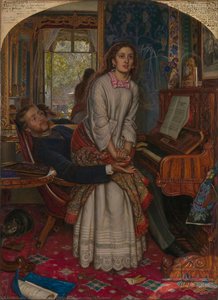
Heräävä Tajunta tekijä William Holman Hunt

Heräävä Tajunta

Öljyväri kankaalle

William Holman Huntin "Tietoisuuden Herääminen" – Victorianin Sielun Syvällinen Katse William Holman Huntin vuonna 1853 maalattu “Tietoisuuden Herääminen” (The Awakening Conscience) on paljon enemmän kuin pelkkä kodinomainen kuvaus; se on voimakkaasti tunteisiin vetoava tarina, joka on vangittu ajassa. Maalaus paljastaa ratkaisevan hetken – naisen heräävän tietoisuuden, joka on joutunut yhteiskunnan odotusten ja oman vallan väliseen ristiriitaan, kun hän kokee sisäisen muutoksen. Kuva kertoo salamyhkäisestä suhteesta, jonka seuraukset ovat syvällisiä. Aluksi…

3
Syntipukki (1854) tekijä William Holman Hunt

Syntipukki

1854 · Öljyväri kankaalle · Lady Lever Art Gallery, Liverpool

Tässä teoksessa, jonka nimi on Syntipukki, taiteilija William Holman Hunt kääntää katseensa syvälliseen raamatulliseen kertomukseen. Vuosien 1854 ja 1856 välisenä aikana syntynyt maalaus ammentaa aiheensaaa Leviticus-kirjasta. Se esittää yksinäisen ja raskaan eristyneisyyden hetken, keskittyen eläimeen, joka kantaa yhteisön synnit mukanaan erämaahan.

4
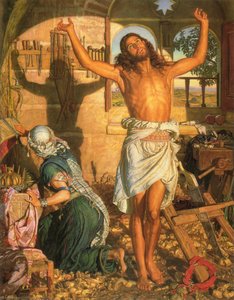
Kuoleman varjo tekijä William Holman Hunt

Kuoleman varjo

Öljyväri · Manchesterin taidegalleria, Manchester

Teoksessa Kuoleman varjo, William Holman Hunt esittää syvällisen kuvauksen Kristuksen uhrauksesta. Kangas vangitsee Jeesuksen ristillä, hänen käsivartensa levitettyinä syvän kärsimyksen eleeseen. Hän roikkuu puun varassa, ja hänen kehonsa välittää suuren kivun fyysisen todellisuuden. Tämä hetki on kuvattu sellaisella suoruudella, joka korostaa tapahtuman painavuutta.

5
Työvuokraajan pastori (1851) tekijä William Holman Hunt

Työvuokraajan pastori

1851 · Öljyväri kankaalle · Manchesterin taidegalleria, Manchester

Uppoudu William Holman Huntin "The Hireling Shepherd" -teoksen lumoavaan maailmaan, hurmaavaan työhön, joka kiteyttää esirappelilaisten veljeskunnan omistautumisen naturalismille ja symboliselle syvyydelle. Tämä vuonna 1851 valmistunut mestariteos kutsuu katsojan pastoraaliseen näkymään, joka on täynnä monimutkaisia yksityiskohtia, eloisia värejä ja syviä kerronnallisia kerroksia.

6
Maailman valo (1851) tekijä William Holman Hunt

Maailman valo

1851 · Öljyväri kankaalle · Keble College, Oxford

William Holman Huntin ”Maailman valo”, joka valmistui vuonna 1851, on enemmän kuin pelkkä maalaus; se on uppoutuva meditaatio uskosta ja lunastuksesta. Tämä 59 x 125 cm kokoinen öljyväri kankaalle -mestariteos, joka sijaitsee nykyään Oxfordissa Keble Collegessa, vetää katsojan välittömästi syvän hiljaisuuden ja hengellisen merkityksellisyyden äärelle. Hunt, syvästi uskovainen taiteilija, pyrki vangitsemaan paitsi visuaalisen esityksen, myös uskomustensa ruumiillistuman – konkreettisen ilmaisun Jumalan armosta, joka on tarjolla ihmiskunnalle. Maalauksen voima kumpuaa sen…

7
Fanny Waugh Hunt (1868) tekijä William Holman Hunt

Fanny Waugh Hunt

1868 · Acrylic On Canvas · Toledo Museum of Art, Toledo

The Lady of Shalott: A Vision of Faith and Fate William Holman Hunt’s “The Lady of Shalott,” completed in 1905, stands as arguably the Pre-Raphaelite Brotherhood's most ambitious undertaking—a monumental canvas that transcends mere depiction to embody a profound meditation on faith, duty, and the inescapable pull of time. More than just a visual representation of Tennyson’s iconic poem, it is an immersive experience designed to transport the viewer into…

8
The Shadow of Death tekijä William Holman Hunt

The Shadow of Death

Oil On Canvas · Manchesterin taidegalleria, Manchester

William Holman Hunt’s “The Shadow of Death,” completed in 1873 during his second pilgrimage to the Holy Land, is not merely a depiction of Christ's crucifixion; it’s a profound meditation on mortality, faith, and the human condition. This monumental oil painting, measuring an impressive 214.2 cm x 168.2 cm, resides within the hallowed halls of the Manchester Art Gallery, inviting viewers into a scene brimming with symbolic weight and emotional…

9
The Lady of Shalott (1889) tekijä William Holman Hunt

The Lady of Shalott

1889 · Oil On Canvas · Manchesterin taidegalleria, Manchester

To gaze upon William Holman Hunt’s “The Lady of Shalott” is to step across the threshold into a realm suspended between myth and melancholy. This evocative oil on canvas, a cornerstone of the Pre-Raphaelite movement, transcends mere visual representation to become an embodiment of artistic fate. The painting captures the profound tension between a sheltered, solitary existence and the inevitable, often tragic, confrontation with the outside world. Through his meticulous…

10
The Risen Christ with the Two Marys in the Garden of Joseph of Arimathea (1897) tekijä William Holman Hunt

The Risen Christ with the Two Marys in the Garden of Joseph of Arimathea

1897 · Oil On Canvas · Art Gallery of South Australia, Adelaide

William Holman Hunt’s “The Risen Christ with the Two Marys in the Garden of Joseph of Arimathea,” completed in 1897, is more than a painting; it's a meticulously crafted meditation on faith, grief, and the profound mystery of resurrection. This monumental oil-on-canvas work, currently residing at the Art Gallery of South Australia in Adelaide, stands as a cornerstone of the Pre-Raphaelite Brotherhood’s artistic vision – a movement dedicated to rejecting…

William Holman Hunt-valikoima jatkuu, 11–100

11The Awakening Conscience (1853) tekijä William Holman HuntThe Awakening Conscience1853 · Tate Britain 12The Light of the World (1853) tekijä William Holman HuntThe Light of the World1853 · Keble College 13Design for a Monk Succoured by a Christian (2000) tekijä William Holman HuntDesign for a Monk Succoured by a Christian2000 14The flight of Madeline and Porphyro during the drunkenness attending the revelry (The Eve of St. Agnes) (1857) tekijä William Holman HuntThe flight of Madeline and Porphyro during the drunkenness attending the revelry (The Eve of St. Agnes)1857 · Walker Art Gallery 15The Scapegoat (1854) tekijä William Holman HuntThe Scapegoat1854 · Lady Lever Art Gallery 16Isabella and the Pot of Basil (1868) tekijä William Holman HuntIsabella and the Pot of Basil1868 · Laing Art Gallery 17Mary Walker Waugh (1868) tekijä William Holman HuntMary Walker Waugh1868 · Clevelandin taidemuseo 18Past And Present (1868) tekijä William Holman HuntPast And Present1868 19The Ship (1875) tekijä William Holman HuntThe Ship1875 20My Son Cyril (1877) tekijä William Holman HuntMy Son Cyril1877 21The Triumph of the Innocents (1886) tekijä William Holman HuntThe Triumph of the Innocents1886 · Harvard Art Museums 22The Eve of St. Agnes: The Flight of Madeleine and Porphyro during the Drunkenness attending the Revelry (1848) tekijä William Holman HuntThe Eve of St. Agnes: The Flight of Madeleine and Porphyro during the Drunkenness attending the Revelry1848 23The Dead Sea from Siloam (1855) tekijä William Holman HuntThe Dead Sea from Siloam1855 24The Triumph of the Innocents (1887) tekijä William Holman HuntThe Triumph of the Innocents1887 · Walker Art Gallery 25Study of a bloodhound (1848) tekijä William Holman HuntStudy of a bloodhound1848 · Art Gallery of New South Wales 26Portrait of William Pink (1842) tekijä William Holman HuntPortrait of William Pink1842 27Cornfield at Ewell (1849) tekijä William Holman HuntCornfield at Ewell1849 28The Scapegoat (1854) tekijä William Holman HuntThe Scapegoat1854 · Manchesterin taidegalleria 29Portrait of Dante Gabriel Rossetti (1853) tekijä William Holman HuntPortrait of Dante Gabriel Rossetti1853 · Birmingham Museum and Art Gallery 30The Sphinx at Gizeh (1854) tekijä William Holman HuntThe Sphinx at Gizeh1854 31Valentine Rescuing Silvia from Proteus (1851) tekijä William Holman HuntValentine Rescuing Silvia from Proteus1851 32Our English Coasts (1852) tekijä William Holman HuntOur English Coasts1852 33The Dead Sea from Siloam (1857) tekijä William Holman HuntThe Dead Sea from Siloam1857 · Birmingham Museum and Art Gallery 34The Schoolgirl's Hymn (1859) tekijä William Holman HuntThe Schoolgirl's Hymn1859 35Portrait of Fanny Holman Hunt (1868) tekijä William Holman HuntPortrait of Fanny Holman Hunt1868 · Toledo Museum of Art 36The Birthday (A Portrait Of The Artist's Wife, Edith) (1868) tekijä William Holman HuntThe Birthday (A Portrait Of The Artist's Wife, Edith)1868 37The Ponte Vecchio, Florence (1867) tekijä William Holman HuntThe Ponte Vecchio, Florence1867 38Lady Fairbairn with her Children (1864) tekijä William Holman HuntLady Fairbairn with her Children1864 39Self-Portrait (1875) tekijä William Holman HuntSelf-Portrait1875 40The Festival of St. Swithin or The Dovecote (1875) tekijä William Holman HuntThe Festival of St. Swithin or The Dovecote1875 41The Apple Harvest, Valley of The Rhine, Ragaz (1885) tekijä William Holman HuntThe Apple Harvest, Valley of The Rhine, Ragaz1885 · Birmingham Museum and Art Gallery 42Cornfield at Ewell (1849) tekijä William Holman HuntCornfield at Ewell1849 43May Morning on Magdalen College Tower, Oxford (1891) tekijä William Holman HuntMay Morning on Magdalen College Tower, Oxford1891 44The Importunate Neighbour (1895) tekijä William Holman HuntThe Importunate Neighbour1895 · National Gallery of Victoria 45Claudio and Isabella (1850) tekijä William Holman HuntClaudio and Isabella1850 · Tate Gallery 46John Key tekijä William Holman HuntJohn Key 47John Hunt tekijä William Holman HuntJohn Hunt 48The Beloved tekijä William Holman HuntThe BelovedRoyal Collection 49The Ballad of Oriana tekijä William Holman HuntThe Ballad of Oriana 50The Lady of Shalott (study) tekijä William Holman HuntThe Lady of Shalott (study) 51The Artist tekijä William Holman HuntThe ArtistBirmingham Museum of Art 52Stephen lushington tekijä William Holman HuntStephen lushingtonNational Portrait Gallery 53Quakers Meeting tekijä William Holman HuntQuakers Meeting 54The Woman Taken in Adultery tekijä William Holman HuntThe Woman Taken in Adultery 55Cyril benoni holman hunt tekijä William Holman HuntCyril benoni holman huntFitzwilliam Museum 56May Morning on Magdalen Tower (1888) tekijä William Holman HuntMay Morning on Magdalen Tower1888 · Lady Lever Art Gallery 57A Study for Oriana (2000) tekijä William Holman HuntA Study for Oriana2000 58The Ballad of Oriana (2000) tekijä William Holman HuntThe Ballad of Oriana2000 59Sunset in the Val d’Arno (2000) tekijä William Holman HuntSunset in the Val d’Arno2000 60Portrait of Henry Wentworth Monk (1858) tekijä William Holman HuntPortrait of Henry Wentworth Monk1858 61Self Portrait (1845) tekijä William Holman HuntSelf Portrait1845 · Birmingham Museum and Art Gallery 62The Lost Child tekijä William Holman HuntThe Lost Child 63The Ponte Vecchio tekijä William Holman HuntThe Ponte Vecchio 64Risen Lord appearing to Mary Magdalene tekijä William Holman HuntRisen Lord appearing to Mary Magdalene 65Robert Braithwaite Martineau tekijä William Holman HuntRobert Braithwaite Martineau 66The Ship tekijä William Holman HuntThe Ship 67John david jenkins tekijä William Holman HuntJohn david jenkins 68The Abundance of Egypt tekijä William Holman HuntThe Abundance of Egypt 69F. g. stephens tekijä William Holman HuntF. g. stephens 70The Eve of Saint Agnes tekijä William Holman HuntThe Eve of Saint Agnes 71On English Coasts tekijä William Holman HuntOn English Coasts 72Afterglow in Egypt tekijä William Holman HuntAfterglow in Egypt 73The Afterglow in Egypt tekijä William Holman HuntThe Afterglow in Egypt 74Study for 'The Eve of Saint Agnes' tekijä William Holman HuntStudy for 'The Eve of Saint Agnes' 75The Children's Holiday tekijä William Holman HuntThe Children's Holiday 76The Scapegoat tekijä William Holman HuntThe Scapegoat 77The Thames at Chelsea, Evening tekijä William Holman HuntThe Thames at Chelsea, EveningFitzwilliam Museum 78British artist William Holman Hunt tekijä William Holman HuntBritish artist William Holman Hunt 79A Summer Landscape tekijä William Holman HuntA Summer Landscape 80Plain of Esdraelon from the Heights above Nazareth tekijä William Holman HuntPlain of Esdraelon from the Heights above Nazareth 81John Ruskin's dead chick tekijä William Holman HuntJohn Ruskin's dead chick 82Little Nell and Her Grandfather tekijä William Holman HuntLittle Nell and Her Grandfather 83Sir richard owen tekijä William Holman HuntSir richard owen 84Morning tekijä William Holman HuntMorning 85The haunted manor tekijä William Holman HuntThe haunted manor 86Nazareth tekijä William Holman HuntNazareth 87Harold rathbone tekijä William Holman HuntHarold rathbone 88Self-portrait at the Age of - (14) tekijä William Holman HuntSelf-portrait at the Age of - (14) 89The Festival of St Swithin (The Dovecot) tekijä William Holman HuntThe Festival of St Swithin (The Dovecot) 90London Bridge on the Night of the Marriage of the Prince and Princess of Wales tekijä William Holman HuntLondon Bridge on the Night of the Marriage of the Prince and Princess of Wales 91A Bloodhound tekijä William Holman HuntA Bloodhound 92May Morning on Magdalen College Tower, Oxford, Ancient Annual Ceremony tekijä William Holman HuntMay Morning on Magdalen College Tower, Oxford, Ancient Annual CeremonyBirmingham Museum and Art Gallery 93Study of a Head tekijä William Holman HuntStudy of a Head 94Study of Firelight tekijä William Holman HuntStudy of Firelight 95Henry Clark's Mother-in-Law, Mrs Davies, and Four of His Children in the Drawing Room of His Home tekijä William Holman HuntHenry Clark's Mother-in-Law, Mrs Davies, and Four of His Children in the Drawing Room of His Home 96Amaryllis tekijä William Holman HuntAmaryllis 97London Bridge on the Night of the Wedding of the Prince and Princess of Wales tekijä William Holman HuntLondon Bridge on the Night of the Wedding of the Prince and Princess of Wales 98The Lady of Shalott tekijä William Holman HuntThe Lady of Shalott 99The Sphinx tekijä William Holman HuntThe Sphinx 100A Converted British Family Sheltering a Christian Missionary tekijä William Holman HuntA Converted British Family Sheltering a Christian Missionary

William Holman Huntn kuuluisat maalaukset aikakausittain

Aiheet, jotka vangitsivat William Holman Huntin katseen

Nämä neljä aihetta toistuvat näissä alkuperäisteoksissa useimmin, jokaisesta löytyy hienoin esimerkki.

Museot, joissa William Holman Hunt'n alkuperäisteokset sijaitsevat

Tämän sivun teoksista eniten sisältävät 8 museota.

Museo Kaupunki William Holman Hunt teokset Tämän listan maalaukset
Birmingham Museum and Art Gallery, BirminghamBirmingham Museum and Art Gallery Birmingham 7 Portrait of Dante Gabriel Rossetti, The Dead Sea from Siloam, The Apple Harvest, Valley of The Rhine, Ragaz
Manchesterin taidegalleria, ManchesterManchesterin taidegalleria Manchester 6 Kuoleman varjo, Työvuokraajan pastori, The Shadow of Death
Lady Lever Art Gallery, LiverpoolLady Lever Art Gallery Liverpool 2 Syntipukki, May Morning on Magdalen Tower
Keble College, OxfordKeble College Oxford 2 Maailman valo, The Light of the World
Toledo Museum of Art, ToledoToledo Museum of Art Toledo 2 Fanny Waugh Hunt, Portrait of Fanny Holman Hunt
Walker Art Gallery, LiverpoolWalker Art Gallery Liverpool 2 The flight of Madeline and Porphyro during the drunkenness attending the revelry (The Eve of St. Agnes), The Triumph of the Innocents
Fitzwilliam MuseumFitzwilliam Museum 2 Cyril benoni holman hunt, The Thames at Chelsea, Evening
Tate Britain, LontooTate Britain Lontoo 3 The Awakening Conscience

William Holman Hunt vuosikymmenittäin: jokaisen aikakauden määrittänyt alkuperäisteos

Teokset vuosikymmenittäin

Valitse vuosikymmen nähdäksesi sen määrittäneen alkuperäisteoksen.

Keräilijöiden kysymyksiä William Holman Hunt -taiteilijan maalauksista

Mistä teoksesta William Holman Hunt on tunnetuin?Paljasta vastaus

W H Maailman valo. Seuraavina ovat Heräävä Tajunta ja Syntipukki (1854).

Mitkä ovat kymmenen kuuluisinta William Holman Hunt -taideteosta?Paljasta vastaus

W H Maailman valo, Heräävä Tajunta, Syntipukki, Kuoleman varjo, Työvuokraajan pastori, Maailman valo, Fanny Waugh Hunt, The Shadow of Death, The Lady of Shalott ja The Risen Christ with the Two Marys in the Garden of Joseph of Arimathea. Yllä oleva sijoitus kertoo kunkin teoksen vuosiluvun ja museon.

Kuinka monta maalausta William Holman Hunt jätti jälkeensä?Paljasta vastaus

Katalogissamme on 126 teosta taiteilijalta William Holman Hunt, aikaväliltä 1842–1897.

Missä museoissa William Holman Hunt's mestariteokset sijaitsevat?Paljasta vastaus

Pääasiassa Birmingham Museum and Art Gallery (Birmingham), Manchesterin taidegalleria (Manchester) ja Lady Lever Art Gallery (Liverpool). Yllä oleva museotaulukko listaa ne kaikki.

Minä vuosina William Holman Hunt maalasi kuuluisimmat teoksensa?Paljasta vastaus

Aikakaudella 1850s: 17 sivun 100 teoksista on tehty silloin, joista Syntipukki.

Mitkä ovat William Holman Hunt ensimmäinen ja viimeinen tunnettua alkuperäisteosta?Paljasta vastaus

Tällä sivulla vanhin on Portrait of William Pink (1842) ja uusin The Risen Christ with the Two Marys in the Garden of Joseph of Arimathea (1897).

Mitä aiheita William Holman Hunt käytti useimmiten?Paljasta vastaus

Portraits (8), Women (8) ja Pre-raphaelite (6), yhteensä 100 teosta tällä sivulla.

Mitä tekniikkaa William Holman Hunt käytti eniten?Paljasta vastaus

Oil On Canvas, 16 teoksesta sivun 100 teoksesta.

Mihin taidesuuntaukseen William Holman Hunt kuuluu?Paljasta vastaus

Esiraphelainen, tämän sivun alkuperäisteosten perusteella.

Mitä William Holman Hunt -teoksia Birmingham Museum and Art Gallery -museossa on esillä?Paljasta vastaus

Portrait of Dante Gabriel Rossetti, The Dead Sea from Siloam ja The Apple Harvest, Valley of The Rhine, Ragaz: Birmingham Museum and Art Gallery, Birmingham -ssä on 5 tämän sivun teoksista.

William Holman Hunt: elämä ja tuotanto

A Life Devoted to Vision

William Holman Hunt, born in Cheapside, London on April 2, 1827, was more than simply a painter; he was a philosophical and spiritual seeker who translated his deepest convictions onto canvas. His early life, though rooted in the bustling commercial world of his father’s warehouse business, held within it an artistic inclination that would ultimately defy expectations. Initially destined for a career mirroring his father's, Hunt found solace and purpose in art, beginning with surreptitious sketching and later, after some struggle, formal training at the Royal Academy Schools. This period of apprenticeship, however, proved restrictive. He yearned for an artistic expression that transcended prevailing academic conventions—a desire that would soon propel him toward revolutionary change. He felt stifled by what he perceived as the artificiality of contemporary art and sought a return to the sincerity and detail found in pre-Renaissance masters, a sentiment central to the formation of the Pre-Raphaelite Brotherhood. Hunt’s journey wasn't merely about aesthetics; it was a quest for truth, morality, and spiritual resonance within the realm of visual representation.

The Genesis of a Revolutionary Brotherhood

In 1848, alongside Dante Gabriel Rossetti and John Everett Millais, Hunt established the Pre-Raphaelite Brotherhood (PRB). This collective wasn’t just an artistic movement; it was a rebellion against what they saw as the decline of art since Raphael. The PRB advocated for a return to meticulous detail, vibrant colors, and sincere subject matter characteristic of early Italian painting—before the perceived artificiality of High Renaissance ideals took hold. Hunt's commitment to this philosophy remained unwavering throughout his career. Early works like *The Hireling Shepherd*, painted in 1851, exemplify this dedication. The painting’s painstaking realism – from the texture of the sheep’s wool to each individual blade of grass – was revolutionary for its time. It wasn’t merely a depiction of rural life; it was an attempt to convey moral and symbolic meaning through precise observation of nature. *The Awakening Conscience*, also from this period, further solidified Hunt’s reputation for intensely naturalistic scenes imbued with psychological depth and moral weight. These paintings weren't just visually striking; they were statements about the artist's belief in art as a vehicle for truth and spiritual awakening. The Brotherhood sought to challenge the established norms of artistic production, rejecting what they perceived as formulaic academic painting in favor of a more direct and honest engagement with the world around them.

A Pilgrimage of Faith and Symbolic Depth

Hunt’s artistic journey took an extraordinary turn with his travels to the Holy Land in the 1850s and 60s. Driven by a desire for historical and topographical accuracy, he embarked on a pilgrimage to Palestine and Syria, meticulously documenting landscapes, costumes, and customs. This dedication to authenticity profoundly influenced his later works, imbuing them with an unparalleled sense of realism and spiritual resonance. *The Shadow of Death*, painted during this period, stands as a powerful example. The painting depicts the scene of Christ’s sacrifice in a way that was both visually arresting and deeply symbolic, reflecting Hunt's profound religious convictions. He sought to capture not just the physical reality but also the emotional weight and spiritual significance of biblical events. His meticulous research into ancient texts and archaeological findings ensured that his depictions were as accurate as possible, adding layers of historical depth to his paintings. *The Light of the World*, begun in 1851 and completed in 1853, encapsulates this synthesis of faith and artistic skill. The image of Christ knocking at a door, offering salvation to those who open their hearts, became immensely popular and remains one of the most recognizable religious paintings of the Victorian era. Hunt’s commitment extended beyond mere representation; he sought to imbue his works with layers of symbolic meaning, drawing upon biblical texts, medieval allegory, and contemporary social commentary. He believed that art had a moral purpose—to uplift, inspire, and guide viewers toward spiritual enlightenment.

Key Influences & Themes

  • Influences: John Ruskin’s writings on art and morality; Early Italian Renaissance painting (pre-Raphael); Biblical texts and medieval allegory.
  • Major Themes: Religious faith, moral awakening, the beauty of nature, social commentary, symbolism. Hunt consistently explored themes of redemption, sacrifice, and the search for spiritual truth in his work.
  • Key Dates: April 2, 1827: Born in Cheapside, London; 1851-1853: Painted *The Light of the World*; September 7, 1910: Passed away and buried in St Paul’s Cathedral, London.

Enduring Legacy

William Holman Hunt's legacy extends far beyond the beauty of his paintings. He revolutionized Victorian art by championing realism, symbolism, and spiritual depth, leaving an indelible mark on generations of artists and viewers alike. His works continue to inspire awe and contemplation, reminding us of the power of art to illuminate the human condition and explore the mysteries of faith. His meticulous attention to detail, combined with his profound understanding of religious and moral themes, established him as one of the most significant figures in Pre-Raphaelite art. Hunt’s influence can be seen in the works of subsequent artists who sought to create paintings that were both visually stunning and intellectually stimulating. His commitment to truth, beauty, and spiritual exploration continues to resonate with audiences today, solidifying his place as a true visionary artist.