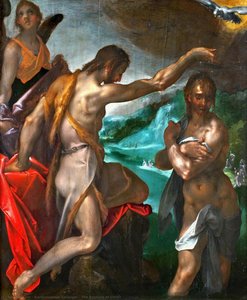
Bartholomeus Spranger muotokuva

74 tunnetuinta Bartholomeus Spranger -maalausta, jokainen ainutlaatuinen

Päivitetty marraskuu 2026 · järjestetty suosituimmuuspisteiden mukaan (jokaisen teoksen haut, vierailut ja tilaukset) · 76 teosta taiteilijalta Bartholomeus Spranger luettelossamme

Lyhyesti

Adoration of the Magi (1606) on se Bartholomeus Spranger -maalaus, joka herättää eniten huomiota. Sen jälkeen katse siirtyy kohteisiin Ulysses and Circe (1586) ja Allegory of Emperor Rudolf II (1592). Bartholomeus Sprangerin 76 teoksemme joukosta nämä 74 ovat kuuluisimpia; jokainen on ainutlaatuinen alkuperäisteos, joka on esitelty vuosiluvun, museon ja sen syyn kera, miksi teos on säilyttänyt suosionsa.

1546 – 1611, Antwerpen Northern mannerism Eniten teoksia: Kunsthistorisches Museum

Bartholomeus Spranger -taiteilijan 10 parasta maalausta gallerian silmin

1
Adoration of the Magi (1606) tekijä Bartholomeus Spranger

Adoration of the Magi

1606 · Engraving

The work titled Adoration of the Magi, also recognized as The Adoration of the Kings, is a creation of the artist Bartholomeus Spranger. Born in Antwerp, Belgium, in 1546, Spranger brought a specific Northern sensibility to the religious scene. He remained active in his craft until his death in 1611. This specific piece emerged from his hand during a period of intense creative output, dated around 1590 or around 1595-6.

2
Ulysses and Circe (1586) tekijä Bartholomeus Spranger

Ulysses and Circe

1586 · Oil On Canvas · Kunsthistorisches Museum, Wien

The air in the room feels heavy, thick with the scent of old stone and spilled wine. In this Mannerist encounter, the bodies do not merely exist; they twist. Circe, seen from behind, turns her torso in a serpentine arc, her pale skin catching a sharp, luminous light that cuts through the gloom. Her form is a curve of white against the deep, dark shadows of the background. Opposite her,…

3
Allegory of Emperor Rudolf II (1592) tekijä Bartholomeus Spranger

Allegory of Emperor Rudolf II

1592 · Oil · Kunsthistorisches Museum, Wien

The Allegory of Emperor Rudolf II emerges from the brush of Bartholomeus Spranger, a painter who captures a moment of intense, swirling movement. Created in 1592, this work presents a complex arrangement of figures that seem to dance through a bright, open sky. The composition draws the eye upward toward a winged figure, while below, a pyramidal structure of deities and warriors creates a sense of layered depth. Every line…

4
Hercules, Deianira, and Nessus (1580) tekijä Bartholomeus Spranger

Hercules, Deianira, and Nessus

1580 · Oil · Kunsthistorisches Museum, Wien

The air in this scene feels heavy, thick with the sudden, violent shift of fate. In a swirling composition of interlocking limbs and muscular torsos, the figures of Hercules, Deianira, and Nessus collide in a moment of profound struggle. The movement is restless, a serpentine energy that pulls the eye through a tangle of bodies. Hercules dominates the center, his form rendered with a powerful anatomical precision that catches the…

5
Minerva Victorious over Ignorance (1591) tekijä Bartholomeus Spranger

Minerva Victorious over Ignorance

1591 · Oil On Canvas · Kunsthistorisches Museum, Wien

In this dynamic Mannerist oil painting, the goddess Minerva Victorious over Ignorance emerges as a central force of triumph. Created by Bartholomeus Spranger around 1591, the scene captures a moment of intense movement and theatrical energy. Minerva dominates the vertical space, her body held in an elegant, elongated contrapposto pose that suggests both grace and power. She wears a gleaming silver breastplate with a golden relief, paired with a light…

6
Self-portrait (1585) tekijä Bartholomeus Spranger

Self-portrait

1585 · Oil On Canvas · Kunsthistorisches Museum, Wien

This oil portrait, titled Self-portrait, was executed by the artist Bartholomeus Spranger in 1585. It offers a direct encounter with the painter himself, captured during a period of significant professional development. The work measures 45 x 63 cm, providing an intimate scale for such a personal study of identity and presence.

7
Fall of Man (1595) tekijä Bartholomeus Spranger

Fall of Man

1595 · Oil On Panel · Kunsthistorisches Museum, Wien

The religious art piece "Fall of Man" by Bartholomeus Spranger presents a scene centered on the biblical narrative of the expulsion from Paradise. The composition focuses on the figures of Adam and Eve in the immediate aftermath of their transgression. These two figures occupy the central space of the work, positioned within a landscape that reflects the consequences of their actions. The subject matter specifically addresses the moment of humanity's…

8
God the Father with the Holy Ghost and angels (1582) tekijä Bartholomeus Spranger

God the Father with the Holy Ghost and angels

1582 · Oil On Panel · Kunsthistorisches Museum, Wien

A celestial hierarchy unfolds within an oval composition, capturing a moment of profound spiritual descent. At the apex, God the Father gazes downward with a solemn expression, one hand raised in blessing while the other rests upon a luminous orb that represents the universe. Beneath him, the Holy Ghost descends as a white dove, enveloped in radiant golden light. The scene is populated by cherubic angel faces emerging from soft,…

9
Apollo and the Muses (1590) tekijä Bartholomeus Spranger

Apollo and the Muses

1590 · Oil · Kunsthistorisches Museum, Wien

In this Mannerist oil painting, we find ourselves drawn into a crowded, dynamic scene where mythology meets a lush, hilly landscape. Apollo sits at the center of this movement, a radiant figure distinguished by a halo, his fingers engaged with a stringed instrument. He is not alone; he is surrounded by several female Muses, each caught in a moment of music or quiet conversation. The composition feels intentional yet restless,…

10
Mercury and Venus (1578) tekijä Bartholomeus Spranger

Mercury and Venus

1578 · Oil On Canvas · Bavarian State Painting Collections, München

The oil on canvas work titled Mercury and Venus was executed by the artist Bartholomeus Spranger. This painting is dated to about 1585. It captures a moment of mythic intimacy through the presence of two central nude figures. These figures, likely Mercury and Venus, are caught in the middle of an embrace.

Bartholomeus Sprangern kuuluisia maalauksia, numerot 11–74

11The Fragrance (1578) tekijä Bartholomeus SprangerThe Fragrance1578 · Bavarian State Painting Collections 12Saint Mary Magdalene (1578) tekijä Bartholomeus SprangerSaint Mary Magdalene1578 · Bavarian State Painting Collections 13Holy Family (1578) tekijä Bartholomeus SprangerHoly Family1578 · Bavarian State Painting Collections 14Lamentation of Christ (1576) tekijä Bartholomeus SprangerLamentation of Christ1576 · Bavarian State Painting Collections 15Sine Cerere et Baccho friget Venus (1590) tekijä Bartholomeus SprangerSine Cerere et Baccho friget Venus1590 · Kunsthistorisches Museum 16Mountain landscape with a scene of the early history of man (1569) tekijä Bartholomeus SprangerMountain landscape with a scene of the early history of man1569 · Staatliche Kunsthalle Karlsruhe 17The contest between Apollo and Pan (1587) tekijä Bartholomeus SprangerThe contest between Apollo and Pan1587 · Bavarian State Painting Collections 18Saint Luke painting the Virgin (1582) tekijä Bartholomeus SprangerSaint Luke painting the Virgin1582 · Bavarian State Painting Collections 19The Flagellation of Christ (1586) tekijä Bartholomeus SprangerThe Flagellation of Christ1586 · Statens Museum for Kunst 20Jael Kills Sisera (1586) tekijä Bartholomeus SprangerJael Kills Sisera1586 · Statens Museum for Kunst 21Ecce Homo (1580) tekijä Bartholomeus SprangerEcce Homo1580 22God the father with the holy spirit and angels (1582) tekijä Bartholomeus SprangerGod the father with the holy spirit and angels1582 23Diana Resting after Hunt (1597) tekijä Bartholomeus SprangerDiana Resting after Hunt1597 · Szépművészeti Múzeum 24Diana - Luna (1600) tekijä Bartholomeus SprangerDiana - Luna1600 · Szépművészeti Múzeum 25Venus and Mercury put a blindfold over Cupid's eyes (1597) tekijä Bartholomeus SprangerVenus and Mercury put a blindfold over Cupid's eyes1597 · Germanisches Nationalmuseum 26Portrait of Zdenko Adalbert Popel, 1st Prince Lobkowicz (1568-1628) (1600) tekijä Bartholomeus SprangerPortrait of Zdenko Adalbert Popel, 1st Prince Lobkowicz (1568-1628)1600 · National Gallery Prague 27The Suicide of Sophonisba (1605) tekijä Bartholomeus SprangerThe Suicide of Sophonisba1605 · National Gallery Prague 28Amor fleeing Psyche (1599) tekijä Bartholomeus SprangerAmor fleeing Psyche1599 29Standing Nude Man (Bacchus) (1600) tekijä Bartholomeus SprangerStanding Nude Man (Bacchus)1600 30Diana and Actaeon (1600) tekijä Bartholomeus SprangerDiana and Actaeon1600 31Saint Barbara (1611) tekijä Bartholomeus SprangerSaint Barbara1611 · Szépművészeti Múzeum 32Venus and Mercury (1585) tekijä Bartholomeus SprangerVenus and Mercury1585 · Kunsthistorisches Museum 33Jupiter and Antiope (1596) tekijä Bartholomeus SprangerJupiter and Antiope1596 · Kunsthistorisches Museum 34Allegory of Justice and Prudence (1599) tekijä Bartholomeus SprangerAllegory of Justice and Prudence1599 · Louvre 35Venus and Adonis (1587) tekijä Bartholomeus SprangerVenus and Adonis1587 · Rijksmuseum 36Venus and Mars warned by Mercury (1587) tekijä Bartholomeus SprangerVenus and Mars warned by Mercury1587 · Kunsthistorisches Museum 37Hermes and Athena (1585) tekijä Bartholomeus SprangerHermes and Athena1585 · Pražský hrad 38Venus and Vulcan (1610) tekijä Bartholomeus SprangerVenus and Vulcan1610 · Kunsthistorisches Museum 39Mountain landscape with a hermit (1567) tekijä Bartholomeus SprangerMountain landscape with a hermit1567 · Staatliche Kunsthalle Karlsruhe 40Figure Studies (1575) tekijä Bartholomeus SprangerFigure Studies1575 41Glaucus and Scylla (1582) tekijä Bartholomeus SprangerGlaucus and Scylla1582 · Kunsthistorisches Museum 42Diana and Actaeon (1585) tekijä Bartholomeus SprangerDiana and Actaeon1585 43Saint Margaret (1583) tekijä Bartholomeus SprangerSaint Margaret1583 44Engelen dragen het lichaam van Christus (Engelenpietà), Bartholomeus Spranger, c. 1587 (1587) tekijä Bartholomeus SprangerEngelen dragen het lichaam van Christus (Engelenpietà), Bartholomeus Spranger, c. 15871587 · Rijksmuseum 45The Baptism of Christ (1603) tekijä Bartholomeus SprangerThe Baptism of Christ1603 · National Museum in Wrocław 46The Triumph of Venus (1600) tekijä Bartholomeus SprangerThe Triumph of Venus1600 47Study of a Female Nude (Venus in a Drapery) (1605) tekijä Bartholomeus SprangerStudy of a Female Nude (Venus in a Drapery)1605 · National Museum in Warsaw 48Achelous and Deianeira (1600) tekijä Bartholomeus SprangerAchelous and Deianeira1600 49The Adoration of the Kings (1595) tekijä Bartholomeus SprangerThe Adoration of the Kings1595 · National Gallery 50Adoration of the Kings (1595) tekijä Bartholomeus SprangerAdoration of the Kings1595 · National Gallery 51Mercury Carrying Psyche to Mount Olympus (1611) tekijä Bartholomeus SprangerMercury Carrying Psyche to Mount Olympus1611 52Odysseus and Circe (1585) tekijä Bartholomeus SprangerOdysseus and Circe1585 · Kunsthistorisches Museum 53St Wenceslas and St Vitus tekijä Bartholomeus SprangerSt Wenceslas and St VitusNational Gallery Prague 54St Sigismund and St Adalbert tekijä Bartholomeus SprangerSt Sigismund and St AdalbertNational Gallery Prague 55Vulcan and Maia (1575) tekijä Bartholomeus SprangerVulcan and Maia1575 · Kunsthistorisches Museum 56Ceres and Bacchus tekijä Bartholomeus SprangerCeres and Bacchus 57Allegory tekijä Bartholomeus SprangerAllegoryMusée des Beaux-Arts 58Apotheosis of the Arts (Fame leading the Arts to Olympus) tekijä Bartholomeus SprangerApotheosis of the Arts (Fame leading the Arts to Olympus)National Gallery Prague 59Faun with Wounded Foot tekijä Bartholomeus SprangerFaun with Wounded Foot 60La Peinture, la Sculpture et l'Architecture tekijä Bartholomeus SprangerLa Peinture, la Sculpture et l'Architecture 61Le Christ sauveur du monde tekijä Bartholomeus SprangerLe Christ sauveur du monde 62BARTHOLOMEUS SPRANGERIN TALOUS – VALON JA TEATTERIN ALLEGORIA tekijä Bartholomeus SprangerBARTHOLOMEUS SPRANGERIN TALOUS – VALON JA TEATTERIN ALLEGORIALouvre 63Venus + Mercury und Amus tekijä Bartholomeus SprangerVenus + Mercury und Amus 64Peter and John Heal a Cripple at the Gate of the Temple tekijä Bartholomeus SprangerPeter and John Heal a Cripple at the Gate of the Temple 65Salvator Mundi tekijä Bartholomeus SprangerSalvator Mundi 66Faith, Hope and Charity tekijä Bartholomeus SprangerFaith, Hope and Charity 67Sarah Presenting Hagar to Abraham tekijä Bartholomeus SprangerSarah Presenting Hagar to Abraham 68Christ blessing little children tekijä Bartholomeus SprangerChrist blessing little children 69Female Warrior Crushing a Satyr tekijä Bartholomeus SprangerFemale Warrior Crushing a Satyr 70Venus and Adonis (1597) tekijä Bartholomeus SprangerVenus and Adonis1597 · Kunsthistorisches Museum 71Epitaph of Goldsmith Nicolas Müller of Prague (1592) tekijä Bartholomeus SprangerEpitaph of Goldsmith Nicolas Müller of Prague1592 · National Gallery Prague 72Angelica and Medoro (1600) tekijä Bartholomeus SprangerAngelica and Medoro1600 · Alte Pinakothek 73Hermaphrodite and the nymph Salmacis (1582) tekijä Bartholomeus SprangerHermaphrodite and the nymph Salmacis1582 · Kunsthistorisches Museum 74Herakles and Omphale (1585) tekijä Bartholomeus SprangerHerakles and Omphale1585 · Kunsthistorisches Museum

Bartholomeus Sprangern kuuluisat maalaukset aikakausittain

Aiheet, jotka vangitsivat Bartholomeus Sprangerin katseen

Nämä neljä aihetta toistuvat näissä alkuperäisteoksissa useimmin, jokaisesta löytyy hienoin esimerkki.

Museot, joissa Bartholomeus Spranger'n alkuperäisteokset sijaitsevat

Tämän sivun teoksista eniten sisältävät 8 museota.

Museo Kaupunki Bartholomeus Spranger teokset Tämän listan maalaukset
Kunsthistorisches Museum, WienKunsthistorisches Museum Wien 19 Ulysses and Circe, Allegory of Emperor Rudolf II, Hercules, Deianira, and Nessus
Bavarian State Painting Collections, MünchenBavarian State Painting Collections München 7 Mercury and Venus, The Fragrance, Saint Mary Magdalene
National Gallery Prague, PrahaNational Gallery Prague Praha 6 Portrait of Zdenko Adalbert Popel, 1st Prince Lobkowicz (1568-1628), The Suicide of Sophonisba, St Wenceslas and St Vitus
Szépművészeti Múzeum, BudapestSzépművészeti Múzeum Budapest 3 Diana Resting after Hunt, Diana - Luna, Saint Barbara
Staatliche Kunsthalle Karlsruhe, KarlsruheStaatliche Kunsthalle Karlsruhe Karlsruhe 2 Mountain landscape with a scene of the early history of man, Mountain landscape with a hermit
Statens Museum for Kunst, KööpenhaminaStatens Museum for Kunst Kööpenhamina 2 The Flagellation of Christ, Jael Kills Sisera
Louvre, PariisiLouvre Pariisi 2 Allegory of Justice and Prudence, BARTHOLOMEUS SPRANGERIN TALOUS – VALON JA TEATTERIN ALLEGORIA
Rijksmuseum, AmsterdamRijksmuseum Amsterdam 2 Venus and Adonis, Engelen dragen het lichaam van Christus (Engelenpietà), Bartholomeus Spranger, c. 1587

Bartholomeus Spranger vuosikymmenten varrelta: jokaisesta yksi ainutlaatuinen alkuperäisteos

Teokset vuosikymmenittäin

Valitse vuosikymmen nähdäksesi sen määrittäneen alkuperäisteoksen.

Bartholomeus Sprangern maalaukset: kysymyksiä gallerialle

Mikä on Bartholomeus Spranger tunnetuin teos?Paljasta vastaus

Adoration of the Magi (1606). Seuraavina ovat Ulysses and Circe (1586) ja Allegory of Emperor Rudolf II (1592).

Missä iässä Bartholomeus Spranger loi teoksen Adoration of the Magi?Paljasta vastaus

60 vuotta vanha: Adoration of the Magi on peräisin vuodelta 1606, ja Bartholomeus Spranger on syntynyt vuonna 1546.

Mitkä ovat Bartholomeus Spranger kymmenen kuuluisinta maalausta?Paljasta vastaus

Adoration of the Magi, Ulysses and Circe, Allegory of Emperor Rudolf II, Hercules, Deianira, and Nessus, Minerva Victorious over Ignorance, Self-portrait, Fall of Man, God the Father with the Holy Ghost and angels, Apollo and the Muses ja Mercury and Venus. Yllä oleva sijoitus kertoo kunkin teoksen vuosiluvun ja museon.

Kuinka monta Bartholomeus Spranger -teosta tunnetaan?Paljasta vastaus

Katalogissamme on 76 teosta taiteilijalta Bartholomeus Spranger, aikaväliltä 1567–1611.

Missä voi nähdä tunnetuimmat Bartholomeus Spranger -alkuperäisteokset?Paljasta vastaus

Pääasiassa Kunsthistorisches Museum (Wien), Bavarian State Painting Collections (München) ja National Gallery Prague (Praha). Yllä oleva museotaulukko listaa ne kaikki.

Mihin ajanjaksoon Bartholomeus Spranger tunnituimmat maalauksensa sijoittuvat?Paljasta vastaus

Aikakaudella 1580s: 21 sivun 74 teoksista on tehty silloin, joista Ulysses and Circe.

Mikä on Bartholomeus Spranger kuuluisimmista maalauksista varhaisin ja mikä uusin?Paljasta vastaus

Tällä sivulla vanhin on Mountain landscape with a hermit (1567) ja uusin Saint Barbara (1611).

Mitä aiheita Bartholomeus Spranger suosi?Paljasta vastaus

Woman (34), Man (32) ja Skin (13), yhteensä 74 teosta tällä sivulla.

Mitä materiaaleja Bartholomeus Spranger käytti eniten?Paljasta vastaus

Oil, 26 teoksesta sivun 74 teoksesta.

Mihin taidesuuntaukseen Bartholomeus Spranger kuuluu?Paljasta vastaus

Northern mannerism, tämän sivun alkuperäisteosten perusteella.

Mitä Bartholomeus Spranger alkuperäisteoksia voin nähdä museossa Kunsthistorisches Museum?Paljasta vastaus

Ulysses and Circe, Allegory of Emperor Rudolf II ja Hercules, Deianira, and Nessus: Kunsthistorisches Museum, Wien -ssä on 19 tämän sivun teoksista.

Bartholomeus Spranger: taiteilijan muotokuva

Bartholomeus Spranger: Erotiikan ja majesteettisuuden hovimaalari

Bartholomeus Spranger (1546–1611) on nimi, joka kaikuu pohjoisen manierismin saleissa; hän oli paljon enemmän kuin pelkkä taiteilija – hän oli keskeinen hahmo, joka muovasi aikakautensa taiteellisia herkkyyksiä. Antwerpissa syntyneen kauppiaan poikana, jonka isä oli tehnyt laajoja matkoja, Sprangerin varhaislapsuus antoi viitteitä tulevaisuudesta, joka olisi täynnä taidetta ja ulkomaisia vaikutteita. Hänen alkukoulutuksensa Jan Mandijnin, Frans Mostaertin ja Cornelis van Dalemin alaisuudessa antoi hänelle vankan pohjan maisemamaalaukseen – mikä on yllättävä lähtöpiste taiteilijalle, joka tulisi myöhemmin kuuluisaksi intensiivisesti aistillisista alastomuuskuvauksistaan. Kuitenkin vasta Pariisin oleskelu vuonna 1565 Marc Duvalin studiolla todella sytytti hänen taiteellisen polkunsa, esitellen hänelle uusia tekniikoita ja näkökulmia, jotka muovasivat hänen tyyliään pysyvästi.

Varhaiset vaikutteet ja Italian matkat

Sprangerin taiteellinen kehitys ei rajoittunut vain Alankomaihin. Hän kopioi ahkerasti Frans Florisin ja Parmigianinon grafiikkaa, imeäkseen itseensä heidän tyylikkäät viivansa ja hienostuneet sommitelmansa. Ratkaisevaa oli hänen matkansa Italiaan, jossa hän vietti kahdeksan kuukautta Milanossa ja kolme kuukautta Parmassa avustuen Bernardino Gattille Santa Maria della Steccatan kupolin kunnianhimikkaassa freskoprojektissa. Tämä kokemus tarjosi hänelle korvaamatonta tietoa suurikokoisten maalausten tekniikoista ja veti hänet keskelle renessanssin Italian eläväistä taidemaailmaa. Hänen aikansa Roomassa osoittautui erityisen muovaavaksi; siellä hän solmi yhteyden Giulio Clovioon, tunnettuun manieristiseen maalariin ja suunnittelijaan, josta tuli hänen suosikkinsa. Juuri täällä hän kohtasi Karel van Manderin, jonka Schilder-boeck tarjoaisi myöhemmin yksityiskohtaisen kuvauksen Sprangerin elämästä ja työn jäljestä – todisteena taiteilijan merkittävyydestä taiteellisessa yhteisössä.

Prahan keisarillinen hovi

Sprangerin ura nousi todelliseen loistoonsa, kun hänet nimettiin paavi Pius V:n hovimaalariksi vuonna 1570. Hänen kenties merkittävin ja pysyvin perintönsä on kuitenkin syntynyt Pyhän saksalais-roomalaisen keisarin Rudolf II:n palveluksessa, taiteen ja esoteerisen tiedon intohimoisessa keräilijässä. Vuosi 1581, jolloin keisari siirsi hovinsa Prahaan, merkitsi käännekohtaa Sprangerin elämässä. Keisarin kiehtomus antiikin klassisuuteen, mytologiaan ja alkemiaan väritti syvästi taiteilijan tuotantoa. Spranger vastasi näihin mieltymyksiin luomalla teoksia, joita hallitsivat mestarillisesti kuvatut alastomat hahmot – usein takaapäin kuvattuina, mikä loi teoksiin mysteerin ja sensuaalisuuden auraa. Nämä eivät olleet pelkkiä koristeellisia harjoituksia, vaan huolellisesti rakennettuja allegorioita, jotka heijastivat Rudolf II:n filosofisia pohdiskeluja sekä hänen haluaan viestiä valtaa ja sivistystä.

Tyyli ja tekniikka: Pohjoisen manierismin huipentuma

Bartholomeus Sprangerin tyyli on pohjoisen manierismin täydellinen ruumiillistuma, jota leimaavat pitkänomaiset hahmot, monimutkaiset asennot sekä harkittu pyrkimys eleganssiin ja hienostuneisuuteen. Hänen maalauksilleen on ominaista pehmeä mallinnus, äärimmäinen yksityiskohtaisuus ja värien hienovaraisessa käytössä kukoistava harmonia. Hän onnistui taitavasti yhdistämään alankomaalaisen realismin italialaisiin manieristisiin vaikutteisiin, erityisesti roomalaiseen perinteeseen, jossa klassista mytologiaa kuvattiin tavalla, joka oli yhtä kertomuksellinen kuin visuaalisesti vaikuttava. Erityisesti hänen luonnoksensa huokuvat hämmästyttävää energiaa ja vapautta, mikä on suora todiste hänen mestarillisesta piirustustaidostaan. Sprangerin teokset ovat tunnettuja dynamiikastaan, jonka hän on saavuttanut huolellisesti orkestroiduilla diagonaaleilla ja jatkuvalla liikkeen tunteella jokaisessa sommitelmassaan. Hänen varhaisemmasta koulutuksestaan maisemamaalauksen parissa on nähtävissä tunnelmallisissa taustoissa, joita hän usein käytti tuodakseen hahmoille syvyyttä ja kontekstia, luoden teoksiinsa rikkaan ja elävän maailman.

Perintö ja vaikutus

Bartholomeus Sprangerin vaikutus eurooppalaiseen taiteeseen on valtava. Hänen teoksensa, erityisesti Wienin taidehistoriallisessa museossa (Kunsthistorisches Museum) säilytettävät maalaukset, edustavat pohjoisen manierismin huipentumaa. Hänen työllään oli merkittävä rooli inspiraationa seuraaville sukupolville taiteilijoille, mukaan lukien Alankomaiden tasavallassa, jossa hänen tyylinsä levisi laajalle painokuvien ja hänen kanssaan työskennelleiden taiteilijoiden ansiosta. Hänen alastomuuksiensa huolellinen yksityiskohtaisuus ja aistillinen vetovoima kiehtovat katsojia edelleen, vahvistaen Sprangerin aseman käsityönsä mestarina ja merkittävänä hahmona länsimaisen taiteen historiassa. Hänen tarinansa on kertomus taiteellisesta evoluutiosta, jota muovasivat moninaiset vaikutteet ja jonka lopulta määritteli hänen ainutlaatuinen visioonsa – visio, joka yhdisti saumattomasti erotiikan, allegorian ja keisarillisen loiston.