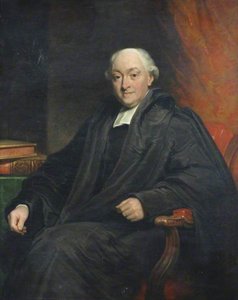
Richard Evans muotokuva

Richard Evans -maalaukset: Gallerian silmin 23 kuuluisinta teosta

Päivitetty marraskuu 2026 · järjestetty suosituimmuuspisteiden mukaan (jokaisen teoksen haut, vierailut ja tilaukset) · 28 teosta taiteilijalta Richard Evans luettelossamme

Lyhyesti

Gallerian silmissä Richard Evans's tunnetuin maalaus on Portrait of Semion R. Vorontsov (1744-1832) (1828), jonka alkuperäinen teos on esillä Hermitage-museo -museossa, kaupungissa Pietari. Sir Thomas Lawrence (1820) ja Thomas Taylor (copy after Thomas Lawrence) (1812) täydentävät kolmikon, jonka jokainen silmä tunnistaa. Galleria esittelee Richard Evans teoksista 28 tunnetuimmat 23 teosta alla; jokainen on alkuperäisteos, josta kerrotaan vuosi, museo sekä teoksen erityispiirteet.

1784 – 1871, Shrewsbury Neoclassicism Eniten teoksia: Durham University

Gallerian 10 parasta Richard Evans -maalausta

1
Portrait of Semion R. Vorontsov (1744-1832) (1828) tekijä: Vincent van Gogh Richard Evans

Portrait of Semion R. Vorontsov (1744-1832)

1828 · Oil On Canvas · Hermitage-museo, Pietari

The sitter is positioned in a composed, authoritative pose, seated slightly to the left within a structured composition. He is framed by heavy, dark drapery on the upper left, while a dark landscape recedes into the background on the right. The palette relies on somber, deep tones—blacks, dark blues, and earthy browns—which provide a stark contrast to the warm reddish-orange of the armchair and the pale skin tones of the…

2
Sir Thomas Lawrence (1820) tekijä: Vincent van Gogh Richard Evans

Sir Thomas Lawrence

1820 · Oil On Canvas · National Portrait Gallery, Lontoo

This oil on canvas portrait presents a bust-length view of a middle-aged man, positioned centrally against a dark, undifferentiated background. The subject is a balding man with dark hair at the sides and prominent sideburns. He gazes directly at the viewer with a steady expression. His attire consists of dark formal clothing, contrasted by the bright white of a cravat. In the lower foreground, his hand holds a wooden palette…

3
Thomas Taylor (copy after Thomas Lawrence) (1812) tekijä: Vincent van Gogh Richard Evans

Thomas Taylor (copy after Thomas Lawrence)

1812 · Oil

This work, titled Thomas Taylor (copy after Thomas Lawrence), was executed by the English painter Richard Evans. It represents a significant moment in Evans’s early career, created around 1812. During this period, Evans was refining his technical skill through his close association with Sir Thomas Lawrence, whose influence is deeply embedded in the composition and style of this piece.

5
Ganymede Feeding the Eagle (1822) tekijä: Vincent van Gogh Richard Evans

Ganymede Feeding the Eagle

1822 · Fresco

The scene unfolds in Ganymede Feeding the Eagle, a work that captures a mythic encounter through the hand of Richard Evans. This piece dates to about 1822, a time when the artist was deeply immersed in the classical traditions of Europe. The painting presents a moment of quiet interaction between a figure and a bird, frozen in a landscape that feels both immediate and ancient.

6
George Canning (1825) tekijä: Vincent van Gogh Richard Evans

George Canning

1825 · Oil

This oil painting, titled George Canning by Richard Evans, depicts the British statesman George Canning. The portrait was created about 1825. The subject is shown in his later years, presented in a manner that reflects his status during his tenure as Prime Minister, a position he held from 1823 to 1827.

7
Alderman Thomas Carden (1738–1836) (1828) tekijä: Vincent van Gogh Richard Evans

Alderman Thomas Carden (1738–1836)

1828 · Oil On Canvas · Worcester Guildhall, Worcester

In this oil on canvas painting from 1828, an elderly man sits in a chair, his body angled slightly toward the viewer while his gaze is directed off-camera. He wears a heavy red robe that covers his shoulders and torso. His hands are positioned near his face, with his fingers resting against his chin in a contemplative gesture. A book lies on a surface in the foreground, positioned directly in…

8
William Carr, Viscount Beresford (1768–1854), General (completed by Richard Evans, Lawrence's assistant, after Lawrence's death) (1831) tekijä: Vincent van Gogh Richard Evans

William Carr, Viscount Beresford (1768–1854), General (completed by Richard Evans, Lawrence's assistant, after Lawrence's death)

1831 · Oil On Canvas · Government Art Collection, Lontoo

The portrait depicts William Carr, Viscount Beresford, positioned on the left side of the canvas. He is shown in military attire, wearing a cape and standing with one hand resting on his hip. His posture is upright, directed toward the viewer. In the middle ground, a horse is visible, suggesting a military or field setting. The background contains a landscape of mountains under a sky that meets the horizon line.…

9
Harriet Martineau (1834) tekijä: Vincent van Gogh Richard Evans

Harriet Martineau

1834 · Oil · National Portrait Gallery, Lontoo

A woman sits anchored in a chair, her hands resting in a quiet fold upon her lap. She wears a black dress that absorbs the light, a dark void interrupted only by the soft texture of fur around her neck. Her gaze is fixed, heavy with a serious, contemplative stillness. In the periphery, two figures move through their own tasks, their presence a mere hum against her silence. She is…

10
George Bradshaw (1841) tekijä: Vincent van Gogh Richard Evans

George Bradshaw

1841 · Oil On Canvas

The portrait depicts George Bradshaw, a man appearing to be in his 50s or 60s, seated in a chair positioned toward the left side of the frame. He wears a dark grey suit paired with a white collar and a tie, presenting an appearance of intellectual focus. His gaze is directed toward a large map that spans the entire width of the background. This map, a detailed representation of railway…

Richard Evans -taideteokset, sijoitukset 11–23

Aiheet, jotka vangitsivat Richard Evansin katseen

Nämä neljä aihetta toistuvat näissä alkuperäisteoksissa useimmin, jokaisesta löytyy hienoin esimerkki.

Museot, joissa Richard Evans'n alkuperäisteokset sijaitsevat

Tämän sivun teoksista eniten sisältävät 6 museota.

Museo Kaupunki Richard Evans teokset Tämän listan maalaukset
Durham University, DurhamDurham University Durham 9 Dr Richard Prosser, Dr Richard Prosser (1747–1839), Dr William Stephen Gilly
National Portrait Gallery, LontooNational Portrait Gallery Lontoo 3 Sir Thomas Lawrence, Harriet Martineau, George Bradshaw
Hermitage-museo, PietariHermitage-museo Pietari 1 Portrait of Semion R. Vorontsov (1744-1832)
Worcester Guildhall, WorcesterWorcester Guildhall Worcester 1 Alderman Thomas Carden (1738–1836)
Government Art Collection, LontooGovernment Art Collection Lontoo 1 William Carr, Viscount Beresford (1768–1854), General (completed by Richard Evans, Lawrence's assistant, after Lawrence's death)
National Maritime Museum, LontooNational Maritime Museum Lontoo 1 Sir Thomas Masterman Hardy (1769–1839), Bt, Vice Admiral of the Blue

Richard Evans, yksi tunnusomainen maalaus vuosikymmeneltä

Teokset vuosikymmenittäin

Valitse vuosikymmen nähdäksesi sen määrittäneen alkuperäisteoksen.

Richard Evansn maalaukset: gallerian vastaukset

Mikä Richard Evans -taideteos on kaikkien kuuluisin?Paljasta vastaus

Portrait of Semion R. Vorontsov (1744-1832) (1828), Hermitage-museo, Pietari. Seuraavina ovat Sir Thomas Lawrence (1820) ja Thomas Taylor (copy after Thomas Lawrence) (1812).

Kuinka vanha Richard Evans oli valmistuessaan teos Portrait of Semion R. Vorontsov (1744-1832)?Paljasta vastaus

44 vuotta vanha: Portrait of Semion R. Vorontsov (1744-1832) on peräisin vuodelta 1828, ja Richard Evans on syntynyt vuonna 1784.

Mitkä ovat Richard Evans'n 10 parasta maalausta?Paljasta vastaus

Portrait of Semion R. Vorontsov (1744-1832), Sir Thomas Lawrence, Thomas Taylor (copy after Thomas Lawrence), Ganymede Feeding the Eagle, Ganymede Feeding the Eagle, George Canning, Alderman Thomas Carden (1738–1836), William Carr, Viscount Beresford (1768–1854), General (completed by Richard Evans, Lawrence's assistant, after Lawrence's death), Harriet Martineau ja George Bradshaw. Yllä oleva sijoitus kertoo kunkin teoksen vuosiluvun ja museon.

Kuinka monta teosta Richard Evans loi?Paljasta vastaus

Katalogissamme on 28 teosta taiteilijalta Richard Evans, aikaväliltä 1812–1841.

Missä Richard Evans'n kuuluisimmat alkuperäisteokset sijaitsevat?Paljasta vastaus

Pääasiassa Durham University (Durham), National Portrait Gallery (Lontoo) ja Hermitage-museo (Pietari). Yllä oleva museotaulukko listaa ne kaikki.

Milloin Richard Evans maalasi kuuluisimmat teoksensa?Paljasta vastaus

Aikakaudella 1820s: 6 sivun 23 teoksista on tehty silloin, joista Portrait of Semion R. Vorontsov (1744-1832).

Mitkä ovat Richard Evans'n varhaisimmat ja viimeisimmät kuuluisat teokset?Paljasta vastaus

Tällä sivulla vanhin on Thomas Taylor (copy after Thomas Lawrence) (1812) ja uusin George Bradshaw (1841).

Mihin aiheisiin Richard Evans palasi useimmin?Paljasta vastaus

Man (7), People (4) ja Suit (3), yhteensä 23 teosta tällä sivulla.

Mitä tekniikkaa Richard Evans käytti eniten?Paljasta vastaus

Oil On Canvas, 6 teoksesta sivun 23 teoksesta.

Mihin taidesuuntaukseen Richard Evans kuuluu?Paljasta vastaus

Neoclassicism, tämän sivun alkuperäisteosten perusteella.

Mitä Richard Evans -taiteilijan alkuperäisteoksia Durham University -museossa on?Paljasta vastaus

Dr Richard Prosser, Dr Richard Prosser (1747–1839) ja Dr William Stephen Gilly: Durham University, Durham -ssä on 9 tämän sivun teoksista.

Richard Evans: taiteilija

A Life Dedicated to Likeness: The World of Richard Evans

Richard Evans (1784-1871) occupies a fascinating, if often overlooked, position in the landscape of 19th-century British portraiture. Born into an era captivated by image and social standing, he carved out a career not as a revolutionary innovator, but as a supremely skilled and adaptable painter – a portraitist and copyist whose work reflected the tastes and demands of his time. While never achieving the household name recognition of contemporaries like Lawrence or Raeburn, Evans’s life story is one of consistent professional success, international travel, and a dedication to mastering the art of capturing human likeness. His journey took him from the studios of London to the vibrant society of Haiti, and ultimately to Italy, where he spent his later years honing his craft.

Early Training and Apprenticeship in London

Evans’s artistic education began in London, a bustling center for art and commerce. He initially trained under Henry Thomson, a respected portrait painter known for his meticulous technique and ability to capture the character of his sitters. This foundational training instilled in Evans a commitment to realism and accuracy that would define his entire career. However, it was his subsequent association with Sir Thomas Lawrence that proved particularly formative. Lawrence, the leading portraitist of the day, recognized Evans’s talent and took him into his studio as an assistant. This apprenticeship provided invaluable experience, exposing Evans to the techniques, clientele, and social dynamics of a highly successful artistic practice. He learned not only how to paint but also how to navigate the complex world of commissions, patronage, and public perception. Evans' early works demonstrate Lawrence’s influence – elegant poses, refined brushwork, and a focus on flattering representation.

A Caribbean Interlude: Portraiture in Haiti

In 1809, Evans embarked on an unusual chapter of his career, accepting a commission to paint portraits in Haiti. This was a period of significant political upheaval following the Haitian Revolution, and the island nation presented a unique cultural landscape. The details surrounding this commission remain somewhat obscure, but it is believed that he was employed by prominent members of the newly established Haitian elite – individuals eager to establish their status through portraiture. Painting in Haiti offered Evans an opportunity to depict subjects from diverse backgrounds, challenging him to adapt his style and approach beyond the conventions of British society. The portraits produced during this time are notable for their sensitivity and dignity, capturing the individuality of his sitters against a backdrop of post-revolutionary change. This experience broadened his artistic horizons and instilled in him an appreciation for different cultural aesthetics.

Italian Sojourn and Refinement of Style

Following his return from Haiti, Evans spent extended periods in Italy, primarily Rome, beginning around 1814. This move was driven by a desire to study the Old Masters – Michelangelo, Raphael, and Titian – and to further refine his technique. The Italian sojourn marked a turning point in his artistic development. He immersed himself in classical art, absorbing its principles of composition, anatomy, and color. His style became increasingly influenced by Renaissance portraiture, characterized by a greater emphasis on form, depth, and psychological insight. He was elected to the British Academy in Rome in 1820, solidifying his reputation as a serious artist dedicated to academic standards. During this period, he also undertook numerous commissions from British travelers visiting Italy, creating portraits that blended classical influences with contemporary sensibilities.

Legacy and Historical Significance

Richard Evans’s career spanned over six decades, during which he produced a substantial body of work – portraits, copies after Old Masters, and historical compositions. While he may not be celebrated as an innovator, his skill as a portraitist was widely recognized by his contemporaries. He possessed a remarkable ability to capture the likeness and character of his sitters, creating images that were both aesthetically pleasing and psychologically insightful. His work provides valuable insights into the social history of 19th-century Britain and Haiti, documenting the lives and aspirations of individuals from diverse backgrounds. Evans’s copies after Old Masters demonstrate a deep understanding of artistic technique and serve as important records of works that may no longer exist in their original form. His time in Haiti is particularly significant, offering a rare glimpse into the art and society of this post-revolutionary nation. Though often overshadowed by more famous artists, Richard Evans’s dedication to his craft and his ability to adapt to different cultural contexts make him a compelling figure in the history of British portraiture – a testament to the enduring power of likeness and representation.