Michelangelo Morlaiter muotokuva

Michelangelo Morlaiter -maalaukset: Gallerian silmin 35 kuuluisinta teosta

Päivitetty marraskuu 2026 · järjestetty suosituimmuuspisteiden mukaan (jokaisen teoksen haut, vierailut ja tilaukset) · 93 teosta taiteilijalta Michelangelo Morlaiter luettelossamme

Lyhyesti

Gallerian silmissä Michelangelo Morlaiter's tunnetuin maalaus on Pieta (1499), jonka alkuperäinen teos on esillä Pyhän Pietarin basilika -museossa, kaupungissa Rooma. Study for Haman (1508) ja Design for a statue of Henry II of France (1559) täydentävät kolmikon, jonka jokainen silmä tunnistaa. Galleria esittelee Michelangelo Morlaiter teoksista 93 tunnetuimmat 35 teosta alla; jokainen on alkuperäisteos, josta kerrotaan vuosi, museo sekä teoksen erityispiirteet.

High renaissance Eniten teoksia: British Museum

Gallerian 10 parasta Michelangelo Morlaiter -maalausta

1
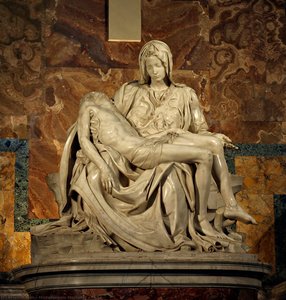
Pieta (1499) tekijä Michelangelo Morlaiter

Pieta

1499 · Marble · Pyhän Pietarin basilika, Rooma

The composition centers on the intimate, physical connection between Mary and her son. In this close-up view, the focus remains entirely on the Virgin Mary as she cradles the body of Jesus in her arms. The arrangement of the figures emphasizes a quiet moment of maternal comfort, capturing the weight of the body against her form. This central grouping is elevated upon a pedestal, which provides a sense of prominence…

2
Study for Haman (1508) tekijä Michelangelo Morlaiter

Study for Haman

1508 · Drawing · British Museum, Lontoo

To gaze upon this preparatory study is to step directly into the intense, focused crucible of artistic genius. It is not a finished narrative, but rather a profound meditation—a skeleton rendered in pigment—that speaks volumes about the mind wrestling with form and divine proportion. The subject matter itself, though titled Study for Haman, transcends any single story; it becomes an exhaustive exploration of the human vessel. Here, the artist has…

3
Design for a statue of Henry II of France (1559) tekijä Michelangelo Morlaiter

Design for a statue of Henry II of France

1559 · Ink On Paper · Rijksmuseum, Amsterdam

In this exquisite pen and ink drawing, we are transported back to the mid-16th century, witnessing a moment of profound artistic preparation. The work, titled Design for a statue of Henry II of France, serves as a meticulous blueprint for a monument intended to immortalize a monarch. At its heart lies an equestrian figure, a powerful composition of horse and rider that commands the viewer's attention through sheer anatomical precision.…

Michelangelo Morlaiter -taideteokset, sijoitukset 11–35

Aiheet, jotka vangitsivat Michelangelo Morlaiterin katseen

Nämä neljä aihetta toistuvat näissä alkuperäisteoksissa useimmin, jokaisesta löytyy hienoin esimerkki.

Museot, joissa Michelangelo Morlaiter'n alkuperäisteokset sijaitsevat

Tämän sivun teoksista eniten sisältävät 8 museota.

Museo Kaupunki Michelangelo Morlaiter teokset Tämän listan maalaukset
British Museum, LontooBritish Museum Lontoo 9 Study for Haman, Sketch of a Nude Man (study for the "Battle of Cascina"), Ideal head of a woman
Louvre, PariisiLouvre Pariisi 4 Male nude and arm of bearded man, Study of ^quot;Christ on the Cross between the Virgin and St. John the Evangelist^quot;, Kristuksen Rinnastuminen
Palazzo Grassi, VenetsiaPalazzo Grassi Venetsia 2 Decoration of the grand staircase, Venetian Reception (detail)
Pyhän Pietarin basilika, RoomaPyhän Pietarin basilika Rooma 1 Pieta
Rijksmuseum, AmsterdamRijksmuseum Amsterdam 1 Design for a statue of Henry II of France
San Pietro in Vincoli, RoomaSan Pietro in Vincoli Rooma 1 Moses
Ashmolean Museum of Art and Archaeology, OxfordAshmolean Museum of Art and Archaeology Oxford 1 Portrait of Andrea Quaratesi
Galleria degli Uffizi, FirenzeGalleria degli Uffizi Firenze 1 Design for Julius II tomb (first version)

Michelangelo Morlaiter, yksi tunnusomainen maalaus vuosikymmeneltä

Teokset vuosikymmenittäin

Valitse vuosikymmen nähdäksesi sen määrittäneen alkuperäisteoksen.

Michelangelo Morlaitern maalaukset: gallerian vastaukset

Mikä Michelangelo Morlaiter -taideteos on kaikkien kuuluisin?Paljasta vastaus

Pieta (1499), Pyhän Pietarin basilika, Rooma. Seuraavina ovat Study for Haman (1508) ja Design for a statue of Henry II of France (1559).

Mitkä ovat Michelangelo Morlaiter'n 10 parasta maalausta?Paljasta vastaus

Pieta, Study for Haman, Design for a statue of Henry II of France, Battle of Cascina (Copy by Michelangelo's pupil Aristotele da Sangallo), The Study of Adam, Sistine Chapel Ceiling: God Dividing Land and Water, Male nude and arm of bearded man, Sistine Chapel Ceiling: God Dividing Light from Darkness, Sketch of a Nude Man (study for the "Battle of Cascina") ja Sistine Chapel Ceiling. Yllä oleva sijoitus kertoo kunkin teoksen vuosiluvun ja museon.

Kuinka monta teosta Michelangelo Morlaiter loi?Paljasta vastaus

Katalogissamme on 93 teosta taiteilijalta Michelangelo Morlaiter, aikaväliltä 1499–1766.

Missä Michelangelo Morlaiter'n kuuluisimmat alkuperäisteokset sijaitsevat?Paljasta vastaus

Pääasiassa British Museum (Lontoo), Louvre (Pariisi) ja Palazzo Grassi (Venetsia). Yllä oleva museotaulukko listaa ne kaikki.

Milloin Michelangelo Morlaiter maalasi kuuluisimmat teoksensa?Paljasta vastaus

Aikakaudella 1500s: 11 sivun 35 teoksista on tehty silloin, joista Study for Haman.

Mitkä ovat Michelangelo Morlaiter'n varhaisimmat ja viimeisimmät kuuluisat teokset?Paljasta vastaus

Tällä sivulla vanhin on Pieta (1499) ja uusin Decoration of the grand staircase (1766).

Mihin aiheisiin Michelangelo Morlaiter palasi useimmin?Paljasta vastaus

Human form (2), Human anatomy (2) ja Religious art (2), yhteensä 35 teosta tällä sivulla.

Mitä tekniikkaa Michelangelo Morlaiter käytti eniten?Paljasta vastaus

Ink On Paper, 2 teoksesta sivun 35 teoksesta.

Mihin taidesuuntaukseen Michelangelo Morlaiter kuuluu?Paljasta vastaus

High renaissance ja Renaissance, tämän sivun alkuperäisteosten perusteella.

Mitä Michelangelo Morlaiter -taiteilijan alkuperäisteoksia British Museum -museossa on?Paljasta vastaus

Study for Haman, Sketch of a Nude Man (study for the "Battle of Cascina") ja Ideal head of a woman: British Museum, Lontoo -ssä on 9 tämän sivun teoksista.

Michelangelo Morlaiter: taiteilija

Michelangelo Morlaiter: Venetian Sculptor and Fresco Artist

Michelangelo Morlaiter (1766 – Present) stands as a testament to the enduring legacy of Venetian artistic tradition, particularly within the School of Athens. Born into a family steeped in sculpture—his father, Giovanni Maria Morlaiter, was himself a celebrated sculptor—Michelangelo inherited not only talent but also an unwavering dedication to mastering the craft of disegno, the foundational principles of Renaissance art. His formative years were spent absorbing the artistic atmosphere of Venice, a city renowned for its patronage of the arts and its commitment to preserving classical ideals.
  • Early Life & Training:
  • Giovanni Maria Morlaiter’s influence was paramount in shaping Michelangelo's early artistic sensibilities. He honed his skills under Giovanni Battista Falconetti, a master sculptor known for his meticulous attention to detail and anatomical accuracy. This rigorous training instilled in Morlaiter a profound understanding of sculptural technique—a skill he would later translate into breathtaking frescoes that adorn prominent Venetian churches.

The Accademia di Scoltura, Pittura, ed Architettura Civile: A Crucible of Artistic Innovation

Michelangelo Morlaiter’s contribution to Venetian art extends far beyond individual masterpieces. He was a founding member and professor at the Accademia di Scoltura, Pittura, ed Architettura Civile in Venice (established 1766), an institution dedicated to reviving classical artistic ideals and fostering excellence in sculpture, painting, and architecture. This academy served as a vital hub for disseminating knowledge and nurturing talent—producing generations of artists who would shape the visual landscape of Venice and beyond. Morlaiter’s role as educator ensured that Venetian artistic traditions continued to flourish into the 19th century.
  • Notable Commissions & Artistic Style:
  • Morlaiter gained renown for his monumental sculptures, notably ‘Ignudo,’ a stunning nude study reflecting the influence of Michelangelo Buonarroti and embodying the humanist spirit of the Renaissance. His frescoes within Chiesa dell'Angelo Raffaele—particularly “The Study of Adam”—demonstrate masterful fresco technique, characterized by layering pigments onto wet plaster to achieve luminous colors and unparalleled textural depth. These works exemplify Venetian Rococo art’s elegance and grace.

Influences & Artistic Legacy

Morlaiter's artistic vision was deeply rooted in the humanist ideals of the Renaissance, mirroring the broader cultural movement that championed reason, observation, and human dignity. He drew inspiration from Michelangelo Buonarroti’s sculptural achievements—particularly his David—and embraced the stylistic conventions of Venetian Rococo art, prioritizing decorative splendor and emotional expression alongside technical virtuosity. His enduring legacy resides in his contribution to Venetian artistic heritage and his role as a pivotal figure in shaping the aesthetic sensibilities of his time.
  • Major Achievements:
  • Morlaiter’s sculptures are celebrated for their anatomical precision and expressive dynamism, capturing the human form with remarkable realism. His frescoes—particularly “The Study of Adam”—are considered masterpieces of Venetian fresco painting, showcasing unparalleled color palettes and textural nuances. He cemented his place in art history as a champion of classical ideals and a pivotal voice within Venice’s artistic community.

Historical Significance

Michelangelo Morlaiter's work represents more than just aesthetic beauty; it embodies the spirit of Venetian Renaissance culture—a commitment to reviving classical art forms and upholding humanist values. His influence extended beyond his immediate circle, shaping artistic trends throughout Venice and contributing to the preservation of Venetian artistic traditions for centuries to come. He stands as a symbol of Venetian artistic excellence and a testament to the enduring power of disegno.