Maksim Vorobjov muotokuva

68 tunnetuinta Maksim Vorobjov -maalausta, jokainen ainutlaatuinen

Päivitetty marraskuu 2026 · järjestetty suosituimmuuspisteiden mukaan (jokaisen teoksen haut, vierailut ja tilaukset) · 68 teosta taiteilijalta Maksim Vorobjov luettelossamme

Lyhyesti

Full Length Portrait (1992) on se Maksim Vorobjov -maalaus, joka herättää eniten huomiota; alkuperäisteos kuuluu museolle The Sotiris Felios Collection, Ateena. Sen jälkeen katse siirtyy kohteisiin Smirna (1820) ja The Nevka by the Elagin Island (1829). Maksim Vorobjovin 68 teoksemme joukosta nämä 68 ovat kuuluisimpia; jokainen on ainutlaatuinen alkuperäisteos, joka on esitelty vuosiluvun, museon ja sen syyn kera, miksi teos on säilyttänyt suosionsa.

1787 – 1855, Pihkova Romanticism Eniten teoksia: The Sotiris Felios Collection

Maksim Vorobjov -taiteilijan 10 parasta maalausta gallerian silmin

1
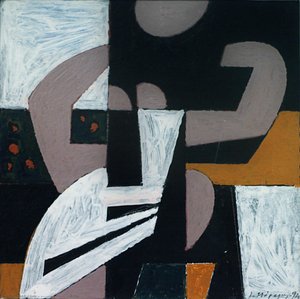
Full Length Portrait (1992) tekijä Maksim Vorobjov

Full Length Portrait

1992 · Oil · The Sotiris Felios Collection, Ateena

In Maxim Vorobiev's Full Length Portrait, a man emerges from a void of deep, absolute black. He stands squarely facing the viewer, his presence commanding the center of the frame. This formal, symmetrical presentation creates a sense of stillness, as if the subject has paused mid-breath to meet a gaze. He occupies nearly the entire vertical space, his tall figure cutting through the darkness with a quiet, imposing authority. His…

2
Smirna (1820) tekijä Maksim Vorobjov

Smirna

1820 · Watercolor

The harbor of Smyrna, modern-day Izmir, Turkey, unfolds in this 1820 watercolor. The composition is anchored by a formidable citadel perched upon a rising hill, overlooking a bustling maritime scene. In the foreground, several sailing ships navigate the waters, their rigging and rounded sails rendered with precise, linear detail. The sea and sky meet at a hazy horizon where rolling mountains fade into the distance through atmospheric perspective. The palette…

3
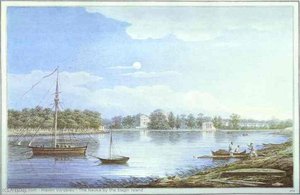
The Nevka by the Elagin Island (1829) tekijä Maksim Vorobjov

The Nevka by the Elagin Island

1829 · Watercolor · Hermitage-museo, Pietari

The artwork, "The Nevka by the Elagin Island" by Maxim Nikiforovich Vorobyov from 1829, presents a serene landscape scene. The image depicts a view of the Neva River and Elagin Island in Russia, likely during twilight or dawn given the soft lighting and partially obscured moon. The composition is balanced, with the river acting as a central horizontal axis dividing the scene into foreground, middle ground, and background. The subject…

4
Artist's Workshop in Rome. (1830) tekijä Maksim Vorobjov

Artist's Workshop in Rome.

1830 · Watercolor · Tretyakovin kansallismuseo, Moskova

Maxim Vorobiev’s Artist's Workshop in Rome., created about 1830, presents a spacious interior defined by high ceilings and large windows that allow a diffused light to permeate the space. The composition is broadly symmetrical, organizing the studio into a structured environment of creative industry. At the center of this arrangement, an easel holds a painting, positioned near a seated figure presumably representing the artist. This central focus anchors the room,…

5
Interior of the Church of the Nativity in Bethlehem. (1835) tekijä Maksim Vorobjov

Interior of the Church of the Nativity in Bethlehem.

1835 · Oil · National Museum in Warsaw, Varsova

The oil painting depicts the interior of the Church of the Nativity in Bethlehem, a cavernous space defined by heavy stone arches and structural pillars. A central perspective directs the eye toward an illuminated altar at the far end of the nave. The color palette relies on muted, earthy tones, including ochre, deep browns, and stone greys. Light enters the scene from specific, localized sources: numerous metal lamps, known as…

6
Ave Maria (1839) tekijä Maksim Vorobjov

Ave Maria

1839 · Watercolor

The shadows of a Roman night press inward, thick and heavy, as a luminous moon hangs suspended in the sky. This celestial light spills downward, cutting through the darkness to illuminate a scene of profound human distress. A man kneels in the center of the chaos, his posture one of absolute vulnerability, perhaps seeking divine solace amidst a crowd of onlookers. The air feels heavy with the weight of a…

7
A Bridegroom Buying a Ring for His Fiancee (1839) tekijä Maksim Vorobjov

A Bridegroom Buying a Ring for His Fiancee

1839 · Oil On Canvas

The air in the Russian marketplace feels heavy with the scent of dust and the low murmur of passing pedestrians. Under the soft, diffused light of a midday sun, a man leans toward a jeweler, his focus narrowing entirely to the small, precious object that will bind his future to another. He is a man caught in a singular, transformative instant. Beside him, his fiancée waits, her presence a gentle…

8
Head of John the Baptist (1845) tekijä Maksim Vorobjov

Head of John the Baptist

1845 · Oil

The light catches the ridge of a nose and the curve of a forehead, pulling a face from the shadows of a deep, dark background. This is the head of John the Baptist, rendered with a heavy, emotional weight that seems to vibrate in the quiet air of the room. He gazes slightly upward and to the left, his eyes fixed on something unseen beyond the frame. There is a…

9
Head of John the Evangelist (1840) tekijä Maksim Vorobjov

Head of John the Evangelist

1840 · Oil On Canvas

This oil painting on canvas presents a close-up portrait of the head and shoulders of a man identified as John the Evangelist. The subject is depicted with a serene expression, gazing slightly off-center to his right, which creates a sense of introspection. The composition is tightly focused on the face and upper torso, with the figure cropped just below the shoulders against an indistinct, dark background.

10
Festival in Rome in October. Scene in the Loggia (Asking to Dance) (1842) tekijä Maksim Vorobjov

Festival in Rome in October. Scene in the Loggia (Asking to Dance)

1842 · Oil On Canvas

The scene unfolds within a spacious loggia, where the architecture of Rome provides a structured frame for a moment of social grace. Under the soft, diffused light of an October afternoon, a group of elegantly dressed figures gathers to engage in the delicate choreography of courtship and celebration. A gentleman in a dark coat and top hat gestures toward a woman in a light-colored gown, his posture signaling a formal…

Maksim Vorobjovn kuuluisia maalauksia, numerot 11–68

11A Head of a Young Man (1845) tekijä Maksim VorobjovA Head of a Young Man1845 12Flying with Knowledge (2018) tekijä Maksim VorobjovFlying with Knowledge2018 · Museum of Greek Children's Art 13Figure (1927) tekijä Maksim VorobjovFigure1927 · The Pavle Beljanski Memorial Collection 14Local (1933) tekijä Maksim VorobjovLocal1933 · National Gallery of Bulgaria 15Self Portrait (1933) tekijä Maksim VorobjovSelf Portrait1933 16Raising of Columns to St Isaac's Cathedral (1838) tekijä Maksim VorobjovRaising of Columns to St Isaac's Cathedral1838 · Hermitage-museo 17The Carob Tree (2001) tekijä Maksim VorobjovThe Carob Tree2001 · Contemporary Art Platform 18Portrait of the Sculptress Vaska Emanuilova (1927) tekijä Maksim VorobjovPortrait of the Sculptress Vaska Emanuilova1927 · National Gallery of Bulgaria 19Kerameikos – Night (2007) tekijä Maksim VorobjovKerameikos – Night2007 · The Sotiris Felios Collection 20Acrobats (1987) tekijä Maksim VorobjovAcrobats1987 · The Sotiris Felios Collection 21Panaghia Keriotissa (2009) tekijä Maksim VorobjovPanaghia Keriotissa2009 · The Sotiris Felios Collection 22The Wielder (2008) tekijä Maksim VorobjovThe Wielder2008 · The Sotiris Felios Collection 23Myrsini (2008) tekijä Maksim VorobjovMyrsini2008 · The Sotiris Felios Collection 24Clairvoyant (2010) tekijä Maksim VorobjovClairvoyant2010 · The Sotiris Felios Collection 25Summer (1999) tekijä Maksim VorobjovSummer1999 · The Sotiris Felios Collection 26Travellers in Snowy Mountains (1663) tekijä Maksim VorobjovTravellers in Snowy Mountains1663 27Arta (1994) tekijä Maksim VorobjovArta1994 · The Sotiris Felios Collection 28View of the Moscow Kremlin (from the Kamenny Bridge) (1819) tekijä Maksim VorobjovView of the Moscow Kremlin (from the Kamenny Bridge)1819 · Tretyakovin kansallismuseo 29The Bay of Naples Near Castellmare (1846) tekijä Maksim VorobjovThe Bay of Naples Near Castellmare1846 30The Portrait of a Young Man from Tomara’s Family (1847) tekijä Maksim VorobjovThe Portrait of a Young Man from Tomara’s Family1847 · National Art Museum of Ukraine 31Pansies (2002) tekijä Maksim VorobjovPansies2002 · The Sotiris Felios Collection 32Portrait of Hetman Petro Konashevych-Sahaidachnyi (1860) tekijä Maksim VorobjovPortrait of Hetman Petro Konashevych-Sahaidachnyi1860 · Ukrainan historian kansallismuseo 33The Summit (2009) tekijä Maksim VorobjovThe Summit2009 · Ibrahimi Collection 34Night Scene on the Volga (1871) tekijä Maksim VorobjovNight Scene on the Volga1871 · Metropolitan Museum of Art 35In Beech forest (1881) tekijä Maksim VorobjovIn Beech forest1881 · National Art Museum of Ukraine 36Mountain Aragats (1917) tekijä Maksim VorobjovMountain Aragats1917 · Armenian kansallinen galleria 37Beggar (1933) tekijä Maksim VorobjovBeggar1933 · National Gallery of Bulgaria 38Pine Trees (2015) tekijä Maksim VorobjovPine Trees2015 · The Sotiris Felios Collection 39Shadows of Flowers (2011) tekijä Maksim VorobjovShadows of Flowers2011 · Ibrahimi Collection 40Pansies in a Flower Βed II (2006) tekijä Maksim VorobjovPansies in a Flower Βed II2006 · The Sotiris Felios Collection 41The Lover (1977) tekijä Maksim VorobjovThe Lover1977 · The Ramzi and Saeda Dalloul Art Foundation 42Exodus (2006) tekijä Maksim VorobjovExodus2006 · The Sotiris Felios Collection 43Chris – Conjuror (1983) tekijä Maksim VorobjovChris – Conjuror1983 · The Sotiris Felios Collection 44Untitled Composition #1 (1989) tekijä Maksim VorobjovUntitled Composition #11989 45Amaryllises Ι (2006) tekijä Maksim VorobjovAmaryllises Ι2006 · The Sotiris Felios Collection 46Carp (1992) tekijä Maksim VorobjovCarp1992 · The Sotiris Felios Collection 47Lenses (1998) tekijä Maksim VorobjovLenses1998 · The Sotiris Felios Collection 48Chinese Puppet Player (1998) tekijä Maksim VorobjovChinese Puppet Player1998 · The Sotiris Felios Collection 49Offering (1998) tekijä Maksim VorobjovOffering1998 · The Sotiris Felios Collection 50Untitled (2001) tekijä Maksim VorobjovUntitled2001 · UPF Art Track 51Erotic (2002) tekijä Maksim VorobjovErotic2002 · The Sotiris Felios Collection 52جدار و كوفية‎ (2005) tekijä Maksim Vorobjovجدار و كوفية‎2005 · The Ramzi and Saeda Dalloul Art Foundation 53The Treasure of Life (2007) tekijä Maksim VorobjovThe Treasure of Life2007 · Ibrahimi Collection 54Seasonal Fruit (2006) tekijä Maksim VorobjovSeasonal Fruit2006 · The Sotiris Felios Collection 55Almond Tree (2007) tekijä Maksim VorobjovAlmond Tree2007 · The Sotiris Felios Collection 56The Time (2009) tekijä Maksim VorobjovThe Time2009 · Ibrahimi Collection 57From Soil (2008) tekijä Maksim VorobjovFrom Soil2008 · Ibrahimi Collection 58Acrobat on Stool (2010) tekijä Maksim VorobjovAcrobat on Stool2010 · The Sotiris Felios Collection 59Robin (2012) tekijä Maksim VorobjovRobin2012 · The Sotiris Felios Collection 60The Fall of Haifa 22.4.1948 (2012) tekijä Maksim VorobjovThe Fall of Haifa 22.4.19482012 · The Ramzi and Saeda Dalloul Art Foundation 61Blackbird (2012) tekijä Maksim VorobjovBlackbird2012 · The Sotiris Felios Collection 62Vase with flowers (2016) tekijä Maksim VorobjovVase with flowers2016 · Museum of Greek Children's Art 63Young Olive Tree with Flame (2018) tekijä Maksim VorobjovYoung Olive Tree with Flame2018 · The Sotiris Felios Collection 64Red Morning Glory and Rotten Gun tekijä Maksim VorobjovRed Morning Glory and Rotten GunNational Gallery Singapore 65Birth of Beirut tekijä Maksim VorobjovBirth of BeirutThe Ramzi and Saeda Dalloul Art Foundation 66View from Yauza on Kremlin in Moscow tekijä Maksim VorobjovView from Yauza on Kremlin in Moscow 67Cucumbers tekijä Maksim VorobjovCucumbers 68Tree of Life tekijä Maksim VorobjovTree of LifeThe Ramzi and Saeda Dalloul Art Foundation

Maksim Vorobjovn kuuluisat maalaukset aikakausittain

Aiheet, jotka vangitsivat Maksim Vorobjovin katseen

Nämä neljä aihetta toistuvat näissä alkuperäisteoksissa useimmin, jokaisesta löytyy hienoin esimerkki.

Museot, joissa Maksim Vorobjov'n alkuperäisteokset sijaitsevat

Tämän sivun teoksista eniten sisältävät 8 museota.

Museo Kaupunki Maksim Vorobjov teokset Tämän listan maalaukset
The Sotiris Felios Collection, AteenaThe Sotiris Felios Collection Ateena 26 Full Length Portrait, Kerameikos – Night, Acrobats
Ibrahimi Collection, AmmanIbrahimi Collection Amman 5 The Summit, Shadows of Flowers, The Treasure of Life
The Ramzi and Saeda Dalloul Art Foundation, BeirutThe Ramzi and Saeda Dalloul Art Foundation Beirut 5 The Lover, جدار و كوفية‎, The Fall of Haifa 22.4.1948
National Gallery of Bulgaria, SofiaNational Gallery of Bulgaria Sofia 3 Local, Portrait of the Sculptress Vaska Emanuilova, Beggar
Hermitage-museo, PietariHermitage-museo Pietari 2 The Nevka by the Elagin Island, Raising of Columns to St Isaac's Cathedral
Tretyakovin kansallismuseo, MoskovaTretyakovin kansallismuseo Moskova 2 Artist's Workshop in Rome., View of the Moscow Kremlin (from the Kamenny Bridge)
Museum of Greek Children's Art, AthensMuseum of Greek Children's Art Athens 2 Flying with Knowledge, Vase with flowers
National Art Museum of Ukraine, KievNational Art Museum of Ukraine Kiev 2 The Portrait of a Young Man from Tomara’s Family, In Beech forest

Maksim Vorobjov vuosikymmenten varrelta: jokaisesta yksi ainutlaatuinen alkuperäisteos

Teokset vuosikymmenittäin

Valitse vuosikymmen nähdäksesi sen määrittäneen alkuperäisteoksen.

Maksim Vorobjovn maalaukset: kysymyksiä gallerialle

Mikä on Maksim Vorobjov tunnetuin teos?Paljasta vastaus

Full Length Portrait (1992), The Sotiris Felios Collection, Ateena. Seuraavina ovat Smirna (1820) ja The Nevka by the Elagin Island (1829).

Mitkä ovat Maksim Vorobjov kymmenen kuuluisinta maalausta?Paljasta vastaus

Full Length Portrait, Smirna, The Nevka by the Elagin Island, Artist's Workshop in Rome., Interior of the Church of the Nativity in Bethlehem., Ave Maria, A Bridegroom Buying a Ring for His Fiancee, Head of John the Baptist, Head of John the Evangelist ja Festival in Rome in October. Scene in the Loggia (Asking to Dance). Yllä oleva sijoitus kertoo kunkin teoksen vuosiluvun ja museon.

Kuinka monta Maksim Vorobjov -teosta tunnetaan?Paljasta vastaus

Katalogissamme on 68 teosta taiteilijalta Maksim Vorobjov, aikaväliltä 1819–1847.

Missä voi nähdä tunnetuimmat Maksim Vorobjov -alkuperäisteokset?Paljasta vastaus

Pääasiassa The Sotiris Felios Collection (Ateena), Ibrahimi Collection (Amman) ja The Ramzi and Saeda Dalloul Art Foundation (Beirut). Yllä oleva museotaulukko listaa ne kaikki.

Mihin ajanjaksoon Maksim Vorobjov tunnituimmat maalauksensa sijoittuvat?Paljasta vastaus

Aikakaudella 1840s: 6 sivun 68 teoksista on tehty silloin, joista Head of John the Baptist.

Mikä on Maksim Vorobjov kuuluisimmista maalauksista varhaisin ja mikä uusin?Paljasta vastaus

Tällä sivulla vanhin on View of the Moscow Kremlin (from the Kamenny Bridge) (1819) ja uusin The Portrait of a Young Man from Tomara’s Family (1847).

Mitä aiheita Maksim Vorobjov suosi?Paljasta vastaus

Man (8), People (8) ja Woman (6), yhteensä 68 teosta tällä sivulla.

Mitä materiaaleja Maksim Vorobjov käytti eniten?Paljasta vastaus

Oil On Canvas, 10 teoksesta sivun 68 teoksesta.

Mihin taidesuuntaukseen Maksim Vorobjov kuuluu?Paljasta vastaus

Romanticism, tämän sivun alkuperäisteosten perusteella.

Mitä Maksim Vorobjov alkuperäisteoksia voin nähdä museossa The Sotiris Felios Collection?Paljasta vastaus

Full Length Portrait, Kerameikos – Night ja Acrobats: The Sotiris Felios Collection, Ateena -ssä on 26 tämän sivun teoksista.

Maksim Vorobjov: taiteilijan muotokuva

Maxim Vorobyov: Venäjän ja Idän romanttinen tarkkailija

Pskovissa vuonna 1787 syntynyt Maxim Nikiforovich Vorobyov eli elämää, joka oli kuin monimutkainen kudelma, jossa yhdistyivät sotilasura, taiteellinen oppipoikatyö, diplomaattiset tehtävät ja syvä henkilökohtainen menetys. Hän ei ollut pelkkä taidemaalari; hän oli sekä maisemien että inhimillisen kokemuksen tutkimusmatkailija, joka vangitsi aikansa olemuksen tarkalla silmällä ja herkkyydellä, joka resonoi syvällä hänen teoksissaan. Hänen matkansa Venäjän historiallisesta sydämestä Palestiinan ja Italian eksoottisille rannoille muovasivat hänestä yhden 1800-luvun venäläisen maisemamaalauksen kiehtovimmista hahmoista.

Vorobyovin varhaiset vuodet olivat yllättävän vaatimattomat. Eläkkeellä olevan sotilaan poikana, joka toimi myöhemmin keisarillisen taideakatemian vartijana, hän sai ensimmäiset taiteelliset koulutuksensa jo kymmenvuotiaana. Tämä epätavallinen alku – nuori poika oppipoikana taiteen ankarassa maailmassa – loi perustan hänen huolelliselle lähestymistavalleen ja syvälle ymmärrykselleen sommittelusta. Hän aloitti viralliset opintonsa maisemamaalauksessa kaupunkinäkymien mestarin, Fjodor Aleksejevin, johdolla ja hioi taitojaan edelleen arkkitehti Jean-François Thomas de Thomonin alaisuudessa, jonka vaikutus näkyy selvästi Vorobyovin arkkitehtonisissa kuvauksissa sekä hänen kykysään integroida rakennukset saumattomasti osaksi laajempaa maisemaa.

Hänen varhaista uraansa leimasi palvelus Venäjän armeijassa. Vuonna 1809 hän liittyi Aleksejevin mukaan retkikunnalle dokumentoimaan Keski-Venäjän historiallisia alueita, mikä oli muovaava kokemus, joka herätti hänessä syvän arvostuksen maan monimuotoista maantiedettä ja arkkivaloa kohtaan. Tämä matka huipentui hänen osallistumiseensa vuoden 1813–1814 sotaretkiin Venäjän armeijan mukana Saksassa ja Ranskassa – kokemukset, jotka epäilemättä muokkasivat hänen ymmärrystään sodasta ja sen vaikutuksesta maahan. Nämä vuodet eivät liittyneet vain sotilaalliseen havainnointiin; Vorobyovin rooli avustajana antoi hänelle mahdollisuuden kehittää taiteellisia taitojaan luonnostelemalla taistelukenttiä ja linnoituksia hämmästyttävän yksityiskohtaisesti.

Palestiina ja diplomaattinen tehtävä

Ehkä merkittävin luku Vorobyovin urassa avautui hänen vuonna 1820 suorittamassaan Palestiinan tehtävässä suurmies Nikolai Pavlovichin puolesta. Kyseessä ei ollut pelkkä taiteellinen retki, vaan huolellisesti järjestetty diplomaattinen hanke, jonka tarkoituksena oli dokumentoida alueen kristillisiä kohteita mahdollisia Moskovan lähellä toteutettavia jälleenrakennusprojekteja varten. Toimiessaan tiukan salaisuuden vallassa ja kohdaten usein osmanien viranomaisten väliintuloja, jotka varoivat Venäjän vaikutusvaltaa, Vorobyov suoritti huomattavan havainnoinnin ja dokumentoinnin saavutuksen. Hän luonnosteli tarkasti muinaisia raunioita – Jerusalemin toisen temppelin jäänteitä ja Kuollutta merta – sekä nykyajan vilkkaita kaupunkeja, kuten Jaffaa ja Smyrnaa. Hänen vesivärinsä eivät olleet pelkkiä esityksiä; ne olivat yrityksiä vangita näiden paikkojen henki ja tunnelma, heijastaen sekä niiden historiallista merkitystä että elinvoimaista nykyhetkeä.

Tuloksena syntynyt yli yhdeksänkymmenen vesivärilehd性的 kokoelma muodostui arvokkaaksi resurssiksi arkkitehdeille ja suunnittelijoille. Projekti vaati hillittyä toimintaa, pakottaen Vorobyovin työskentelemään salassa navigoiden monimutkaisten poliittisten maisemien ja kulttuuristen herkkyyksien keskellä. Tämä salamyhkäisyys vain lisää hänen työnsä kiehtovuutta korostaen sitä tärkeyttä, jonka hän antoi näiden historiallisten kohteiden säilyttämiselle.

Menetyksen ja pohdiskelun maalaaja

Hänen rakastetun vaimonsa Cleon äkillinen kuolema vuonna 1840 vajotti Vorobyovin syvän surun ja alkoholismin aikaan. Tämä henkilökohtainen tragedia vaikutti dramaattisesti hänen taiteelliseen tuotantoonsa, johtaen työn laadun ja määrän laskuun. Hän vetäytyi sisäänpäin etsien lohdutusta matkustamisesta – erityisesti matkalta Italiaan vuosien 1844 ja 1846 välillä. Tänä aikana hän tuotti sarjan luonnoksia, jotka olivat yritys voittaa surunsa ja löytää inspiraatio uudelleen. Nämä myöhemmät teokset, vaikka niitä leimasi usein melankolinen tunnelma, paljastavat jatkuvan teknisen mestaruuden sekä syvän herkkyyden valolle ja ilmakehälle.

Vaikka tuotanto väheni, Vorobyovin perintö elää hänen puhuttelevissa kuvauksissaan Venäjän maisemista, historiallisista kohteista ja Palestiinan eksoottisesta kauneudesta. Hänen työnsään on todistus taiteellisesta taidosta, seikkailunhalusta ja kyvystä vangita menneen aikakauden olemus. Hänen maalauksensa tarjoavat ainutlaatuisen ikkunan 1800-luvun Venäjälle – kansakunnalle, joka kamppaili identiteetistään, tutki menneisyyttään ja uskalsi suunnata katseensa kohti laajempaa maailmaa.

Keskeiset teokset ja taiteellinen tyyli

Vorobyovin taiteellista tyyliä leimaavat tarkka yksityiskohtaisuus, vahva perspektiivin taju ja romanttinen herkkyys. Hän oli erityisen taitava vangitsemaan valon ja varjon vaikutuksia, luoden tunnelmallisia maisemia, jotka herättävät syvän emotionaalisen vasteen. Hänen maalauksissaan esiintyy usein suuria näkymiä, huolellisesti kuvattuja rakennuksia ja arkipäiväisiin toimintoihin uppoutuneita hahmoja – kaikki esitettynä hämmästyttävällä realismilla ja herkkyydellä. Merkittäviä teoksia ovat muun muassa ”Näkymä Kremliin”, yksityiskohtainen kaupunkimaisema, joka esittelee Moskovan arkkitehtonista loistoa, sekä ”Sisänäkymä Jerusalemin temppelistä”, dramaattinen kuvaus uskonnollisesta sisätilasta, joka osoittaa hänen mestaruutensa perspektiivissä ja sommittelussa.

Hänen omistautumisensa tarkkuudelle näkyy arkkitehtuurin huolellisessa kuvauksessa, kun taas hänen maisemansa sisältävät kiistattoman emotionaalisen syvyyden. Vorobyovin työ heijastaa aikansa taiteellisia suuntauksia – klassisen realismin ja romanttisen idealismia – tehden hänestä merkittävän hahmon venäläisen maisemamaalauksen kehityksessä.