Jacopo Amigoni muotokuva

Jacopo Amigoni -maalaukset: Gallerian silmin 80 kuuluisinta teosta

Päivitetty marraskuu 2026 · järjestetty suosituimmuuspisteiden mukaan (jokaisen teoksen haut, vierailut ja tilaukset) · 80 teosta taiteilijalta Jacopo Amigoni luettelossamme

Lyhyesti

Gallerian silmissä Jacopo Amigoni's tunnetuin maalaus on Portrait of a Young Clergyman (1745), jonka alkuperäinen teos on esillä Museum Boijmans Van Beuningen -museossa, kaupungissa Rotterdam. Peter I with Minerva (with the Allegorical Figure of Glory) (1732) ja Elector Max Emanuel Receives a Turkish Embassy (1688) täydentävät kolmikon, jonka jokainen silmä tunnistaa. Galleria esittelee Jacopo Amigoni teoksista 80 tunnetuimmat 80 teosta alla; jokainen on alkuperäisteos, josta kerrotaan vuosi, museo sekä teoksen erityispiirteet.

1682 – 1752, Napoli Rococo Eniten teoksia: Bavarian State Painting Collections

Gallerian 10 parasta Jacopo Amigoni -maalausta

1
Portrait of a Young Clergyman (1745) tekijä Jacopo Amigoni

Portrait of a Young Clergyman

1745 · Oil · Museum Boijmans Van Beuningen, Rotterdam

This formal 18th-century portrait, executed in a Rococo style, presents a bust-length depiction of a young man, likely a clergyman. The subject is positioned slightly off-center, turned toward the viewer's right while casting his gaze back toward the center. The composition is defined by a restrained and somber color palette, where deep blacks and dark browns within the clothing and background create a sharp contrast against the luminous, pale tones…

2
Peter I with Minerva (with the Allegorical Figure of Glory) (1732) tekijä Jacopo Amigoni

Peter I with Minerva (with the Allegorical Figure of Glory)

1732 · Oil On Canvas · Hermitage-museo, Pietari

This oil on canvas work is titled Peter I with Minerva (with the Allegorical Figure of Glory). It was executed by the artist Jacopo Amigoni. The painting is also recognized by several other titles, including Peter the Great with Minerva and Peter I with Minerva. Through these various designations, the work captures a specific intersection of historical portraiture and classical allegory.

3
Elector Max Emanuel Receives a Turkish Embassy (1688) tekijä Jacopo Amigoni

Elector Max Emanuel Receives a Turkish Embassy

1688 · Oil On Canvas · Bavarian State Painting Collections, München

The oil painting titled Elector Max Emanuel Receives a Turkish Embassy captures a moment of high diplomacy. Created by the Italian painter Jacopo Amigoni, this work functions as a fragment or detail of a larger composition. It depicts the Elector Max Emanuel receiving a Turkish legation, a scene of formal encounter between two distinct worlds. The brushwork traces the meeting of European and Ottoman figures within a structured, ceremonial space.

4
Europa (1695) tekijä Jacopo Amigoni

Europa

1695

In this work, Europa, Jacopo Amigoni explores a moment of profound change. The painting captures the mythological scene of Europa and the Bull, a narrative centered on the intersection of the divine and the mortal. Dating to about 1695, the piece focuses on the tension inherent in the encounter between the woman and the animal. It is a study of the sudden shift from the pastoral to the mythic.

5
Jacob and Rachel (1701) tekijä Jacopo Amigoni

Jacob and Rachel

1701 · Oil On Canvas · National Museum in Warsaw, Varsova

In this dramatic oil painting, the biblical narrative of Jacob and Rachel unfolds before the viewer. Created by Jacopo Amigoni about 1701, the work captures a moment of intense human connection and tension. The scene centers on the intimate interaction between a young woman and a man, while an elderly man sits nearby, grounding the composition in a landscape that feels both vast and immediate. Every gesture and facial expression…

6
Herminia and the shepherds (1700) tekijä Jacopo Amigoni

Herminia and the shepherds

1700 · Oil On Canvas

The scene unfolds in a painting titled Herminia and the shepherds, a work that captures a moment of dramatic interaction within a pastoral setting. This oil painting, also known by the name Herminia bei den Hirten, brings a sense of movement to the canvas as the central figure engages with those around her. The atmosphere feels heavy with the weight of a story being told through gesture and gaze.

7
mythological scene (1700) tekijä Jacopo Amigoni

mythological scene

1700 · Oil On Canvas

This 18th-century oil painting, titled mythological scene, was executed by the Italian artist Jacopo Amigoni. The work is presented here as a monochrome reproduction, allowing for a focused study of its form and composition. It dates to about 1700, a period when Amigoni was establishing his presence within the European art landscape.

8
dancing nymph (1700) tekijä Jacopo Amigoni

dancing nymph

1700 · Oil

In this work, titled dancing nymph, Jacopo Amigoni centers the composition around a luminous, semi-nude female figure caught in a moment of dance. She is positioned in a contrapposto stance, her body twisting with a natural grace that directs the viewer's eye through the movement. In her left hand, she holds a tambourine aloft, while her right hand reaches up to touch her hair. Light and voluminous drapery swirls around…

9
Sleeping Christ Child with Instruments of the Passion (1713) tekijä Jacopo Amigoni

Sleeping Christ Child with Instruments of the Passion

1713 · Oil · Bavarian State Painting Collections, München

The scene unfolds in the quietude of "Sleeping Christ Child with Instruments of the Passion," a work that captures a profound stillness. Here, the infant Christ rests in a deep slumber, his small form a focal point of peace amidst the heavy symbolism surrounding him. This painting, created by Jacopo Amigoni, invites a close gaze into a moment of profound vulnerability and divine destiny.

10
Mary with Child (1713) tekijä Jacopo Amigoni

Mary with Child

1713 · Oil On Canvas · Bavarian State Painting Collections, München

In Mary with Child by Jacopo Amigoni, the composition is a close-up, intimate portrait centered on a woman holding an infant. Mary is positioned slightly to the left of the frame, looking down toward the child with a serene and tender expression. The infant is held in her arms, facing away from the viewer, with its body angled toward her chest. This arrangement creates a tight, focused grouping of the…

Jacopo Amigoni -taideteokset, sijoitukset 11–80

11Elector Max Emanuel Receives the Turkish Embassy (Oil Sketch) (1713) tekijä Jacopo AmigoniElector Max Emanuel Receives the Turkish Embassy (Oil Sketch)1713 · Bavarian State Painting Collections 12Preaching of John the Baptist (1713) tekijä Jacopo AmigoniPreaching of John the Baptist1713 · Bavarian State Painting Collections 13Adoration of the Magi (1713) tekijä Jacopo AmigoniAdoration of the Magi1713 · Bavarian State Painting Collections 14Mary with the Child and the Infant John (1713) tekijä Jacopo AmigoniMary with the Child and the Infant John1713 · Bavarian State Painting Collections 15Mary with Child (1713) tekijä Jacopo AmigoniMary with Child1713 · Bavarian State Painting Collections 16Design for Ceiling Painting (1713) tekijä Jacopo AmigoniDesign for Ceiling Painting1713 · Bavarian State Painting Collections 17Baptism of Christ (1713) tekijä Jacopo AmigoniBaptism of Christ1713 · Bavarian State Painting Collections 18Mary with Child (1713) tekijä Jacopo AmigoniMary with Child1713 · Bavarian State Painting Collections 19Saint John Preaching in the Desert (1713) tekijä Jacopo AmigoniSaint John Preaching in the Desert1713 · Bavarian State Painting Collections 20Saint Joseph with the Christ Child (1713) tekijä Jacopo AmigoniSaint Joseph with the Christ Child1713 · Bavarian State Painting Collections 21Portrait of Abbot Magnus Pachinger of Benediktbeuern (1713) tekijä Jacopo AmigoniPortrait of Abbot Magnus Pachinger of Benediktbeuern1713 · Bavarian State Painting Collections 22Moses and the Brazen Serpent (1725) tekijä Jacopo AmigoniMoses and the Brazen Serpent1725 · Musée des Beaux-Arts de Strasbourg 23Portrait of Sigismund Streit (1739) tekijä Jacopo AmigoniPortrait of Sigismund Streit1739 · Gemäldegalerie 24Marcus Curius Dentatus refuses the gifts of the Samnites (1738) tekijä Jacopo AmigoniMarcus Curius Dentatus refuses the gifts of the Samnites1738 · Museum Bredius 25Boys Playing with a Goat (1735) tekijä Jacopo AmigoniBoys Playing with a Goat1735 · Royal Collection 26Frederick, Prince of Wales (1707-51) (1735) tekijä Jacopo AmigoniFrederick, Prince of Wales (1707-51)1735 · Royal Collection 27Anne, Princess Royal and Princess of Orange (1709-1759) (1734) tekijä Jacopo AmigoniAnne, Princess Royal and Princess of Orange (1709-1759)1734 · Royal Collection 28Bacchus and Ariadne (1740) tekijä Jacopo AmigoniBacchus and Ariadne1740 · Art Gallery of New South Wales 29Abraham's Sacrifice of Isaac (1742) tekijä Jacopo AmigoniAbraham's Sacrifice of Isaac1742 · Gemäldegalerie 30Susanna and the Elders (1742) tekijä Jacopo AmigoniSusanna and the Elders1742 · Gemäldegalerie 31Bathseba at her bath receives the message of David (1742) tekijä Jacopo AmigoniBathseba at her bath receives the message of David1742 · Gemäldegalerie 32Portrait of the singer Farinelli (Carlo Broschi) 1705-1782 (1740) tekijä Jacopo AmigoniPortrait of the singer Farinelli (Carlo Broschi) 1705-17821740 · Carnavalet Museum 33Maria Anna Caroline of Baviera (1696-1750) as nun (1750) tekijä Jacopo AmigoniMaria Anna Caroline of Baviera (1696-1750) as nun1750 · Bavarian State Painting Collections 34The Infanta María Antonia Fernanda, Daughter of Philip V (1750) tekijä Jacopo AmigoniThe Infanta María Antonia Fernanda, Daughter of Philip V1750 · Museo del Prado 35Portrait group: The singer Farinelli and friends (1750) tekijä Jacopo AmigoniPortrait group: The singer Farinelli and friends1750 · National Gallery of Victoria 36Portrait of a Lady as Diana (1757) tekijä Jacopo AmigoniPortrait of a Lady as Diana1757 · Gemäldegalerie 37Portrait of the Marquis de la Ensenada (1750) tekijä Jacopo AmigoniPortrait of the Marquis de la Ensenada1750 · Museo del Prado 38Jupiter and Callisto (1750) tekijä Jacopo AmigoniJupiter and Callisto1750 · Hermitage-museo 39The Holy Face (1701) tekijä Jacopo AmigoniThe Holy Face1701 · Museo del Prado 40Venus and Adonis (1740) tekijä Jacopo AmigoniVenus and Adonis1740 · Gallerie dell'Accademia di Venezia 41Apollo and the Muses (1700) tekijä Jacopo AmigoniApollo and the Muses1700 · Museo de Arte de Ponce 42Mercury About to Slay Argus (1730) tekijä Jacopo AmigoniMercury About to Slay Argus1730 43Jael and Sisera (1739) tekijä Jacopo AmigoniJael and Sisera1739 44Venus and Adonis (detail) (1740) tekijä Jacopo AmigoniVenus and Adonis (detail)1740 · Gallerie dell'Accademia di Venezia 45The Last Supper tekijä Jacopo AmigoniThe Last SupperBavarian State Painting Collections 46The Birth of Adonis tekijä Jacopo AmigoniThe Birth of AdonisNational Gallery of Ireland 47Apollo and the Muses tekijä Jacopo AmigoniApollo and the MusesMuseum of Fine Arts 48Peter I, Emperor of Russia tekijä Jacopo AmigoniPeter I, Emperor of RussiaNational Portrait Gallery of Sweden 49Children playing with a little bird tekijä Jacopo AmigoniChildren playing with a little birdCa' Rezzonico – 1700-luvun Venetsian museo 50The Triumph of the Arts tekijä Jacopo AmigoniThe Triumph of the Arts 51Diana and Callisto tekijä Jacopo AmigoniDiana and Callisto 52Abraham and the three Angels tekijä Jacopo AmigoniAbraham and the three Angels 53Lady Sophia Bentinck (1701–1748), Duchess of Kent tekijä Jacopo AmigoniLady Sophia Bentinck (1701–1748), Duchess of Kent 54Flora and Zephyr (1730) tekijä Jacopo AmigoniFlora and Zephyr1730 · Metropolitan Museum of Art 55Persée délivrant Andromède tekijä Jacopo AmigoniPersée délivrant AndromèdeMusée Hyacinthe Rigaud 56Joseph in the Pharaoh's Palace tekijä Jacopo AmigoniJoseph in the Pharaoh's PalaceMuseo del Prado 57Queen caroline tekijä Jacopo AmigoniQueen caroline 58Caroline Wilhelmina of Brandenburg-Ansbach tekijä Jacopo AmigoniCaroline Wilhelmina of Brandenburg-AnsbachNational Portrait Gallery 59Princess anne tekijä Jacopo AmigoniPrincess anne 60The Rape of Europa tekijä Jacopo AmigoniThe Rape of EuropaOsterley Park And House 61Peter I (1672–1725), 'Peter the Great', Tsar of Russia, with Minerva tekijä Jacopo AmigoniPeter I (1672–1725), 'Peter the Great', Tsar of Russia, with Minerva 62Jupiter and Io with Cupid and Attendant Putti tekijä Jacopo AmigoniJupiter and Io with Cupid and Attendant Putti 63Argus Guarding Io Who Has Been Transformed into a White Heifer tekijä Jacopo AmigoniArgus Guarding Io Who Has Been Transformed into a White Heifer 64Mercury about to Kill Argus Having Lulled Him to Sleep tekijä Jacopo AmigoniMercury about to Kill Argus Having Lulled Him to Sleep 65Coriolanus Entreated by His Womenfolk tekijä Jacopo AmigoniCoriolanus Entreated by His WomenfolkCalke Abbey 66Princess caroline elizabeth tekijä Jacopo AmigoniPrincess caroline elizabethIckworth 67Solomon Sacrificing to His Wives' Idols tekijä Jacopo AmigoniSolomon Sacrificing to His Wives' IdolsOsterley Park And House 68Mrs Elizabeth Thompson, nee Croft of Stillington tekijä Jacopo AmigoniMrs Elizabeth Thompson, nee Croft of Stillington 69Queen Caroline of Brandenburg-Anspach tekijä Jacopo AmigoniQueen Caroline of Brandenburg-AnspachScottish National Portrait Gallery 70Aeneas and Achates Wafted in a Cloud before Dido, Queen of Carthage, with Cupid at Her Feet tekijä Jacopo AmigoniAeneas and Achates Wafted in a Cloud before Dido, Queen of Carthage, with Cupid at Her FeetOsterley Park And House 71James Howe, Benjamin Tilden and Richard John Thompson tekijä Jacopo AmigoniJames Howe, Benjamin Tilden and Richard John Thompson 72Cupids at Play tekijä Jacopo AmigoniCupids at Play 73Portrait of a Lady tekijä Jacopo AmigoniPortrait of a Lady 74Sir thomas reeve tekijä Jacopo AmigoniSir thomas reeve 75Allegory of Charity tekijä Jacopo AmigoniAllegory of CharityAntony House 76Portrait of a Gentlemen in Blue Jacket tekijä Jacopo AmigoniPortrait of a Gentlemen in Blue Jacket 77Kuningatar Karoliina Brandenburg-Ansbach tekijä Jacopo AmigoniKuningatar Karoliina Brandenburg-AnsbachDurham University 78Venus and Adonis tekijä Jacopo AmigoniVenus and AdonisAlte Pinakothek 79Juno Receiving the Head of Argos (1730) tekijä Jacopo AmigoniJuno Receiving the Head of Argos1730 80Portrait of the Soprano Carlo Broschi, known as Il Farinelli (1752) tekijä Jacopo AmigoniPortrait of the Soprano Carlo Broschi, known as Il Farinelli1752 · Staatsgalerie Stuttgart

Jacopo Amigonin kuuluisat maalaukset aikakausittain

Aiheet, jotka vangitsivat Jacopo Amigoniin katseen

Nämä neljä aihetta toistuvat näissä alkuperäisteoksissa useimmin, jokaisesta löytyy hienoin esimerkki.

Museot, joissa Jacopo Amigoni'n alkuperäisteokset sijaitsevat

Tämän sivun teoksista eniten sisältävät 8 museota.

Museo Kaupunki Jacopo Amigoni teokset Tämän listan maalaukset
Bavarian State Painting Collections, MünchenBavarian State Painting Collections München 16 Elector Max Emanuel Receives a Turkish Embassy, Sleeping Christ Child with Instruments of the Passion, Mary with Child
Gemäldegalerie, BerliiniGemäldegalerie Berliini 5 Portrait of Sigismund Streit, Abraham's Sacrifice of Isaac, Susanna and the Elders
Museo del Prado, MadridMuseo del Prado Madrid 4 The Infanta María Antonia Fernanda, Daughter of Philip V, Portrait of the Marquis de la Ensenada, The Holy Face
Royal Collection, LontooRoyal Collection Lontoo 3 Boys Playing with a Goat, Frederick, Prince of Wales (1707-51), Anne, Princess Royal and Princess of Orange (1709-1759)
Osterley Park And House, LontooOsterley Park And House Lontoo 3 The Rape of Europa, Solomon Sacrificing to His Wives' Idols, Aeneas and Achates Wafted in a Cloud before Dido, Queen of Carthage, with Cupid at Her Feet
Hermitage-museo, PietariHermitage-museo Pietari 2 Peter I with Minerva (with the Allegorical Figure of Glory), Jupiter and Callisto
Gallerie dell'Accademia di Venezia, VenetsiaGallerie dell'Accademia di Venezia Venetsia 2 Venus and Adonis, Venus and Adonis (detail)
Museum Boijmans Van Beuningen, RotterdamMuseum Boijmans Van Beuningen Rotterdam 1 Portrait of a Young Clergyman

Jacopo Amigoni, yksi tunnusomainen maalaus vuosikymmeneltä

Teokset vuosikymmenittäin

Valitse vuosikymmen nähdäksesi sen määrittäneen alkuperäisteoksen.

Jacopo Amigonin maalaukset: gallerian vastaukset

Mikä Jacopo Amigoni -taideteos on kaikkien kuuluisin?Paljasta vastaus

Portrait of a Young Clergyman (1745), Museum Boijmans Van Beuningen, Rotterdam. Seuraavina ovat Peter I with Minerva (with the Allegorical Figure of Glory) (1732) ja Elector Max Emanuel Receives a Turkish Embassy (1688).

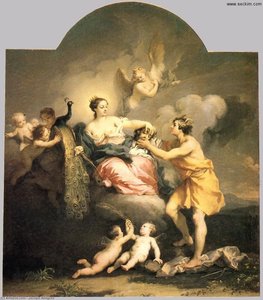
Kuinka vanha Jacopo Amigoni oli valmistuessaan teos Portrait of a Young Clergyman?Paljasta vastaus

63 vuotta vanha: Portrait of a Young Clergyman on peräisin vuodelta 1745, ja Jacopo Amigoni on syntynyt vuonna 1682.

Mitkä ovat Jacopo Amigoni'n 10 parasta maalausta?Paljasta vastaus

Portrait of a Young Clergyman, Peter I with Minerva (with the Allegorical Figure of Glory), Elector Max Emanuel Receives a Turkish Embassy, Europa, Jacob and Rachel, Herminia and the shepherds, mythological scene, dancing nymph, Sleeping Christ Child with Instruments of the Passion ja Mary with Child. Yllä oleva sijoitus kertoo kunkin teoksen vuosiluvun ja museon.

Kuinka monta teosta Jacopo Amigoni loi?Paljasta vastaus

Katalogissamme on 80 teosta taiteilijalta Jacopo Amigoni, aikaväliltä 1695–1752.

Missä Jacopo Amigoni'n kuuluisimmat alkuperäisteokset sijaitsevat?Paljasta vastaus

Pääasiassa Bavarian State Painting Collections (München), Gemäldegalerie (Berliini) ja Museo del Prado (Madrid). Yllä oleva museotaulukko listaa ne kaikki.

Milloin Jacopo Amigoni maalasi kuuluisimmat teoksensa?Paljasta vastaus

Aikakaudella 1710s: 13 sivun 80 teoksista on tehty silloin, joista Sleeping Christ Child with Instruments of the Passion.

Mitkä ovat Jacopo Amigoni'n varhaisimmat ja viimeisimmät kuuluisat teokset?Paljasta vastaus

Tällä sivulla vanhin on Europa (1695) ja uusin Portrait of the Soprano Carlo Broschi, known as Il Farinelli (1752).

Mihin aiheisiin Jacopo Amigoni palasi useimmin?Paljasta vastaus

Man (20), Woman (20) ja Drapery (20), yhteensä 80 teosta tällä sivulla.

Mitä tekniikkaa Jacopo Amigoni käytti eniten?Paljasta vastaus

Oil On Canvas, 29 teoksesta sivun 80 teoksesta.

Mihin taidesuuntaukseen Jacopo Amigoni kuuluu?Paljasta vastaus

Rococo ja Baroque, tämän sivun alkuperäisteosten perusteella.

Mitä Jacopo Amigoni -taiteilijan alkuperäisteoksia Bavarian State Painting Collections -museossa on?Paljasta vastaus

Elector Max Emanuel Receives a Turkish Embassy, Sleeping Christ Child with Instruments of the Passion ja Mary with Child: Bavarian State Painting Collections, München -ssä on 16 tämän sivun teoksista.

Jacopo Amigoni: taiteilija

Jacopo Amigoni: Rokokon hovin mestari

Napolissa noin vuonna 1682 syntynyt ja Madridissa vuonna 1752 kuollut Jacopo Amigoni seisoo keskeisenä hahmona myöhäisbarokin ja varhaisen rokokon taidemaailmassa. Vaikka hänen koulutuksensa alkoi Venetsiassa, hänen uransa kukoisti ympäri Eurooppaa, vakiinnuttaen hänet yhdeksi aikakautensa halutuimmista muotokuvaajista ja lavastemaalareista. Amigonin elämäntyötä leimasi jatkuva liike – venetsialaisista ateljeista Baijerin, Englannin ja Espanjan loistokkaisiin hoveihin – ja jokainen kohde jätti oman ainutlaatuisen jälkensä hänen kehittyvään tyyliinsä ja aihevalikoimaansa.

Uransa alkuvaiheessa Amigoni loi teoksia, jotka kattoivat niin mytologisia kertomuksia kuin uskonnollisia kohtauksiakin. Nämä varhaiset teokset osoittavat nousevaa teknistä taitoa ja arvostusta dramaattista sommittelua kohtaan. Kuitenkin 1ään vuosisadan edetessä ja hänen saavuttaessa tunnustusta aristokraattisten suojelijoiden keskuudessa, hänen keskittymisensä siirtyi kohti intiimimpiä, salonkimaisia maalauksia – kuvauksia jumalista rennoissa asennoissa, allegorisia aiheita ja muotokuvia, jotka tavoittivat Euroopan aateliston olemuksen. Hänen kykynsä kuvata ylellisiä kankaita, kimaltelevia jalokiviä ja ilmeikkäitä kasvoja muodostui hänen omintakeisen tyylinsä tavaramerkeiksi.

Hovimaalari mantereiden välillä

Amigonin ura on erottamattomasti sidoksissa hänen matkustamiseensa. Hän aloitti työskentelyn Baijerissa noin vuonna 1717, aluksi Nymphenburgin linnan hovissa, ja löysi myöhemmin arvostetun aseman Schleissheimin linnassa vuosina textup 1725–1729. Aika näissä saksalaisissa kohteissa vahvisti hänen mainettaan luoda runsasyksityiskohtaisia ja teknisesti taitavia teoksia. Vuodesta 1726 alkaen hän matkusti Venetsiaan, jatkaen palvelustaan merkittävien venetsialaisten perheiden, kuten Streitin ja Savoin, keskuudessa ja tuottaen huomattavan määrän teoksia heidän asuintaloihinsa.

1700-luvun puoliväli toi mukanaan Amigonin laajat matkat Englantiin. Hän vietti useita vuosia Lontoossa työskennellen eri suojelijoiden, kuten lordi Tankervillen, alaisuudessa ja osallistuen jopa Covent Gardenin teatterielämään. Hänen läsnäolonsa Englannissa oli huomionarvoista; hän kävi vilkasta vuoropuhelua aikansa kriitikoiden, kuten James Ralphin kanssa, jonka purevat arvostelut nostivat esiin sekä Amigonin työn kauneuden että sen koetun ylenpalttisuuden. Tämä ajanjakso oli myös ratkaiseva Canaletton houkuttelemisessa muuttamaan Englantiin, hyödyntäen Amigonin verkostoja englantilaisessa taidemaailmassa.

Hänen matkansa jatkuivat Pariisiin vuonna 1736, missä hän kohtasi kuuluisan kastraton Farinellin ja loi kaksi upeaa muotokuvaa laulajasta ja tämän seurueesta. Myöhemmin hän vietti aikaa Madridissa, jossa hänestä tuli Espanjan Ferdinand VI:n hovimaalari ja Royal Academy of Saint Fernando -akatemian johtaja – asema, joka antoi hänelle huomattavaa vaikutusvaltaa espanjalaisessa taide-elämässä. Hän kohtasi myös François Lemoynen ja Boucherin työt, omaksuen elementtejä heidän omintakeisista tyyleistään.

Tyyli ja vaikutteet

Amigonin tyylille on ominaista loisto, tekninen loistokkuus sekä mestarillinen värien ja valon hallinta. Hänen maalauksensa ovat usein täynnä teatraalisuutta, hyödyntäen dramaattista chiaroscuroa syvyyden luomiseksi ja keskeisten hahmojen korostamiseksi sommittelussa. Hän oli erityisen taitava pintojen tekstuurien kuvaamisessa – samettisten kaapujen poimuista jalokivien kimalteeseen – mikä vaikutti merkittävästi hänen teostensa ylelliseen tunnelmaan.

Vaikka hän sai vaikutteita Giuseppe Nogarin kaltaisten taiteilijoiden barokkiperinteistä, Amigoni kehitti selkeän rokokon tuntemuksen, jota leimasivat eleganssi, sulavuus ja koristeellisten yksityiskohtien painottaminen. Hänen muotokuvansa eivät ole pelkkiä ulkonäön esityksiä; ne tavoittavat kohteidensa persoonallisuuden ja sosiaalisen aseman hämmästyttävällä herkkyydellä. Hänen työnsä osoittavat tarkkaa silmää muodille ja ymmärrystä aikansa vallitseville esteettisille trendeille.

Perintö ja merkittävät teokset

Jacopo Amigonin perintö ulottuu kauas hänen tuotantonsa määrän yli. Hän toimi mentorina useille lupaaville nuorille taiteilijoille, kuten Charles Joseph Flipartille, Michelangelo Morlaiterille ja Pietro Antonio Novellille, varmistaen taiteellisen linjansa jatkumisen. Hänen vaikutuksensa on nähtävissä myöhempien sukupolvien maalaajien teoksissa.

Hänen kuuluisimpien teostensa joukossa ovat ”Juno vastaanottaa Argon pään” (1730), roomalaisen jumalattaren dramaattinen kuvaus, sekä ”Abraham ja kolme enkeliä”, joka on voimakas esitys jumalallisesta väliintulosta. Hänen teoksensa ”Hyväntekeväisyyden allegoria” ilmentää hänen kykyään välittää monimutkaisia allegorisia teemoja tyylikkyydellä ja arvokkuudella. Farinellin muotokuva säilyy erityisen merkittävänä esimerkkinä hänen taidostaan vangita kohteensa persoonallisuus ja karisma.

Amigonin elämä huipentui Madridiin, jossa hän kuoli vuonna 1752. Hänen tyttärensä, Caterina Amigoni Castellini, jatkoi perheen taideperinnettä pastellimaalarina, vahvistaen entisestään Amigonin nimeä taidemaailmassa. Hänen teoksiaan ihaillaan edelleen niiden kauneuden, teknisen taituruuden ja rokokon aikakauden eurooppalaisen aristokraattisen elämän evokoivien kuvauksien vuoksi.