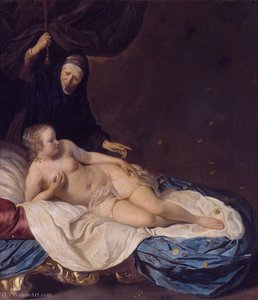
Jacob Van Loo muotokuva

Jacob Van Loo -maalaukset: Gallerian silmin 51 kuuluisinta teosta

Päivitetty marraskuu 2026 · järjestetty suosituimmuuspisteiden mukaan (jokaisen teoksen haut, vierailut ja tilaukset) · 53 teosta taiteilijalta Jacob Van Loo luettelossamme

Lyhyesti

Gallerian silmissä Jacob Van Loo's tunnetuin maalaus on Allegory of Fortune (1655), jonka alkuperäinen teos on esillä Bavarian State Painting Collections -museossa, kaupungissa München. Bacchus and Ariadne (1650) ja Portrait of Thomas Corneille (1660) täydentävät kolmikon, jonka jokainen silmä tunnistaa. Galleria esittelee Jacob Van Loo teoksista 53 tunnetuimmat 51 teosta alla; jokainen on alkuperäisteos, josta kerrotaan vuosi, museo sekä teoksen erityispiirteet.

1614 – 1670, Sluis Baroque Eniten teoksia: Rijksmuseum

Gallerian 10 parasta Jacob Van Loo -maalausta

1
Allegory of Fortune (1655) tekijä Jacob Van Loo

Allegory of Fortune

1655 · Oil · Bavarian State Painting Collections, München

In Allegory of Fortune, Jacob van Loo presents a dense gathering of figures within a dark, lush woodland. The scene is a complex arrangement of movement and light, where the shadows of the forest press against the illuminated bodies of the subjects. At the heart of this chaotic abundance, a central nude figure appears to float or dance, caught in a moment of weightless grace. This figure anchors a composition…

2
Bacchus and Ariadne (1650) tekijä Jacob Van Loo

Bacchus and Ariadne

1650 · Oil On Canvas · Yale University Art Gallery, New Haven

In Bacchus and Ariadne, Jacob van Loo captures a sudden collision of myth and flesh. Created about 1650, the oil painting freezes the precise moment of a mythological encounter. Bacchus lunges from the left, his movement driven by a sudden discovery. He reaches toward the reclining Ariadne, whose form rests upon the right. The scene is a flash of passion caught against a dark, turbulent sky.

3
Portrait of Thomas Corneille (1660) tekijä Jacob Van Loo

Portrait of Thomas Corneille

1660 · Oil On Canvas · Condé-museo, Chantilly

The gaze of an elderly man meets us in the Portrait of Thomas Corneille, a work that captures a quiet moment of contemplation. Created by the artist Jacob van Loo, this oil on canvas presents a single subject, an aged male whose presence fills the frame. His long, wispy hair and weathered features suggest a life of significant experience, frozen here in a moment of serene stillness. The portraiture genre…

4
Portrait of a Young Girl (1650) tekijä Jacob Van Loo

Portrait of a Young Girl

1650 · Oil On Panel · Minneapolis Institute of Art, Minneapolis

The Portrait of a Young Girl by Jacob van Loo brings a quiet presence into the room. Painted about 1650, this work captures a moment of stillness in the life of a child. The subject sits with a poised dignity, her gaze meeting the viewer from across the centuries. There is a sense of a life paused, a single breath held in the soft light of the Dutch Golden Age.

5
Amorous Couple (1650) tekijä Jacob Van Loo

Amorous Couple

1650 · Oil On Canvas · Mauritshuis, Haag

The work before us is titled Amorous Couple, a painting by the Dutch artist Jacob van Loo. Created around 1650, this oil on canvas captures a quiet, private moment between two figures. It is a piece that reflects the artist's specific interest in the nuances of human interaction and the subtle play of light across different textures.

6
Susannah and the Elders (1658) tekijä Jacob Van Loo

Susannah and the Elders

1658 · Oil On Canvas · Kelvingrove Art Gallery and Museum, Glasgow

The scene unfolds in a moment of profound tension within the painting titled Susannah and the Elders. Created by the artist Jacob van Loo, this oil on canvas captures a heavy, dramatic instance of religious art. The work is signed and dated in the bottom right corner, where the hand of the painter leaves the mark "J; van Loo fecit 1658."

7
Portrait of a Lady (1647) tekijä Jacob Van Loo

Portrait of a Lady

1647 · Oil On Canvas · Mauritshuis, Haag

The oil on canvas work titled Portrait of a Lady was executed by the artist Jacob van Loo in 1647. This half-length portrait depicts a woman seated in a high-backed chair. The subject is positioned against a dark, indistinct background that emphasizes her presence and the details of her attire. The composition focuses on the sitter from the waist up, establishing a direct connection through her orientation toward the viewer.

8
Family Portrait of Rutger van Weert and Maria Beels (1644) tekijä Jacob Van Loo

Family Portrait of Rutger van Weert and Maria Beels

1644 · Oil On Canvas

Jacob van Loo’s Family Portrait of Rutger van Weert and Maria Beels presents a formal and dignified arrangement of seven family members within an outdoor setting. The subjects are organized in a loose pyramidal structure, a composition that establishes a sense of stability and familial unity. This group portrait relies on a rhythmic pattern created by the sharp contrast between somber, dark tones—primarily blacks and deep browns in the clothing—and…

9
Diana and her nymphs, resting after the hunt (1648) tekijä Jacob Van Loo

Diana and her nymphs, resting after the hunt

1648 · Oil On Canvas · Gemäldegalerie, Berliini

Jacob van Loo painted "Diana and her nymphs, resting after the hunt" about 1648. The oil painting depicts a group of women situated within a mythological setting. These figures are identified as the goddess Diana and her nymphs. The scene captures a specific moment of repose following a hunt, moving away from the active pursuit of prey toward a state of rest.

10
Allegory of Wealth (1650) tekijä Jacob Van Loo

Allegory of Wealth

1650 · Oil On Canvas · Condé-museo, Chantilly

The scene unfolds within the Allegory of Wealth, an oil on canvas created by the Dutch painter Jacob van Loo. This work emerges from around 1650, capturing a moment of profound abundance. The figures exist in a space defined by their interactions, a hallmark of the artist's approach to narrative painting. Every gesture and glance contributes to the unfolding story of prosperity and its allure.

Jacob Van Loo -taideteokset, sijoitukset 11–51

11Portrait of Sophia Huydecoper, née Coymans (1655) tekijä Jacob Van LooPortrait of Sophia Huydecoper, née Coymans1655 12Portrait of Joan Huydecoper (1655) tekijä Jacob Van LooPortrait of Joan Huydecoper1655 13Portrait of Jan Hinlopen and Leonora Huydecoper (1657) tekijä Jacob Van LooPortrait of Jan Hinlopen and Leonora Huydecoper1657 · Szépművészeti Múzeum 14Boy with a Top and Dog (1650) tekijä Jacob Van LooBoy with a Top and Dog1650 15A Glass and Coral Factory (1649) tekijä Jacob Van LooA Glass and Coral Factory1649 · Statens Museum for Kunst 16Allegory of feeding the poor (1657) tekijä Jacob Van LooAllegory of feeding the poor1657 · Amsterdam Museum 17Group portrait of the regents of the Aalmoezeniers, Arm- and Werkhuis in Haarlem, 1659 (1659) tekijä Jacob Van LooGroup portrait of the regents of the Aalmoezeniers, Arm- and Werkhuis in Haarlem, 16591659 · Frans Halsin museo 18Portrait of Lodewijk Huygens (1631-1699) (1649) tekijä Jacob Van LooPortrait of Lodewijk Huygens (1631-1699)1649 19Young Man Reading (1650) tekijä Jacob Van LooYoung Man Reading1650 20Musician with a wine-glass (1651) tekijä Jacob Van LooMusician with a wine-glass1651 · Wallraf-Richartz-Museum 21Portrait of a boy with a dog (1658) tekijä Jacob Van LooPortrait of a boy with a dog1658 · Musee Baron Martin 22Mother with two children (1657) tekijä Jacob Van LooMother with two children1657 · Gemäldegalerie 23Three Men in a Wine Cellar (1664) tekijä Jacob Van LooThree Men in a Wine Cellar1664 24Portrait of Michel Corneille (1661-1664) (1663) tekijä Jacob Van LooPortrait of Michel Corneille (1661-1664)1663 25Portrait of a woman (1662) tekijä Jacob Van LooPortrait of a woman1662 · Frederik Muller & Co 26Diana resting and bathing with her nymphs (1665) tekijä Jacob Van LooDiana resting and bathing with her nymphs1665 · Herzog Anton Ulrich Museum 27Amarillis crowning Blueberry. tekijä Jacob Van LooAmarillis crowning Blueberry. 28Indulgent Old Lady (1654) tekijä Jacob Van LooIndulgent Old Lady1654 · Hermitage-museo 29Venus and Cupid (1649) tekijä Jacob Van LooVenus and Cupid1649 · Statens Museum for Kunst 30Concert (1650) tekijä Jacob Van LooConcert1650 · Hermitage-museo 31Self Portrait, circa 1660, Jacob van Loo, 1655 - 1665 (1665) tekijä Jacob Van LooSelf Portrait, circa 1660, Jacob van Loo, 1655 - 16651665 · Rijksmuseum 32Young Woman Going to Bed tekijä Jacob Van LooYoung Woman Going to BedGrand Palais 33Danae (1660) tekijä Jacob Van LooDanae1660 · The Kremer Collection 34Amaryllis of the Annunciation (1649) tekijä Jacob Van LooAmaryllis of the Annunciation1649 · Gemäldegalerie 35Portrait of a Man, thought to be Christoffel van Gangelt, Second Husband of Lucretia Boudaen, Jacob van Loo (attributed to), 1640 - 1670 (1670) tekijä Jacob Van LooPortrait of a Man, thought to be Christoffel van Gangelt, Second Husband of Lucretia Boudaen, Jacob van Loo (attributed to), 1640 - 16701670 · National Museum in Warsaw 36Portrait of Scientist tekijä Jacob Van LooPortrait of ScientistArt Museum Riga Bourse 37interior - a nude woman - Rhodope tekijä Jacob Van Loointerior - a nude woman - Rhodope 38A Bacchanal tekijä Jacob Van LooA Bacchanal 39Ariadne. tekijä Jacob Van LooAriadne. 40Portrait of Lucretia Boudaen tekijä Jacob Van LooPortrait of Lucretia Boudaen 41Melancholy tekijä Jacob Van LooMelancholy 42Lovers. tekijä Jacob Van LooLovers.Rijksmuseum 43Portrait of a Woman, thought to be Lucretia Boudaen (1616-1663), Wife of Jean Ortt and Second Wife of Christoffel van Gangelt, Jacob van Loo (attributed to), 1640 - 1670 (1670) tekijä Jacob Van LooPortrait of a Woman, thought to be Lucretia Boudaen (1616-1663), Wife of Jean Ortt and Second Wife of Christoffel van Gangelt, Jacob van Loo (attributed to), 1640 - 16701670 · Rijksmuseum 44Diana and Her Nymphs (1654) tekijä Jacob Van LooDiana and Her Nymphs1654 · Statens Museum for Kunst 45Portrait of a Gentleman tekijä Jacob Van LooPortrait of a Gentleman 46Group portrait of the regentesses of Aalmoezeniers tekijä Jacob Van LooGroup portrait of the regentesses of AalmoezeniersFrans Halsin museo 47Danae tekijä Jacob Van LooDanae 48Portrait of Johan Ort tekijä Jacob Van LooPortrait of Johan Ort 49Study of a woman tekijä Jacob Van LooStudy of a woman 50Bacchic scene tekijä Jacob Van LooBacchic sceneRijksmuseum 51Portrait of the Meebeeck Cruywagen family near the gate of their country home on the Uitweg near Amsterdam. tekijä Jacob Van LooPortrait of the Meebeeck Cruywagen family near the gate of their country home on the Uitweg near Amsterdam.

Aiheet, jotka vangitsivat Jacob Van Looin katseen

Nämä neljä aihetta toistuvat näissä alkuperäisteoksissa useimmin, jokaisesta löytyy hienoin esimerkki.

Museot, joissa Jacob Van Loo'n alkuperäisteokset sijaitsevat

Tämän sivun teoksista eniten sisältävät 8 museota.

Museo Kaupunki Jacob Van Loo teokset Tämän listan maalaukset
Rijksmuseum, AmsterdamRijksmuseum Amsterdam 4 Self Portrait, circa 1660, Jacob van Loo, 1655 - 1665, Lovers., Portrait of a Woman, thought to be Lucretia Boudaen (1616-1663), Wife of Jean Ortt and Second Wife of Christoffel van Gangelt, Jacob van Loo (attributed to), 1640 - 1670
Gemäldegalerie, BerliiniGemäldegalerie Berliini 3 Diana and her nymphs, resting after the hunt, Mother with two children, Amaryllis of the Annunciation
Statens Museum for Kunst, KööpenhaminaStatens Museum for Kunst Kööpenhamina 3 A Glass and Coral Factory, Venus and Cupid, Diana and Her Nymphs
Condé-museo, ChantillyCondé-museo Chantilly 2 Portrait of Thomas Corneille, Allegory of Wealth
Mauritshuis, HaagMauritshuis Haag 2 Amorous Couple, Portrait of a Lady
Frans Halsin museo, HaringinFrans Halsin museo Haringin 2 Group portrait of the regents of the Aalmoezeniers, Arm- and Werkhuis in Haarlem, 1659, Group portrait of the regentesses of Aalmoezeniers
Hermitage-museo, PietariHermitage-museo Pietari 2 Indulgent Old Lady, Concert
Bavarian State Painting Collections, MünchenBavarian State Painting Collections München 1 Allegory of Fortune

Jacob Van Loo, yksi tunnusomainen maalaus vuosikymmeneltä

Teokset vuosikymmenittäin

Valitse vuosikymmen nähdäksesi sen määrittäneen alkuperäisteoksen.

Jacob Van Loon maalaukset: gallerian vastaukset

Mikä Jacob Van Loo -taideteos on kaikkien kuuluisin?Paljasta vastaus

Allegory of Fortune (1655), Bavarian State Painting Collections, München. Seuraavina ovat Bacchus and Ariadne (1650) ja Portrait of Thomas Corneille (1660).

Kuinka vanha Jacob Van Loo oli valmistuessaan teos Allegory of Fortune?Paljasta vastaus

41 vuotta vanha: Allegory of Fortune on peräisin vuodelta 1655, ja Jacob Van Loo on syntynyt vuonna 1614.

Mitkä ovat Jacob Van Loo'n 10 parasta maalausta?Paljasta vastaus

Allegory of Fortune, Bacchus and Ariadne, Portrait of Thomas Corneille, Portrait of a Young Girl, Amorous Couple, Susannah and the Elders, Portrait of a Lady, Family Portrait of Rutger van Weert and Maria Beels, Diana and her nymphs, resting after the hunt ja Allegory of Wealth. Yllä oleva sijoitus kertoo kunkin teoksen vuosiluvun ja museon.

Kuinka monta teosta Jacob Van Loo loi?Paljasta vastaus

Katalogissamme on 53 teosta taiteilijalta Jacob Van Loo, aikaväliltä 1644–1670.

Missä Jacob Van Loo'n kuuluisimmat alkuperäisteokset sijaitsevat?Paljasta vastaus

Pääasiassa Rijksmuseum (Amsterdam), Gemäldegalerie (Berliini) ja Statens Museum for Kunst (Kööpenhamina). Yllä oleva museotaulukko listaa ne kaikki.

Milloin Jacob Van Loo maalasi kuuluisimmat teoksensa?Paljasta vastaus

Aikakaudella 1650s: 19 sivun 51 teoksista on tehty silloin, joista Allegory of Fortune.

Mitkä ovat Jacob Van Loo'n varhaisimmat ja viimeisimmät kuuluisat teokset?Paljasta vastaus

Tällä sivulla vanhin on Family Portrait of Rutger van Weert and Maria Beels (1644) ja uusin Portrait of a Man, thought to be Christoffel van Gangelt, Second Husband of Lucretia Boudaen, Jacob van Loo (attributed to), 1640 - 1670 (1670).

Mihin aiheisiin Jacob Van Loo palasi useimmin?Paljasta vastaus

Woman (15), Man (12) ja Dark background (9), yhteensä 51 teosta tällä sivulla.

Mitä tekniikkaa Jacob Van Loo käytti eniten?Paljasta vastaus

Oil On Canvas, 21 teoksesta sivun 51 teoksesta.

Mihin taidesuuntaukseen Jacob Van Loo kuuluu?Paljasta vastaus

Baroque, tämän sivun alkuperäisteosten perusteella.

Mitä Jacob Van Loo -taiteilijan alkuperäisteoksia Rijksmuseum -museossa on?Paljasta vastaus

Self Portrait, circa 1660, Jacob van Loo, 1655 - 1665, Lovers. ja Portrait of a Woman, thought to be Lucretia Boudaen (1616-1663), Wife of Jean Ortt and Second Wife of Christoffel van Gangelt, Jacob van Loo (attributed to), 1640 - 1670: Rijksmuseum, Amsterdam -ssä on 4 tämän sivun teoksista.

Jacob Van Loo: taiteilija

Jacob van Loo: Keskustelujen mestari

Sluisissa, Alankomaiden vilkkaassa satamakaupungissa vuonna 1614 syntynyt Jacob van Loo eli elämää, joka kietoutui erottamattomasti aikansa eloisiin taiteellisiin virtauksiin. Hänen varhaisia vuosia muovasi isä Jan van Loo, taidemaalari, joka opetti pojalleen tekniikan ja taiteellisuuden perusteet. Vaikka yksityiskohdat hänen kasvuvuosistaan ovat osittain kadonneet sotien aikana tuhoutuneiden kaupunkien arkistojen myötä, on selvää, että Van Loon taiteellinen matka alkoi hollantilaisen kultakauden rikkaasta kudelmasta – aikakaudesta, joka tunnettiin innovatiivisista maalaustyyleistään ja tuottavista taiteilijoistaan. Hänen sukuhistoriansa on merkittävä; isän perintö loi pohjan maalaridynastialle, joka vaikutti pysyvästi koko eurooppalaiseen taiteeseen.

Amsterdamista tuli Van Loon uusi koti vuonna 1635, ja kaupunki upotti hänet dynaamiseen taiteelliseen piiriin, johon kuuluivat suuruudet kuten Rembrandt, Frans Hals ja Bartholomeus van der Helst. Tämä ympäristö ruokki kiivasta kilpailua ja yhteistyötä, työntäen taiteellisen ilmaisun rajoja eteenpäin. Kaupungin sykkivä tunnelma todennäköisesti ruokki hänen luovuuttaan tarjoten jatkuvaa inspiraatiota ja haastamalla häntä hienovarsistamaan taitojaan. Hän avioitui Anna Lengelen kanssa vuonna 1642, liitto, joka toi vakautta ja vahvisti perheen kasvavaa vaikutusvaltaa taidemaailmassa. Heidän kotinsa kukoisti kuuden lapsen myötä, mukaan lukien lahjakkaat maalarit Jean-Baptiste van Loo ja Louis-Abraham van Loo – luoden perinnön, joka ulottui kauas hänen oman elinaikansa yli.

Vallankumouksellinen lähestymistapa sommitteluun

Van Loo erottui mestarillisella otteellaan ”keskusteluryhmiin”, tekniikalla, joka mullisti historiallisen maalaustaiteen genren. Toisin kuin aikaisemmat esitykset, jotka usein esittivät mytologisia tai raamatullisia kohtauksia staattisina ja muodollisina tapahtumina, Van Loo täytti kankaansa elävillä, mukaansatempaavilla hahmoilla, jotka olivat vangittu vuorovaikutuksen hetkiin – dialogit, eleet ja ilmeet antoivat narratiiville henkeä. Tämä lähestymistapa ei ollut pelkästään koristeellinen; se täytti maalaukset välittömyyden ja realismin tunteella, vetäen katsojan suoraan tapahtumien keskiöön.

Hänen taitonsa ulottui erityisesti alastomien hahmojen kuvaukseen, aiheeseen, jota pidettiin aikanaan usein rohkeana. Vaikka Rembrandtin naishahmoja ylistettiin heidän psykologisesta syvyydestään ja emotionaalisesta voimastaan, Van Loon alastomat hahmot saavuttivat huomattavaa suosiota yleisön keskuudessa. Jotkut aikakauden kriitikot jopa väittivät, että hänen naishahmonsa olivat suositumpia kuin Amsterdamin kilpailijansa teokset. Tämä mieltymys kertoo yleisön arvostuksesta hänen teknistä taituruuttaan ja ihanteellista kauneutta kohtaan, jonka hän kankaalle vangitsi. Erityisen huomionarvoista on, että hänen elinaikanaan hänen naishahmojaan pidettiin jopa parempina ja suositumpina kuin Rembrandtin teoksia.

Vaikutteet ja taiteellinen kehitys

Van Loon taiteellinen kehitys muovautui kiistatta useiden keskeisten vaikutteiden myötä. Varhaiset yhteydet Thomas de Keyseriin ja Jacob Adriaensz Backeriin antoivat hänelle vankan pohjan klassisille tekniikoille ja sommittelulle. Nämä kohtaamiset altistivat hänet renessanssitaiteen periaatteille, jotka hän integroi taitavasti omaan tyyliinsä. Roomasta kumpuava barokki liike vaikutti myös merkittävästi, tuoden mukanaan dramaattisen valon, rikkaat värit ja dynaamiset asennot, jotka ovat ominaisia hänen teoksilleen.

Hänen aikansa Pariisissa osoittautui käänteentekeväksi, merkiten siirtymää kohti suurempaa eleganssia ja hienostuneisuutta. Hänet hyväksyttiin Académie royale de peinture et de sculpture -akatemiaan vuonna 1663, mikä vahvisti hänen asemansa ranskalaisessa taide-establishmentissa. Tämä muutto ei merkinnyt ainoastaan ammatillista edistystä, vaan myös syventymistä pariisilaisen taidemaailman kehittyviin makuihin ja konventioihin.

Perintö ja dynastia

Jacob Loon vaikutus ulottui kauas hänen oman elinaikansa yli. Hänen menestyksensä perusti ”Van Loo -maalariperheen”, dynastian, joka vaikutti syvästi eurooppalaiseen maalaustaiteeseen vuosisatojen ajan. Hänen poikansa Jean-Baptiste van Loo jatkoi suvun perinnettä tuottaen poikkeuksellisen laadukkaita teoksia ja vakiinnuttaen erottuvan taiteellisen tyylin. Hänen pojanpoikansa Charles-André van Loo laajensi suvun perintöä entisestään tullen yhdeksi 18. vuosisadan kuuluisimmista ranskalaisista maalarista.

Van Loo -dynastian vaikutus on nähtävissä seuraavien sukupolvien teoksissa, mikä osoittaa isän innovatiivisten tekniikoiden jatkuvaa kehitystä ja soveltamista. Jacob Loon edelläkävijämäinen lähestymistapa sommitteluun, hänen mestarillinen kykynsä kuvata alastomia hahmoja sekä pysyvän taiteellisen suvun perustaminen vakiinnuttivat hänen paikkansa keskeisenä hahmona hollantilaisessa ja ranskalaisessa taidehistoriassa. Hänen maalauksiaan tutkitaan ja ihaillaan edelleen niiden kauneuden, dynamiikan ja ajattoman vetovoiman vuoksi.

Merkittäviä teoksia

  • Diana ja hänen nymfinsä (1648): Erinomainen esimerkki Van Loon keskusteluryhmistä, näyttäen hänen kykynsä vangita elävä kohtaus mukaansatempaavilla hahmoilla. Katso teos
  • Itsemuotokuva, noin 1660: Silmiinpistävä kuvaus taiteilijasta itsestään, paljastaen hänen hienostuneen tyylinsä ja itsevarmat eleensä. Katso teos
  • Ryhmämuotokuva Meebeeck Cruywagenin perheestä heidän maaseutukotiensa portilla Uitwegin lähellä Amsterdamia (omistettu): Osoittaa hänen kykynsä kuvata sosiaalista kohtaamista yksityiskohtaisesti ja realistisesti. Katso teos

Lisätietoja Jacob van Loosta löytyy taiteilijatietokannasta ja yksityiskohtaisesta Wikipedia-artikkelista: Wikipedia.