1


Päivitetty marraskuu 2026 · järjestetty suosituimmuuspisteiden mukaan (jokaisen teoksen haut, vierailut ja tilaukset) · 20 teosta taiteilijalta De Scott Evans luettelossamme
Lyhyesti
Free Sample, Take One (1891) on se De Scott Evans -maalaus, joka herättää eniten huomiota; alkuperäisteos kuuluu museolle Dayton Art Institute, Dayton. Sen jälkeen katse siirtyy kohteisiin Free Sample / Try One (1885) ja Try One (1885). De Scott Evansin 20 teoksemme joukosta nämä 19 ovat kuuluisimpia; jokainen on ainutlaatuinen alkuperäisteos, joka on esitelty vuosiluvun, museon ja sen syyn kera, miksi teos on säilyttänyt suosionsa.


Nämä neljä aihetta toistuvat näissä alkuperäisteoksissa useimmin, jokaisesta löytyy hienoin esimerkki.
Tämän sivun teoksista eniten sisältävät 8 museota.
| Museo | Kaupunki | De Scott Evans teokset | Tämän listan maalaukset |
|---|---|---|---|
 Yale University Art Gallery |
New Haven | 2 | Free Sample / Try One, Two Hanging Apple |
 Dayton Art Institute |
Dayton | 1 | Free Sample, Take One |
 Birmingham Museum of Art |
Birmingham | 1 | Try One |
 Crystal Bridges Museum of American Art |
Bentonville | 1 | Daisies |
 Columbus Museum of Art |
Columbus | 1 | A New Variety, Try One |
 Indianapolisin taidemuseo |
Indianapolis | 1 | Scene on the Island of Jamaica |
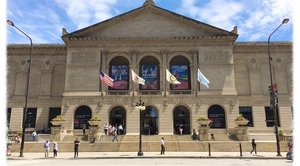 Art Institute of Chicago |
Chicago | 1 | The Irish Question |
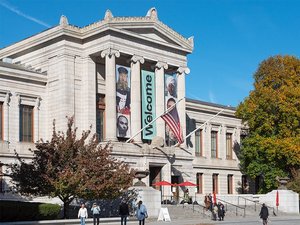 Museum of Fine Arts |
Boston | 1 | A New Variety, Try One |
Pitkä 18 vuoden ura, vuodesta 1881 vuoteen 1898: De Scott Evans'n kuuluisimmat alkuperäisteokset vuosi vuodelta esiteltynä.
Valitse vuosi nähdäksesi alkuperäisteokset.
Free Sample, Take One (1891), Dayton Art Institute, Dayton. Seuraavina ovat Free Sample / Try One (1885) ja Try One (1885).
44 vuotta vanha: Free Sample, Take One on peräisin vuodelta 1891, ja De Scott Evans on syntynyt vuonna 1847.
Free Sample, Take One, Free Sample / Try One, Try One, Daisies, Grandfather's Clock, Two Hanging Apple, A New Variety, Try One, The Connoisseur, A new variety try one ja Scene on the Island of Jamaica. Yllä oleva sijoitus kertoo kunkin teoksen vuosiluvun ja museon.
Katalogissamme on 20 teosta taiteilijalta De Scott Evans, aikaväliltä 1881–1898.
Pääasiassa Yale University Art Gallery (New Haven), Dayton Art Institute (Dayton) ja Birmingham Museum of Art (Birmingham). Yllä oleva museotaulukko listaa ne kaikki.
Aikakaudella 1885: 3 sivun 19 teoksista on tehty silloin, joista Free Sample / Try One.
Tällä sivulla vanhin on Grandfather's Clock (1881) ja uusin A new variety try one (1898).
Free Sample / Try One ja Two Hanging Apple: Yale University Art Gallery, New Haven -ssä on 2 tämän sivun teoksista.
De Scott Evans remains one of the most captivating enigmas in the annals of nineteenth-century American art, a painter whose true mastery was only fully realized through the ghostly echoes of his posthumous reputation. Born David Scott Evans in 1847 in the quiet landscape of Boston, Indiana, his life was marked by a profound dedication to the pursuit of visual truth. While he spent much of his career navigating the academic circles of Ohio and New York, it is his ability to manipulate the very fabric of perception that has secured his place in art history. Evans did not merely paint objects; he breathed a deceptive vitality into them, creating works so convincingly three-dimensional that they seemed to defy the flat confines of the canvas.
His artistic journey was shaped by a rigorous classical foundation, beginning with his studies under Professor Adrian Beaugureau at Miami University and later in Cincinnati. This early immersion in the principles of meticulous observation provided the technical scaffolding for what would become his signature style. However, it was his transformative sojourn to Paris in the late 1870s that truly refined his vision. Studying under the legendary Adolphe William Bouguereau, Evans absorbed the essence of the Beaux Arts tradition—a method defined by an unwavering commitment to anatomical precision and idealized beauty. This Parisian influence instilled in him a reverence for light and texture, allowing him to later execute trompe l'oeil works that could trick even the most discerning eye.
During his lifetime, Evans was primarily celebrated as a painter of genre scenes and elegant portraits, capturing the refined domesticity and fashionable grace of the Victorian era. He possessed a remarkable ability to render the soft textures of fabric and the subtle glow of skin, making him a sought-after chronicler of contemporary life. Yet, it is in the realm of trompe l'oeil—the art of "deceiving the eye"—where his most enduring magic resides. Decades after his tragic death, scholars began to attribute a series of breathtaking still lifes to him, works that utilized hyper-realistic detail to create startling illusions.
These masterpieces often featured mundane objects elevated to the level of high drama through sheer technical prowess. One might encounter a cupboard scene where almonds appear trapped behind splintered glass, or a composition where a simple string of pears seems to extend beyond the frame and attach itself to a physical nail on the wall. His skill in rendering the grain of weathered wood, the translucency of fruit, and the delicate sheen of paper was nothing short of miraculous. This mastery of texture and depth allowed him to play with the viewer's sense of reality, turning a simple viewing experience into a playful, intellectual game of perception.
The life of De Scott Evans was cut short by a maritime catastrophe that left a void in the American art world. In July 1898, while traveling aboard the ocean liner La Bourgogne bound for Paris, Evans and his three beloved daughters were lost when the ship collided with another vessel and sank in the North Atlantic. This sudden, violent end to his life added a layer of melancholy to his legacy, leaving behind a body of work that continues to haunt and delight collectors. Because he frequently utilized various pseudonyms—including D. Scott Evans, S. S. David, and Stanley S. David—his true identity was long obscured, much like the illusions he so expertly crafted.
Today, the significance of Evans lies in his unique position at the intersection of academic realism and playful deception. He stands as a bridge between the formal traditions of the nineteenth century and a more modern fascination with the boundaries of representation. His work serves as a poignant reminder that art possesses the power to transcend the physical plane, inviting us to question not only what we see, but how we perceive the very world around us. Through his rediscovered brilliance, Evans continues to command our attention, proving that even in death, an artist's vision can remain vibrantly, deceptively alive.