Cornelis van Spaendonck muotokuva

Cornelis van Spaendonck -maalaukset: Gallerian silmin 15 kuuluisinta teosta

Päivitetty marraskuu 2026 · järjestetty suosituimmuuspisteiden mukaan (jokaisen teoksen haut, vierailut ja tilaukset) · 16 teosta taiteilijalta Cornelis van Spaendonck luettelossamme

Lyhyesti

Gallerian silmissä Cornelis van Spaendonck's tunnetuin maalaus on Still Life of Flowers (1793), jonka alkuperäinen teos on esillä Herbert F. Johnson Museum of Art -museossa, kaupungissa Ithaca. Still-Life with Fruit on Table (1798) ja Vase of Roses (1806) täydentävät kolmikon, jonka jokainen silmä tunnistaa. Galleria esittelee Cornelis van Spaendonck teoksista 16 tunnetuimmat 15 teosta alla; jokainen on alkuperäisteos, josta kerrotaan vuosi, museo sekä teoksen erityispiirteet.

1756 – 1839, Tilburg Eniten teoksia: Fitzwilliam Museum

Gallerian 10 parasta Cornelis van Spaendonck -maalausta

1
Still Life of Flowers (1793) tekijä Cornelis van Spaendonck

Still Life of Flowers

1793 · Oil · Herbert F. Johnson Museum of Art, Ithaca

In this 1793 composition, we find ourselves in the presence of a lush, pyramidal arrangement that speaks to the quiet intensity of the late Baroque tradition. A large, cream-colored vase sits at the center, its ornate surface catching the light as it overflows with a dense collection of blossoms. The arrangement is not merely a display of flora but a carefully constructed study of form and shadow. Soft pink peonies…

2
Still-Life with Fruit on Table (1798) tekijä Cornelis van Spaendonck

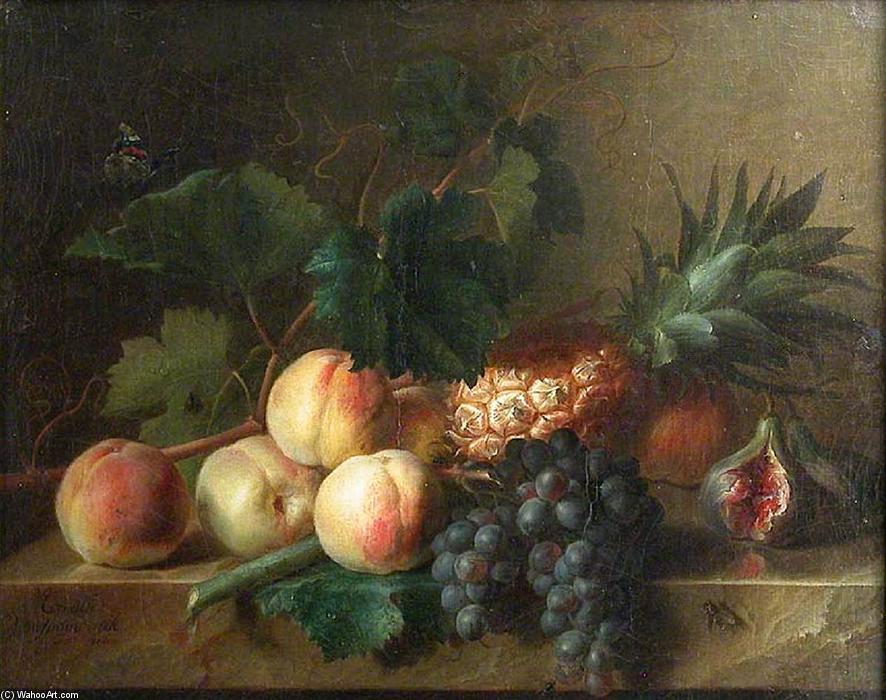
Still-Life with Fruit on Table

1798 · Oil On Canvas · Louvre, Pariisi

Gaze upon this exquisite vision of abundance, a moment captured in time that speaks volumes through its vibrant arrangement of nature's bounty. This still life, featuring an array of ripe fruit—luscious apples nestled in the foreground, stately pears positioned just behind them, and clusters of deep purple grapes alongside bright oranges—is more than mere depiction; it is a celebration of harvest and earthly pleasure. The composition is further enriched by…

3
Vase of Roses (1806) tekijä Cornelis van Spaendonck

Vase of Roses

When the Dutch painter Cornelis van Spaendonck was around the age of twenty, he settled in Paris, which had become the new center of flower painting since the mid-18th century. As the artistic director of the Sèvres porcelain manufactory between 1785 and 1800, he created a great number motifs for the porcelain pieces designed to embellish the houses of princes and royals. This bouquet containing several varieties of roses was…

Cornelis van Spaendonck -taideteokset, sijoitukset 11–15

Aiheet, jotka vangitsivat Cornelis van Spaendonckin katseen

Nämä neljä aihetta toistuvat näissä alkuperäisteoksissa useimmin, jokaisesta löytyy hienoin esimerkki.

Museot, joissa Cornelis van Spaendonck'n alkuperäisteokset sijaitsevat

Tämän sivun teoksista eniten sisältävät 7 museota.

Museo Kaupunki Cornelis van Spaendonck teokset Tämän listan maalaukset
Fitzwilliam MuseumFitzwilliam Museum 3 Open Wicker Basket Of Mixed Flowers, Including Tulip, Roses, Harebell, Hollyhock, Poppy, Larkspur And Auricula On A Marble Ledge, Vase Of Flowers, Open wicker basket of mixed flowers, including iris, roses, poppies, hollyhock, marigold, larkspur and convolvulus on a marble ledge
Noordbrabants Museum, 's-HertogenboschNoordbrabants Museum 's-Hertogenbosch 2 Cabbage rose, Still Life with Flowers in a Vase
Herbert F. Johnson Museum of Art, IthacaHerbert F. Johnson Museum of Art Ithaca 1 Still Life of Flowers
Louvre, PariisiLouvre Pariisi 1 Still-Life with Fruit on Table
Musée des Beaux-Arts de Lyon, LyonMusée des Beaux-Arts de Lyon Lyon 1 Vase of Roses
Musée des Beaux-Arts, CarcassonneMusée des Beaux-Arts Carcassonne 1 Cornelis Van Spaendonck - Vase de fleurs avec nid
Ashmolean Museum, OxfordAshmolean Museum Oxford 1 Basket of Flowers

Cornelis van Spaendonck, yksi tunnusomainen maalaus vuosikymmeneltä

Teokset vuosikymmenittäin

Valitse vuosikymmen nähdäksesi sen määrittäneen alkuperäisteoksen.

Cornelis van Spaendonckn maalaukset: gallerian vastaukset

Mikä Cornelis van Spaendonck -taideteos on kaikkien kuuluisin?Paljasta vastaus

Still Life of Flowers (1793), Herbert F. Johnson Museum of Art, Ithaca. Seuraavina ovat Still-Life with Fruit on Table (1798) ja Vase of Roses (1806).

Kuinka vanha Cornelis van Spaendonck oli valmistuessaan teos Still Life of Flowers?Paljasta vastaus

37 vuotta vanha: Still Life of Flowers on peräisin vuodelta 1793, ja Cornelis van Spaendonck on syntynyt vuonna 1756.

Mitkä ovat Cornelis van Spaendonck'n 10 parasta maalausta?Paljasta vastaus

Still Life of Flowers, Still-Life with Fruit on Table, Vase of Roses, Still Life with Fruit Basket, Vase of Flowers on a Stone Table, with a Nest and a Male Greenfinch, Cornelis Van Spaendonck - Vase de fleurs avec nid, Cabbage rose, Still Life with Flowers in a Vase, Open Wicker Basket Of Mixed Flowers, Including Tulip, Roses, Harebell, Hollyhock, Poppy, Larkspur And Auricula On A Marble Ledge ja Basket and Vase of Flowers. Yllä oleva sijoitus kertoo kunkin teoksen vuosiluvun ja museon.

Kuinka monta teosta Cornelis van Spaendonck loi?Paljasta vastaus

Katalogissamme on 16 teosta taiteilijalta Cornelis van Spaendonck, aikaväliltä 1781–1830.

Missä Cornelis van Spaendonck'n kuuluisimmat alkuperäisteokset sijaitsevat?Paljasta vastaus

Pääasiassa Fitzwilliam Museum, Noordbrabants Museum ('s-Hertogenbosch) ja Herbert F. Johnson Museum of Art (Ithaca). Yllä oleva museotaulukko listaa ne kaikki.

Milloin Cornelis van Spaendonck maalasi kuuluisimmat teoksensa?Paljasta vastaus

Aikakaudella 1780s: 3 sivun 15 teoksista on tehty silloin, joista Still Life with Fruit Basket.

Mitkä ovat Cornelis van Spaendonck'n varhaisimmat ja viimeisimmät kuuluisat teokset?Paljasta vastaus

Tällä sivulla vanhin on Still Life with Fruit Basket (1781) ja uusin Still Life with Flowers in a Vase (1830).

Mihin aiheisiin Cornelis van Spaendonck palasi useimmin?Paljasta vastaus

Flowers (4), Vase (2) ja Floral arrangement (2), yhteensä 15 teosta tällä sivulla.

Mitä Cornelis van Spaendonck -taiteilijan alkuperäisteoksia Fitzwilliam Museum -museossa on?Paljasta vastaus

Open Wicker Basket Of Mixed Flowers, Including Tulip, Roses, Harebell, Hollyhock, Poppy, Larkspur And Auricula On A Marble Ledge, Vase Of Flowers ja Open wicker basket of mixed flowers, including iris, roses, poppies, hollyhock, marigold, larkspur and convolvulus on a marble ledge: Fitzwilliam Museum -ssä on 3 tämän sivun teoksista.

Cornelis van Spaendonck: taiteilija

The Delicate Mastery of Cornelis van Spaendonck

In the grand tapestry of European art history, few threads possess the delicate, luminous quality found in the works of Cornelis van Spaendonck. Born in the Dutch city of Tilburg in 1756, Van Spaendonck emerged from a lineage of profound artistic dedication, beginning his journey under the tutelage of Willem Jacob Herreyns in Antwerp. This early training laid the foundation for a career that would eventually bridge the gap between the meticulous traditions of the Dutch Golden Age and the refined elegance of the French Neoclassical era. In 1773, a pivotal year that redirected the course of his life, he moved to Paris, where he joined his older brother, Gérard van Spaendonck. Together, they became central figures in the Parisian art scene, weaving a legacy of botanical precision and decorative splendor that would captivate the French Academy for decades.

The essence of Van Spaendonck’s artistry lies in his ability to transform the ephemeral into the eternal. While many artists of his era sought the drama of historical epic or the grandeur of portraiture, Cornelis found his muse in the quiet, intimate corners of the natural world. His mastery of oils and gouache allowed him to capture the translucent petals of a rose, the velvety texture of a tulip, and the subtle, dewy moisture on a leaf with an almost scientific accuracy. His compositions often transcend mere botanical documentation; they are poetic meditations on life and decay. In works such as "Open Wicker Basket Of Mixed Flowers," one can sense the artist's profound reverence for each individual bloom, from the sturdy hollyhock to the delicate harebell, all arranged with a grace that feels both spontaneous and perfectly balanced.

A Legacy of Porcelain and Prestige

Van Spaendonck’s influence extended far beyond the canvas, reaching into the very fabric of decorative arts that defined 18th-century luxury. His tenure as the director of the prestigious Sèvres porcelain factory from 1785 to 1800 represents a remarkable intersection of fine art and industrial design. During this period, his botanical sensibilities were translated into exquisite motifs for porcelain, bringing the beauty of the natural world to the tables of the European aristocracy. Even after his administrative departure from Sèvres in 1800, his creative spirit remained tethered to the manufactory, as he continued to design decorative elements that would become hallmarks of French elegance until 1808.

His professional stature was further solidified by his membership in the Académie des Beaux Arts, a distinction he earned in 1789. This prestigious affiliation provided him with a continuous platform to showcase his botanical wonders to the most discerning eyes in Europe. His work often featured more than just flora; he possessed a singular talent for integrating small, living details that breathed life into his still lifes. A wandering bee, a shimmering dragonfly, or a tiny bird's nest tucked among the stems served as subtle reminders of the interconnectedness of nature, adding layers of narrative depth to his compositions.

The historical significance of Cornelis van Spaendonck is found not only in his individual achievements but also in the lineage of talent he helped cultivate. As a mentor to artists like Frédéric Bouchardy, he ensured that the tradition of meticulous botanical illustration would endure into the next century. His life’s work remains a testament to the power of observation and the enduring allure of the natural world, offering a window into an era where beauty was captured with unparalleled precision and profound affection.