Bertram Nicholls muotokuva

36 tunnetuinta Bertram Nicholls -maalausta, gallerian valikoima

Päivitetty marraskuu 2026 · järjestetty suosituimmuuspisteiden mukaan (jokaisen teoksen haut, vierailut ja tilaukset) · 39 teosta taiteilijalta Bertram Nicholls luettelossamme

Lyhyesti

Kaikista Bertram Nicholls jättämistä alkuperäisteoksista kuuluisin on Bridgnorth, Shropshire (1943), joka kuuluu Buxton Museum - Art Gallery -kokoelmaan, Buxton. Heti perässä tulevat By a Sussex Stream (1926) ja Porto Rocco, Orvieto, Italy (1926). Katalogissamme on 39 teosta taiteilijalta Bertram Nicholls; galleria on säilyttänyt 36 maailman ihailluimmista teoksista, ja jokaisesta on esitetty sen päivämäärä, museo sekä tarina.

1883 – 1974 Contemporary realism Eniten teoksia: The National Trust For Scotland

Bertram Nicholls -taiteilijan 10 parasta maalausta: gallerian valinnat

1
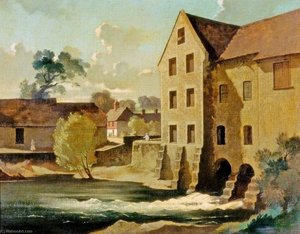
Bridgnorth, Shropshire (1943) tekijä: Vincent van Gogh Bertram Nicholls

Bridgnorth, Shropshire

The painting Bridgnorth, Shropshire by Bertram Nicholls is a captivating representation of a quaint town in the English countryside. Created in 1943, this oil on canvas piece measures 54 x 76 cm and is currently housed at the Buxton Museum - Art Gallery in Buxton, United Kingdom. The scene features a picturesque town situated near a river with a bridge crossing it, surrounded by lush greenery and charming buildings. Composition…

5
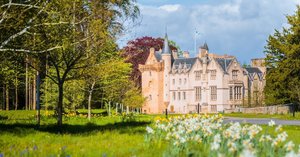
Pitigliano (1926) tekijä: Vincent van Gogh Bertram Nicholls

Pitigliano

1926 · Oil · The National Trust For Scotland, Forres

In the quiet, evocative strokes of Bertram Nicholls’ 1926 masterpiece, Pitigliano, we are transported to a world where history breathes through the very architecture of the landscape. The painting captures the enchanting Italian town of Pitigliano, famously carved into the volcanic tuff rock, presenting a scene that feels less like a mere depiction and more like a rediscovered memory. At the heart of the composition stands a formidable stone castle,…

6
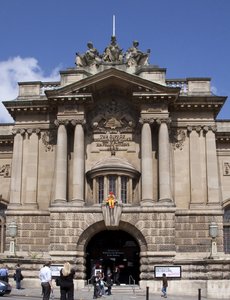
Washing in a Stream at Gouda (1928) tekijä: Vincent van Gogh Bertram Nicholls

Washing in a Stream at Gouda

In the quietude of 1928, Bertram Nicholls captured a moment of profound stillness in his evocative work, Washing in a Stream at Gouda. This painting invites the viewer into a pastoral dreamscape where the boundaries between human presence and the natural world seem to dissolve. At its heart, the composition centers on a gentle stream flowing beneath a weathered stone bridge, a structure that speaks of time's passage and the…

Bertram Nicholls-valikoima jatkuu, 11–36

Aiheet, jotka vangitsivat Bertram Nichollsin katseen

Nämä neljä aihetta toistuvat näissä alkuperäisteoksissa useimmin, jokaisesta löytyy hienoin esimerkki.

Museot, joissa Bertram Nicholls'n alkuperäisteokset sijaitsevat

Tämän sivun teoksista eniten sisältävät 8 museota.

Museo Kaupunki Bertram Nicholls teokset Tämän listan maalaukset
The National Trust For Scotland, ForresThe National Trust For Scotland Forres 3 Pitigliano, A Mountain Village, Philippe le Bel's Tower
Buxton Museum - Art Gallery, BuxtonBuxton Museum - Art Gallery Buxton 2 Bridgnorth, Shropshire, Wilton Bridge, Ross on Wye, Herefordshire
Harris Museum - Art Gallery, PrestonHarris Museum - Art Gallery Preston 2 By a Sussex Stream, Ragusa
Bristol Museum - Art Gallery, BristolBristol Museum - Art Gallery Bristol 2 Washing in a Stream at Gouda, Assisi
Government Art Collection, LontooGovernment Art Collection Lontoo 2 Le mammelle d'Italia, Lambeth Bridge
Guildhall Art Gallery, LontooGuildhall Art Gallery Lontoo 1 Porto Rocco, Orvieto, Italy
Maidstone Museum - Bentlif Art Gallery, MaidstoneMaidstone Museum - Bentlif Art Gallery Maidstone 1 San Giovanni Nepomuceno
Touchstones Rochdale, RochdaleTouchstones Rochdale Rochdale 1 Easby Abbey, Richmond, North Yorkshire

Bertram Nicholls vuosikymmenittäin: jokaisen aikakauden määrittänyt alkuperäisteos

Teokset vuosikymmenittäin

Valitse vuosikymmen nähdäksesi sen määrittäneen alkuperäisteoksen.

Keräilijöiden kysymyksiä Bertram Nicholls -taiteilijan maalauksista

Mistä teoksesta Bertram Nicholls on tunnetuin?Paljasta vastaus

Bridgnorth, Shropshire (1943), Buxton Museum - Art Gallery, Buxton. Seuraavina ovat By a Sussex Stream (1926) ja Porto Rocco, Orvieto, Italy (1926).

Kuinka vanha Bertram Nicholls oli, kun Bridgnorth, Shropshire tehtiin?Paljasta vastaus

60 vuotta vanha: Bridgnorth, Shropshire on peräisin vuodelta 1943, ja Bertram Nicholls on syntynyt vuonna 1883.

Mitkä ovat kymmenen kuuluisinta Bertram Nicholls -taideteosta?Paljasta vastaus

Bridgnorth, Shropshire, By a Sussex Stream, Porto Rocco, Orvieto, Italy, Goodrich Village, Herefordshire, Pitigliano, Washing in a Stream at Gouda, Picturesque Steyning, Drying the Sails, Steyning Church, Sussex ja The Bridge. Yllä oleva sijoitus kertoo kunkin teoksen vuosiluvun ja museon.

Kuinka monta maalausta Bertram Nicholls jätti jälkeensä?Paljasta vastaus

Katalogissamme on 39 teosta taiteilijalta Bertram Nicholls, aikaväliltä 1914–1949.

Missä museoissa Bertram Nicholls's mestariteokset sijaitsevat?Paljasta vastaus

Pääasiassa The National Trust For Scotland (Forres), Buxton Museum - Art Gallery (Buxton) ja Harris Museum - Art Gallery (Preston). Yllä oleva museotaulukko listaa ne kaikki.

Minä vuosina Bertram Nicholls maalasi kuuluisimmat teoksensa?Paljasta vastaus

Aikakaudella 1920s: 16 sivun 36 teoksista on tehty silloin, joista By a Sussex Stream.

Mitkä ovat Bertram Nicholls ensimmäinen ja viimeinen tunnettua alkuperäisteosta?Paljasta vastaus

Tällä sivulla vanhin on Picturesque Steyning (1914) ja uusin Lambeth Bridge (1949).

Mitä aiheita Bertram Nicholls käytti useimmiten?Paljasta vastaus

Bridge (2), People (2) ja Dog (2), yhteensä 36 teosta tällä sivulla.

Mihin taidesuuntaukseen Bertram Nicholls kuuluu?Paljasta vastaus

Contemporary realism, tämän sivun alkuperäisteosten perusteella.

Mitä Bertram Nicholls -teoksia The National Trust For Scotland -museossa on esillä?Paljasta vastaus

Pitigliano, A Mountain Village ja Philippe le Bel's Tower: The National Trust For Scotland, Forres -ssä on 3 tämän sivun teoksista.

Bertram Nicholls: elämä ja tuotanto

The Quiet Observer: The Life and Legacy of Bertram Nicholls

Born in the industrious heart of Didsbury, Manchester, on September 26th, 1883, Bertram Nicholls emerged as a painter of profound stillness and atmospheric grace. As the youngest child of William Andrews Nicholls, a local fruit merchant, and Mary Allen, his early years were rooted in the steady rhythms of Northern English life. His journey toward artistic mastery began at the Manchester Grammar School, but it was his subsequent enrollment at the prestigious Slade School of Fine Art between 1901 and 1904 that would fundamentally reshape his vision. Under the tutelage of Reginald Barber, Nicholls began to move beyond mere representation, seeking instead a deeper connection with the light and tonal harmonies that define the natural world.

The foundations of his style were laid by the giants of British art history. He drew deep inspiration from the meticulous observation found in the works of Joshua Reynolds and the landscape sensibilities of Richard Wilson. These early influences instilled in him a reverence for compositional balance and a sophisticated understanding of how light interacts with texture. His formative years were further enriched by encounters with the Staithes Group, particularly Frederick Jackson, whose commitment to plein air painting—the practice of painting directly from nature—encouraged Nicholls to capture the immediate, breathing essence of the British countryside.

A Journey Through Light and Stone

In 1904, a transformative voyage to Madrid introduced Nicholls to the profound complexities of Baroque mastery. Immersing himself in the works of Diego Velázquez, he developed an acute sensitivity to the rendering of light and the structural integrity of composition. This Spanish influence would later manifest in his ability to imbue even the most tranquil landscapes with a sense of monumental presence. Upon returning to England, Nicholls’ work began to reflect a unique synthesis of styles; he absorbed the innovative color palettes of Whistler and the atmospheric grandeur of Turner, blending them into a personal language characterized by understated beauty and quietude.

His travels across Europe provided him with an endless repertoire of subjects, from the rugged, sun-drenched architecture of Italy to the pastoral serenity of the Netherlands. In his 1926 masterpiece, Pitigliano, one can witness his ability to turn stone into memory, capturing an Italian town carved from volcanic tuff with a tactile precision that makes the ancient masonry feel almost palpable. Similarly, in works such as Washing in a Stream at Gouda (1928), he achieved a rare dissolution of boundaries between human presence and the natural world, using soft, painterly brushstrokes to evoke the misty, restorative solitude of a Dutch landscape.

The Resilience of Vision

The trajectory of Nicholls’ life was not without its interruptions by the turbulence of history. During the First World War, he served in the Kite Balloon Service of the Royal Flying Corps. This period of aerial reconnaissance offered him a unique, panoramic perspective on the landscape—a view from above that likely deepened his understanding of spatial relationships and the sweeping contours of the earth. This experience of observing the world from a detached, soaring height may have contributed to the sense of peaceful, observational distance found in his later landscapes.

Throughout his long life, which concluded in 1974, Nicholls remained dedicated to the pursuit of the "quiet landscape." His oeuvre stands as a testament to the power of subtle emotion and the enduring beauty of the everyday. Whether depicting a sun-dappled quay in Italy or a muted, impressionistic stream in Sussex, his work continues to resonate with those seeking a moment of respite. His historical significance lies in his ability to bridge the gap between the rigorous traditions of the Slade School and a modern, emotive approach to light, ensuring that his paintings remain timeless windows into a world of profound peace.