Alessandro Magnasco (1667–1749): A Painter of Gloom and Wonder
Early Life and Training:
Collaboration and Artistic Influences:
Magnasco’s Distinctive Style: Landscape and Figure Painting:
Themes and Symbolism in His Oeuvre:
Legacy and Recognition:
Early Life and Training
Alessandro Magnasco was born in Genoa in 1667, the son of Stefano Magnasco, a painter who practiced in the Genoese tradition. Unlike his father’s polished style—characterized by harmonious color blending—Magnasco embraced a radically different aesthetic path from an early age. Recognizing his talent, Stefano Magnasco entrusted him to Valerio Castello and Filippo Abbiati in Milan, where he honed his skills amidst the vibrant artistic milieu of the Lombard Baroque. This formative period instilled in Magnasco a sensitivity to expressive brushwork and a fascination with capturing psychological depth—traits that would define his future artistic endeavors.
Collaboration and Artistic Influences:
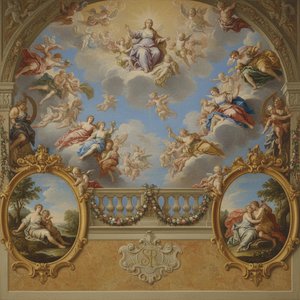
Magnasco’s career began as a portrait painter, but he quickly gained renown for his involvement in collaborative projects. He frequently partnered with Giovanni Battista Tavella and Clemente Spera, skillfully integrating figures into the landscapes of Tavella and utilizing architectural ruins crafted by Spera. These collaborations weren't merely about technical proficiency; they exposed Magnasco to diverse artistic perspectives—particularly those championed by Venetian painters like Sebastiano Ricci—and broadened his understanding of compositional techniques.
Magnasco’s Distinctive Style: Landscape and Figure Painting:
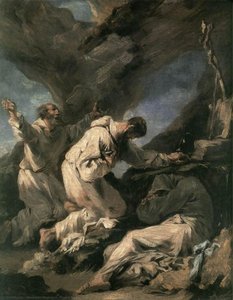
Magnasco's signature style is instantly recognizable. He favored small canvases, employing a hypochromatic palette dominated by grays, browns, and ochres—a deliberate choice that contributes to the somber atmosphere pervading his paintings. Unlike many of his contemporaries who sought grandeur and spectacle, Magnasco focused on capturing mood and emotion with remarkable precision. His scenes frequently depict crumbling ruins, eerie landscapes shrouded in mist, or crowded interiors populated by elongated figures rendered with nervous brushstrokes. These figures—often ragged beggars, solitary monks, or shadowy groups engaged in mysterious activities—are not merely decorative elements; they embody Magnasco’s artistic vision.
Themes and Symbolism in His Oeuvre:
Magnasco's subject matter was equally unconventional. He shunned mythological narratives and idealized depictions, opting instead for scenes considered marginal or even taboo—synagogue services, Quaker meetings, gatherings of robbers, interrogations by the Inquisition, and representations of catastrophes. The artist’s intent remains ambiguous; were these paintings expressions of social commentary, explorations of religious tolerance (or intolerance), or simply exercises in capturing a particular mood? This ambiguity is precisely what elevates Magnasco's work beyond mere visual representation—it invites contemplation and challenges viewers to confront uncomfortable truths.
Legacy and Recognition:
Despite initial indifference from Genoa’s artistic establishment, Magnasco gained acclaim among collectors and patrons elsewhere, notably in Milan. Rudolf Wittkower famously described him as “a solitary, tense, strange” artist—a characterization that captures the essence of his artistic temperament. Although he remained largely unrecognized during his lifetime, Magnasco's oeuvre was rediscovered by scholars in the first quarter of the 20th century, cementing his place as a pivotal figure in Baroque art and establishing him as an artist whose unsettling vision continues to resonate with audiences today. His influence extended beyond stylistic imitation; he inspired subsequent generations of painters—including Marco Ricci, Giuseppe Bazzani, Francesco Maffei, and Gianantonio Guardi—demonstrating the enduring power of Magnasco’s distinctive aesthetic.
OriginalUniqueArt.com:n toimitus
Tietovisa
Jokaisessa kysymyksessä on vain yksi oikea vastaus.
Kysymys 1:
Alessandro Magnasco syntyi vuonna?
Kysymys 2:
Missä Alessandro Magnasco työskenteli suurimman osan urastaan?
Kysymys 3:
Magnasco tunnettiin erityisesti hänen tyylinsä ansiosta.
Kysymys 4:
Magnasco työskenteli yhteistyössä seuraavien taiteilijoiden kanssa:
Kysymys 5:
Alessandro Magnasco oli tunnettu erityisesti hänen kuvistaan.
Explore the captivating world of Sebastiano Ricci, a leading Venetian Baroque painter renowned for his luminous frescoes & illusionistic masterpieces. Discover his life, techniques, and lasting influence on art history.
Italian Mannerist painters like Bronzino, Pontormo, and Parmigianino defined an era of elegance. Shop museum-quality reproductions on OriginalUniqueArt.com.