
 Esikatselu
 Jaa teos
 Jaa
Jaa
 Tiedot
 Opas
Opas

 Lataa kuva
 Samanlaisia kohteita
 Röntgenkuvaus
 Diaesitys
 Kysymykset ja vastaukset
 Tilastot
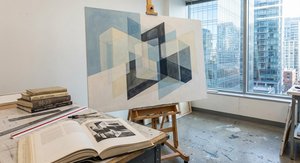
Black and White Structure

- 158.0 x 222.0 cm


 Lue lisää
Tällä sivulla esitettyä taideteosta suojaa tekijänoikeuslaki, mikä tarkoittaa, ettemme voi laillisesti luoda tai myydä täsmälleen samanlaista jäljennöstä. Tämä suoja toteutetaan kansainvälisten sopimusten, kuten esimerkiksi Berne-konventio ja kansallisilla laeilla, mukaan lukien niillä määritellyt Yhdysvaltain tekijänoikeuslaki – Luku 17. Kaikki oikeudet pidätetään. Luvaton kopiointi tai jäljittely on kielletty.
Tämä menetelmä noudattaa täysin tekijänoikeussäännöksiä, sillä se ei sisällä suojatun taideteoksen kopioimista tai jäljentämistä. Sen sijaan kyseessä on luova uudelleentulkinta – uusi maalaus, joka ammentaa vaikutteita alkuperäisestä, mutta ei ole sen identtinen kopio.
Giclée- ja taideprintit
Museolaatuisia giclée- tai kankaitaulun tulosteita nopealla tuotannolla ja joustavilla viimeistelyvaihtoehdoilla. ( Osta käsinmaalattu taideteos Siirry digitaaliseen kuvaan)




































Valitse valmiista mitoistamme sellaiset, jotka vastaavat teoksen alkuperäisiä mittasuhteita.

Syötä tarvitsemasi leveys ja korkeus, jotta tuloste sopii kehyksiisi tai seinällesi. Tulostetta voidaan vain leikata, sitä ei voida koskaan suurentaa alkuperäistä kuvaa suuremmaksi, joten eri muotoinen koko aiheuttaa osan kuvasta katoamisen. Lähetämme sinulle digitaalisen mallikuvan hyväksyttäväksi ennen kuin aloitamme tulostuksen. Tällä sivulla näkyvä kuva ei näytä lopullista rajausta — vain mallikuva näyttää sen.
Maailmanlaajuinen toimitus () 2 viikossa tavallisen 4–5 viikon sijaan. (8 marraskuu)

Ilmainen pikatoimitus ympäri maailman

Korkealaatuinen pellavakangas

Kattava kuljetusvakuutus

Tulliveron palautustakuu

Takuu täydellisestä värien vastaavuudesta

100 päivän palautusoikeus (vain valmistusvirheet)

100% rahat takaisin -takuu

Määräalennus tarjolla
 Lasivaihtoehto on saatavilla vain alle 110 cm kokoisille teoksille

Black and White Structure
Giclée- ja taideprintit
Replikaatin koko
-


Kokonaishinta
€ 72
Kysymykset ja vastaukset
Milloin ja mihin tyylisuuntaan "Black and White Structure" on tehty?
"Black and White Structure" on tehty vuonna 1965 Geometric Abstraction-suuntauksen piirissä.
Mihin taidesuuntaukseen Zdeněk Sýkora:n "Black and White Structure" kuuluu?
Teoksen Zdeněk Sýkora:n "Black and White Structure" tyylisuunta on Geometric Abstraction. Tämä luokittelu sijoittaa teoksen muiden samankaltaisten taiteilijoiden ja teosten joukkoon.
Milloin teos Zdeněk Sýkora:n "Black and White Structure" on luotu?
Zdeněk Sýkora:n "Black and White Structure" on luotu vuonna 1965.
Taiteilijan elämäkerta
The Architect of Lines: The Life and Legacy of Zdeněk Sýkora
In the vast landscape of twentieth-century modernism, few figures command as much intellectual curiosity as Zdeněk Sýkora. Born in 1920 in Louny, Czechoslovakia, Sýkora’s journey was one of profound transformation, moving from the tangible beauty of the natural world to the mathematical precision of the digital frontier. His early years were marked by a traditional approach to the canvas, where his late 1940s works captured the essence of landscapes through a more representational lens. However, as the political and cultural tides of Central Europe shifted, so too did Sýkora’s vision. He began to shed the weight of the physical world, gravitating instead toward the rigorous, cerebral beauty of geometric abstraction.
The evolution of his style was not merely a personal choice but a response to the burgeoning technological era. Influenced by the structural complexities of Cubism and the dreamlike logic of Surrealism, Sýkora sought a way to bridge the gap between human intuition and algorithmic precision. By the 1960s, he emerged as a true pioneer, becoming one of the first artists to integrate computer technology into the creative process. This was a revolutionary leap; through the use of computers, he could manipulate geometric structures with a level of complexity that surpassed the capabilities of the human hand alone. His work began to pulse with a new kind of energy, where mathematical logic met artistic spontaneity.
A Symphony of Geometry and Chance
As his career progressed, Sýkora’s aesthetic underwent another mesmerizing metamorphosis. The rigid, strict systems of his early geometric structures gradually gave way to a more fluid, rhythmic language. He developed a signature style characterized by intricate line paintings, where vibrant streaks of color traversed expansive canvases in seemingly random yet deeply calculated directions. This period of his work felt less like a mathematical proof and more like a visual symphony, capturing the tension between order and chaos. His membership in the Křižovatka (Crossroad) group further solidified his place within the vanguard of Czech modernism, as he explored the intersections of different artistic movements.
This creative spirit was often a collaborative one. In 1985, Sýkora began a profound artistic partnership with his wife, Lenka Sýkora. Together, they expanded the boundaries of abstraction, applying their shared vision to large-scale architectural projects. Their work moved beyond the confines of the gallery wall and into the very fabric of the built environment, such as the striking flight operation building in Jeneč near Prague. This integration of fine art and architecture allowed Sýlam’s geometric explorations to inhabit three-dimensional space, influencing how viewers interact with modern structures.
Recognition and Eternal Influence
Despite the challenges posed by the Soviet occupation and the resulting limitations on international exhibition opportunities, Sýkora’s brilliance could not be contained. His resilience led to a global recognition that honored his immense contributions to the evolution of abstract art. The prestige of his career is reflected in the numerous accolades he received, including:
- The Vladimír Boudnik Award (2008)
- L'Ordre des Arts et des Lettres from France
- The Herbert-Boeckl-Preis from Austria
Today, the legacy of Zdeněk Sýkora lives on in the permanent collections of the world’s most esteemed institutions. From the Centre Georges Pompidou in Paris to the MUMOK in Vienna, his works serve as a testament to the power of innovation. He remains a monumental figure for anyone studying the intersection of technology and fine art, reminding us that even within the strictest mathematical lines, there is room for the infinite soul of creativity.

Zdeněk Sýkora
1920 - 2011 , Czech Republic
Pähkinänkuoressa
- Full Name: Zdeněk Sýkora
- Nationality: Czech
- Date Of Birth: 1920
- Date Of Death: 2011
- Place Of Birth: Louny, Czech Republic
- Notable Artworks:
- Black & White Structure
- Lines No 24
- Artistic Movement Or Style: Geometric abstraction
- Artists Who Influenced This Artist:
- Cubism
- Surrealism
- Artists Or Movements Influenced By This Artist:
- Op Art
- Křižovatka group
Aiheeseen liittyvät artikkelit
Beyond Form & Color: Geometric Abstraction's Enduring Legacy in Art History
Explore the captivating world of geometric abstraction! Discover its origins, key artists like Malevich & Mondrian, and why this movement remains highly valued by art collectors today. Expert insights at OriginalUniqueArt.

Beyond Form & Color: Geometric Abstraction's Evolution in 20th/21st Century Art
Explore the evolution of geometric abstraction from Cubism to contemporary art. Discover key artists like Malevich & Mondrian, investment insights, and expert collecting advice at OriginalUniqueArt.

Wassily Kandinskin 25 mestariteosta: Värien ja muodon syvä maailma | OriginalUniqueArt
Tutustu Wassily Kandinskin 25 vaikuttavinta teosta! Uppoudu abstraktin taiteen maailmaan, värien symboliikkaan ja modernin ekspressionismin historiaan. Löydä inspiraatiota kodin sisustukseen OriginalUniqueArt.com:ista – laadukkaat taideprintit ja reproduktiot.

Geometrisen abstraktion mestariteokset: Taidetta kotiin OriginalUniqueArtilta
Tutustu geometrisen abstraktion 10 mestariteokseen! Piet Mondrian, Kandinsky ja muut taiteilijat muovasivat modernin taiteen historiaa. Löydä inspiraatiota kotiisi OriginalUniqueArtilta – laadukkaat taideprintit ja sisustusehdotukset odottavat. Tutki kokoelma verkossa!

Neo-Abstract Art: The High-Impact Evolution of Modern Visual Energy and Geometric Sophistication
Discover the power of Neo-Abstract art. Explore how bold geometric forms and high-impact visual energy are redefining modern design. Learn to curate sophisticated, high-energy spaces with the latest trends in contemporary abstraction and structural color.