Work
Oil On Canvas
WallArt
Abstract Expressionism
1957
Modern
100.0 x 100.0 cm
Käsinmaalattu öljykopio
Käsinmaalattu öljyväri kankaalle haluamassasi koossa ja kehyksissä, taiteilijoidemme valmistamana tilauksesta.
Valitse valmiista mitoistamme sellaiset, jotka vastaavat teoksen alkuperäisiä mittasuhteita.
Voit syöttää omat mitat sopimaan tiettyyn kehykseen tai tilaan. Jos valitsemasi koko ei vastaa alkuperäisen kuvan mittasuhteita, rajaamme taideteoksen tai jatkamme maalausta käsin maalatuilla elementeillä. Digitaalinen esikatselu lähetetään hyväksyttäväksi ennen tuotannon aloittamista.
Huomioithan, että näytöllä oleva esikatselu ei vastaa todellista rajausta tai jatkamista. Vain digitaalinen mallikuva näyttää lopullisen sommittelun tarkasti.
Vaikka mittatilaustyöt ovat mahdollisia, suosittelemme valitsemaan mitan ennalta määritetystä listasta alkuperäisten mittasuhteiden säilyttämiseksi.
Tilauksen jälkeen OriginalUniqueArt.com -tiimi lähettää asiakkaalle ohjeet ja esikatselukuvan.
Maailmanlaajuinen toimitus () 3–4 viikossa tavallisen 5 viikon sijaan. (24 heinäkuu). Laadusta ei tingitä.
Ilmainen pikatoimitus ympäri maailman
Korkealaatuinen pellavakangas
Kattava kuljetusvakuutus
Tulliveron palautustakuu
Täydellinen värien vastaavuustakuu
60 päivän palautusoikeus (vain valmistusvirheet)
100% rahat takaisin -takuu
Määräalennus tarjous
Work
Reproduktiotekniikka
Replikaatin koko
-
Kokonaishinta
-
Teoksen kuvaus
A Symphony of Geometry and Tension
In this masterful 1957 composition, Yoo Youngkuk invites the viewer into a realm where the boundaries between form and emotion dissolve into a striking abstract landscape. The artwork presents a captivating dance of geometric shapes, dominated by a powerful interplay of black, red, and green. At first glance, the eye is met with a sense of profound mystery; the canvas feels like a fragmented window into a structured yet enigmatic dimension. There is no singular focal point to anchor the gaze, but rather a dynamic arrangement of overlapping rectangles and angular planes that encourage the eye to wander across the surface. This lack of a traditional center creates a rhythmic tension, as if the shapes are caught in a moment of perpetual motion, intersecting and layering to create an illusion of depth within a seemingly flat, modern plane.
The artist’s use of color is both disciplined and evocative, employing a restricted palette that maximizes emotional impact. A deep, commanding black serves as the foundation, providing a somber backdrop that allows the bold, angular bursts of red to vibrate with intensity. Interspersed throughout are organic, textured patches of green that offer a subtle, earthy counterpoint to the sharper geometric elements, while a delicate touch of blue provides a fleeting moment of cool contrast. This deliberate color theory does more than just decorate the canvas; it builds an atmosphere of austerity and restraint, where every hue carries the weight of intentionality.
The Essence of Korean Abstraction
To understand this piece is to understand the pioneering spirit of Yoo Youngkuk, a titan of Korean abstraction. Created during a period of significant historical transition, the work reflects the artist's lifelong quest to distill the essence of the natural world—specifically the majestic mountains of his youth—into pure, non-representational language. While the subject matter avoids literal depiction, the sharp lines and intersecting planes evoke the ruggedness and structural strength of a landscape stripped down to its skeletal beauty. The technique, an expressive application of oil on canvas, reveals a sophisticated mastery of texture; while much of the surface appears smooth, a closer inspection unveils the subtle, tactile presence of brushstrokes that breathe life into the green segments.
For the discerning collector or interior designer, this artwork offers more than mere visual interest; it provides a profound emotional resonance. The fragmented composition and stark contrasts can evoke feelings ranging from contemplative isolation to a heightened sense of modern anxiety, making it a powerful statement piece for any sophisticated space. Whether placed in a minimalist gallery setting or as a focal point in a contemporary living room, the painting’s ability to command attention through its structural complexity and historical significance makes it an invaluable acquisition. It stands as a testament to the power of abstraction to communicate the complex, unspoken tensions of the human experience through nothing more than shape, color, and line.
Taiteilijan elämäkerta
Yoo Youngkuk: Korean Abstraction's Pioneer
Yoo Youngkuk (劉永國; YYK), born in 1916, Uljin-gun, South Korea, stands as a monumental figure in the history of Korean modern art—the inaugural champion of abstract expressionism on Korean soil. His artistic journey unfolded against the backdrop of turbulent geopolitical shifts, beginning with formative years steeped in the serene majesty of Taebaek Mountains and culminating in a lifetime dedicated to distilling nature’s essence into pure geometric form and vibrant color fields. From his early training at Bunka Gakuin University in Tokyo—where he encountered the groundbreaking movements of Murai Masanari and Hasegawa Saburo—to his return to Korea amidst WWII, Yoo navigated an era defined by conflict and transformation with unwavering artistic conviction.Early Life & Influences
Yoo’s childhood instilled within him a profound connection to Korean landscape, particularly the towering peaks of Taebaek Mountains, which would become recurring motifs in his oeuvre. This sensitivity to natural beauty wasn't merely aesthetic; it underpinned his intellectual curiosity and fueled his engagement with Western avant-garde philosophies—specifically Constructivism and Suprematism—influences that profoundly shaped his formative artistic vision. His formal education at Bunka Gakuin University exposed him to the revolutionary ideas circulating in Japan during the interwar period, fostering a dialogue with fellow artists who championed radical experimentation.Sinsasil-pa & The Birth of Korean Abstract Expressionism
In 1948 Yoo joined forces with Kim Whanki and Lee Kyusang to establish Sinsasil-pa (新寫實派), Korea’s first organized collective dedicated to breaking free from representational conventions and embracing abstract expressionism. This audacious undertaking signaled a decisive rejection of traditional artistic paradigms—a bold assertion that challenged prevailing aesthetic sensibilities and ignited fervent debate within the Korean art community. Yoo's early works during this period demonstrated an interplay between color fields and emerging geometric forms, reflecting his engagement with influential Japanese artists like Murai Masanari and Hasegawa Saburo.The Mountain Motif & Artistic Evolution
Throughout his prolific career, Yoo Youngkuk’s artistic style underwent a transformative evolution—characterized by a gradual shift from initial explorations of color field painting to the incorporation of more defined geometric shapes. Notably, he adopted “the mountain” as his signature motif—a symbol not merely of Korean landscape but also of resilience, endurance, and the enduring spirit of the nation itself. Yoo’s paintings captured organic forces while simultaneously distilling nature's grandeur into simplified forms, reflecting a deep understanding of both visual aesthetics and philosophical concepts. His meticulous attention to detail—particularly in capturing subtle variations of color and texture—established him as a master craftsman whose work resonated with profound emotional depth.Legacy & Recognition
Yoo Youngkuk’s contributions to Korean modern art were widely recognized during his lifetime, culminating in a comprehensive survey by *Monthly Art* magazine that hailed him as the most outstanding artist among over a hundred of his contemporaries. His enduring influence extends beyond his paintings—he paved the way for subsequent generations of Korean artists to explore abstraction and experiment with new forms of expression. Yoo Youngkuk’s unwavering commitment to artistic innovation, coupled with his deep connection to Korean culture and landscape, continues to inspire artists today. His ability to translate the emotional and spiritual qualities of nature into a purely abstract visual language remains a testament to his profound artistry and enduring legacy—a cornerstone of Korean art history.Yoo Youngkuk
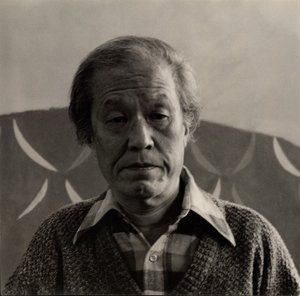
1916 - 2002 , Etelä-Korea
Pikatiedot
- Artistic Movement Or Style: Abstrakti taide
- Artists Or Movements Influenced By This Artist:
- Konstruktivismi
- Suprematism
- Artists Who Influenced This Artist:
- Murai Masanari
- Hasegawa Saburo
- Date Of Birth: 1916
- Date Of Death: 2002
- Full Name: Yoo Youngkuk
- Nationality: Korean
- Notable Artworks:
- Vuori
- Työ
- Place Of Birth: Uljin, Etelä-Korea

Lasivaihtoehto on saatavilla vain alle 110 cm kokoisina teoksina