() ·

A painting made for you, by hand

Untitled

Käsinmaalattu öljyvärinen jäljennös

Käsinmaalattu öljyväri kankaalle haluamassasi koossa ja kehyksissä, taiteilijoidemme valmistamana tilauksesta. ( Vaihda tulosteeseen Siirry digitaaliseen kuvaan)

Keräilykohteen kuvaus

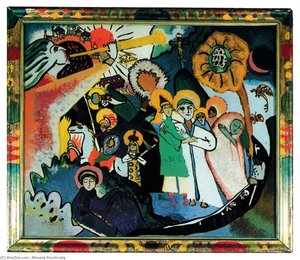
Explore Wassily Kandinsky's 'Untitled,' a vibrant 1915 watercolor capturing a woman playing an instrument amidst a dynamic, colorful scene. A cornerstone of abstract art and spiritual expression.

Taiteilijan elämäkerta

Wassily Kandinsky (1866-1944) oli vallankumouksellinen taiteilija, joka loi abstraktin taiteen ja tutki värin sekä mielen syvyyksiä. Tutustu upeisiin maalauksiin ja hänen vaikutukseensa!

from ·

Chapter 1

How large should it be?

Slide to change the size; the picture on the left shows the frame at its real width. The proportions of the original are kept.

Vakiokoko
räätälöity
CM
INCH

Valitse valmiista mitoistamme sellaiset, jotka vastaavat teoksen alkuperäisiä mittasuhteita.

leveys
korkeus

Kirjoita tarvitsemasi leveys ja korkeus, jotta teos sopii kehyksiisi tai seinällesi. Koska kyseessä on käsinmaalattu teos, taiteilija voi maalata hieman enemmän kuvan ympärille tai rajata sitä hieman, jos haluat eri muotoisen koon — valinta on sinun. Lähetämme sinulle digitaalisen mallikuvan hyväksyttäväksi ennen kuin maalaus alkaa. Tällä sivulla näkyvä kuva ei vastaa lopullista tulosta — vain mallikuva näyttää sen.

Chapter 2

How should it arrive?

Choose the edges of the stretched canvas

Choose your frame

Corner sample of the WhiteWrap canvas edge finish, stretched on massiivipuu bars
White €1
Corner sample of the BlurSideWrap canvas edge finish, stretched on massiivipuu bars
Blurside €1
Corner sample of the ExtendedWrap canvas edge finish, stretched on massiivipuu bars
Extended €1
Corner sample of the P118B picture frame: valettu polystyreeni, 5 cm wide and 3 cm thick
P118B €10
Corner sample of the P118H picture frame: valettu polystyreeni, 5 cm wide and 3 cm thick
P118H €10
Corner sample of the P118W picture frame: valettu polystyreeni, 5 cm wide and 3 cm thick
P118W €10
Corner sample of the P438Z picture frame: valettu polystyreeni, 5.5 cm wide and 3.5 cm thick
P438Z €10
Corner sample of the P508JH picture frame: valettu polystyreeni, 7 cm wide and 3.5 cm thick
P508JH €12
Corner sample of the P508YH picture frame: valettu polystyreeni, 7 cm wide and 3.5 cm thick
P508YH €12
Corner sample of the P805H picture frame: valettu polystyreeni, 5 cm wide and 3.5 cm thick
P805H €10
Corner sample of the P805Z picture frame: valettu polystyreeni, 5 cm wide and 3.5 cm thick
P805Z €10
Corner sample of the P919BZ picture frame: valettu polystyreeni, 7 cm wide and 3.5 cm thick
P919BZ €10
Corner sample of the P919G picture frame: valettu polystyreeni, 7 cm wide and 3.5 cm thick
P919G €10
Corner sample of the P919XJ picture frame: valettu polystyreeni, 7 cm wide and 3.5 cm thick
P919XJ €10
Corner sample of the P959ZH picture frame: valettu polystyreeni, 5 cm wide and 3 cm thick
P959ZH €10
Corner sample of the P968JZ picture frame: valettu polystyreeni, 6 cm wide and 4 cm thick
P968JZ €12
Corner sample of the W106C picture frame: massiivipuu, 5 cm wide and 3 cm thick
W106C €8
Corner sample of the W218G picture frame: massiivipuu, 5 cm wide and 3 cm thick
W218G €10
Corner sample of the W218JH picture frame: massiivipuu, 5 cm wide and 3 cm thick
W218JH €8
Corner sample of the W218Y picture frame: massiivipuu, 5 cm wide and 3 cm thick
W218Y €10
Corner sample of the W307PJ picture frame: massiivipuu, 6 cm wide and 3 cm thick
W307PJ €10
Corner sample of the W316G picture frame: massiivipuu, 6 cm wide and 3 cm thick
W316G €10
Corner sample of the W316PJ picture frame: massiivipuu, 6 cm wide and 3 cm thick
W316PJ €8
Corner sample of the W316Y picture frame: massiivipuu, 6 cm wide and 3 cm thick
W316Y €10
Corner sample of the W398PJ picture frame: massiivipuu, 5 cm wide and 3 cm thick
W398PJ €8
Corner sample of the W4111J picture frame: massiivipuu, 6.5 cm wide and 3.5 cm thick
W4111J €10
Corner sample of the W500HY picture frame: massiivipuu, 7 cm wide and 5 cm thick
W500HY €15
Corner sample of the W500JH picture frame: massiivipuu, 7 cm wide and 5 cm thick
W500JH €15
Corner sample of the W692G picture frame: massiivipuu, 8 cm wide and 4 cm thick
W692G €12
Corner sample of the W849H picture frame: massiivipuu, 5 cm wide and 3 cm thick
W849H €8
Corner sample of the W940BG picture frame: massiivipuu, 7.5 cm wide and 4.5 cm thick
W940BG €15
Corner sample of the W953PJ picture frame: massiivipuu, 6 cm wide and 3.5 cm thick
W953PJ €8
Corner sample of the H24-GOLD picture frame: kaiverrettua puuta ja gessoa, 10 cm wide and 6 cm thick
H24-GOLD €30
Corner sample of the H24-SILVER picture frame: kaiverrettua puuta ja gessoa, 10 cm wide and 6 cm thick
H24-SILVER €30
Corner sample of the H36-GOLD picture frame: kaiverrettua puuta ja gessoa, 15 cm wide and 6.5 cm thick
H36-GOLD €45
Corner sample of the H36-SILVER picture frame: kaiverrettua puuta ja gessoa, 15 cm wide and 6.5 cm thick
H36-SILVER €45
Kehyksen esikatselu
Kehystetty

Moulding: . Overall size with the frame: .

Chapter 3

Who paints it, and should anything change?

Examples of what can be changed: Replace face with customer photo; Add pet (e.g., replace cat with dog); Include hidden message in background; Change background landscape or elements.
After order, OriginalUniqueArt.com team will email client for instructions and provide a mockup preview

Maailmanlaajuinen toimitus () 3–4 viikossa tavallisen 5 viikon sijaan. (2 marraskuu). Laadusta ei tingitä.

Chapter 4

The finishing touches

A nameplate, as in a museum?

Kaiverretun pronssilaatan tiedot

This elegant plaque features the artist's name and the title of the artwork, finely engraved for a timeless presentation.

It is made from bronze with a refined, elegant finish. The text is precisely laser-engraved for a sharp and permanent result. Measuring 9x2 cm, the plaque is compact yet easy to read. It's built to be durable and scratch-resistant, offering a professional, museum-quality look. Mounting is simple thanks to the included adhesive backing.

Läpinäkyvän akryylilaatan tiedot

The plaque includes essential engraved details such as the artist's name, the title of the artwork, the date it was created, the type of media used-like oil on canvas or watercolor-a brief description of the piece, and a QR code that links to the complete artwork information.

It is crafted from clear acrylic, offering a sleek, modern appearance. The text is UV-engraved in black to ensure strong visual contrast. With a size of 10x15 cm, it ensures optimal readability. It comes equipped with two metal hooks for secure wall mounting. The plaque is designed to be weather-resistant, making it suitable for various environments, and it includes interactive features that work seamlessly with smartphone scanning.

Mustan akryylilaatan tiedot

This elegant plaque includes engraved information such as the artist's name, the title of the artwork, the date it was created, the type of media used (like oil on canvas or watercolor), a short description of the artwork, and a QR code for quick access to more information.

The plaque itself is made from refined black acrylic with a premium finish. The text is laser-engraved in white for high contrast and readability. Its size is 10x15 cm, designed to be easy to read. It comes with two metal hooks for professional mounting. The design is sleek and fits any interior style. It is also weather-resistant and durable, with built-in digital integration for mobile compatibility.

A protective varnish?

When do you need it?

Chapter 5

Your painting, as you ordered it

Untitled

Reproduktiotekniikka

Replikaatin koko

-

Kokenut huipputaiteilija

Lisää yksityiskohtia, hienostuneisuutta ja enemmän aikaa tuotantoon

-

Reproduktion kehystysvaihtoehdot

-

-

Teoksille tai reproduktioille, joiden mikä tahansa sivu on suurempi kuin 105 cm (noin 41 tuumaa), kehys toimitetaan osina purettuna sarjana. Tämä menetelmä varmistaa turvallisen toimituksen ja ehkäisee vaurioita kuljetuksen aikana.

Vaatii ammattimaista kokoamista – kyseessä ei ole tee-se-itse-tuote.
Sarja on koottava ja kangas kiristettävä kokeneen kehystysammattilaisen toimesta käyttäen puuliimaa (ei sisälly pakkaukseen), kangaspinnetteitä ja puristimia, jotta kehyksen kulmat pysyvät suorina liiman kuivuessa. Virheellinen kokoaminen tai epätasainen kankaan kiristys voi vaurioittaa teosta pysyvästi, eikä tällaiset vauriot ala takuun piiriin.

  • Kaikki massiivipuupalat sisältyvät, tarkasti mittojen mukaan leikattuina.

  • Kootaan mukana tulevilla ruuveilla sekä kulmaliitoksia varten tarvittavalla puuliimalla, jota ei toimiteta, joten se on hankittava kehystäjältä.

  • Vaatii ammattilaisvälineitä, jotka eivät sisälly pakkaukseen: kankaan venytyspihdit (kiristin) ja puristimet, joilla pidetään kehyksen puut suorassa liiman kuivuessa.

Tärkeää:
Kulmaliitoksissa tarvitaan puuliimaa, kehyksien osat on pidettävä puristimilla, kunnes liima on täysin kuivunut, ja koottuun kehykseen jännitettävän kankaan kiristämiseen tarvitaan kangaspenssipihti. Mikään näistä ei sisälly pakkaukseen. Suosittelemme varmistamaan kokeneen kehystäjän saatavuuden ennen tämän kokoisen kehyksen tilaamista.

Nimilaatta

-

-

Suojalakkaus

Kiiltävä lakka (syventää värejä, suojaa valolta ja kosteudelta)

-

Mukauta taideteokseni

Esimerkkejä muokattavista asioista: Vaihda kasvot asiakkaan omaan valokuvaan; Lisää lemmikki (esim. vaihda kissa koiraan); Lisää taustalle piilotettu viesti; Muuta taustan maisemaa tai elementtejä.

-

Pikatoimitus

Maailmanlaajuinen toimitus () 3–4 viikossa tavallisen 5 viikon sijaan. (2 marraskuu). Laadusta ei tingitä.

-

Pikatoimitus

Maailmanlaajuinen toimitus () 5 viikon kuluessa. (9 marraskuu).

Sisältyy hintaan

Kokonaishinta

€ 267

Kokonaishinta € 267

Lasivaihtoehto on saatavilla vain alle 110 cm kokoisille teoksille

Included with every order

  • Ilmainen pikatoimitus ympäri maailman
  • Korkealaatuinen pellavakangas
  • Kattava kuljetusvakuutus
  • Tulliveron palautustakuu
  • Takuu täydellisestä värien vastaavuudesta
  • 100 päivän palautusoikeus (vain valmistusvirheet)
  • 100% rahat takaisin -takuu
  • Määräalennus tarjolla

The Genesis of Abstraction: Unveiling "Untitled"

Wassily Kandinsky's “Untitled,” painted in 1915, isn’t merely a depiction of a scene; it’s an immersion into the nascent world of abstract expression. Born from a confluence of profound experiences – the visceral impact of Claude Monet’s “Haystacks,” and the transcendent power of Wagner’s opera – Kandinsky embarked on a radical journey to liberate art from representational constraints. This particular canvas, a watercolor executed during a pivotal period in his artistic evolution, embodies this shift with breathtaking intensity. It's a testament to the belief that color itself could communicate emotion and spiritual truth, a core tenet of Kandinsky’s developing philosophy.

The painting immediately draws the eye to its central figure: a woman engaged in an act of musical creation. She is not simply playing an instrument; she's channeling something deeper – a vibrant energy that seems to radiate outwards. The violin or guitar, though partially obscured, acts as a conduit for this force, suggesting a connection between sound and visual form. Around her swirl other figures, fragments of human interaction, hinting at a communal experience rooted in artistic expression. These aren’t portraits in the traditional sense; they are embodiments of feeling, rendered through simplified shapes and dynamic arrangements.

A Palette of Emotion: Color as Language

Kandinsky's masterful use of color is paramount to understanding “Untitled.” The dominant hues – a rich red and a warm yellow – create an immediate sense of dynamism and vitality. These aren’t colors that simply describe objects; they *are* the emotion. Red, often associated with passion and energy, pulsates through the composition, while yellow evokes joy and optimism. Notice how these colors interact, creating areas of tension and harmony, mirroring the complexities of human experience.

  • Red’s Intensity: The bold application of red suggests a powerful emotional current, driving the scene forward with an almost palpable force.
  • Yellow's Radiance: The yellow areas offer moments of respite and illumination, hinting at underlying hope and spiritual connection.
  • Complementary Harmony: The interplay between red and yellow demonstrates Kandinsky’s understanding of color theory – how complementary colors can create visual excitement while maintaining a sense of balance.

Historical Context & Spiritual Intent

Painted in 1915, “Untitled” sits squarely within the context of early modernism and the burgeoning movement towards abstraction. Kandinsky was deeply influenced by theosophy, which posited that art could be a vehicle for accessing higher spiritual realms. He believed that colors possessed inherent symbolic meanings – red representing life force, blue symbolizing spirituality, and so on. This painting reflects his desire to move beyond mere representation and create works that directly evoked these inner states.

The background’s geometric shapes—circles, triangles, and squares—are not merely decorative elements; they are integral to Kandinsky's concept of “spiritual architecture.” He envisioned art as a building in which the soul could find refuge and experience transcendence. These forms, arranged with careful consideration, create a sense of spatial depth and suggest a hidden order beneath the surface chaos.

A Legacy of Inner Vision

“Untitled” is more than just a painting; it’s a window into Kandinsky's revolutionary mind. It represents a pivotal moment in art history – the birth of abstraction as a means of expressing inner experience and spiritual truth. Its enduring appeal lies in its ability to evoke powerful emotions, stimulate the imagination, and invite viewers to contemplate the fundamental relationship between color, form, and consciousness. Reproductions capture only a fraction of this vibrant energy, but they offer a tangible connection to one of art’s most profound pioneers.

Kysymykset ja vastaukset

Kuinka voimakas kontrasti teoksessa Wassily Wassilyevich Kandinsky:n "Untitled" on?

Teoksessa Wassily Wassilyevich Kandinsky:n "Untitled" on Statement kontrasti vaaleiden ja tummien alueiden välillä.

Mitä tunnetta Expressionism-tyylisuunnan teos "Untitled" välittää?

Expressionism-suuntauksen sisällä teos "Untitled" on tallennettu Spiritual sävyllä.

Mikä hallitseva sävy lävistää teoksen Wassily Wassilyevich Kandinsky:n "Untitled"?

Ochre to Sepia sävy läpi koko teoksen Wassily Wassilyevich Kandinsky:n "Untitled".

More about this painting

Esikatselu Esikatsele AR-tilassa Vaihda tulosteeseen Siirry digitaaliseen kuvaan Jaa teos
Tiedot Opas Lisää suosikkeihin Lataa kuva Samanlaisia kohteita Röntgenkuvaus Diaesitys Q&A Tilastot

In numbers

  • 1915the year it was painted
  • 29frames to choose from
  • standard sizes, in its own proportions
  • 5weeks to paint and deliver it
Wassily Wassilyevich Kandinsky

Wassily Wassilyevich Kandinsky

1866 - 1944, Venäjä

Quick facts about Wassily Wassilyevich Kandinsky

  • Artistic Movement Or Style: Abstrakti taide, Ekspressionismi
  • Artists Or Movements Influenced By This Artist: ['Abstrakti ekspressionismi']
  • Artists Who Influenced This Artist:
    • Claude Monet
    • Richard Wagner
  • Date Of Birth: 1866-12-04
  • Date Of Death: 1944-12-13
  • Full Name: Wassily Wassilyevich Kandinsky
  • Nationality: Venäläinen, Ranskalainen
  • Notable Artworks:
    • Temppelikampanja
    • Useita ympyröitä
    • Intimate Party
  • Place Of Birth: Moskova, Venäjä

Taiteilijan elämäkerta

A Life Immersed in Color and Spirit

Wassily Wassilyevich Kandinsky, syntyvä Moskovassa vuonna 1866, oli vallankumouksellinen taiteilija, joka mullisti täysin modernin taiteen kulkua. Hänen matkansa ei ollut välittömästi taiteelliseen kutsumukseen; hän oli alun perin määrätty lakimies- ja taloustieteen uralle Moskovan yliopistossa, mutta syvä kohtaaminen Impressionismin kanssa – erityisesti Claude Monetin “Peltolätkä” - ja koskettava kokemus Richard Wagnerin oopperasta "Lohengrin" sytyttivät hänessä sammuneen taiteellisen halun. Tämä keskeinen hetki, joka tapahtui noin kolmenkympin ikää myötä, ei merkinnyt pelkästään uran muutosta vaan täydellistä näkemyskentän muuttumista, asettaen hänet polulle, jolla hän pioneerili jo abstraktia taidetta. Hän muutti pian Müncheniin ja hakeutui arvostettuun Taideakatemian opiskelijaksi Franz von Stuckin valvonnassa, vaikka koulutuksen puitteissa Kandinsky’n henki kaipasi tutkimusta perinteisten rajojen ulkopuolelle. Varhaiset vaikutteet sisälsivät venäläistä kansantaidetta, jonka hän hankki etnografisella retkellä Vologdan alueelle vuonna 1889, mikä herätti hänen kiinnostuksensa eloisien väripalettien ja symbolisen kuvaston suhteen. Tämä pohja osoittautui ratkaisevaksi, kun hän alkoi kehittää ainutlaatuista taiteellista kieltään. Nämä varhaiset tutkimukset eivät olleet pelkästään esteettisiä mieltymyksiä; ne juonsivat juurensa syvään kulttuuriseen yhteyteen ja ymmärrykseen siitä, miten taide voisi kommunikoida ulkopuolella kirjaimellista.

The Dawn of Abstraction: From Expressionism to Inner Necessity

Varhaisissa teoksissaan Kandinsky’n tyyli oli vahvasti ekspressionistinen, tunnusomaista olivat rohkeat värit ja tunteiden voima – esimerkiksi vuodelta 1902 oleva "Papeln (Poplars)" on esimerkki tästä ajanjaksosta. Hän ei kuitenkaan ollut tyytyväinen pelkästään ulkoisen maailman esittämiseen; hän etsi sisäisten todellisuuksien, hengellisiä totuuksia, jotka ylittivät pelkän visuaalisen esityksen. Tämä tavoite johti häntä vähitellen pois representaatiotaidetta ja kohti vallankumouksellista tutkimusta värien, muotojen ja niiden tunteellisen resonanssin suhteen. Hän alkoi uskoa, että värit omaavat omat sisäänrakennetut psykologiset vaikutukset, jotka pystyvät herättämään tiettyjä tunteita ja aistimuksia katsojassa. Tämä vakaumus oli tiiviisti sidoksissa hänen kasvavaan kiinnostukseensa Teosofiaa kohtaan, henkistä liikettä, joka korosti esoteerista tietoa ja universalia veljeilyä. Syventyessään näihin ideoihin Kandinsky’n maalaukset muuttuivat yhä vähemmän representaatiivisiksi, jättäen tunnistetut muodot taakseen ja keskittyen abstraktien komposiittien tutkimiseen, jotka perustuivat sisäiseen tarpeeseen. Tämä ei ollut pelkästään esityksen hylkäämistä; se oli uuden visuaalisen kielen löytämistä, joka pystyi ilmaisemaan aineettomia tunteita ja hengellisiä totuuksia. Hän pyrki luomaan visuaalisen vastineen musiikille, jossa värit ja muodot harmonisoituvat herättämään syviä tunteita.

Geometric Harmony and Spiritual Resonance

Kandinsky’n taide kehittyi merkittävästi hänen osallistuessaan vaikutusvaltaiseen taiteilijaryhmään Der Blaue Reiter (Sininen ratsastaja), jonka hän perusti Münchenissä vuonna 1911. Vaikka aiemmissa teoksissa näkyi usein virtaavia, orgaanisia muotoja, hän alkoi tutkia geometrista abstraktiota keskittyen ympyröiden, kolmioiden ja neliöiden vuorovaikutukseen. "Several Circles" (140 x 140 cm) on esimerkki tästä vaiheesta – dynaaminen komposiitio, jossa värit ja muodot vuorovaikuttavat harmonisesti mutta energisesti. Tämä ei ollut kylmää tai tyhjää geometriaa; se oli kyllä sydän syvästi symbolinen. Kandinsky uskoi, että geometriset muodot omaavat omat sisäänrakennetut symboliset merkityksensä ja niiden järjestely taiteilijan maalauksessa voivat herättää tiettyjä tunteita. Hänen teoreettiset teoksensa, erityisesti "Concerning the Spiritual in Art" (1911), artikuloivat nämä uskomukset asettaen pohjan uudelle ymmärrykselle abstraktista taiteesta välineenä syvien hengellisten totuuksien ilmaisemiseen. Hän argumentoi, että taide ei tulisi pyrkiä jäljittelemään luontoa vaan paljastamaan taiteilijan sisämaailman ja yhdistämään katsojan syvemmälle, intuitiivisemmalle tasolle.

Bauhaus Influence and Lasting Legacy

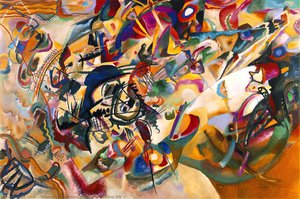
Ensimmäisen maailmansodan purkautuminen pakotti Kandinsky’n palaamaan Venäjälle vuonna 1914, mutta vallankumouksen jälkeen hän löysi itsensä yhä enemmän ristiriidassa vallitsevan taiteellisen ilmapiirin kanssa. Vuonna 1920 hän hyväksyi opettajan viran Bauhaus-taidekoulussa Saksassa, jossa hän vaikutti voimakkaasti useiden taiteilijoiden ajatteluun värien, muotojen ja abstraktion suhteen. Bauhaus tarjosi Kandinsky’lle ihanteellisen ympäristön kehittää ideoitaan ja tutkia uusia luovia polkuja. Hän jatkoi geometristen muotojen ja eloisien värien kokeilua usein sisällyttäen kerroksittaisia impasto-tekniikoita, jotka lisäsivät pintaan syvyyttä ja monimutkaisuutta. "An Intimate Party" (1942) on esimerkki tästä. Kandinsky’n vaikutus moderniin taiteeseen on mittaamaton; hän tunnetaan laajalti abstraktin ekspressionismin pioneerina ja keskeisenä hahmona ei-representatiivisen maalaustyylin kehityksessä. Teoksiaan säilytetään suurissa museoissa ympäri maailmaa, mukaan lukien Tretyakov Gallery Moskovassa, joka omistaa hänen monumentaalisen "Composition VII":n, testamenttinsa taiteelliseen visioon ja kestävään perintöön.

Pikaista tietoa

  • Artist: Wassily Kandinsky
  • Movement: Expressionism
  • Influences:
    • Monet
    • Wagner
  • Medium: Watercolor
  • Subject or theme: Woman playing instrument

Taidevisat

Jokaisessa kysymyksessä on vain yksi oikea vastaus.

Kysymys 1:
What artistic movement is most closely associated with Wassily Kandinsky’s ‘Picture With A White Border’?
Kysymys 2:
The painting prominently features a red and yellow color scheme. What effect does this primarily create?
Kysymys 3:
According to the description, what is one of the objects depicted in the painting besides the woman with the instrument?
Kysymys 4:
Wassily Kandinsky is known for his pioneering work in which area of art?
Kysymys 5:
What year was Wassily Kandinsky born?